
Are you ready to sculpt your abs and enhance your core strength? Crunches are a timeless exercise, loved by fitness enthusiasts and beginners alike for their simplicity and effectiveness.
But did you know there’s more than one way to perform a crunch? Each type targets your muscles differently, offering unique benefits and challenges. Understanding these variations can transform your workout routine, helping you achieve those fitness goals faster. Stick around as we dive into the world of crunches exercise types, uncovering the secrets to a stronger, more defined midsection.
You won’t want to miss the tips that could revolutionize your core workout!
Credit: betterme.world
Basic Crunches
Basic crunches are a popular exercise to strengthen the abdominal muscles. They focus on the upper abs and help improve core stability. This simple movement is a great starting point for those new to fitness. Crunches require no equipment and can be done anywhere.
Standard Technique
- Lie on your back with knees bent and feet flat on the floor.
- Place your hands behind your head without pulling on your neck.
- Engage your core and lift your shoulders off the ground.
- Keep your lower back pressed into the floor throughout the movement.
- Pause briefly at the top, then slowly lower down.
Common Mistakes
- Pulling on the neck or head, causing strain.
- Using momentum instead of abdominal muscles to lift.
- Lifting the entire back off the floor, not just shoulders.
- Holding breath instead of breathing steadily.
- Not controlling the movement on the way down.
Benefits For Beginners
- Builds core strength with low risk of injury.
- Improves posture and spinal support.
- Enhances muscle endurance over time.
- Requires no special equipment or space.
- Prepares the body for more advanced exercises.
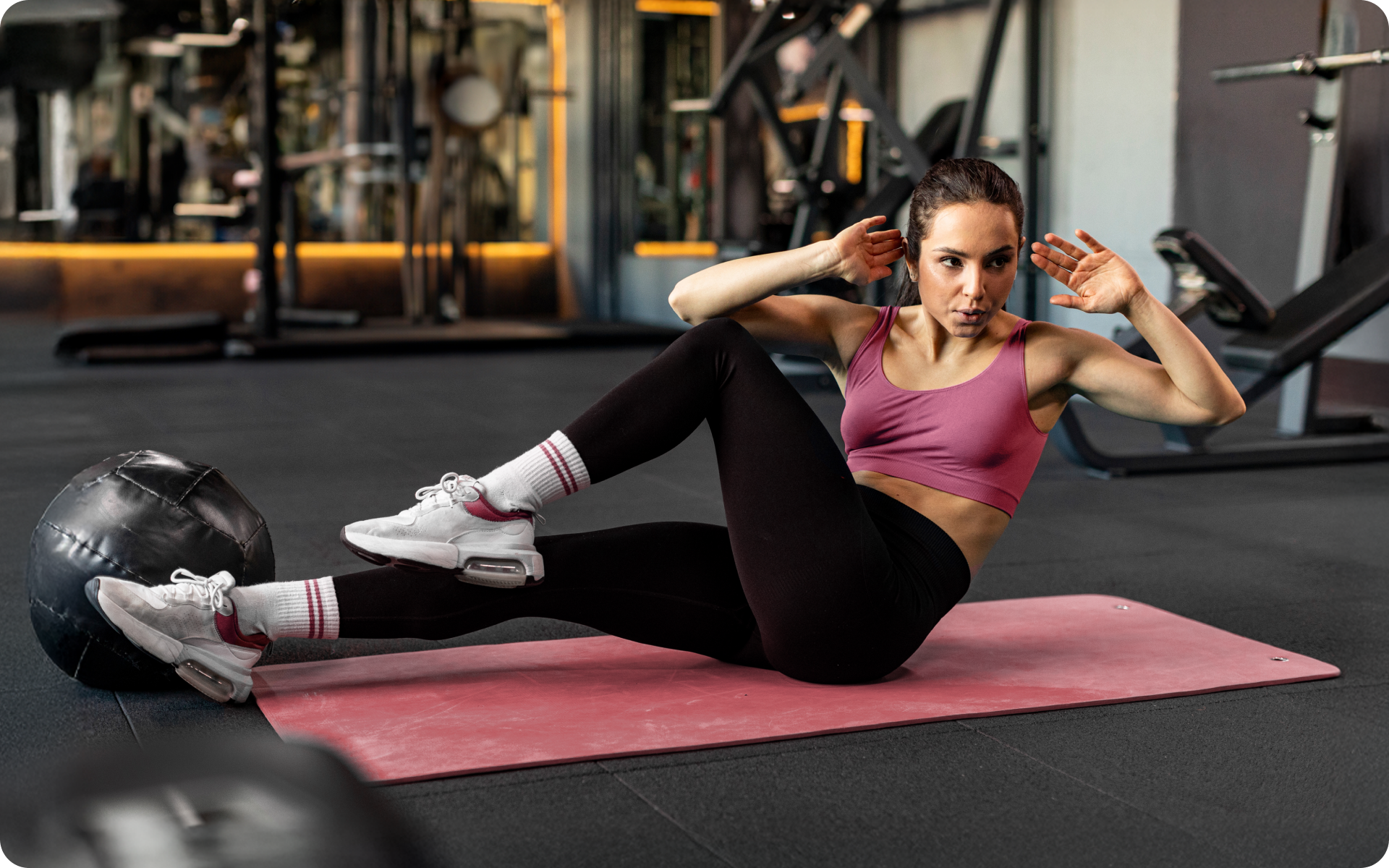
Bicycle Crunches
Bicycle crunches are a dynamic variation of traditional crunches. They engage both the upper and lower abdominal muscles. This exercise also activates the obliques, improving core strength and stability. It is popular for toning the midsection and enhancing overall fitness.
Movement Pattern
Start by lying on your back with your hands behind your head. Lift your shoulders and legs off the ground. Bring one knee toward your chest while twisting your opposite elbow toward that knee. Switch sides in a pedaling motion, like riding a bicycle. Maintain a steady, controlled pace throughout the exercise.
Targeted Muscles
- Rectus abdominis (front abs)
- Obliques (side abs)
- Hip flexors
- Lower abs
Bicycle crunches work multiple core muscles simultaneously. This helps create a balanced and strong midsection.
Tips For Proper Form
- Keep your lower back pressed to the floor.
- Move slowly to avoid using momentum.
- Do not pull on your neck with your hands.
- Focus on twisting your torso, not just your elbows.
- Breathe steadily throughout the movement.
Reverse Crunches
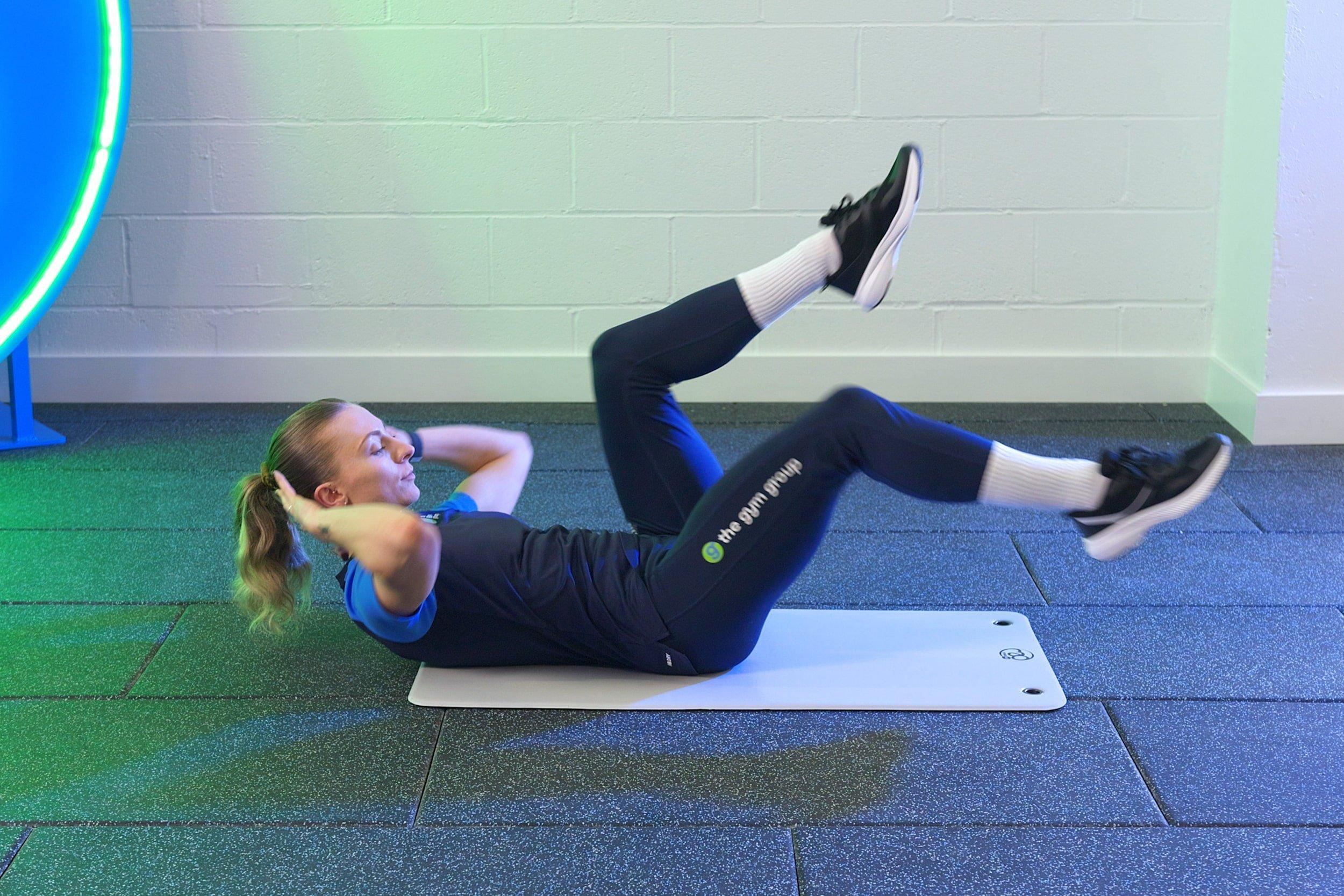
Reverse crunches are a simple yet effective exercise targeting the lower abdominal muscles. Unlike traditional crunches, reverse crunches focus on lifting the hips and legs rather than the upper body. This movement reduces strain on the neck and back, making it a safer option for many people. Incorporating reverse crunches into your routine helps build core strength and improve overall stability.
Execution Steps
- Lie flat on your back with your arms by your sides.
- Bend your knees at a 90-degree angle, lifting your feet off the floor.
- Engage your core muscles and slowly lift your hips towards your chest.
- Pause briefly at the top of the movement.
- Lower your hips back down with control without letting your feet touch the floor.
- Repeat for the desired number of repetitions.
Lower Ab Focus
Reverse crunches mainly target the lower portion of the abdominal muscles. This area is often harder to activate with regular crunches. By lifting the hips, reverse crunches engage the lower abs more effectively. Strong lower abs help improve posture and support the lower back. This exercise also aids in reducing belly fat and tightening the waistline.
Variations To Increase Intensity
- Weighted Reverse Crunch:Hold a small dumbbell or medicine ball between your feet.
- Slow Tempo:Perform the movement slowly to increase muscle tension.
- Leg Raise and Hold:Pause with legs extended before lifting hips.
- Stability Ball Reverse Crunch:Place your legs on a stability ball for added balance challenge.
Credit: www.thegymgroup.com
Oblique Crunches
Oblique crunches target the muscles on the sides of your abdomen, offering a powerful way to shape and strengthen your waistline. Unlike traditional crunches that focus on the front abs, oblique crunches emphasize the twisting motion, which helps develop those elusive side muscles. Adding this exercise to your routine can enhance your overall core stability and improve your posture.
Side Abdominal Activation
Oblique crunches activate the external and internal oblique muscles, which run along the sides of your torso. These muscles are crucial for twisting and bending motions, as well as stabilizing your spine during movement. Strengthening them can reduce the risk of back pain and improve your balance.
Think about how often you twist in daily activities—whether reaching for something or turning while walking. Strong obliques make these motions smoother and less prone to injury.
How To Perform
- Lie on your back with knees bent and feet flat on the floor.
- Place your hands lightly behind your head, keeping your elbows wide.
- Lift your shoulder blades off the ground and twist your torso to bring your right elbow toward your left knee.
- Lower back down slowly and repeat on the other side.
- Keep your movements controlled to avoid using momentum.
Focus on squeezing your obliques at the top of each crunch. Avoid pulling your neck—let your abs do the work. How often do you engage these side muscles during your usual ab routine?
Incorporating Into Workouts
Add oblique crunches into your workout two to three times a week for noticeable results. Pair them with other core exercises like planks or leg raises to create a balanced routine.
Try doing 2–3 sets of 12–15 reps on each side. You can include them at the end of your workout or during a dedicated core session. Have you considered how targeting your obliques might improve your overall athletic performance?
Weighted Crunches
Weighted crunches add resistance to traditional crunches. This increases muscle engagement and strength. The extra weight challenges your abs more effectively. It helps build muscle faster and tones your core.
Using Dumbbells Or Plates
Hold a dumbbell or plate on your chest or behind your head. Keep your neck relaxed to avoid strain. Lift your upper body slowly using your abs. Lower down with control to complete each rep.
Choose a weight that feels challenging but safe. Start light and increase weight as you get stronger. Keep your movements steady and avoid jerking.
Safety Considerations
- Keep your neck and spine neutral during the exercise.
- Do not pull on your head or neck with your hands.
- Use a weight that does not cause pain or discomfort.
- Move slowly to maintain control and avoid injury.
- Stop if you feel sharp pain or dizziness.
Progression Strategies
- Start with bodyweight crunches to build basic strength.
- Add light weights gradually as your muscles get stronger.
- Increase reps or sets to boost endurance.
- Try holding the weight longer at the top of each crunch.
- Combine with other core exercises for balanced strength.

Credit: www.onepeloton.com
Stability Ball Crunches
Stability ball crunches offer a dynamic twist to the traditional crunch exercise. Using a stability ball challenges your muscles differently, making your workout more effective and engaging. This simple tool can improve your core strength while also enhancing your balance and posture.
Balance And Core Engagement
Performing crunches on a stability ball forces your body to maintain balance throughout the movement. This added challenge activates deeper core muscles that often stay dormant during floor crunches. Have you noticed how much harder it is to stay steady on a ball? That constant adjustment strengthens not just your abs but your entire midsection.
Proper Positioning
Start by sitting on the ball and then slowly walk your feet forward until your lower back rests comfortably on the ball. Your hips should be lifted, and your feet flat on the floor, shoulder-width apart. Keep your hands lightly behind your head or crossed over your chest, and avoid pulling your neck as you crunch up. Correct positioning ensures you target the right muscles and reduce the risk of injury.
Advantages Over Floor Crunches
- Greater Range of Motion:The ball allows your spine to extend further backward, increasing the crunch’s effectiveness.
- Improved Posture:Supporting your back on the ball encourages a natural curve, helping to align your spine properly.
- Engages Stabilizer Muscles:You activate more muscles to maintain balance, which boosts overall core strength.
Have you ever felt your core working harder during a stability ball crunch compared to the floor? That extra effort translates to better results and a stronger, more resilient core.
Cable Crunches
Cable crunches offer a powerful way to target the abdominal muscles. They use a cable machine for constant tension. This makes your abs work harder throughout the movement. Cable crunches help build strength and definition in the core. They also improve posture and stability.
Setting Up Equipment
Attach a rope handle to the high pulley on the cable machine. Kneel down a few feet from the machine. Hold the rope behind your head with both hands. Keep your hips still and back straight. Your feet should be flat on the floor for balance.
Controlled Movement
Pull the rope down by curling your upper body forward. Focus on using your abdominal muscles to crunch. Avoid pulling with your arms or neck. Pause briefly at the bottom of the movement. Slowly return to the starting position to keep tension on your abs.
Adjusting Resistance
Choose a weight that challenges your abs but allows control. Increase the resistance as your core gets stronger. Use smaller weight increments to avoid injury. Proper resistance helps you build muscle and prevent strain.
Crunch Variations For Different Fitness Levels
Crunches come in many forms, each suited to different fitness levels. Whether you’re just starting out or you’re an advanced athlete, there’s a variation that fits your current strength and goals. Adjusting your crunch routine can keep your workouts fresh and help you avoid plateaus.
Modifications For Beginners
Starting with basic crunches helps build core strength without overwhelming your muscles. Try crunches with feet flat on the floor and hands behind your head for support.
If neck strain bothers you, place your hands lightly on your thighs and slide them up as you crunch. This keeps your neck relaxed while still targeting your abs.
Another beginner-friendly option is the reverse crunch, where you lift your hips off the floor instead of your upper body. It’s easier on your back and strengthens lower abs.
Challenges For Advanced Athletes
Advanced exercisers can add intensity by using weighted crunches. Hold a plate or dumbbell across your chest to increase resistance.
Try bicycle crunches to engage your obliques and boost your endurance. Moving your legs and torso simultaneously creates a powerful core workout.
For an extra challenge, perform V-ups where you lift both your upper body and legs off the ground at the same time. This demands strength and coordination.
Combining Variations For Results
Mixing different crunch types targets your abs from multiple angles. You might start with a set of basic crunches, followed by reverse crunches, and finish with bicycle crunches.
Changing your routine every few weeks can prevent boredom and keep your muscles guessing. Are you pushing yourself enough or sticking to a single variation out of habit?
Experiment with timing too. Try slow, controlled movements for muscle growth or faster reps for endurance. Tracking your progress can reveal which combination works best for you.
Incorporating Crunches Into Ab Workouts
Incorporating crunches into ab workouts helps build core strength effectively. Crunches target the upper abdominal muscles and improve muscle tone. Using crunches smartly can prevent workout plateaus and reduce injury risks. Focus on form and variety for best results.
Creating Balanced Routines
Balance your routine by including different crunch variations. Mix traditional crunches with bicycle and reverse crunches. This approach targets all abdominal areas for even muscle development. Add exercises that work the lower abs and obliques. Balance avoids overworking one muscle group and keeps workouts interesting.
Frequency And Volume
Perform crunches two to three times per week for good results. Limit sets to three or four per session to avoid strain. Each set should have 15 to 20 repetitions, depending on your fitness level. Rest between sets for muscle recovery. Consistent practice improves endurance and muscle tone over time.
Pairing With Other Core Exercises
Combine crunches with planks and leg raises for a stronger core. Planks build stability, while leg raises focus on lower abs. Use exercises that target different muscle groups for overall strength. This variety improves posture and supports daily movements. A mixed routine enhances core fitness and reduces injury risks.
Preventing Injury During Crunches
Crunches are a popular exercise for strengthening abdominal muscles. Doing them the right way helps avoid injuries. Small mistakes can cause neck or back pain. Taking safety steps keeps your workout safe and effective.
Proper Warm-up
Warming up prepares your muscles for exercise. It increases blood flow and reduces stiffness. Try light cardio or gentle stretches for 5 to 10 minutes. Focus on your core and back muscles. Warm muscles are less likely to get hurt during crunches.
Avoiding Neck Strain
Neck strain is a common issue during crunches. Keep your hands lightly behind your head, not pulling it. Lift your shoulders using your abdominal muscles only. Imagine a small ball under your chin to keep space. This reduces tension and protects your neck from injury.
Listening To Your Body
Pay attention to how your body feels during exercise. Stop if you feel sharp pain or discomfort. Mild muscle burn is normal, but pain is a warning sign. Take breaks and modify the movement if needed. Rest and recovery help prevent long-term injury.
Frequently Asked Questions
What Are The Most Effective Types Of Crunches?
Effective crunch types include traditional, bicycle, reverse, and oblique crunches. Each targets specific abdominal muscles for balanced core strength.
How Do Different Crunches Target Abdominal Muscles?
Different crunch variations engage upper, lower, and side abs. This variety helps develop a well-defined and stronger core.
Can Crunches Improve Overall Core Strength?
Yes, crunches strengthen abdominal muscles, improving posture and stability. Consistent practice enhances core endurance and supports daily movements.
Are Crunches Safe For Beginners?
Crunches are safe if done with proper form. Beginners should start slow and avoid neck strain to prevent injury.
Conclusion
Crunches come in many types to fit your fitness needs. Each type targets different muscles in your abs. You can choose simple or advanced moves. Doing crunches often helps build core strength. Remember to keep good form to avoid injury.
Mix these exercises to keep workouts fresh. Strong abs support your whole body every day. Try different crunches to find what feels best. Stay consistent, and results will follow. Your core health matters for overall fitness and balance.







