
Are you looking to build muscle without spending endless hours at the gym or lifting heavy weights? If so, you might be intrigued by the power of isometric exercises.
But the question remains: can isometrics truly help you build muscle effectively? We dive into the fascinating world of isometrics, exploring how these static exercises can fit into your fitness routine and potentially reshape your body. We’ll uncover the science behind muscle growth, delve into expert opinions, and provide you with practical tips to maximize your results.
Ready to discover a new way to enhance your muscle-building journey? Keep reading to find out if isometrics are your secret weapon.
Basics Of Isometric Exercises
Understanding the basics of isometric exercises can change how you approach building muscle. These exercises involve holding a position without moving, which might seem simple but can be very effective. Knowing what isometrics are, the types of holds, and how your muscles work during these exercises helps you get the most out of your training.
What Are Isometrics
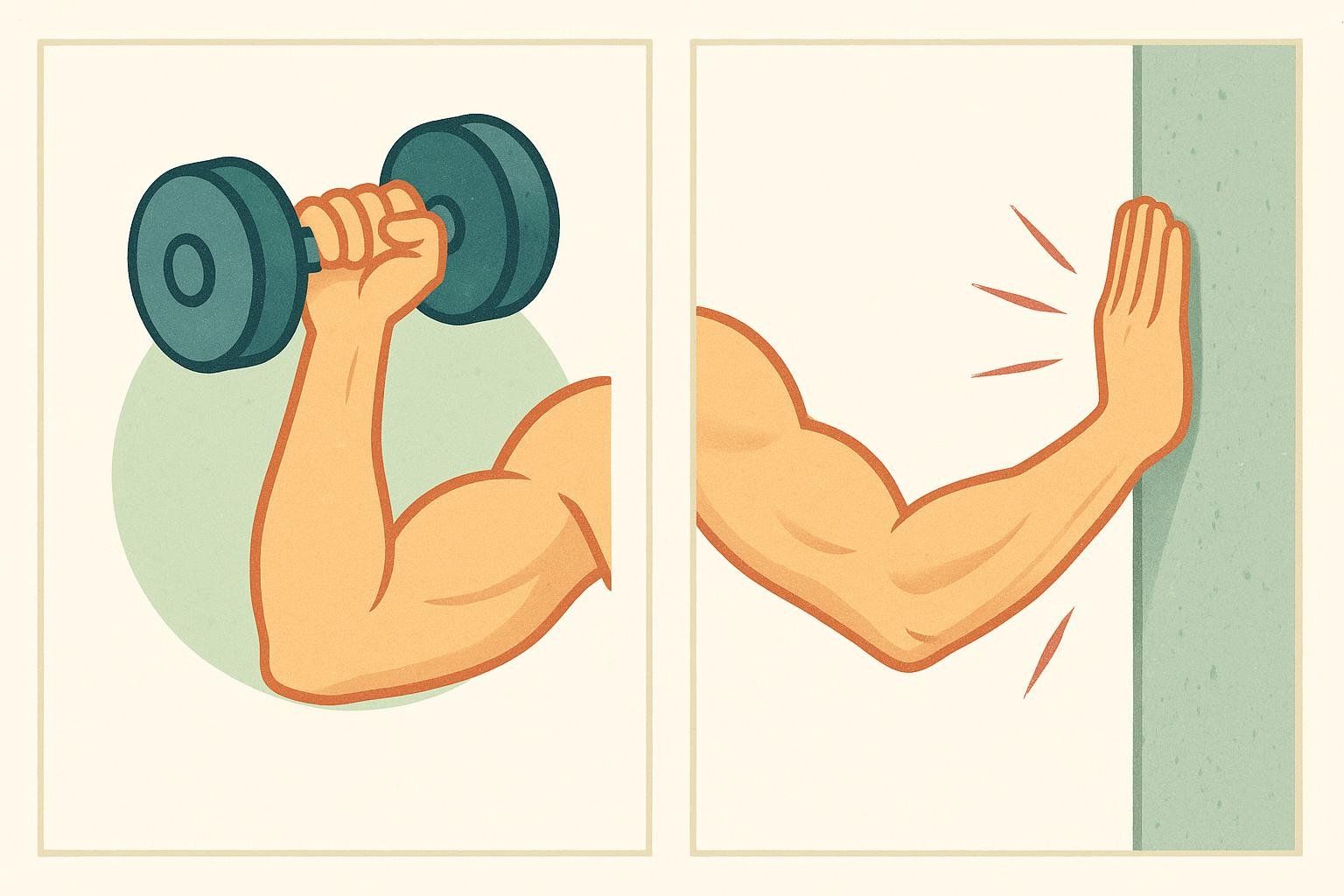
Isometric exercises involve contracting your muscles without any visible movement in the joint angle. Unlike lifting weights through a range of motion, you hold a static position under tension. Think of pressing your palms together hard or holding a plank—your muscles work hard even though you’re not moving.
This form of exercise can be done anywhere, with or without equipment, making it a practical choice. Have you ever tried pushing against a wall as hard as you can? That’s an isometric exercise in action.
Types Of Isometric Holds
Isometric holds come in several forms, each targeting your muscles differently. Here are the main types:
- Maximal Voluntary Contraction (MVC):Holding a position with maximum effort, like pushing against an immovable object.
- Submaximal Hold:Holding a moderate effort position for longer periods, such as holding a wall sit.
- Yielding Isometrics:Holding a position to resist a force that tries to move you, like holding a heavy box steady.
- Overcoming Isometrics:Pushing or pulling against an immovable object with maximal force.
Each type challenges your muscles in unique ways. Which one fits your current strength level and goals?
Muscle Activation During Isometrics
Muscle activation during isometric exercises happens as your muscle fibers contract without changing length. This sustained tension increases the connection between your brain and muscles, improving strength over time.
When you hold a plank, your core muscles fire continuously to keep your body stable. This constant engagement recruits different muscle fibers compared to dynamic exercises.
Isometrics can also help fix weak points in your range of motion by strengthening muscles exactly where you need it most. Have you noticed any specific positions where you feel weak or shaky? Targeting those with isometric holds might be a smart move.

Credit: www.youtube.com
Muscle Growth And Isometrics
Muscle growth through isometric exercises has sparked curiosity among fitness enthusiasts. Unlike traditional workouts that involve movement, isometrics require you to hold a position under tension. This unique approach challenges your muscles differently, prompting a closer look at how it influences hypertrophy and strength gains.
How Isometrics Stimulate Hypertrophy
Isometric exercises create muscle tension without changing the muscle length. This constant tension triggers muscle fibers to adapt and grow stronger. When you hold a plank or press against an immovable object, your muscles work hard to maintain that position, causing micro-tears that lead to muscle growth.
Interestingly, the intensity of the contraction matters more than movement speed. Holding a muscle contraction near its maximum effort for several seconds can signal your body to build muscle. This means you can effectively stimulate hypertrophy even without lifting heavy weights or performing dynamic reps.
Comparing Isometrics To Dynamic Training
Dynamic training involves moving weights through a range of motion, engaging muscles in lengthening and shortening cycles. Isometrics, by contrast, keep muscles static. While dynamic exercises improve muscle coordination and joint mobility, isometrics excel in building strength at specific joint angles.
Consider your own routine: you might notice that isometric holds improve your ability to stabilize during dynamic lifts. However, relying solely on isometrics may limit your muscle growth across the full range of motion. A mix of both methods often yields the best results for balanced muscle development.
Scientific Evidence On Isometric Gains
Studies show that isometric training can increase muscle size and strength, especially when performed at high intensities. Research highlights that muscles subjected to sustained contractions respond by growing stronger, similar to traditional weight training.
One study found that athletes who included isometric holds improved their peak force output significantly. However, muscle growth from isometrics may be more joint-angle specific compared to dynamic exercises. This suggests adding varied angles and movements can help you maximize overall muscle gains.
Have you tried incorporating isometric holds into your workouts? Notice how your muscles respond to the challenge of holding tension without movement. This simple change might be the key to breaking through your muscle growth plateau.
Effective Isometric Training Techniques
Isometric exercises can be powerful tools for muscle building when done with the right techniques. The key lies in how long you hold the position, the effort you put in, and how you challenge your muscles over time. Understanding these elements helps you maximize muscle growth and strength gains from isometric training.
Optimal Duration And Intensity
Holding an isometric contraction too briefly won’t stimulate much muscle growth. Aim to hold each position between 10 to 30 seconds, depending on your strength and fitness level. Focus on maintaining maximum tension during the hold rather than just staying in position.
Intensity matters as much as duration. You should push your muscles close to their limit without risking injury. This means tightening your muscles as hard as you can while holding the position steady.
Progressive Overload In Isometrics
How do you keep making gains with isometric training? Progressive overload is the answer. Gradually increase the hold time, the tension, or the number of sets to keep challenging your muscles.
For example, if you start by holding a plank for 20 seconds, try adding 5 seconds each week or increasing the effort by squeezing your core tighter. This slow increase forces your muscles to adapt and grow stronger.
Combining Isometrics With Other Workouts
Isometrics alone can build muscle, but combining them with dynamic exercises can boost results. Pair holds with movements like push-ups, squats, or lunges to engage muscles through different ranges of motion.
This blend improves muscle endurance and strength more effectively. Have you tried adding a wall sit right after a set of squats? The burn feels intense because you’re hitting your muscles from multiple angles.
Credit: www.bodyspec.com
Common Mistakes To Avoid
Isometric exercises can be powerful for building muscle, but only if you avoid common pitfalls that many people overlook. Mistakes during your routine can slow progress or even cause injury. Recognizing these errors early helps you stay on track and maximize your gains.
Overtraining Risks
Holding isometric contractions for too long or too often can lead to overtraining. Unlike dynamic exercises, isometrics keep muscles tense without rest, which can cause excessive fatigue. You might feel strong initially but end up with soreness or reduced muscle performance the next day.
Ask yourself: Are you giving your muscles enough recovery time? Scheduling rest days and limiting session length can prevent burnout and keep your muscles growing steadily.
Poor Form And Its Impact
Maintaining correct posture during isometric holds is crucial. Poor form can shift tension away from target muscles and place unnecessary stress on joints. For example, holding a plank with hips too low can strain your lower back instead of strengthening your core.
Pay close attention to alignment and muscle engagement. Using a mirror or video recording can help you spot and correct form issues before they become bad habits.
Neglecting Range Of Motion
Isometric training often focuses on holding a single position, but ignoring the full range of motion limits muscle development. Muscles grow best when challenged through varied angles and lengths. Sticking to one fixed joint angle means missing out on activating different muscle fibers.
Try combining isometric holds with dynamic movements or vary the hold positions. This approach keeps your muscles guessing and promotes balanced strength growth.
Sample Isometric Workouts For Muscle Growth
Isometric workouts help build muscle by holding positions under tension. These exercises increase strength and muscle size without movement. Below are sample routines targeting upper body, lower body, and core. Each routine uses simple holds to maximize muscle engagement.
Upper Body Isometric Routine
- Wall Push-Up Hold: Lean against a wall, lower halfway, hold for 30 seconds.
- Static Bicep Curl: Hold a light dumbbell halfway through a curl for 20 seconds.
- Shoulder Press Hold: Press weights overhead and hold for 15-20 seconds.
- Plank to Push-Up Hold: Hold the lowered push-up position for 20 seconds.
Lower Body Isometric Routine
- Wall Sit: Sit against a wall with knees at 90 degrees, hold 30-60 seconds.
- Glute Bridge Hold: Lift hips and hold at the top for 30 seconds.
- Static Lunge: Lower into a lunge and hold for 20-30 seconds each leg.
- Calf Raise Hold: Rise on toes and hold for 20 seconds.
Core Strengthening Isometrics
- Forearm Plank: Hold a straight line from head to heels for 30-60 seconds.
- Side Plank: Support body on one forearm, hold for 20-30 seconds per side.
- Hollow Body Hold: Lie on back, lift legs and shoulders off floor, hold 20 seconds.
- Boat Pose Hold: Sit with legs raised, hold for 30 seconds.
Tracking Progress And Adjustments
Tracking progress and making adjustments are key to building muscle with isometrics. Regular monitoring helps you see if your strength improves. It also shows when to change your routine. Without tracking, you might miss signs of plateau or overtraining.
Measuring Strength Gains
Track your strength by noting how long you hold each position. Record the time or effort level during each session. Use a journal or app to keep details. Compare your numbers week by week. Small improvements indicate muscle growth and better endurance.
Adjusting Intensity Over Time
Increase intensity gradually to keep challenging your muscles. You can hold the position longer or add resistance. Try pushing harder against the immovable object. Change angles to target muscles differently. Adjustments prevent stalls and encourage continuous progress.
Incorporating Rest And Recovery
Rest days are essential for muscle repair and growth. Avoid training the same muscle group every day. Aim for at least 48 hours of recovery between sessions. Use rest to reduce fatigue and prevent injury. Good recovery supports steady strength gains over time.

Credit: www.goldsgym.com
Frequently Asked Questions
Can Isometric Exercises Increase Muscle Size Effectively?
Yes, isometric exercises can build muscle size by creating tension without movement. They improve muscle endurance and strength but may need to be combined with dynamic exercises for maximum growth.
How Do Isometrics Compare To Traditional Weightlifting?
Isometrics focus on static holds, improving strength at specific angles. Weightlifting involves movement, targeting muscles through a full range. Both methods complement each other for balanced muscle development.
Are Isometric Workouts Suitable For Muscle Beginners?
Yes, isometric workouts are safe and effective for beginners. They help build initial strength and control without stressing joints or requiring equipment. Beginners should start with short holds and proper form.
Can Isometric Training Prevent Muscle Loss During Injury?
Isometric training is useful during injury recovery to maintain muscle strength. It minimizes joint movement, reducing pain while preserving muscle mass. Always consult a professional before starting post-injury exercises.
Conclusion
Isometric exercises can help build muscle with consistent effort. They improve strength by holding your muscles tight without moving. These exercises work well for beginners and those with limited equipment. Combining isometrics with other workouts boosts muscle growth faster. Remember, muscles grow by stress and recovery together.
Patience and regular practice bring the best results. Keep your body active and challenge your muscles often. Small steps lead to strong, lasting muscle gains.







