
Struggling with Hashimoto’s disease can often feel like a never-ending battle with fatigue, weight fluctuations, and brain fog. You might find yourself wondering if there’s a way to take control of your health and feel like yourself again.
Imagine following a diet plan that’s specifically tailored to help manage your symptoms, boost your energy levels, and support your thyroid health. Sounds promising, right? In this blog post, we’ll introduce you to a 7-day diet plan designed just for those dealing with Hashimoto’s disease.
This plan is packed with nutrient-rich foods that can help soothe your symptoms and improve your overall well-being. Ready to discover how small changes in your diet can lead to big improvements in your life? Let’s dive in!
Hashimoto’s Disease And Diet
Hashimoto’s disease affects the thyroid gland and slows down hormone production. Diet plays a key role in managing symptoms and supporting thyroid health. Certain foods can worsen inflammation or interfere with thyroid function. Choosing the right nutrients can help improve energy and overall well-being.
Impact Of Nutrition On Thyroid Health
Nutrition influences how well the thyroid works. Eating balanced meals supports hormone production. Poor diet may increase inflammation and fatigue. Nutrient deficiencies can worsen symptoms. Proper food choices reduce autoimmune reactions and promote healing.
Foods To Avoid
- Processed foods high in sugar and salt
- Gluten-containing grains like wheat, barley, and rye
- Soy products that interfere with hormone absorption
- Cruciferous vegetables in large amounts, such as broccoli and cabbage
- Excessive caffeine and alcohol
- Highly processed oils and fried foods
Beneficial Nutrients
- Selenium: supports thyroid hormone production
- Iodine: essential for hormone synthesis (in moderate amounts)
- Zinc: helps regulate immune function
- Vitamin D: reduces inflammation and boosts immunity
- Omega-3 fatty acids: promote healthy cell membranes
- Antioxidants from fruits and vegetables to protect thyroid tissue

Credit: www.amymyersmd.com
Daily Meal Structure
Creating a daily meal structure is essential for managing Hashimoto’s disease effectively. Your body needs consistent, balanced nutrition to support thyroid health and reduce inflammation. Planning your meals with the right foods can make a noticeable difference in your energy and overall well-being.
Breakfast Ideas
Start your day with meals rich in protein and healthy fats to keep your energy steady and avoid blood sugar spikes. Think about dishes like scrambled eggs with spinach or a smoothie with almond milk, chia seeds, and berries. Avoid gluten and highly processed grains early in the day, as they can trigger inflammation.
- Omelet with kale and avocado
- Greek yogurt with walnuts and cinnamon
- Gluten-free oatmeal topped with pumpkin seeds
Lunch Options
Lunch should be satisfying but not heavy, so you stay alert and productive. Include lean proteins like grilled chicken or salmon paired with leafy greens and colorful vegetables. Adding a small serving of quinoa or sweet potatoes can provide sustained energy without stressing your thyroid.
- Grilled chicken salad with mixed greens and olive oil dressing
- Baked salmon with steamed broccoli and roasted carrots
- Quinoa bowl with chickpeas, cucumber, and lemon-tahini sauce
Dinner Recipes
Focus on meals that help your body relax and repair overnight. Choose anti-inflammatory ingredients like turmeric, ginger, and cruciferous vegetables. Keep your dinner light but nutrient-dense, avoiding heavy starches or fried foods that may disrupt sleep.
- Stir-fried tofu with bok choy and garlic
- Roasted turkey breast with sautéed green beans and turmeric rice
- Lentil soup with carrots, celery, and herbs
Snack Suggestions
Snacks can keep your metabolism steady and prevent overeating during meals. Opt for nutrient-packed choices that support thyroid function and reduce inflammation. Nuts, seeds, and fresh fruit are excellent options that are easy to carry and prepare.
- Almonds or walnuts with a piece of fruit
- Carrot sticks with hummus
- Seaweed snacks or pumpkin seeds
How do you feel after your current meals? Adjusting the structure of your day’s eating could be the key to better managing your symptoms. What small changes can you try tomorrow?
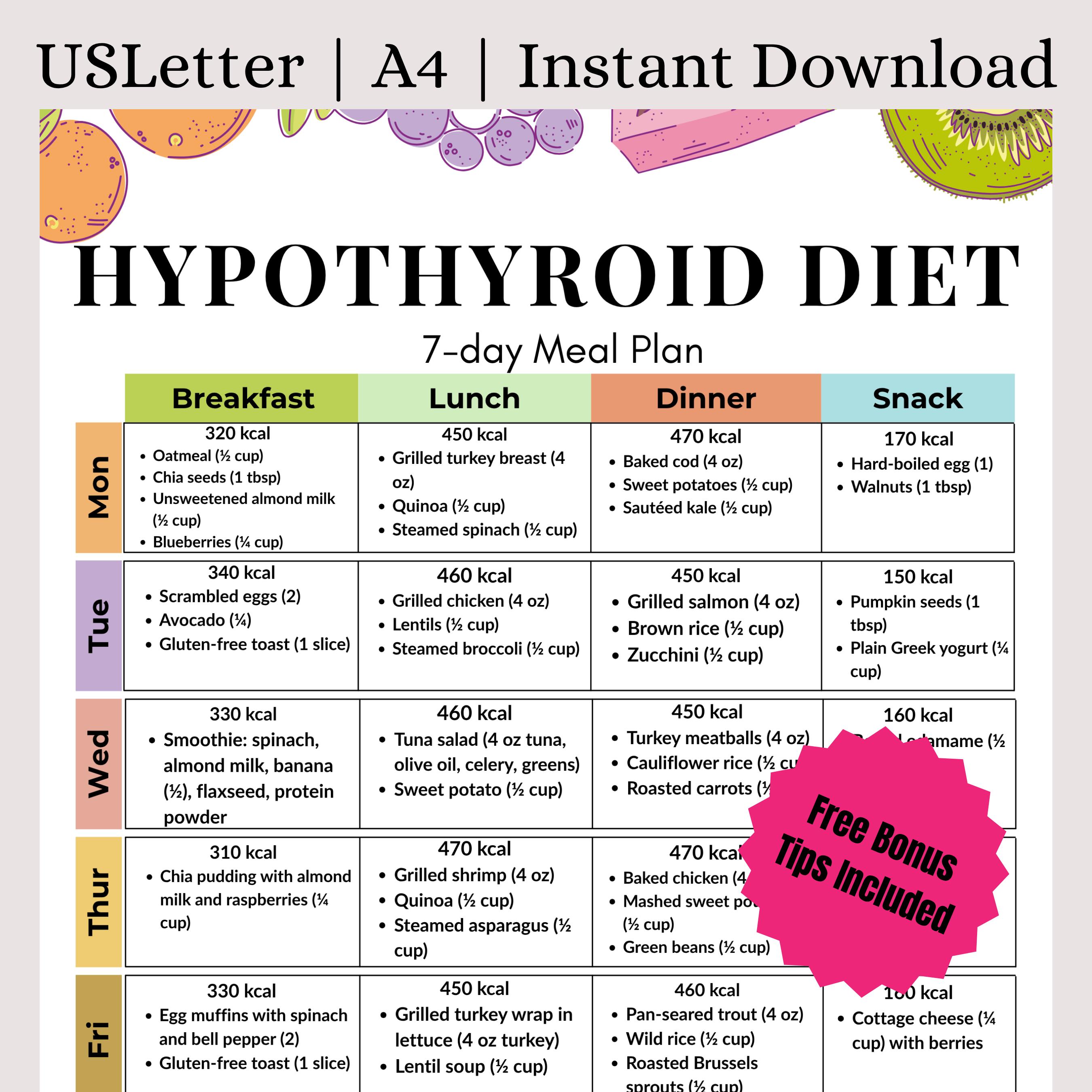
7-day Diet Plan Breakdown
Understanding what to eat each day can make managing Hashimoto’s disease feel less overwhelming. This 7-day diet plan breakdown gives you clear guidance on meals designed to support your thyroid health and reduce inflammation. Each day offers balanced options that focus on nutrient-rich foods without complicating your routine.
Day 1 Meal Plan
Start with a breakfast of scrambled eggs and sautéed spinach to boost your iodine and selenium intake. For lunch, enjoy grilled chicken with quinoa and steamed broccoli. Dinner can be a baked salmon fillet with roasted sweet potatoes and a side salad dressed in olive oil.
Day 2 Meal Plan
Begin your day with a smoothie made from coconut milk, blueberries, and chia seeds. Lunch on turkey lettuce wraps filled with avocado and cucumber slices. Dinner includes a vegetable stir-fry with tofu, using coconut aminos instead of soy sauce.
Day 3 Meal Plan
Breakfast consists of gluten-free oatmeal topped with walnuts and fresh strawberries. Have a mixed greens salad with chickpeas and pumpkin seeds for lunch. For dinner, try slow-cooked beef stew with carrots, celery, and herbs.
Day 4 Meal Plan
Enjoy a bowl of Greek yogurt with flaxseeds and sliced kiwi for breakfast. Lunch features a baked cod fillet served with asparagus and a small baked potato. Dinner is a warm lentil soup with garlic and turmeric for added anti-inflammatory benefits.
Day 5 Meal Plan
Kick off the day with a green smoothie made from kale, green apple, and ginger. Lunch on grilled shrimp skewers with a side of cauliflower rice. Dinner includes roasted chicken thighs with Brussels sprouts and a beetroot salad.
Day 6 Meal Plan
Have two poached eggs on gluten-free toast with a side of avocado for breakfast. Lunch is a quinoa bowl with roasted vegetables and tahini dressing. Dinner features a mushroom and spinach frittata paired with a fresh tomato salad.
Day 7 Meal Plan
Breakfast includes chia pudding made with almond milk and topped with raspberries. Enjoy a turkey and avocado salad with mixed greens for lunch. End the week with grilled lamb chops, sautéed green beans, and mashed carrots for dinner.
Supplements And Hydration
Proper supplements and hydration are essential for managing Hashimoto’s disease. They help support thyroid function and improve overall well-being. This section covers key supplements and hydration tips tailored for those with this condition.
Key Supplements To Support Thyroid
- Selenium:Important for thyroid hormone production and reducing inflammation.
- Vitamin D:Often low in Hashimoto’s patients; supports immune health.
- Zinc:Aids thyroid hormone metabolism and immune function.
- Iron:Necessary for thyroid hormone synthesis; check levels regularly.
- B Vitamins:Help with energy and reduce fatigue linked to thyroid issues.
- Omega-3 Fatty Acids:Reduce inflammation and support brain function.
Hydration Tips
Staying hydrated is vital for thyroid health and overall energy.
- Drink at least 8 glasses of water daily.
- Include herbal teas like ginger or chamomile for added benefits.
- Avoid sugary drinks that may cause inflammation.
- Limit caffeine to prevent dehydration.
- Listen to your body’s thirst signals.
Lifestyle Tips For Healing
Living with Hashimoto’s disease requires more than just a diet change. Healing involves a balanced lifestyle that supports your thyroid and overall health. Small daily habits can ease symptoms and improve energy. Focus on managing stress, staying active, and getting good sleep. These lifestyle tips help your body heal and feel better.
Stress Management
Stress affects the thyroid and immune system negatively. Find simple ways to relax daily. Deep breathing, meditation, or gentle yoga can calm your mind. Avoid stressful situations when possible. Taking breaks and setting clear boundaries helps reduce anxiety. A calm mind supports healing and reduces flare-ups.
Exercise Recommendations
Exercise boosts mood and supports thyroid health. Choose low-impact activities like walking, swimming, or stretching. Aim for 30 minutes most days, but listen to your body. Overdoing it may cause fatigue. Gentle movement improves circulation and energy without strain. Regular exercise helps maintain a healthy weight and reduces inflammation.
Sleep Hygiene
Good sleep is vital for healing and hormone balance. Create a restful bedtime routine. Keep your bedroom cool, dark, and quiet. Avoid screens and caffeine before bed. Try to go to bed and wake up at the same time daily. Quality sleep helps reduce fatigue and supports immune function.

Credit: www.restartmed.com
Common Challenges And Solutions
Following a 7-day diet plan for Hashimoto’s disease presents unique challenges. These challenges can affect your progress and well-being. Understanding common issues helps you find practical solutions. Staying aware of these obstacles makes the journey smoother and more effective.
Managing Food Sensitivities
Many with Hashimoto’s face food sensitivities. Common triggers include gluten, dairy, and soy. These foods can cause inflammation and worsen symptoms. Identifying and avoiding trigger foods is crucial. Keep a food diary to track reactions. Choose nutrient-rich, whole foods instead. Consult a dietitian to customize your plan safely.
Dealing With Fatigue
Fatigue is a major symptom of Hashimoto’s. It can reduce motivation to cook or eat well. Small, frequent meals help keep energy steady. Include protein and healthy fats to sustain energy. Prioritize rest and gentle exercise for better stamina. Stay hydrated to support overall health. Adjust your diet to fit your energy levels each day.
Maintaining Consistency
Sticking to a diet plan can be tough. Busy days and cravings test your commitment. Plan meals ahead to avoid last-minute choices. Use simple, quick recipes that fit your lifestyle. Set realistic goals to stay motivated. Celebrate small successes to keep positive. Remember, consistency over perfection leads to lasting benefits.
Credit: www.etsy.com
Frequently Asked Questions
What Foods Should I Avoid With Hashimoto’s Disease?
Avoid gluten, processed foods, and excessive soy. These can trigger inflammation and worsen symptoms. Focus on whole, nutrient-rich foods for better thyroid support.
Can A 7-day Diet Improve Hashimoto’s Symptoms?
Yes, a 7-day diet plan can reduce inflammation and support thyroid health. It helps stabilize energy and manage weight effectively when followed correctly.
Which Nutrients Are Essential For Hashimoto’s Patients?
Selenium, zinc, vitamin D, and omega-3 fatty acids are crucial. These nutrients help reduce inflammation and support thyroid function naturally.
How Does Gluten Affect Hashimoto’s Disease?
Gluten may increase autoimmune reactions and inflammation. Many with Hashimoto’s benefit from a gluten-free diet to reduce symptoms and improve thyroid health.
Conclusion
This 7-day diet plan supports thyroid health and overall well-being. Eating balanced meals helps manage Hashimoto’s symptoms daily. Small changes lead to steady progress and better energy. Focus on whole foods, lean proteins, and fresh vegetables. Avoid processed foods and sugar to reduce inflammation.
Stay consistent and listen to your body’s needs. Healthy habits create a strong foundation for your journey ahead.







