
Are you looking to sculpt your core and enhance your overall fitness? Crunch exercises might just be your perfect solution.
These simple yet highly effective movements target your abdominal muscles, helping you achieve that toned midsection you’ve always desired. But did you know there are various types of crunch exercises, each designed to focus on different muscle groups? By understanding and incorporating these variations into your routine, you can maximize your workout results and keep boredom at bay.
Keep reading to discover the diverse world of crunch exercises and find out which ones can take your fitness game to the next level.
Basic Crunch
The basic crunch is a classic abdominal exercise that targets your upper abs. It’s simple, requires no equipment, and can be done almost anywhere. Many people think crunches are easy, but doing them correctly is key to seeing results and avoiding injury.
Proper Form
Lie on your back with your knees bent and feet flat on the floor. Place your hands gently behind your head, keeping your elbows wide to avoid pulling your neck. Engage your core and lift your shoulders off the ground by curling your upper body towards your knees.
Focus on using your abdominal muscles to lift, not your neck or arms. Keep your lower back pressed into the floor throughout the movement. Pause briefly at the top, then slowly lower back down with control.
Common Mistakes
- Pulling on the neck:Using your hands to yank your head forward can strain your neck and reduce the effectiveness of the crunch.
- Lifting too high:Coming all the way up into a full sit-up shifts focus away from the abs and can stress your spine.
- Using momentum:Jerking your body up quickly wastes effort and increases injury risk. Slow and controlled movement works best.
- Not engaging the core:Letting your stomach relax means you’re not working the muscles you want to target.
Have you ever felt neck pain after doing crunches? That’s a sign to check your form. Try focusing on lifting with your abs and keeping your head supported without pulling. Small tweaks like these can make a big difference in results and comfort.

Credit: www.youtube.com
Bicycle Crunch
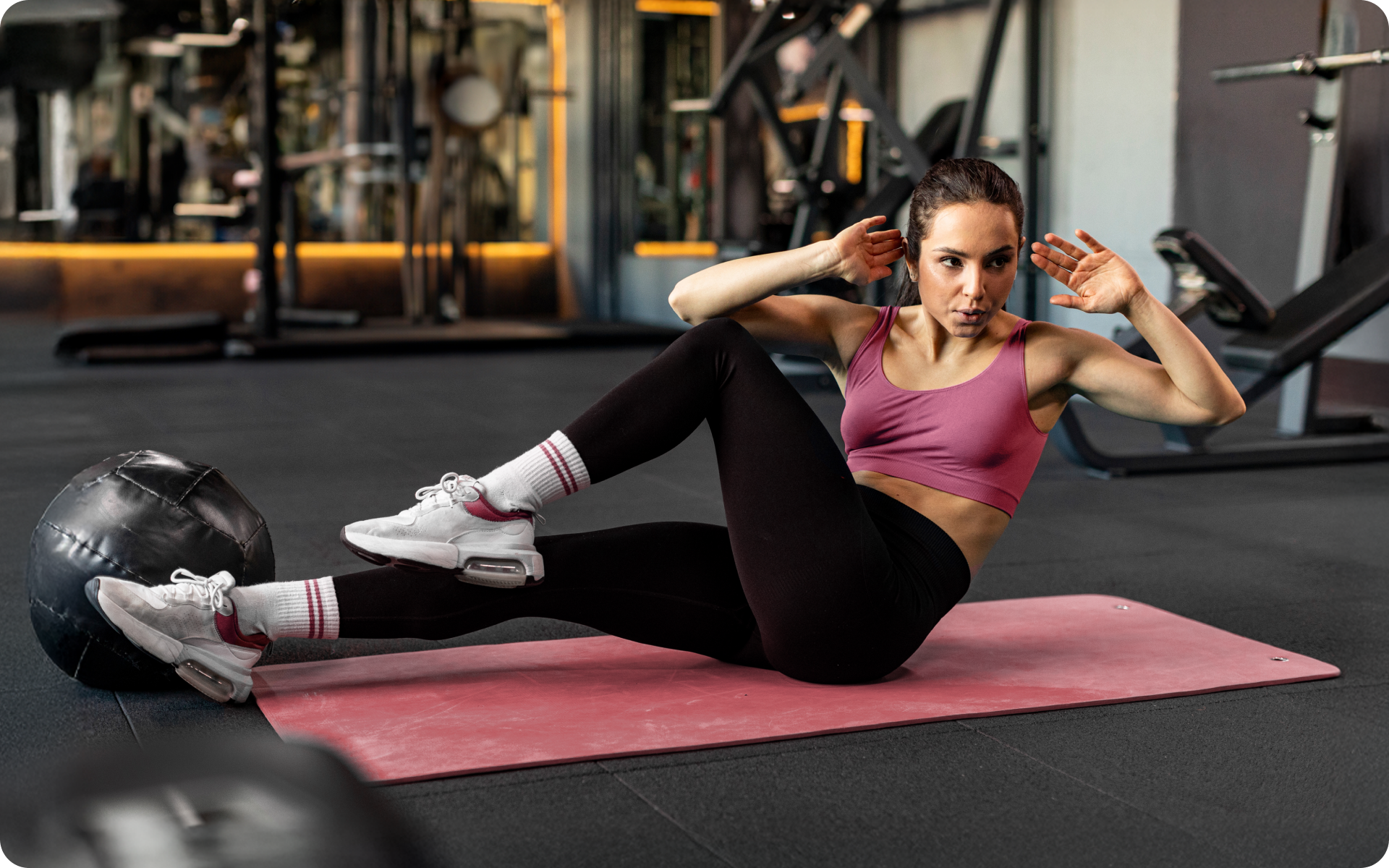
The bicycle crunch is an effective abdominal exercise that combines movement and strength. It targets multiple core muscles and improves stability. This exercise mimics a pedaling motion, engaging both the upper and lower abs. It also helps tone the obliques, which are the muscles on the sides of your waist. The bicycle crunch is a popular choice for those wanting to build a strong and defined core.
Muscles Targeted
- Rectus abdominis (front of the abdomen)
- Obliques (side abdominal muscles)
- Hip flexors (muscles near the hips)
- Transverse abdominis (deep core stabilizer)
Step-by-step Guide
- Lie flat on your back with your hands behind your head.
- Lift your shoulders off the floor, engaging your core.
- Bring your right elbow toward your left knee while extending your right leg.
- Switch sides by bringing your left elbow to your right knee.
- Continue alternating in a smooth, controlled pedaling motion.
- Keep your lower back pressed to the floor throughout the exercise.
- Perform 15-20 repetitions on each side for one set.
Reverse Crunch
The Reverse Crunch is a powerful variation of the traditional crunch that targets your lower abdominal muscles more effectively. Unlike the regular crunch where you lift your upper body, this exercise focuses on lifting your hips and legs towards your chest. It’s a smart move if you want to add variety to your core workout and challenge your abs in a new way.
Benefits
One of the biggest benefits of the Reverse Crunch is its ability to engage the lower abs, an area that can be tough to target with other exercises. It also puts less strain on your neck and back compared to regular crunches, making it a safer option for many people.
This exercise helps improve your core strength, which can enhance your posture and stability in daily activities. Plus, it aids in developing muscle control and coordination, which are essential for overall fitness.
How To Perform
- Lie flat on your back with your legs bent at a 90-degree angle and your arms resting by your sides.
- Keep your feet together and raise your legs, curling your hips off the floor towards your chest.
- Focus on using your lower abdominal muscles to lift your hips, rather than swinging your legs.
- Slowly lower your hips back down to the starting position without letting your feet touch the ground.
- Repeat for the desired number of reps, maintaining control throughout each movement.
Have you noticed how engaging your lower abs feels different from the usual crunch? That’s because this move activates muscles that often stay underworked. Try adding Reverse Crunches to your routine and see how your core responds to this fresh challenge.
Credit: betterme.world
Oblique Crunch
The oblique crunch is a powerful exercise that targets the muscles on the sides of your abdomen. Unlike the traditional crunch, which focuses on the front abs, the oblique crunch zeroes in on your side muscles, helping to shape and define your waistline. Adding this move to your routine can bring balance and strength to your core.
Targeting Side Abs
Oblique crunches work the external and internal oblique muscles. These muscles run along the sides of your torso and are key for twisting and bending movements.
When you perform an oblique crunch, you lift your torso while twisting it toward your knee. This twisting motion engages the side abs more intensely than regular crunches.
Pay attention to your form—slow and controlled movements maximize muscle engagement and reduce the risk of injury. Do you notice how your side abs feel more activated compared to a standard crunch?
Variations
There are several ways to change up the oblique crunch to keep your workouts fresh and challenging.
- Seated Oblique Crunch:Sit on a bench, lean back slightly, and twist your torso side to side.
- Weighted Oblique Crunch:Hold a dumbbell or medicine ball on your chest to add resistance.
- Bicycle Oblique Crunch:Lie down and alternate touching your elbow to the opposite knee while cycling your legs.
- Oblique Crunch on Stability Ball:Perform the crunch on a stability ball to engage more core stabilizer muscles.
Trying different variations can help you find which style works best for your body and keeps you motivated. Which variation have you found most effective for your side abs?
Stability Ball Crunch
The Stability Ball Crunch is a popular core exercise that adds balance and support. It helps engage more muscles than a regular crunch. Using the ball allows your body to move more naturally. This movement targets deep core muscles and improves posture.
Using Equipment
The stability ball is the main tool for this exercise. Choose a ball size that fits your height. Sit on the ball and walk your feet forward. Let your lower back rest on the ball. Keep your feet flat on the floor for balance. Place your hands behind your head or cross them on your chest. Avoid pulling your neck during the crunch.
Improving Core Strength
Performing crunches on the ball activates core muscles deeply. The unstable surface forces your body to stabilize itself. This builds strength in your abs and lower back. Strong core muscles help reduce back pain. They also improve balance and overall body control. Start with slow, controlled movements. Increase reps as your strength grows. Consistency is key for noticeable results.
Weighted Crunch
The weighted crunch is a popular variation of the basic crunch exercise. It involves holding extra weight while performing the crunch to increase the challenge. This exercise targets the abdominal muscles more intensely. Adding weight helps build strength and muscle definition faster. It suits those who want to advance beyond regular crunches.
Adding Resistance
Use a weight plate, dumbbell, or medicine ball for resistance. Hold the weight against your chest or behind your head. Start with a light weight to maintain good form. Slowly increase the weight as your strength improves. Keep your movements controlled and steady during each crunch. Avoid using momentum to lift your upper body.
Safety Tips
- Keep your lower back pressed to the floor to avoid injury.
- Do not pull on your neck or head when lifting up.
- Choose a weight that challenges you but allows proper form.
- Stop immediately if you feel any sharp pain or discomfort.
- Perform the exercise on a comfortable surface, such as a mat.
- Breathe out as you crunch up and breathe in as you lower down.
Cable Crunch
The cable crunch is a powerful exercise that targets your abdominal muscles with added resistance. Unlike traditional floor crunches, this move uses a cable machine, allowing you to adjust the weight for a more challenging workout. It’s a favorite for many who want to build strong, defined abs while maintaining control over the movement.
Gym Setup
To start, find a cable machine with a high pulley and attach a rope handle. Kneel down facing the machine, gripping the rope with both hands. Make sure the weight is set to a level that challenges you but still allows for proper form.
Position your hips so they stay still during the exercise. Your knees should be about hip-width apart, and your torso upright before you begin the crunch. Setting up correctly helps prevent strain and maximizes abdominal engagement.
Technique
Begin by crunching down, bringing your elbows toward your knees while keeping your hips stationary. Focus on contracting your abs rather than pulling with your arms. Control the motion on the way down and avoid jerking to reduce injury risk.
Exhale as you crunch down and inhale as you return to the starting position. Keep your neck neutral and avoid tucking your chin excessively. How does adjusting the weight affect your ability to maintain form during each rep?
Try to feel the tension in your abs throughout the movement, not just at the bottom. This exercise can transform your core strength if done consistently and with focus. Have you experimented with different cable attachments to vary the challenge?
Crunch Alternatives
If traditional crunches aren’t your favorite or you want to target your core differently, there are plenty of crunch alternatives that can be just as effective. These exercises engage your abdominal muscles from various angles, helping to build strength and stability without the repetitive motion of crunches. Trying different movements can also reduce boredom and lower the risk of strain on your neck and back.
Plank Variations
Planks are a powerful alternative that work your entire core, including your abs, back, and shoulders. Unlike crunches, planks focus on holding a position, which improves endurance and stability.
You can add variety with moves like side planks to target your obliques or plank with shoulder taps to challenge your balance. These variations keep your muscles guessing and can be easier on your neck.
Have you ever noticed how holding a plank makes your core feel tight and engaged differently than crunching up? It’s because planks activate deeper muscles that crunches often miss.
Leg Raises
Leg raises are another excellent way to work your lower abs without bending your neck or back. By lifting your legs while lying down, you create tension in your abdominal muscles from below.
You can try lying leg raises, hanging leg raises, or even supported leg raises with a bench. Each version challenges your core in a slightly different way, helping you develop balanced strength.
Think about how lifting your legs feels compared to curling your torso. Which movement feels more controlled and less stressful on your spine? This insight can guide you to safer core workouts.
Crunch Workout Tips
Crunch exercises target the abdominal muscles and help build core strength. To get the best results, follow some simple workout tips. These tips improve your form and avoid injury. They also help you stay consistent and motivated.
Frequency And Sets
Work your abs 3 to 4 times per week. Give your muscles a day to rest between workouts. Start with 2 to 3 sets per session. Each set should have 12 to 15 crunches. Focus on quality, not just quantity. Take short breaks of 30 to 60 seconds between sets. Gradually increase sets or reps as your strength grows.
Combining With Cardio
Crunches alone won’t burn belly fat. Add cardio exercises like walking, running, or cycling. Cardio helps reduce overall body fat. Aim for 20 to 30 minutes of cardio, 3 to 5 times weekly. This combination reveals toned abs faster. It also improves heart health and endurance. Balance strength training with cardio for best results.

Credit: health.yahoo.com
Frequently Asked Questions
What Are The Most Effective Types Of Crunch Exercises?
Effective crunch types include traditional, bicycle, reverse, and oblique crunches. Each targets different abdominal muscles. Mixing these improves core strength and definition. Choose variations based on fitness level and goals for best results.
How Do Crunch Variations Benefit Abdominal Muscles?
Crunch variations engage different parts of the abs. For example, bicycle crunches work the obliques, while reverse crunches target the lower abs. This diversity enhances muscle balance, strength, and overall core stability, reducing injury risk.
Can Crunch Exercises Improve Posture And Core Stability?
Yes, crunch exercises strengthen core muscles that support the spine. Improved core stability enhances posture and balance. Regularly doing crunches helps reduce back pain and supports everyday movements, promoting better overall body alignment.
How Often Should I Do Crunch Exercises Weekly?
Perform crunch exercises 2-3 times weekly with rest days in between. Overtraining can cause muscle strain. Consistency combined with proper form maximizes abdominal muscle growth and core strength safely.
Conclusion
Crunch exercises come in many types to fit your fitness goals. Each type targets different muscles in your belly and sides. Choose the one that feels right and safe for your body. Doing crunches regularly helps build strong abs and improves posture.
Remember to keep your movements slow and steady for best results. Mix crunches with other exercises for a balanced workout. Stay consistent, and you will see progress over time. Simple steps lead to better strength and health every day.







