
Are you struggling to figure out how many calories you need to build muscle effectively? You’re not alone.
Many people dive into strength training with enthusiasm but soon find themselves puzzled by the nutritional side of muscle growth. If you’ve ever wondered why your hard work in the gym isn’t translating to muscle gains, the answer might be hidden in your diet.
Understanding the right calorie intake is crucial. It’s not just about lifting weights; it’s about fueling your body with the right amount of energy. Are you ready to unlock the secret to muscle growth? Keep reading to discover how you can tailor your diet to support your muscle-building goals and finally see the results you’ve been working for.
Calories And Muscle Growth
Understanding how calories impact muscle growth is essential if you want to build muscle efficiently. Calories provide the energy your body needs to repair and build muscle tissue after workouts. Without the right calorie intake, your muscle gains can stall or even reverse.
Role Of Calories In Muscle Building
Calories act as the fuel for muscle growth. When you consume enough calories, your body has the energy to repair muscle fibers torn during exercise. This repair process leads to stronger and bigger muscles.
Think of calories as the building blocks of muscle. Without enough energy, your body struggles to maintain muscle mass, let alone grow it. This is why tracking your calorie intake is crucial during your muscle-building journey.
Caloric Surplus Vs Deficit
To build muscle, you generally need a caloric surplus—eating more calories than you burn. This surplus provides your body with extra energy to support muscle growth. However, eating too many calories can lead to unwanted fat gain.
On the other hand, a caloric deficit, where you eat fewer calories than you burn, makes muscle gain difficult. Your body lacks energy to build new muscle and may even break down existing muscle for fuel.
Finding the right balance is key. Aim for a moderate surplus of about 250-500 calories per day to gain muscle steadily without excessive fat gain.
How Calories Affect Muscle Recovery
Muscle recovery depends heavily on calorie intake. After workouts, your body needs calories to rebuild muscle fibers and restore energy stores.
Insufficient calories can prolong recovery time and increase fatigue. This means you might feel sore longer and struggle with your next workout.
Pay attention to the quality of calories too—protein, carbs, and fats all play roles in recovery. Protein repairs muscle, carbs replenish glycogen, and fats support hormone production.
Credit: homegymsupply.co.uk
Calculating Calorie Needs
Calculating your calorie needs is a crucial step if you want to build muscle effectively. Knowing exactly how many calories your body requires helps you fuel your workouts and recovery properly. It also prevents you from eating too little or too much, which can stall your progress.
Basal Metabolic Rate (bmr)
Your Basal Metabolic Rate (BMR) is the number of calories your body burns at rest just to keep you alive. This includes functions like breathing, circulating blood, and maintaining body temperature. Understanding your BMR gives you a baseline for your daily calorie needs before adding activity.
You can calculate your BMR using formulas like the Harris-Benedict equation, which factors in your age, gender, weight, and height. For example, a 30-year-old male weighing 180 pounds at 5’10” has a BMR of around 1,800 calories. This means even without moving, his body uses 1,800 calories daily.
Activity Level Impact
Activity level dramatically changes how many calories you need. Sitting at a desk all day burns far fewer calories than someone working out or doing physical labor. You need to multiply your BMR by an activity factor to find your total daily energy expenditure (TDEE).
- Sedentary (little or no exercise): BMR × 1.2
- Lightly active (light exercise 1-3 days/week): BMR × 1.375
- Moderately active (moderate exercise 3-5 days/week): BMR × 1.55
- Very active (hard exercise 6-7 days/week): BMR × 1.725
- Extra active (very hard exercise & physical job): BMR × 1.9
If you train seriously 4-5 times a week, use the moderately active or very active multiplier. This gives you a more accurate calorie target that supports your activity level without underestimating your needs.
Adjusting For Muscle Gain
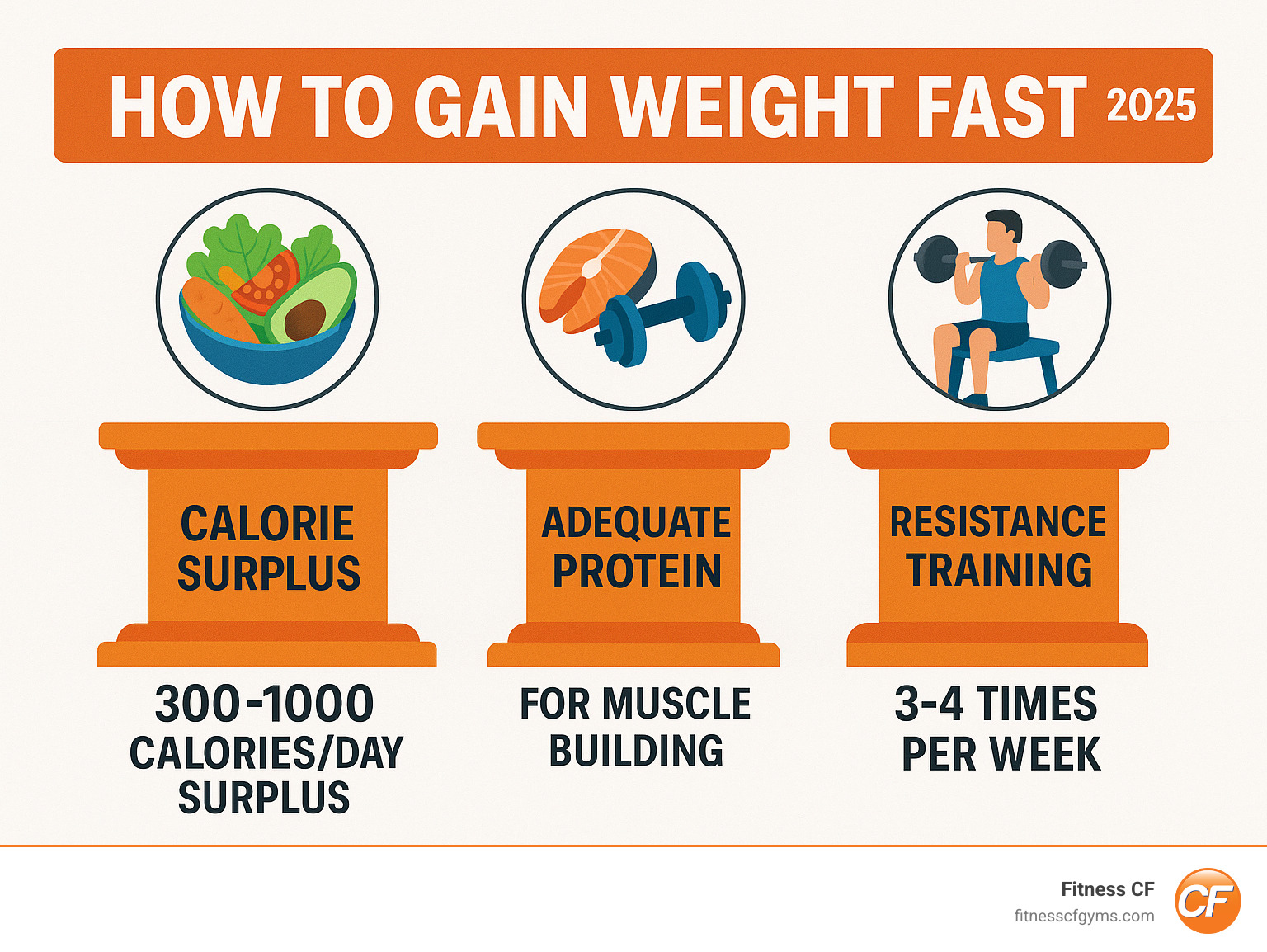
To build muscle, you need a calorie surplus—eating more calories than your body burns. But how much more? A good rule of thumb is to add 250 to 500 extra calories per day to your TDEE. This provides enough fuel for muscle growth without adding excessive fat.
Start with a smaller surplus and track your progress weekly. If you’re not gaining muscle or weight after two weeks, increase calories slightly. Remember, muscle gain is a slow process, and patience with your calorie intake pays off.
Have you tried adjusting calories based on your activity and BMR before? What changes did you notice in your muscle growth or energy levels?
Optimal Calorie Intake For Rapid Gains
Finding the right calorie intake for muscle growth is more than just eating more food. The goal is to provide your body with enough energy to build muscle quickly without piling on unwanted fat. Understanding how many extra calories to eat and how to balance your diet can make a big difference in your progress.
Determining Surplus Size
Eating in a calorie surplus is essential to muscle gain, but how much extra should you eat? A good starting point is adding around 250 to 500 calories per day above your maintenance level. This range supports muscle growth while keeping fat gain under control.
Think about your experience—did eating too much ever make you feel sluggish or just add fat? Adjust your surplus based on how your body reacts, not just fixed numbers. Smaller surpluses are safer if you want to gain lean muscle steadily.
Balancing Macronutrients
Calories alone don’t build muscle; what you eat matters too. Protein is king for muscle repair and growth, so aim for about 1.6 to 2.2 grams per kilogram of your body weight daily. Carbs provide the energy needed for intense workouts, while fats support hormone production.
Try breaking down your calories roughly like this:
- Protein:25-30%
- Carbohydrates:40-50%
- Fats:20-30%
This balance helps you fuel workouts, recover well, and keep your hormones working optimally for muscle growth.
Avoiding Excess Fat Gain
How do you keep fat gain minimal while eating more? Monitor your progress weekly by tracking weight and body measurements. If you notice rapid weight gain without strength improvements, your surplus might be too high.
Be mindful of food quality—choose whole, nutrient-dense foods over empty calories. This not only supports muscle growth but also keeps your body healthy and reduces fat storage.
Ask yourself: Are you gaining strength and muscle, or just adding pounds on the scale? Adjusting your calorie intake based on these signs helps you stay on track for lean muscle gains.

Credit: www.youtube.com
Tracking Progress And Adjustments
Tracking your progress and making the right adjustments is key to building muscle efficiently. Eating the right number of calories is not a set-it-and-forget-it deal. Your body changes as you gain muscle and lose fat, so your calorie needs shift too.
Monitoring Body Composition
Keep an eye on your body composition instead of just the scale. Muscle gain and fat loss can happen simultaneously, which might not always show as weight change. Use tools like skinfold calipers, bioelectrical impedance scales, or even progress photos to see the real changes.
Ask yourself: Are your clothes fitting differently? Is your strength improving? These clues help you understand if your current calorie intake supports muscle growth.
Adjusting Calories Over Time
Your calorie needs will evolve as you gain muscle or change your activity level. If your weight stalls for more than two weeks and you’re not gaining muscle, it might be time to add calories. Increase by 100-200 calories daily and track the changes.
On the flip side, if you’re gaining fat too quickly, try cutting back slightly. Small tweaks make a big difference over time. Regularly revisiting your calorie goals keeps your progress on track.
Signs Of Overeating Or Undereating
Watch for clear signals from your body. Feeling constantly bloated or gaining mostly fat? You’re likely eating too much. On the other hand, low energy, stalled lifts, or feeling cold could mean you’re not eating enough.
Notice how your recovery feels after workouts. Poor recovery often hints at insufficient calories or nutrients. Listening closely to your body helps you avoid setbacks and keeps muscle-building sustainable.
Calorie Timing And Meal Frequency
Calorie timing and meal frequency play a crucial role in how effectively your body builds muscle. It’s not just about how many calories you eat but when you eat them. Properly spacing your meals and timing your calorie intake around your workouts can help maximize muscle growth and recovery.
Pre- And Post-workout Nutrition
Eating the right foods before and after your workout fuels your muscles and speeds up recovery. Before training, focus on carbs and protein to give you energy and start muscle repair. For example, a banana with a scoop of whey protein or a chicken sandwich can work well.
After your workout, your muscles need nutrients to recover and grow. Aim to eat a mix of protein and carbs within 30 to 60 minutes post-exercise. A smoothie with protein powder and fruit or grilled chicken with rice helps replenish glycogen and repair muscle fibers.
Meal Timing Strategies
How often you eat can impact your muscle gains. Spreading your calorie intake over 4 to 6 meals a day helps maintain a steady flow of nutrients to your muscles. This steady supply supports growth and keeps your metabolism active.
Try to avoid eating too much in one sitting or going long periods without food. Consistent meal timing can also reduce muscle breakdown and improve workout performance. How do you currently space out your meals? Could adjusting the timing give you better results?
Snacking For Muscle Growth
Snacks can be powerful tools in your muscle-building plan. Choose snacks rich in protein and healthy fats to keep your muscles fueled between meals. Examples include Greek yogurt with nuts, cottage cheese with fruit, or a handful of almonds with a boiled egg.
Don’t overlook the impact of smart snacking on your overall calorie intake. Snacks can help you reach your daily calorie goal without feeling overly full at main meals. What’s your go-to snack for muscle support during a busy day?
Supplements And Calorie Intake
Supplements can play a key role in helping you reach your calorie goals for muscle building. They make it easier to add extra calories without feeling overly full. But knowing which supplements to choose and when to use them can make a big difference in your progress.
Protein Supplements
Protein powders are a popular choice because they help you meet your daily protein needs quickly. Whey, casein, and plant-based proteins each have unique benefits depending on your digestion and timing preferences.
If you struggle to eat enough protein through whole foods, a protein shake after workouts can boost muscle repair. Have you ever noticed how a quick shake keeps you fueled without slowing you down?
Calorie-dense Options
Some supplements focus on adding calories, not just protein. Mass gainers often contain carbs and fats alongside protein to help you hit higher calorie targets.
These can be useful if you find it hard to eat large meals or need extra energy for intense training days. Keep an eye on the ingredients to avoid excessive sugars that don’t support muscle growth.
When To Use Supplements
Supplements work best when they fill gaps in your diet, not replace whole foods. Think about your daily routine—are there moments when eating a full meal is tough?
Using supplements strategically during these times can keep your calorie intake consistent. Have you tracked your calories enough to know where you might need that extra boost?
Common Mistakes To Avoid
Building muscle requires more than just eating a certain number of calories. Many people make mistakes that slow their progress or stop it completely. Avoiding these common errors helps keep muscle growth on track.
Ignoring Quality Of Calories
Not all calories are equal. Eating junk food or empty calories can harm muscle growth. Nutrient-rich foods support recovery and energy. Focus on proteins, healthy fats, and complex carbs. These foods help repair muscles and build strength.
Relying Solely On Calorie Counting
Counting calories is useful but not enough alone. Quality and timing of meals matter too. Eating at the right times fuels workouts and recovery. Ignoring meal balance can lead to poor results. Combine calorie tracking with good food choices.
Neglecting Consistency
Muscle building needs regular effort over time. Skipping workouts or meals slows progress. Consistency creates steady muscle gain and strength. Make a plan and stick to it every day. Small, steady steps add up to big changes.
Credit: fitnesscfgyms.com
Frequently Asked Questions
How Many Calories To Build Muscle Daily?
To build muscle, consume 250-500 calories above your maintenance level daily. This surplus supports muscle growth while minimizing fat gain.
What Is The Calorie Surplus For Muscle Gain?
A calorie surplus of 10-20% above maintenance is ideal. It provides enough energy for muscle repair and growth without excess fat.
How To Calculate Calories For Muscle Building?
Calculate your maintenance calories first, then add 250-500 calories. Use apps or formulas like Mifflin-St Jeor for accuracy.
Does Protein Affect Calorie Needs For Muscle Gain?
Yes, protein intake influences calorie needs. Aim for 1. 6-2. 2 grams of protein per kilogram to optimize muscle growth.
Conclusion
Building muscle needs a calorie surplus to fuel growth. Track your daily calories carefully and adjust as needed. Protein and strength training remain key to muscle gain. Eat balanced meals with carbs, fats, and protein. Rest and recovery help muscles repair and grow stronger.
Stay consistent with your diet and workouts every week. Muscle building takes time, patience, and steady effort. Keep your goals clear and calories in check. Progress will follow with smart eating and training habits.







