
Are you ready to transform your fitness routine and unleash your inner warrior? The Tim Kennedy MMA workout promises to do just that.
This isn’t just another fitness fad; it’s a powerhouse regimen designed by a seasoned professional who knows what it takes to excel in the ring and beyond. As you dive into the world of mixed martial arts, you’ll discover a workout that challenges your limits, boosts your confidence, and delivers results.
Imagine feeling stronger, more agile, and ready to tackle any challenge that comes your way. Stick with us, and you’ll uncover the secrets behind Tim Kennedy’s workout success, and how you can make it work for you.

Credit: www.mmamania.com
Tim Kennedy’s Training Philosophy
Tim Kennedy’s training philosophy centers on a blend of practical strength, endurance, and mental resilience. He believes that a fighter’s success in MMA is not just about physical power but also about how well they can push through limits. His approach challenges you to rethink how you prepare both body and mind for competition.
Balancing Strength And Endurance
Kennedy doesn’t just lift heavy weights or run long miles; he combines both to build functional fitness. This means your workouts should include explosive strength exercises alongside cardio that mimics fight conditions.
For example, Kennedy might pair heavy deadlifts with high-intensity interval training (HIIT). This trains your muscles to generate power while your heart and lungs recover quickly. Have you tried mixing strength circuits with sprint intervals to see how your stamina improves?
This balance prevents burnout and overtraining. Instead, it prepares you for real fight scenarios where you need strength and stamina simultaneously.
Mental Toughness In Workouts
Tim Kennedy stresses that mental toughness is as important as physical ability. He trains his mind to remain calm under pressure and to push through pain and fatigue.
During his workouts, he deliberately adds challenges like extra reps or reduced rest time to test his limits. This forces you to develop grit and focus, crucial traits for MMA success.
Ask yourself: How do you react when your body wants to quit? Can you push beyond that point? Kennedy’s approach teaches you to find strength in discomfort and keep moving forward.
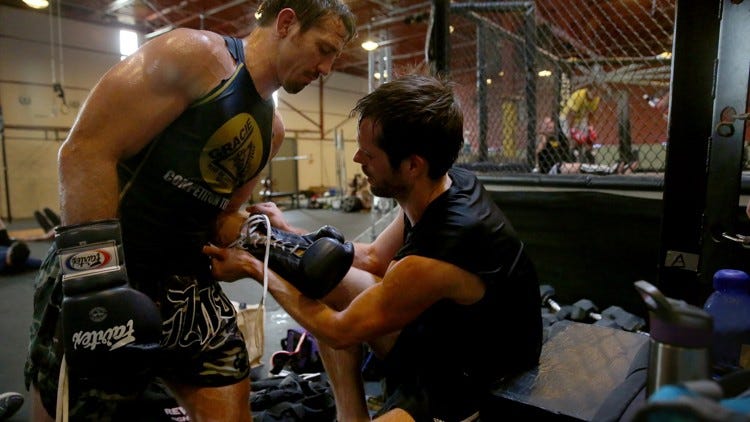
Credit: www.statesman.com
Core Components Of The Workout
Understanding the core components of Tim Kennedy’s MMA workout can transform how you train. Each part is designed to push your limits and build a fighter’s body. Focusing on these essentials will help you gain strength, endurance, and agility, all critical for success in MMA.
Conditioning Drills
Conditioning drills in Tim Kennedy’s workout are intense and varied to simulate real fight scenarios. You won’t just run laps; you’ll engage in sprints, shuttle runs, and battle rope exercises that spike your heart rate quickly.
These drills improve your stamina and recovery speed, so you can go hard for all rounds. Ask yourself: How long can you maintain peak effort before needing a break?
Strength Training Techniques
Strength training here is not about lifting the heaviest weights but about building functional power. Tim often uses compound lifts like deadlifts, squats, and bench presses combined with explosive movements such as kettlebell swings.
This approach helps your muscles fire faster and harder during fights. You’ll notice better control and knock-out power by focusing on these proven lifts rather than random gym routines.
Functional Movements
Functional movements mimic the actions you perform inside the cage. Tim Kennedy emphasizes exercises like Turkish get-ups, sandbag carries, and medicine ball slams to boost coordination and balance.
These movements engage multiple muscle groups and improve your ability to move efficiently under pressure. Think about how your body moves in a fight—are your workouts preparing you for those exact motions?
Daily Workout Structure
Tim Kennedy’s MMA workout follows a clear daily structure. It balances intensity with recovery. Each day includes warm-up, main training, and cool-down. This approach helps build strength, skill, and endurance steadily. Consistency plays a key role in his success. Understanding this structure can help athletes train smarter and avoid injury.
Warm-up Routines
Warm-ups prepare the body and mind for training. Tim starts with light cardio like jogging or jump rope. This raises heart rate and warms muscles. Next, he adds dynamic stretches to improve mobility. Movements mimic those used in MMA, such as leg swings and arm circles. These steps reduce injury risk and boost performance.
Main Training Sessions
The core of Tim’s workout focuses on skill and conditioning. He mixes striking drills, wrestling techniques, and grappling practice. Training includes pad work, sparring, and drilling moves repeatedly. Strength and endurance exercises like weightlifting and sprints are part of the routine. Each session targets different muscle groups and energy systems. This variety builds overall fighting ability.
Cool-down Practices
After training, cool-downs help the body recover. Tim uses light jogging or walking to lower heart rate. Stretching follows to improve flexibility and reduce soreness. Foam rolling targets tight muscles and helps release tension. These practices speed up recovery and prepare for the next workout day.
Nutrition For Fighter Fitness
Nutrition plays a crucial role in fighter fitness, especially for someone training like Tim Kennedy. Your body needs the right fuel at the right time to perform at its best. Without careful attention to what and when you eat, even the most intense workouts can fall short.
Meal Timing And Composition
Timing your meals around training sessions can make a big difference in your energy and recovery. Eating a balanced meal 2-3 hours before training helps sustain your stamina and focus. Include a mix of complex carbs, lean protein, and healthy fats to keep your energy levels steady.
After training, your body craves nutrients to repair muscles and replenish glycogen. Aim to eat a protein-rich meal within 30-60 minutes post-workout. Adding some carbs here speeds up recovery and prepares you for the next session.
- Pre-workout: brown rice, grilled chicken, and steamed vegetables
- Post-workout: protein shake with banana or a turkey sandwich on whole grain bread
Have you noticed how skipping or delaying meals affects your training intensity? Pay attention to those signals and adjust your meal timing to keep your energy consistent.
Supplements And Hydration
Supplements can support your nutrition but shouldn’t replace whole foods. Tim Kennedy uses whey protein for muscle repair and branched-chain amino acids (BCAAs) to reduce fatigue during workouts. Creatine is another popular choice for boosting strength and power.
Hydration is often overlooked but is just as important. Dehydration can sap your energy and slow down recovery. Drink water consistently throughout the day and consider electrolyte drinks during intense sessions to stay balanced.
| Supplement | Benefit | When to Take |
|---|---|---|
| Whey Protein | Muscle repair and growth | Post-workout |
| BCAAs | Reduce muscle fatigue | During or before workout |
| Creatine | Increase strength and power | Daily, any time |
What’s your hydration strategy during tough training days? Experiment and find what keeps you sharp and energized.
Recovery Strategies
Recovery strategies are a crucial part of Tim Kennedy’s MMA workout routine. They help your body repair, reduce fatigue, and prepare you for the next intense session. Ignoring recovery can lead to burnout and injury, which no fighter wants.
Rest And Sleep Importance
Rest and quality sleep are non-negotiable for muscle repair and mental sharpness. Tim Kennedy often emphasizes that no amount of training can replace a solid 7-9 hours of sleep. Your body releases growth hormones during deep sleep, which rebuilds damaged tissues and improves strength.
Think about the last time you felt exhausted but pushed through training. Did your performance suffer? That’s your body signaling it needs more rest. Prioritize consistent sleep schedules and create a calm environment—turn off screens early and keep your room cool and dark.
Active Recovery Methods
Active recovery isn’t about complete rest; it’s about moving gently to boost blood flow and speed up healing. Tim Kennedy uses light activities like swimming, walking, or yoga on his off days. These low-impact exercises help flush out toxins and reduce muscle stiffness without adding stress.
Stretching and foam rolling are other practical tools you can use. They relieve tight muscles and improve flexibility, which lowers injury risk. Have you tried adding a short walk or easy bike ride after a tough workout? It might surprise you how much it helps your next session feel better.

Credit: www.mmafighting.com
Adapting Workouts For Different Levels
Tim Kennedy’s MMA workout is intense but can be adjusted for all fitness levels. Adapting exercises helps prevent injury and builds strength safely. Tailoring the workout keeps motivation high and progress steady. Beginners can start slow and learn proper form. Advanced athletes can increase intensity and complexity. This approach fits everyone’s needs and goals.
Beginner Modifications
Start with lower weights or bodyweight exercises. Focus on mastering basic movements like squats and push-ups. Use slower, controlled motions to improve balance and coordination. Reduce the number of reps and sets to avoid fatigue. Rest longer between exercises for full recovery. Incorporate simple cardio like walking or light jogging. Prioritize form over speed to build a strong foundation.
Advanced Progressions
Increase weights and add resistance bands for extra challenge. Combine movements into complex sequences to improve agility. Use explosive exercises like plyometrics for power development. Shorten rest periods to boost endurance and stamina. Include sparring drills to simulate real fight conditions. Track progress with higher reps and heavier loads. Push limits gradually to prevent overtraining and injuries.
Incorporating Tim Kennedy’s Techniques At Home
Training like Tim Kennedy at home doesn’t mean you need a full gym setup or hours to spare. His methods focus on efficiency and adaptability, which means you can build strength, endurance, and technique right in your living room. Think about how you can push your limits with what you have and still get results that matter.
Minimal Equipment Options
You don’t need fancy gear to practice Tim Kennedy’s MMA workout style. A pair of dumbbells, resistance bands, or even a heavy backpack can stand in for gym machines.
- Use resistance bands for shadowboxing to add intensity.
- Fill a backpack with books for weighted squats and lunges.
- Bodyweight exercises like push-ups, burpees, and planks target multiple muscle groups effectively.
I once swapped dumbbells for water bottles and still felt the burn. The key is to focus on movement quality and control, not just the weight.
Time-efficient Workouts
Tim Kennedy’s approach values quality over quantity. You can get a full-body workout in 20 to 30 minutes if you keep your rest times short and focus on compound movements.
- Try circuits combining punches, squats, and core exercises to keep your heart rate up.
- Interval training with intense effort bursts followed by short rests mirrors fight conditioning.
- Set a timer for rounds—like three minutes of work, one minute rest—to mimic real fight pacing.
Ask yourself: Can you maintain intensity for shorter sessions rather than dragging through long workouts? That’s where real progress happens.
Frequently Asked Questions
What Does Tim Kennedy’s Mma Workout Include?
Tim Kennedy’s MMA workout blends strength training, cardio, and technical drills. It focuses on conditioning, power, and fight skills for peak performance.
How Often Does Tim Kennedy Train For Mma?
Tim Kennedy trains six days a week, balancing intense workouts with rest. This routine maximizes skill development and physical conditioning.
What Are Key Benefits Of Tim Kennedy’s Mma Workout?
His workout improves endurance, strength, agility, and fight technique. It builds mental toughness and prepares fighters for real competition scenarios.
Can Beginners Follow Tim Kennedy’s Mma Workout?
Beginners can adapt his MMA workout by reducing intensity. It’s essential to focus on form and gradually increase workout difficulty.
Conclusion
Tim Kennedy’s MMA workout shows how strength and skill work together. Train hard, focus on technique, and stay consistent. This workout builds endurance, power, and speed for fighters. Anyone can follow the plan with dedication and patience. Small steps lead to big improvements over time.
Try the exercises and feel your body grow stronger. Keep pushing, stay safe, and enjoy the process. Your effort matters most in any training journey.







