
Are you ready to transform your fitness game with a pull workout routine that packs a punch? Imagine unlocking the power to sculpt your back, biceps, and shoulders while boosting your overall strength.
Sounds exciting, right? A well-structured pull workout can be your secret weapon to achieving a balanced and toned upper body. As you dive into this article, you’ll discover easy-to-follow exercises and insider tips that will help you maximize your workout results.
Whether you’re a seasoned gym-goer or just starting out, this guide is designed with you in mind, ensuring you walk away with actionable insights. Ready to unleash your full potential? Let’s get started!
Benefits Of Pull Workouts
Pull workouts offer more than just a way to lift weights—they shape how your body moves and feels every day. They focus on specific muscle groups and movements, giving you a balanced and strong upper body. Have you ever noticed how a few pull exercises can change your posture and boost your daily strength? That’s the power of pull workouts.
Muscle Groups Targeted
Pull workouts mainly target the muscles involved in pulling motions. These include your back muscles like the latissimus dorsi, trapezius, and rhomboids. Your biceps and forearms also get a solid workout.
By focusing on these areas, you build a strong and defined upper body. This helps with activities like lifting, carrying, and even pulling open heavy doors. Are you training the right muscles that support your daily movements?
Strength And Muscle Growth
Pull workouts stimulate muscle growth by challenging your muscles to work against resistance. This stress encourages your muscles to repair and grow stronger over time. Regular pull exercises can help you increase your overall upper body strength.
Stronger muscles improve your ability to perform other exercises and everyday tasks. You might notice lifting groceries or climbing stairs gets easier. What strength gains could you unlock by adding pull workouts to your routine?
Improved Posture And Functionality
Many people struggle with poor posture caused by weak back muscles and tight chest muscles. Pull workouts strengthen the muscles that pull your shoulders back and keep your spine aligned. This can reduce slouching and back pain.
Better posture also improves your breathing and movement efficiency. When your body functions well, you feel more confident and comfortable. How would improved posture change your daily comfort and confidence?

Credit: www.majorfitness.com
Key Pull Exercises
Key pull exercises form the backbone of any effective pull workout routine. They target your back, biceps, and rear shoulders, helping you build strength and improve posture. Choosing the right exercises and performing them with good form can make a huge difference in your progress.
Pull-ups And Chin-ups
Pull-ups and chin-ups are classic bodyweight moves that challenge your upper body strength. Pull-ups focus more on your back and shoulders, while chin-ups put extra emphasis on your biceps.
If you’ve ever struggled to do your first pull-up, you’re not alone. I once thought I’d never manage one, but by using assisted variations and consistent practice, I finally nailed it. How could adding just this one exercise change your entire upper body strength?
Barbell And Dumbbell Rows
Rows are essential for building thickness in your back muscles. Barbell rows allow you to lift heavy and engage multiple muscles at once. Dumbbell rows, on the other hand, help fix imbalances by working each side individually.
Try to keep your back flat and core tight during these exercises to avoid injury. Have you noticed one side being weaker? Dumbbell rows might be your secret weapon.
Face Pulls And Rear Delt Raises
These exercises target the often neglected rear deltoids and upper traps. Face pulls, performed with a cable or resistance band, improve shoulder health and posture. Rear delt raises isolate the back of your shoulders, helping to balance your physique.
Adding these movements can reduce shoulder pain and enhance your pulling power. When was the last time you trained your rear delts?
Lat Pulldowns And Cable Rows
Lat pulldowns mimic pull-ups but allow you to adjust the weight, making them great for beginners or those focusing on form. Cable rows keep constant tension on your muscles, promoting better muscle engagement.
Both exercises complement free-weight moves by offering controlled motion. Do you focus enough on controlled tempo during your pulls?
Structuring Your Pull Routine
Structuring your pull workout routine correctly can make a huge difference in the results you see. A well-organized routine helps you target the right muscles effectively while preventing injury. Let’s break down the key elements that will keep your workouts productive and balanced.
Warm-up And Mobility
Starting with a proper warm-up is essential. It increases blood flow to your muscles and prepares your joints for the movements ahead.
Spend 5 to 10 minutes on light cardio like jogging or jumping rope, followed by dynamic stretches focused on your shoulders, back, and arms.
Adding mobility exercises such as arm circles, band pull-aparts, or scapular push-ups can improve your range of motion and reduce stiffness.
Exercise Order And Sets
Arrange your exercises by starting with the most demanding movements that require the most energy and good form.
- Begin with compound exercises like pull-ups or barbell rows that engage multiple muscle groups.
- Move on to isolation exercises such as bicep curls or face pulls to target specific muscles.
Typically, 3 to 4 sets per exercise work well. Adjust based on your fitness level and goals—more sets for strength, fewer for endurance.
Reps And Intensity Guidelines
Your choice of reps and intensity shapes your progress. If you want to build muscle size, aim for 8 to 12 reps per set with moderate to heavy weights.
For strength gains, try 4 to 6 reps with heavier weights, ensuring your form stays strict.
Keep track of how challenging each set feels, and don’t hesitate to increase weight or reps when the workout starts feeling too easy.

Credit: www.reddit.com
Progressive Overload Techniques
Progressive overload is key to building strength and muscle in pull workouts. It means making your exercises harder over time. Small, steady increases help your muscles grow and avoid plateaus. Use different techniques to challenge your body safely and effectively.
Increasing Weight
Lifting heavier weights forces your muscles to adapt. Add small weight increments each week or session. Use plates, dumbbells, or resistance bands to increase load. Keep good form to prevent injuries. Track your progress to know when to add weight.
Volume And Frequency Adjustments
Volume means total sets and reps in your workout. Increase volume by adding more sets or reps gradually. Frequency is how often you train your pull muscles. Train pull exercises two to three times per week for growth. Balance volume and frequency to avoid overtraining.
Incorporating Advanced Variations
Advanced exercises add new challenges to your routine. Try weighted pull-ups, one-arm rows, or slow negatives. Use different grips like wide, narrow, or reverse to target muscles differently. Change tempo to increase time under tension. These variations improve strength and muscle control.
Common Mistakes To Avoid
A pull workout routine can deliver great results, but many people unknowingly sabotage their progress. Avoiding common mistakes is key to building strength effectively and preventing injuries. Let’s look at some pitfalls that could be holding you back.
Poor Form And Technique
Using improper form is one of the biggest mistakes in pull workouts. It might feel like you’re working hard, but incorrect technique reduces muscle engagement and increases injury risk.
For example, swinging your body during pull-ups shifts focus away from your back muscles. Instead, control your movement and keep your core tight.
Ask yourself: Are you feeling the right muscles working, or just going through the motions? Watching yourself in a mirror or recording your set can reveal hidden flaws.
Neglecting Recovery
Recovery is just as important as training. Skipping rest days or ignoring muscle soreness can lead to burnout and stalled progress.
Your muscles need time to repair and grow stronger after each session. Overtraining can cause fatigue and even injury, slowing down your gains.
Have you ever pushed through pain only to regret it later? Listen to your body and schedule rest or light activity days to keep your routine sustainable.
Imbalanced Training
Focusing only on pull exercises while ignoring push movements creates muscle imbalances. This can lead to poor posture and joint problems.
Balance your routine by adding exercises like push-ups or bench presses. This ensures all muscle groups develop evenly.
Consider: Are you working your entire upper body, or just parts of it? A balanced approach supports better strength and reduces injury risk over time.
Credit: fitneslover.com
Nutrition For Muscle Gains
Nutrition plays a key role in building muscle during your pull workout routine. Eating the right foods helps repair muscle fibers and supports growth. It also fuels your workouts and improves recovery times. Focusing on balanced nutrition boosts strength and endurance over time. Proper diet and hydration complement your training efforts for better results.
Protein Intake Recommendations
Protein is essential for muscle repair and growth. Aim to consume 1.2 to 2.0 grams of protein per kilogram of body weight daily. Choose high-quality sources such as:
- Lean meats like chicken and turkey
- Fish and seafood
- Eggs and dairy products
- Plant-based proteins like beans, lentils, and tofu
Spread protein intake evenly across meals to maximize muscle synthesis.
Pre- And Post-workout Nutrition
Eating before your pull workout provides energy for strength and focus. Choose easily digestible carbs like fruit or toast. Include a moderate amount of protein to prepare muscles.
After training, your body needs nutrients to recover and grow. Consume protein and carbs within 30 to 60 minutes post-workout. This helps replenish energy stores and repair muscle tissue.
Hydration And Supplements
Staying hydrated supports muscle function and overall performance. Drink water before, during, and after workouts. Dehydration can reduce strength and delay recovery.
Supplements can aid muscle gains but are not mandatory. Common options include:
- Whey protein for quick protein supply
- Creatine to enhance strength and endurance
- Branched-chain amino acids (BCAAs) to reduce muscle soreness
Consult a healthcare professional before starting any supplement regimen.
Sample Pull Workout Plans
Sample pull workout plans provide a clear path to building strength and muscle in your back, biceps, and rear shoulders. Whether you’re just starting out or looking to push your limits, having a structured routine helps you stay consistent and see progress. Let’s break down routines tailored to different levels so you can pick what fits your current fitness journey.
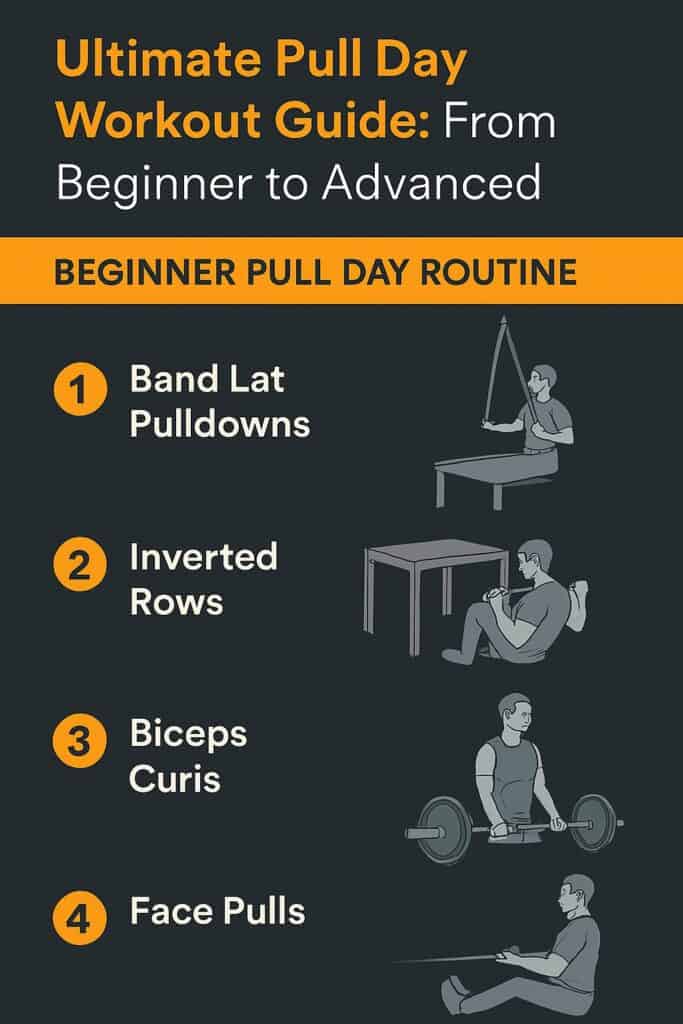
Beginner Routine
If you’re new to pull workouts, focus on mastering form and building a solid foundation. Start with exercises that use your body weight or light resistance to avoid injury.
- Assisted Pull-Ups– 3 sets of 8-10 reps
- Seated Cable Rows– 3 sets of 10-12 reps
- Face Pulls– 3 sets of 12-15 reps
- Barbell or Dumbbell Bicep Curls– 3 sets of 10-12 reps
- Dead Hangs– 3 sets of 20-30 seconds
Starting light might feel slow, but it builds the control you need for tougher workouts. Have you noticed how improving your grip strength changes your performance?
Intermediate Routine
Once you feel comfortable with basics, you can add intensity and variety. This routine mixes compound movements with isolation to hit all key muscles.
- Pull-Ups– 4 sets of 6-8 reps
- Bent-Over Barbell Rows– 4 sets of 8-10 reps
- Lat Pulldowns– 4 sets of 10-12 reps
- Hammer Curls– 3 sets of 10-12 reps
- Reverse Flyes– 3 sets of 12-15 reps
At this stage, you might feel your back getting stronger, but are you also focusing on balanced muscle engagement? Sometimes, neglecting smaller muscles slows your progress.
Advanced Routine
Advanced plans demand power, endurance, and precision. Incorporate heavier weights and supersets to challenge your muscles in new ways.
- Weighted Pull-Ups– 5 sets of 5-7 reps
- Chest-Supported Dumbbell Rows– 4 sets of 8-10 reps
- Single-Arm Cable Rows– 4 sets of 10-12 reps
- Concentration Curls– 4 sets of 12 reps
- Face Pulls with External Rotation– 4 sets of 15 reps
Do you push yourself enough to fully fatigue your muscles? Sometimes adding just one more set or increasing weight slightly makes a big difference.
Tracking Progress And Adjustments
Tracking your progress and making necessary adjustments is key to getting the most out of your pull workout routine. Without keeping an eye on how you’re improving, it’s easy to lose motivation or hit a plateau without realizing it. You need a clear way to see what’s working and what needs tweaking to keep pushing forward.
Logging Workouts
Write down every set, rep, and weight you use during your workouts. This simple habit helps you spot trends and improvements over time. If you find yourself repeating the same numbers week after week, it’s a sign you might need to change something.
Try using a notebook or an app to keep your logs organized. Include notes on how you felt during each session—were some exercises harder or easier than before? These details give you clues about your recovery and readiness.
Assessing Strength Gains
Track your strength by focusing on key lifts like pull-ups, rows, and deadlifts. Are you able to do more reps or add weight consistently? If yes, that’s clear evidence your muscles are getting stronger.
Think about your form too—are you maintaining proper technique as you get stronger? Sometimes, strength gains come with bad habits that can cause injury. Regularly filming yourself or asking for feedback can help keep your form sharp.
Modifying Routine For Plateaus
Have you hit a point where progress stalls? It’s common, but you don’t have to stay stuck. Changing the number of sets, reps, or even the exercises themselves can reignite progress.
Consider switching from heavy low reps to lighter high reps or adding pauses and slow negatives to increase muscle tension. You might also need to increase your rest between sets or add an extra workout day focused on pulling movements.
What small change can you try today to break through your current plateau?
Frequently Asked Questions
What Muscles Does A Pull Workout Target?
A pull workout mainly targets the back, biceps, and forearms. It strengthens the latissimus dorsi, trapezius, and rhomboids. Pull exercises also engage the rear deltoids and grip muscles. This routine improves posture and enhances upper body pulling strength.
How Often Should I Do Pull Workouts Weekly?
For balanced muscle growth, perform pull workouts 2-3 times per week. Allow at least 48 hours of rest between sessions. This frequency prevents overtraining and promotes recovery. Adjust based on your fitness level and goals for optimal results.
What Are Essential Exercises In A Pull Workout?
Key pull exercises include pull-ups, chin-ups, bent-over rows, and lat pulldowns. These moves effectively work the back and biceps. Incorporate face pulls and dumbbell curls for balanced muscle development. Proper form ensures maximum benefit and injury prevention.
Can Pull Workouts Help Improve Posture?
Yes, pull workouts strengthen upper back muscles that support good posture. Strong rhomboids and traps pull shoulders back and align the spine. Regular training reduces slouching and shoulder rounding. Consistency is key to long-term posture improvement.
Conclusion
A good pull workout routine builds strong back and arm muscles. It helps improve posture and daily movement. Keep your form correct to avoid injury. Start with light weights and increase slowly. Consistency is key for steady progress. Rest days help your muscles recover well.
Track your workouts to see how you improve. Stay patient and enjoy the process. Your body will thank you in time.







