
Imagine sculpting the body you’ve always dreamed of without the need for bulky gym equipment or an expensive membership. Resistance bands, those colorful stretchy strips you might have seen in workout videos or at a friend’s house, promise just that.
But here’s the burning question: can these simple bands truly help you build muscle? If you’ve ever wondered whether resistance bands can replace weights and give you the strength and definition you desire, you’re not alone. The answer might surprise you.
Stay with us as we unravel the science and secrets behind resistance bands and discover how they could transform your fitness journey. You won’t want to miss this!
How Resistance Bands Work
Resistance bands work by providing adjustable tension that challenges your muscles throughout each movement. Unlike traditional weights that rely on gravity, these bands create resistance as they stretch, forcing your muscles to contract and stabilize. This dynamic resistance helps you build muscle strength and endurance effectively.
Types Of Resistance Bands
Resistance bands come in various forms to suit different workouts and fitness levels. You’ll find:
- Loop Bands:Circular bands great for lower body exercises like squats and leg lifts.
- Tube Bands with Handles:Versatile bands ideal for upper body workouts, mimicking dumbbell movements.
- Therapy Bands:Flat and thin, mostly used for rehab and light resistance training.
Choosing the right band depends on your goals and the muscle groups you want to target.
Muscle Engagement With Bands
Resistance bands engage muscles differently compared to weights. They keep your muscles under tension for the entire range of motion, which means your muscles work harder, especially at the peak of the movement. This continuous tension can lead to improved muscle activation and growth.
Think about a bicep curl with a band: as the band stretches, it forces your biceps to maintain effort even at the top of the curl, unlike free weights where the load can lessen at certain points. This makes your muscles work in new ways, often activating smaller stabilizer muscles too.
Benefits Over Free Weights
Resistance bands offer benefits that free weights don’t always provide. They are lightweight, portable, and easy to use anywhere, making it simple to keep up your training routine whether at home, in a park, or while traveling.
Another key benefit is the variable resistance: the more you stretch the band, the harder it gets. This means your muscles face increasing challenge throughout the exercise. Free weights, on the other hand, provide constant resistance, which may not engage muscles as fully at all angles.
Have you ever struggled with joint pain from heavy lifting? Bands offer a low-impact alternative that reduces stress on joints while still building strength. This can be a game changer if you’re recovering from injury or want to avoid wear and tear.

Credit: www.youtube.com
Muscle Growth Principles
Understanding how muscles grow is key to knowing whether resistance bands can help you build muscle. Muscle growth happens when you challenge your muscles enough to cause tiny damage, which then repairs stronger than before. This process is influenced by several factors, including how much you push your muscles, how long they stay under tension, and how tired they get during your workout.
Progressive Overload Basics
Progressive overload means gradually increasing the stress you place on your muscles. You can do this by adding more resistance, doing more reps, or increasing workout frequency. Resistance bands allow you to adjust tension by using thicker bands or combining multiple bands, making them a practical tool to apply progressive overload.
Have you noticed how switching to a stronger band makes your workouts tougher? That’s progressive overload in action. Keep challenging your muscles a little more each session to ensure continuous growth.
Role Of Tension And Time Under Tension
Tension is the force your muscles face during exercise, and time under tension is how long your muscles are working during each set. Resistance bands provide constant tension throughout the movement, unlike free weights that can lose tension at certain points. This steady resistance can increase the effectiveness of your workout.
Try slowing down your movements to increase time under tension. You might find that a simple change in tempo makes your muscles work harder, even with the same band.
Importance Of Muscle Fatigue
Muscle fatigue happens when your muscles can’t perform another repetition with good form. Hitting fatigue signals your body to repair and grow muscle fibers stronger. Resistance bands can push your muscles to fatigue if you choose the right resistance level and perform enough reps.
Have you experienced that burning sensation near the end of a set with bands? That’s fatigue working for your muscle growth. Don’t stop just because it’s uncomfortable—those moments drive progress.
Effectiveness Of Bands For Muscle Building
Resistance bands have grown in popularity for muscle building, but you might wonder how effective they really are. Can these simple tools truly help you gain strength and size? Understanding their effectiveness depends on research, comparison to traditional weights, and recognizing their limits.
Research On Resistance Bands
Studies show resistance bands can activate muscles similarly to free weights. One research example found that bands produce comparable muscle activation during exercises like squats and presses.
Because bands provide variable resistance—more tension as you stretch them—they challenge muscles differently than weights. This can improve muscle endurance and strength over time.
Have you tried combining bands with your regular workouts? Many find this mix keeps training fresh and targets muscles in new ways.
Comparing Bands To Traditional Weights
Traditional weights offer constant resistance throughout the movement, while bands increase resistance as you stretch them. This means bands emphasize the muscle’s hardest part of the movement.
Weights often allow for precise load adjustments, making it easier to track progress with heavier lifts. Bands, however, require you to estimate tension and control form carefully.
Using bands can add variety and reduce joint strain, which is great if you want low-impact training. But if you aim for maximum muscle size, weights may still hold a slight edge.
Limitations To Consider
Resistance bands have some drawbacks you should keep in mind. They can wear out and lose elasticity, which affects the resistance level over time.
Also, it can be tricky to measure exact resistance, making progressive overload less straightforward. Without increasing tension methodically, muscle growth might plateau.
Can you balance bands with weights or bodyweight exercises to overcome these limits? Many people find blending methods brings the best results.
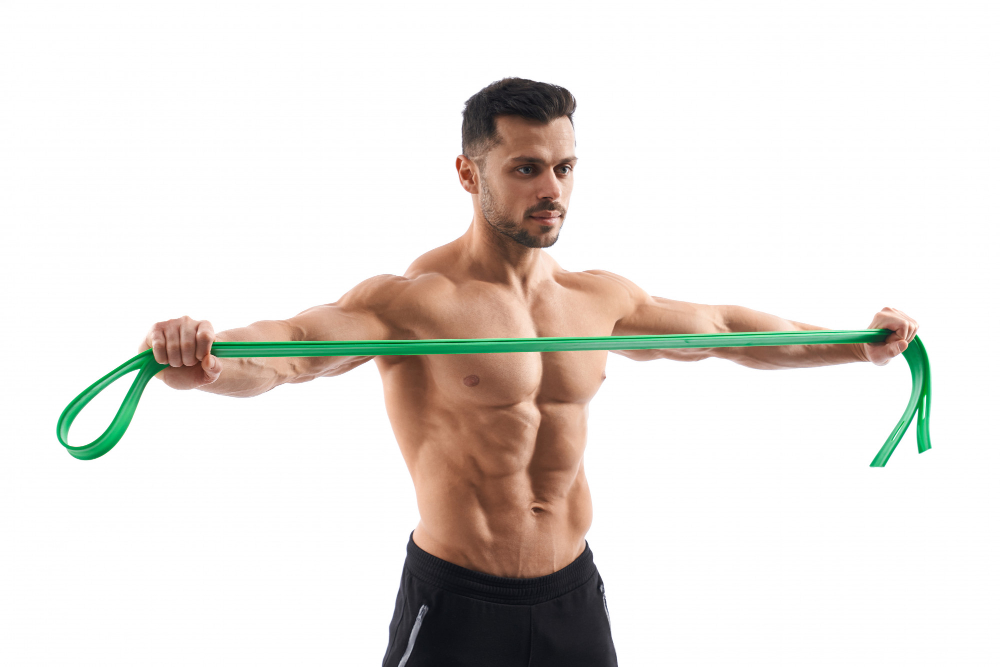
Credit: www.hitonefitness.com
Tips For Maximizing Muscle Gains
Maximizing muscle gains with resistance bands takes more than just pulling and stretching. You need to be smart about how you use them to really see results. Small adjustments in your routine can make a big difference in muscle growth and strength.
Proper Form And Technique
Using resistance bands with proper form is crucial. If your technique is off, you might not target the right muscles effectively, and this can lead to injury. Focus on controlled, steady movements rather than rushing through reps.
Think about how each movement feels. Are you engaging your muscles fully? For example, during a bicep curl, keep your elbow close to your body and avoid swinging. This keeps tension on your muscles where it counts.
Combining Bands With Other Equipment
Resistance bands don’t have to be your only tool. Pairing them with dumbbells or bodyweight exercises can challenge your muscles in new ways. This variety helps prevent plateaus and keeps your workouts interesting.
Try adding bands to push-ups or squats to increase resistance at different points in the movement. This mix can push your muscles harder without the need for heavy weights.
Increasing Resistance Safely
Gradually increasing the resistance is key to building muscle. You can do this by using thicker bands or doubling up bands as your strength improves. But don’t skip steps; increasing resistance too fast can cause strain or injury.
Listen to your body. If a resistance level feels too easy, bump it up slightly. If you feel sharp pain or discomfort, reduce the resistance and focus on form instead.
Tracking Progress
Keeping track of your workouts helps you see what’s working. Write down the resistance level, sets, and reps for each exercise. This way, you can spot trends and adjust your routine accordingly.
Ask yourself: Are you lifting more, holding the tension longer, or feeling stronger? Tracking these details helps keep you motivated and on the path to real muscle gains.
Sample Resistance Band Workouts
Resistance bands offer a flexible way to build muscle at home or in the gym. They fit any fitness level and allow varied workouts. Here are sample routines to help you use bands effectively. Each targets muscles differently to improve strength and tone.
Full-body Routine
This routine hits all major muscle groups in one session. It saves time and boosts overall strength.
- Squats with resistance band around thighs
- Chest press by anchoring band behind you
- Bent-over rows holding band under feet
- Standing shoulder press with band under feet
- Glute bridges with band above knees
- Bicep curls stepping on the band
- Tricep extensions anchored overhead
Perform 2–3 sets of 12–15 reps for each exercise. Rest 30 seconds between sets.
Targeted Muscle Group Exercises
Focus on specific areas to improve muscle shape and strength. Choose exercises that isolate each muscle group.
- Legs:Lateral band walks, hamstring curls
- Back:Seated rows, lat pull-downs
- Chest:Band chest fly, push-ups with band
- Arms:Concentration curls, overhead tricep extensions
- Core:Russian twists, standing woodchoppers
Complete 3 sets of 10–15 reps per exercise. Adjust band tension to increase difficulty.
Advanced Band Training Methods
Challenge muscles further with advanced techniques. These increase resistance and muscle engagement.
- Drop sets: Start heavy, then reduce band tension mid-set
- Supersets: Pair two exercises with no rest between
- Isometric holds: Hold band tension at peak contraction for 10 seconds
- Slow tempo: Move slowly to increase muscle time under tension
- Combination moves: Combine two exercises, like curls into presses
Use these methods for 1–2 workouts weekly to break plateaus and grow muscle.
Common Mistakes To Avoid
Using resistance bands can build muscle effectively. Avoiding common mistakes improves results. These errors often slow progress or cause injury. Focus on consistent effort, correct resistance, and recovery.
Inconsistent Training
Skipping workouts or training irregularly reduces muscle growth. Muscles need regular stress to grow stronger. Missing sessions breaks the growth cycle. Stick to a steady schedule for best results.
Using Incorrect Resistance
Choosing bands too easy or too hard limits progress. Light bands don’t challenge muscles enough. Very heavy bands cause poor form or injury. Select resistance that pushes muscles but allows good technique.
Neglecting Recovery
Muscles grow during rest, not workouts. Overtraining without breaks causes fatigue and injury. Give muscles time to heal between sessions. Include rest days and enough sleep for muscle repair.
Credit: www.fightsense.com
Frequently Asked Questions
Can Resistance Bands Effectively Build Muscle?
Yes, resistance bands create tension that stimulates muscle growth. They provide constant resistance, enhancing strength and muscle tone over time.
How Do Resistance Bands Compare To Weights For Muscle Gain?
Resistance bands offer variable resistance and improve stability. While weights target heavy loads, bands engage muscles throughout full motion.
What Muscle Groups Can Resistance Bands Target?
Resistance bands work all major muscle groups. You can train arms, legs, chest, back, and core effectively with them.
Are Resistance Bands Good For Muscle Endurance?
Yes, resistance bands enhance muscle endurance by increasing time under tension. They allow for high-rep, low-impact workouts that improve stamina.
Conclusion
Resistance bands help build muscle effectively and safely. They work by adding tension to your muscles during exercises. You can use them at home or the gym. Bands allow for different levels of difficulty, fitting all fitness levels. They improve strength, tone, and muscle endurance.
Consistency and proper form are key to seeing results. Resistance bands offer a flexible way to boost your workouts. Give them a try to enhance your muscle growth journey. Simple, versatile, and effective—bands are a smart choice for muscle building.







