
Are you wondering if resistance bands can really help you build muscle? You might think they’re just for light stretching or rehab exercises, but the truth is, these simple bands can pack a powerful punch.
Imagine getting stronger, toning your body, and boosting your muscle growth—all without heavy weights or bulky gym machines. If you want to know how to make resistance bands work for your muscle gains, keep reading. This guide will reveal the secrets to using bands effectively, so you can transform your workouts and see real results.
Benefits Of Resistance Bands
Resistance bands offer unique benefits that can help you build muscle effectively. They provide versatility and adaptability that traditional weights often lack. If you want a workout tool that fits your lifestyle and grows with your strength, resistance bands are worth considering.
Portability And Convenience
Resistance bands are incredibly lightweight and compact. You can easily slip them into your bag or even a pocket, making workouts possible anywhere—at home, the office, or while traveling.
Have you ever missed a workout because you couldn’t get to the gym? Bands eliminate that excuse. They give you the freedom to stay consistent, which is key to muscle growth.
Variable Resistance Levels
Unlike fixed weights, resistance bands provide variable resistance throughout the entire movement. This means your muscles work harder at different points, improving strength more effectively.
You can adjust the intensity simply by choosing a band with different thickness or by changing how much you stretch it. This adaptability lets you progress smoothly without needing to buy new equipment constantly.
Joint-friendly Workouts
Resistance bands reduce stress on your joints compared to heavy weights. The elastic nature allows for controlled, smooth movements, which lowers the risk of injury.
If you’ve ever experienced joint pain during weightlifting, bands might be a safer alternative. They let you strengthen muscles without pushing your joints beyond comfortable limits.
How Resistance Bands Build Muscle
Resistance bands are more than just convenient workout tools—they actively help you build muscle by creating constant tension and challenging your muscles in unique ways. Understanding how they work can help you maximize your gains and keep your routine fresh.
Muscle Activation And Tension
Resistance bands create continuous tension throughout your movements, unlike free weights that rely heavily on gravity. This means your muscles stay engaged during both the lifting and lowering phases of an exercise.
Think about a bicep curl with a band: as you pull, the band stretches, increasing resistance and forcing your muscle to work harder. This steady tension stimulates muscle fibers effectively, helping you build strength and size.
Progressive Overload Techniques
Building muscle requires progressively challenging your muscles over time, and resistance bands allow you to do this in several simple ways.
- Use bands with higher resistance levels as you get stronger.
- Add more repetitions or sets to your workout.
- Slow down your movements to increase time under tension.
- Combine bands with bodyweight exercises for extra difficulty.
Have you tried increasing the resistance gradually with bands? It’s a straightforward way to keep your muscles adapting and growing.
Targeting Different Muscle Groups
Resistance bands come in different shapes and sizes, allowing you to target almost every muscle in your body effectively.
From squats and lunges to chest presses and rows, bands adapt to your movement patterns and angles. This versatility lets you work on muscles you might miss with traditional weights.
For example, using a loop band around your thighs during squats activates your glutes more intensely. What muscle group do you feel you neglect in your workouts that bands could help engage better?
Effective Resistance Band Exercises
Resistance bands offer a simple way to build muscle effectively. They create tension in muscles through every move. This tension helps muscles grow stronger over time. You can target various muscle groups with resistance bands. Exercises can be done anywhere, making them very convenient.
Using resistance bands regularly improves strength and muscle tone. The bands come in different resistance levels. This variety lets you increase difficulty as you get stronger. Below are some effective exercises for different body areas.
Upper Body Workouts
- Banded Rows: Attach the band at a low point. Pull the band towards your chest. Squeeze shoulder blades together.
- Bicep Curls: Stand on the band. Hold handles with palms up. Curl your hands towards shoulders.
- Overhead Shoulder Press: Step on the band. Hold handles at shoulder height. Press hands upward.
- Tricep Extensions: Secure band overhead. Hold one handle behind head. Extend arm upward.
Lower Body Workouts
- Squats with Band: Stand on the band. Hold handles at shoulders. Squat down and rise up.
- Glute Kickbacks: Tie band around ankles. Kick one leg back slowly. Return and repeat.
- Lateral Band Walks: Place band around legs above knees. Step side to side keeping tension.
- Leg Press: Lie down. Place band on feet. Push feet away from the body.
Core Strengthening Moves
- Banded Russian Twists: Sit with legs bent. Hold band handles. Twist torso side to side.
- Standing Woodchoppers: Attach band high. Pull band down across body. Keep core tight.
- Plank with Band Row: Get in plank position. Pull band handle toward chest. Keep hips stable.
- Seated Ab Crunch: Sit with band behind back. Hold handles in front. Crunch forward.

Credit: www.youtube.com
Tips For Maximizing Muscle Growth
Maximizing muscle growth with resistance bands needs more than just pulling and stretching. A focused approach can help your muscles grow stronger and bigger. Following clear tips ensures your workouts are effective and safe.
Proper Form And Technique
Good form prevents injuries and targets muscles correctly. Keep your movements slow and controlled. Avoid using momentum to lift the bands. Focus on the muscle you want to work. Maintain a straight posture to support your spine. Stop if you feel sharp pain. Consistency in form builds strength over time.
Increasing Resistance Safely
Muscles grow when challenged with more weight or tension. Increase resistance gradually to avoid strain. Use thicker or shorter bands to add more tension. Combine two bands for extra resistance. Don’t rush to heavier bands; let your muscles adapt. Rest well between sessions to recover. Track your progress to know when to increase resistance.
Combining Bands With Other Equipment
Mixing resistance bands with weights or machines can enhance muscle growth. Use bands to warm up or finish your workout. Pair bands with dumbbells to add variety. This combination targets muscles differently. It prevents boredom and plateaus in training. Try bands with bodyweight exercises for added challenge. Variety helps muscles grow stronger and more balanced.
Common Mistakes To Avoid
Building muscle with resistance bands can be highly effective, but only if you avoid some common mistakes that many people make. These errors can slow your progress, increase the risk of injury, or even cause frustration. Understanding what not to do helps you get the most out of your workouts and stay motivated.
Using Incorrect Resistance Levels
Choosing the right resistance band is crucial for muscle growth. If the band is too light, you won’t challenge your muscles enough to stimulate growth. On the other hand, using a band that’s too heavy can cause poor form and increase injury risk.
Ask yourself: Are you feeling the burn by the last few reps? If not, it’s time to step up the resistance. Start with a moderate level and increase gradually as you get stronger.
Neglecting Warm-up And Recovery
Skipping warm-ups can leave your muscles stiff and more prone to injury. A quick 5-10 minute warm-up increases blood flow and prepares your muscles for resistance training.
Recovery is just as important. Without proper rest, your muscles don’t repair and grow. Are you giving your body enough time to bounce back between sessions?
Overtraining And Muscle Fatigue
Doing resistance band exercises every day without breaks can lead to overtraining. Muscle fatigue sets in, reducing your strength and increasing injury risk.
Listen to your body. If you feel persistent soreness or weakness, it’s a sign you need rest. Quality beats quantity when building muscle.

Credit: www.youtube.com
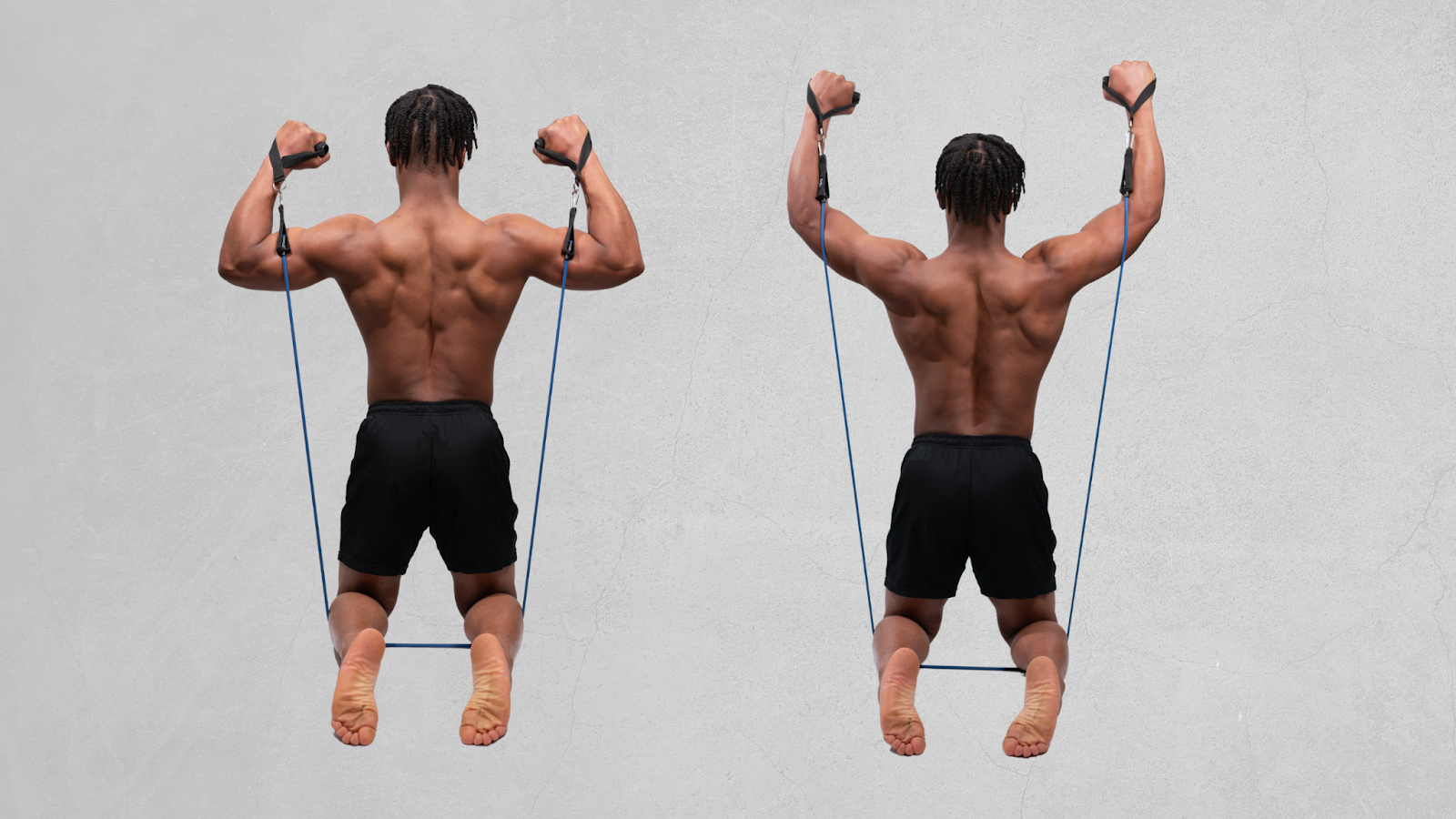
Credit: jimartialarts.com
Frequently Asked Questions
Can Resistance Bands Replace Weights For Muscle Building?
Resistance bands can effectively build muscle similar to weights. They provide constant tension, enhancing muscle activation. They’re versatile, allowing varied exercises targeting different muscle groups. While they may not replace heavy lifting for advanced gains, they’re excellent for strength training and muscle growth, especially for beginners or those seeking portable workout options.
How Do Resistance Bands Work For Muscle Growth?
Resistance bands work by providing external resistance that muscles must overcome. This resistance engages muscle fibers, stimulating growth. They allow varied resistance levels, accommodating different fitness levels. Bands also offer constant tension throughout movements, increasing muscle activation. They’re effective for muscle growth when used consistently and correctly.
Are Resistance Bands Effective For All Fitness Levels?
Yes, resistance bands are suitable for all fitness levels. They offer various resistance levels, accommodating beginners to advanced users. Bands allow gradual progression by increasing resistance. They’re versatile and can be used for different exercises targeting various muscle groups. This adaptability makes them effective for everyone seeking to build muscle.
How Often Should I Use Resistance Bands?
Using resistance bands three to five times a week is optimal. This frequency allows adequate muscle stimulation and recovery. Consistent use helps build strength and muscle over time. Incorporating rest days is crucial to prevent overtraining. Listening to your body ensures effective workouts and muscle growth.
Conclusion
Resistance bands can help build muscle effectively at home or the gym. They offer varied resistance for strength and muscle growth. Consistent workouts with bands improve muscle tone and endurance. They suit all fitness levels and allow easy progress. Combining bands with good nutrition boosts muscle results.
Small, regular efforts lead to visible changes over time. So, resistance bands make muscle building simple and accessible for many. Give them a try and feel the difference yourself.







