
Are you trying to lose weight but still want to build muscle? Many people believe that gaining muscle while in a calorie deficit is impossible.
But what if you could achieve both goals at the same time? Imagine looking leaner and stronger, without sacrificing one for the other. We’ll dive into the science and strategies that make it possible to build muscle while shedding unwanted pounds.
Stick around to discover how you can transform your body without giving up your fitness dreams. Whether you’re a fitness enthusiast or just starting your journey, this guide will equip you with the knowledge you need to succeed. Let’s get started!
Muscle Growth Basics
Understanding how muscle growth works is key before deciding if you can build muscle in a calorie deficit. Muscle growth is a biological process that involves repair and adaptation. When you stress your muscles through exercise, they respond by getting stronger and sometimes bigger. But this process needs the right conditions to happen effectively.
How Muscles Grow
Your muscles grow through a cycle of damage and repair. When you lift weights or do resistance training, tiny tears form in your muscle fibers. Your body then repairs these tears, making the muscles stronger and sometimes larger than before.
Protein plays a crucial role here. It provides the building blocks your muscles need to heal and grow. Without enough protein, your body struggles to repair muscle tissue, which can slow down or stop growth.
Another important factor is the balance between muscle breakdown and muscle synthesis. For muscles to grow, synthesis must exceed breakdown. This balance depends on your nutrition, training, and recovery.
Calorie Surplus Vs Deficit
Muscle growth is often linked to eating more calories than you burn, which is called a calorie surplus. In a surplus, your body has extra energy to support muscle repair and growth. Many athletes and bodybuilders use this approach to gain size.
But what if you eat fewer calories than you burn—a calorie deficit? This usually means your body is focusing on using stored fat for energy. Building muscle in this state is tougher because your body has limited energy for repair and growth.
Still, you might be able to build muscle in a deficit if you:
- Are new to training or returning after a break
- Eat enough protein to support muscle repair
- Follow a smart training plan that challenges your muscles
Ask yourself: Can you manage your nutrition and training well enough to signal your muscles to grow even when energy is tight? This question helps you set realistic expectations and choose the best path for your goals.

Credit: www.fit3d.com
Challenges Of Building Muscle In Deficit
Building muscle while eating fewer calories than your body needs is tough. Your body requires energy to grow muscle. A calorie deficit means less energy is available. This creates specific challenges that can slow muscle gain. Understanding these challenges helps set realistic goals and expectations.
Energy Limitations
Energy is essential for muscle growth. Your body uses calories to repair and build muscle tissue. In a calorie deficit, fewer calories mean less fuel. The body prioritizes vital functions over muscle growth. This can lead to slower muscle gains or even muscle loss. Energy shortages also reduce workout intensity. Less energy means less strength during exercise. This impacts the effectiveness of your training sessions.
Recovery And Fatigue
Muscle recovery depends on proper rest and nutrition. A calorie deficit limits nutrients that repair muscles. This can increase muscle soreness and fatigue. The body takes longer to heal after workouts. Poor recovery raises the risk of injury. Fatigue builds up faster, reducing workout frequency. Without enough recovery, muscles cannot grow efficiently. Recovery problems make consistent training harder to maintain.
When Muscle Gain In Deficit Is Possible
Building muscle while eating fewer calories than you burn sounds impossible, but it can happen under certain conditions. Understanding when muscle gain in a calorie deficit is possible helps you set realistic goals and tailor your approach effectively. Let’s look at who can make this happen and how.
Beginners And Muscle Memory
If you’re new to strength training, your body is primed to respond quickly to resistance exercises. This “newbie gains” phase allows muscle growth even without a calorie surplus. Additionally, if you’ve trained before and are returning after a break, muscle memory kicks in, making it easier to rebuild lost muscle while in a deficit.
Think about the last time you restarted lifting after months off. You probably noticed strength and size improvements faster than your initial training period. That’s muscle memory helping you regain what was lost, even when calories are limited.
Overweight Individuals
Carrying extra body fat can actually support muscle gain while in a calorie deficit. Your body uses stored fat for energy, which frees up resources to build muscle. This creates a unique window where losing fat and gaining muscle happen simultaneously.
If you’re overweight, your body’s energy reserves act like an internal fuel tank. This means you can push through tough workouts and recover well without eating in a calorie surplus. Are you using your body’s fat stores smartly to improve your composition?
Optimized Training
Muscle gain in a calorie deficit demands smart, focused training. You need to prioritize heavy, compound movements and progressive overload to send strong growth signals to your muscles. Without this, your body won’t have a reason to add muscle tissue when energy is limited.
Rest and recovery also play a crucial role. Training intensely but not allowing your muscles to recover can stall progress or even cause muscle loss. How well are you balancing workout intensity with recovery to maximize gains in a deficit?
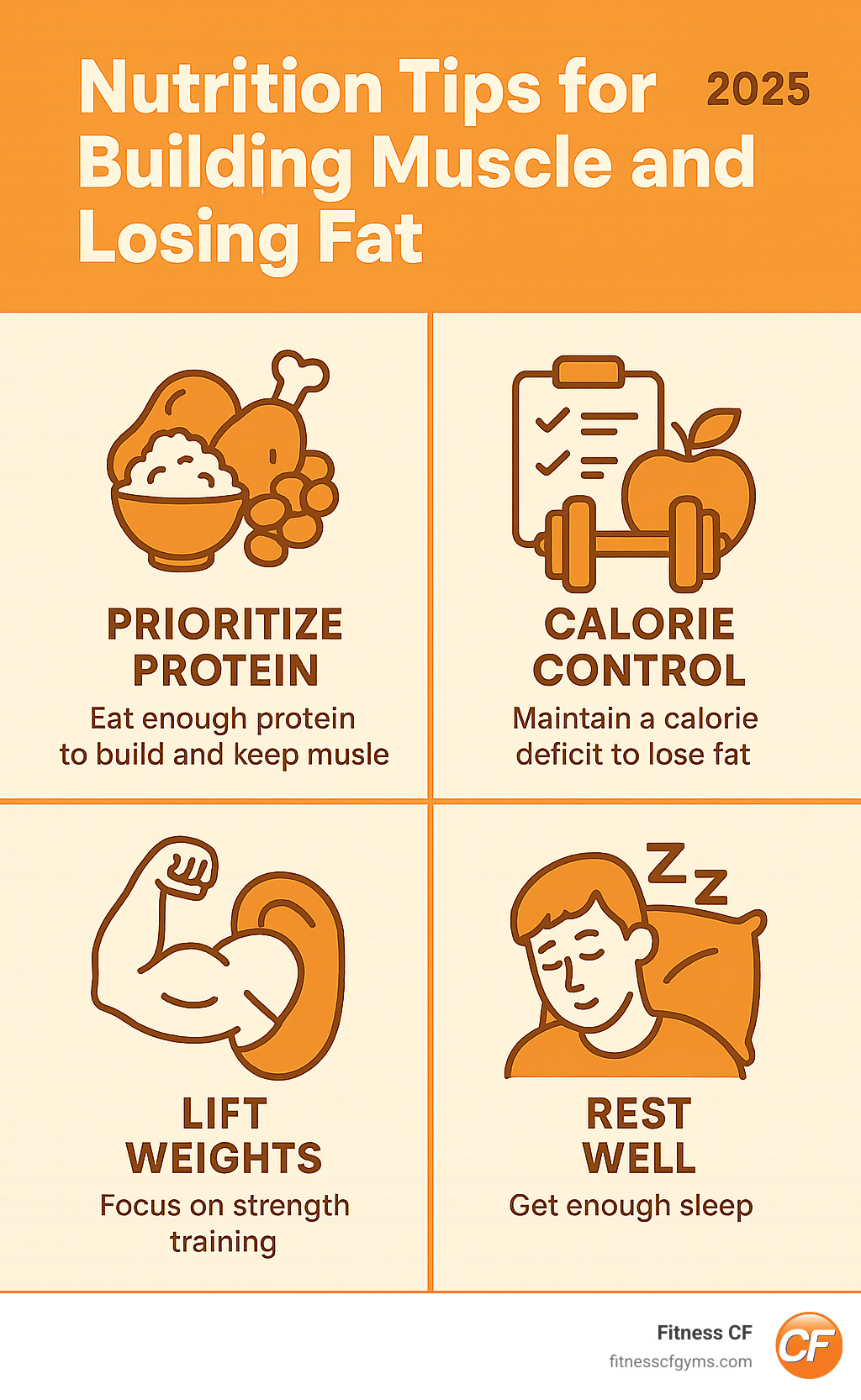
Credit: fitnesscfgyms.com
Nutrition Strategies
Nutrition plays a key role in building muscle while eating fewer calories. Proper food choices help maintain strength and muscle size during calorie cuts. Smart nutrition supports recovery and muscle repair, even with less energy intake. Small changes in diet make a big difference in muscle growth.
Protein Intake Importance
Protein is the building block of muscles. Eating enough protein helps prevent muscle loss in a calorie deficit. Aim for 1.6 to 2.2 grams of protein per kilogram of body weight daily. Include lean meats, dairy, beans, and plant proteins. Protein supports muscle repair and growth after workouts. Higher protein intake also helps with feeling full.
Meal Timing And Frequency
Distribute protein evenly across meals. Eating protein every 3 to 4 hours may improve muscle protein synthesis. Small, frequent meals keep energy steady and reduce muscle breakdown. Plan meals around workouts to fuel exercise and recovery. Pre- and post-workout nutrition can enhance muscle repair.
Micronutrient Support
Vitamins and minerals support muscle function and recovery. Nutrients like vitamin D, calcium, and magnesium are important. Eat a variety of colorful fruits and vegetables daily. These provide antioxidants that reduce muscle inflammation. Micronutrients help maintain energy and support overall health.
Training Approaches
Training smart is key if you want to build muscle while eating fewer calories than you burn. Your workout plan needs to focus on preserving muscle and making every session count. Adjusting how you train can make a big difference in your results, even when your body is in a calorie deficit.
Resistance Training Tips
Focus on compound exercises like squats, deadlifts, and bench presses. These moves work multiple muscles at once and give you the best muscle-building bang for your buck.
Use proper form to avoid injury and maximize muscle engagement. Don’t just go through the motions—feel each movement.
Keep your workouts consistent. Skipping sessions can lead to muscle loss faster when you’re in a calorie deficit.
Progressive Overload
Challenge your muscles by gradually increasing the weight or reps over time. This forces your body to adapt and grow stronger.
If you hit a plateau, try changing the tempo or adding more sets instead of just increasing weight. Small tweaks can keep progress steady.
Ask yourself: Are you pushing a little harder than last week? This mindset helps you stay on track even with fewer calories.
Recovery Techniques
Muscle growth happens outside the gym. Prioritize sleep and give your body time to repair.
Use techniques like stretching, foam rolling, or light walking on rest days to reduce soreness and improve blood flow.
Remember, overtraining can cause muscle breakdown. Listen to your body and rest when needed to protect your hard-earned gains.
Supplements That Help
Building muscle while in a calorie deficit can feel like a tough challenge. But supplements can give your body the extra support it needs to maintain and even grow muscle during this phase. Choosing the right supplements helps you stay strong and recover faster, making your efforts in the gym more effective.
Protein Powders
Protein is your muscle’s main building block. When you’re eating fewer calories, it’s easy to fall short on protein. Protein powders are a quick and convenient way to add high-quality protein to your diet without extra calories.
Whey protein is popular because it’s absorbed quickly, helping with muscle repair right after workouts. If you’re vegan or lactose intolerant, plant-based proteins like pea or rice protein work well too. Have you tracked your daily protein intake lately to see if you’re hitting your muscle-building goals?
Creatine
Creatine is one of the most researched supplements for muscle growth. It helps your muscles produce energy during high-intensity exercises, letting you push harder and lift heavier. This can lead to better muscle gains, even when your calories are limited.
Taking creatine regularly can also help your muscles retain water, making them look fuller and aiding recovery. Many people don’t realize how much this simple supplement can improve strength and endurance. Could creatine be the missing piece in your workout routine?
Branched-chain Amino Acids
BCAAs—leucine, isoleucine, and valine—are essential amino acids that play a key role in muscle protein synthesis. When you’re in a calorie deficit, your body might break down muscle for energy. BCAAs can help reduce this muscle breakdown.
Supplementing with BCAAs before or during workouts can keep your muscles fueled and reduce fatigue. This means you can train harder without losing muscle mass. Are you giving your muscles the amino acids they need to stay strong?
Tracking Progress Effectively
Tracking progress effectively is key to building muscle in a calorie deficit. You need clear ways to see if your body is changing the right way. Simple scales don’t tell the full story. Focus on measures that show changes in muscle and strength. This helps keep motivation high and plans on track.
Body Composition Measures
Use tools that show muscle versus fat changes. Body fat calipers, smart scales, or professional tests work well. Measure at the same time of day for accuracy. Track waist, arms, and chest size with a tape. These numbers give a better idea than weight alone.
Strength Gains
Strength is a key sign of muscle growth. Keep a workout log to record weights and reps. If you lift heavier or do more reps, muscle is likely growing. Strength gains can happen even if the scale drops.
Adjusting Plans
Use your tracked data to change your diet and workouts. If muscle or strength drops, eat more or reduce cardio. If fat loss stops, lower calories or add activity. Small changes keep progress steady without losing muscle.

Credit: homegymsupply.co.uk
Common Mistakes To Avoid
Building muscle while in a calorie deficit is challenging but not impossible. Many people make mistakes that stall their progress or even cause setbacks. Avoiding these common errors can make a big difference in how your body responds and adapts.
Overtraining
Pushing yourself too hard without enough fuel can backfire. Your muscles need energy to repair and grow, but a calorie deficit limits that supply.
If you train intensely every day without rest, your body may break down muscle tissue for energy. Are you giving yourself enough time to recover between workouts? Less can sometimes be more when calories are tight.
Undereating Protein
Protein is the building block of muscle. Eating too little protein during a calorie deficit makes it harder for your body to maintain or build muscle mass.
Make sure you get enough high-quality protein each day. Think lean meats, eggs, dairy, or plant-based options like beans and lentils. How often do you track your protein intake to ensure you meet your target?
Ignoring Recovery
Recovery goes beyond just rest days. Quality sleep, stress management, and hydration all play roles in muscle growth and repair.
Neglecting these can stall your progress even if your workouts and diet are on point. How well are you sleeping, and do you make time to relax and recharge?
Frequently Asked Questions
Can You Build Muscle While Eating Fewer Calories?
Yes, you can build muscle in a calorie deficit, especially if you’re a beginner. Prioritize protein intake and strength training. Muscle gain might be slower but remains possible with proper nutrition and workout balance.
How Does Calorie Deficit Affect Muscle Growth?
A calorie deficit limits energy availability, making muscle growth harder. However, adequate protein and resistance training help preserve and build muscle during fat loss phases.
What Foods Help Muscle Gain In A Calorie Deficit?
High-protein foods like lean meats, eggs, and legumes support muscle growth. Include nutrient-dense, low-calorie foods to maintain energy and muscle while reducing fat.
Is Strength Training Necessary In A Calorie Deficit?
Yes, strength training is essential to stimulate muscle growth and prevent muscle loss when calories are limited. It signals your body to build muscle even with fewer calories.
Conclusion
Building muscle in a calorie deficit is possible but challenging. Focus on eating enough protein and doing strength training. Your body needs fuel to repair and grow muscles. Progress may be slower than in a calorie surplus. Patience and consistency matter most for muscle gain.
Track your food and workouts to stay on course. Rest and recovery also help build muscle. Keep your goals realistic and adjust as needed. Small gains add up over time. Stay motivated and enjoy the process.







