
Are you ready to build stronger, more defined arms that turn heads? Whether you want to boost your confidence, improve your strength, or simply look great in sleeveless shirts, the right arms workout routine can make all the difference.
You’ll discover simple yet powerful exercises designed to help you sculpt your biceps, triceps, and forearms effectively. Stick with me, and by the end, you’ll have a clear plan to transform your arms and feel proud of every rep you do.
Let’s get started!
Benefits Of Focused Arms Training
Focused arms training brings many benefits beyond just bigger muscles. It improves strength, endurance, and overall arm function. Regular arm workouts help in daily tasks and sports performance. Strong arms also enhance your body shape and confidence.
Improved Muscle Strength And Endurance
Targeted arm exercises boost muscle power effectively. They make lifting, pushing, and pulling easier. Training both biceps and triceps builds balanced strength. This balance prevents injuries and improves endurance.
Enhanced Physical Appearance
Defined arms create a toned, athletic look. Focused training reduces flabbiness and builds firm muscles. This improves posture and body proportion. Visible muscle definition increases confidence and motivation.
Better Functional Performance
Strong arms help in many daily activities. Tasks like carrying groceries or lifting objects become easier. Athletes gain better control and power during sports. Functional strength reduces fatigue and risk of injury.
Increased Metabolism And Fat Loss
Arm workouts burn calories and boost metabolism. Muscle growth raises resting metabolic rate. This helps in losing fat and maintaining weight. Consistent training contributes to overall body fitness.
Supports Joint Health And Stability
Strengthening arm muscles protects elbow and shoulder joints. It improves joint stability and reduces pain. Focused training helps maintain joint mobility. This support is crucial for long-term arm health.
Key Muscles In The Arms
The arms contain several important muscles that control movement and strength. Understanding these key muscles helps create a balanced workout plan. Strong arm muscles improve daily tasks and athletic performance.
The main muscles in the arms include the biceps brachii, triceps brachii, and forearm muscles. Each muscle group has a unique role in arm motion and strength.
Biceps Brachii
The biceps brachii is the muscle on the front of the upper arm. It has two heads that work together to bend the elbow. This muscle also helps rotate the forearm. Well-developed biceps improve lifting and pulling strength.
Triceps Brachii
The triceps brachii is the large muscle on the back of the upper arm. It has three heads that extend the elbow. This muscle controls pushing movements. Strong triceps add power to exercises like push-ups and presses.
Forearm Muscles
The forearm muscles control wrist and finger movements. They are crucial for grip strength and hand coordination. These muscles support tasks like lifting, holding, and twisting objects. Training forearms helps prevent injuries and improves overall arm function.
Essential Equipment For Arm Workouts
Choosing the right equipment can make a big difference in your arms workout routine. The tools you use impact your strength gains and muscle tone. Knowing which equipment fits your goals and space helps you stay consistent and motivated.
Dumbbells And Barbells
Dumbbells and barbells are classic choices for arm workouts. They offer a wide range of exercises targeting biceps, triceps, and forearms.
Using dumbbells allows you to work each arm independently, improving balance and coordination. Barbells let you lift heavier weights, which is great for building strength quickly.
Think about your space and budget. Dumbbells take less room and are more versatile for home workouts. Barbells need more space but are ideal if you want to push your limits.
Resistance Bands
Resistance bands are affordable and portable. You can easily use them at home, the gym, or even when traveling.
They provide variable resistance, meaning the tension increases as you stretch the band. This helps build strength through a full range of motion.
Have you tried resistance bands for arm exercises? They’re excellent for warming up or adding extra challenge to basic moves like curls and tricep extensions.
Cable Machines
Cable machines offer smooth, consistent resistance for your arm workouts. They allow you to perform exercises from multiple angles.
This versatility helps target specific arm muscles more effectively. You can adjust the weight quickly, making it easy to change intensity during your workout.
If you have access to a gym, cable machines are a smart choice to add variety and precision. They keep your muscles under constant tension, which is key for growth.
Warm-up Techniques For Arm Training
Warming up before an arms workout prepares your muscles and joints for the effort ahead. It reduces the risk of injury and improves performance. A good warm-up increases blood flow and loosens tight muscles. It also helps your mind focus on the training session. Here are two effective warm-up techniques to get your arms ready.
Dynamic Stretching
Dynamic stretching uses controlled movements to warm up muscles. It helps increase your range of motion. Examples include arm circles, arm swings, and shoulder rolls. Perform these movements slowly at first, then gradually increase speed. Spend about 5 minutes on dynamic stretches before lifting weights. This technique wakes up your muscles without causing fatigue.
Lightweight Repetitions
Lightweight repetitions involve doing arm exercises with very light weights. Use dumbbells or resistance bands that feel easy. Perform 10 to 15 reps of movements like bicep curls or tricep extensions. This activates the muscles and prepares them for heavier loads. Lightweight reps also improve joint lubrication and muscle coordination.
Top Exercises For Biceps Growth
Building bigger and stronger biceps requires more than just lifting weights—it demands focus on exercises that target the muscle effectively. Choosing the right moves can make a noticeable difference in your arm size and strength. Let’s break down some of the best exercises that will help you grow your biceps efficiently.
Barbell Curls
Barbell curls are a classic biceps builder that lets you lift heavier weights compared to dumbbells. This exercise targets both heads of the biceps, helping to add overall mass and strength. Keep your elbows close to your body and avoid swinging the barbell to maximize muscle engagement.
When I started adding barbell curls to my routine, I noticed my arms began to fill out in just a few weeks. Are you focusing enough on form to get the most from this move?
Hammer Curls
Hammer curls use a neutral grip, which hits the brachialis muscle lying beneath your biceps. This can push your arms to look thicker and add strength to your forearms. Use controlled movements and avoid using momentum to really feel the burn in your arms.
Try alternating hammer curls with your regular curls to avoid plateaus. Have you tested your grip strength lately? Hammer curls could be the key to improving it.
Concentration Curls
Concentration curls isolate the biceps, making it easier to focus on the muscle contraction. Sitting down and curling with one arm at a time helps eliminate cheating and improves muscle mind connection. This exercise is perfect if you want to sculpt and define your biceps.
Adding concentration curls to your workout can reveal weak spots in your arms. Do you feel your muscles working fully during your usual curls, or is there room to improve focus?
Effective Triceps Exercises
Strong, well-defined triceps can transform the look and function of your arms. Effective triceps exercises target all three heads of the muscle, helping you build size and strength evenly. You want moves that challenge your muscles while fitting easily into your routine.
Close-grip Bench Press
The close-grip bench press is a powerful exercise that shifts the focus from your chest to your triceps. Keeping your hands closer than shoulder-width apart forces your triceps to do most of the work. This move not only builds muscle but also improves pressing strength for other lifts.
Start with a manageable weight and focus on controlled movement. Lower the bar slowly and press up explosively. Have you noticed how this exercise makes your triceps burn differently than regular bench presses?
Triceps Dips
Triceps dips are a simple yet highly effective bodyweight exercise. You can do these on parallel bars or even a sturdy bench at home. They engage all three heads of the triceps while also activating your shoulders and chest.
If dips feel too easy, add weight with a belt or hold a dumbbell between your feet. Keep your body upright and elbows close to maximize triceps engagement. How much stronger do your arms feel after just a few sets of dips?
Overhead Triceps Extension
This exercise stretches the long head of the triceps, a part often neglected by other moves. Using a dumbbell or a cable, extend your arms overhead and then bend your elbows to lower the weight behind your head. The stretch at the bottom and squeeze at the top build both size and definition.
Maintain a slow and steady pace to avoid using momentum. You can do this seated or standing, but keep your core tight to protect your lower back. Have you tried this for a deeper triceps burn compared to other exercises?
Forearm Strengthening Moves
Building strong forearms is often overlooked but plays a crucial role in enhancing your overall arm strength and grip. Improving forearm strength not only supports better performance in lifts like deadlifts and pull-ups but also helps prevent injuries. You might be surprised how simple movements can make a noticeable difference in your daily grip endurance and arm power.
Wrist Curls
Wrist curls target the muscles on the underside of your forearms. Sit on a bench holding a light dumbbell or barbell with your palms facing up. Slowly curl your wrists upwards, then lower the weight back down with control.
Try doing 3 sets of 12-15 reps. You’ll feel the burn quickly, which shows those small muscles are working hard. Have you noticed your grip weakening during workouts? Adding wrist curls can fix that.
Reverse Wrist Curls
Reverse wrist curls work the muscles on the top side of your forearms, balancing your strength. Hold a dumbbell or barbell with your palms facing down and curl your wrists upward. Lower slowly and repeat.
This move helps prevent wrist pain and improves overall arm stability. Aim for 3 sets of 12-15 reps, just like wrist curls. Consistency here can translate to better control during exercises like rows or push-ups.
Farmer’s Walk
The Farmer’s Walk is a simple but powerful exercise to build grip and forearm endurance. Grab two heavy dumbbells or kettlebells and walk for a set distance or time, keeping your shoulders back and core tight.
This exercise mimics real-life tasks and challenges your forearms in a functional way. You’ll notice your grip lasting longer during workouts and daily activities. How long can you hold heavy weights before your hands give out?
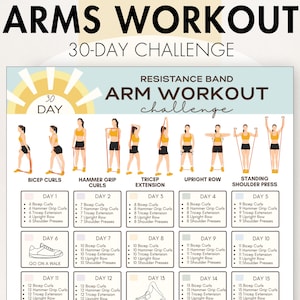
Credit: www.etsy.com
Structuring Your Workout Routine
Structuring your arms workout routine is essential to build strength and size efficiently. Without a clear plan, you risk overtraining or under-stimulating your muscles. Let’s break down key elements that keep your progress steady and your workouts effective.
Frequency And Volume
How often you train your arms affects your growth. Aim for 2-3 sessions per week to allow enough stimulation without causing burnout.
Volume refers to the total number of sets and reps you perform. Starting with 9-15 sets per week divided across your sessions is a solid range to target both biceps and triceps.
Pay attention to how your arms feel after workouts. If soreness lingers too long, consider lowering volume or spreading sessions out. Your muscles need time to recover to grow stronger.
Rest Periods
The time you rest between sets can change how your muscles respond. Short rests of 30-60 seconds keep the intensity high and improve muscle endurance.
If your goal is to lift heavier weights for strength, longer rests of 90-120 seconds help your muscles recover more fully between sets.
I once switched from short rests to longer pauses and noticed I could push heavier weights without losing form. Experiment to find what suits your goals and energy levels.
Progressive Overload
Without increasing the challenge, your arms won’t grow. Progressive overload means gradually adding more weight, reps, or sets over time.
Track your workouts to see when a weight feels easy. Then add a small increment or an extra rep next session to keep pushing your limits.
Have you ever hit a plateau where gains stopped? Changing one variable—like increasing reps or reducing rest—often breaks through that wall.
Nutrition Tips For Muscle Growth
Building strong arms requires more than just lifting weights. Your body needs the right fuel to grow muscle. Nutrition plays a key role in muscle recovery and growth. Eating the right foods helps repair muscles and increases strength.
Protein Intake
Protein is essential for muscle repair and growth. Aim for high-quality sources like chicken, fish, eggs, and beans. Spread your protein intake evenly across meals. This supports steady muscle repair throughout the day.
- Include 20-30 grams of protein per meal.
- Choose lean meats and plant-based proteins.
- Consider protein shakes after workouts for quick absorption.
Hydration
Water keeps muscles hydrated and working well. Dehydration reduces strength and delays recovery. Drink water before, during, and after your workout. Proper hydration helps transport nutrients to your muscles.
- Drink at least 8 cups of water daily.
- Increase intake on workout days.
- Avoid sugary drinks that cause dehydration.
Supplements
Supplements can support muscle growth but are not essential. Creatine, BCAAs, and whey protein are popular choices. Use supplements to fill nutritional gaps, not replace meals.
- Creatine can improve strength and power.
- BCAAs help reduce muscle soreness.
- Whey protein boosts daily protein intake.

Credit: www.youtube.com
Common Mistakes To Avoid
A strong arms workout routine can build muscle and improve strength. Avoiding common mistakes helps you get better results. These errors can slow progress and cause injuries. Focus on proper technique and balance to make your workouts effective and safe.
Overtraining
Training arms too often can lead to fatigue and injury. Muscles need time to repair and grow. Overtraining can cause soreness and reduce strength. Plan rest days between arm workouts. Listen to your body and avoid pushing too hard.
Poor Form
Using incorrect form can cause strain and limit muscle growth. Bad posture or wrong angles reduce exercise benefits. Focus on controlled movements and proper alignment. Start with lighter weights to practice good technique. Quality beats quantity in every repetition.
Neglecting Recovery
Recovery is essential for muscle repair and growth. Skipping rest can lead to muscle breakdown and fatigue. Use stretching and light activity to aid recovery. Sleep well to support muscle healing. Proper recovery helps maintain strength and avoid injuries.
Tracking Progress And Adjustments
Tracking progress and making adjustments are key to building stronger, well-defined arms. Without tracking, it’s hard to see real improvements or know when to push harder. Regularly monitoring your workouts and body changes helps keep your routine effective and safe.
Workout Logs
Keep a detailed record of your arm workouts. Write down exercises, sets, reps, and weights used. This helps spot patterns and plateaus. Tracking workouts motivates you and shows clear progress over time. Use a notebook or fitness app to log your sessions.
Body Measurements
Measure your arms weekly to see physical changes. Use a tape measure around your biceps and forearms. Record the size and note any changes. Body measurements reveal gains that might not show on the scale. Take photos for visual comparison too.
Adjusting Intensity
Increase workout intensity to keep challenging your muscles. Add more weight, increase reps, or try new exercises. Adjust rest times between sets to boost endurance. Changing intensity prevents plateaus and promotes steady muscle growth. Listen to your body to avoid injury.

Credit: apps.apple.com
Frequently Asked Questions
What Are The Best Exercises For An Arms Workout Routine?
Effective arms workouts include bicep curls, tricep dips, hammer curls, and push-ups. These exercises target all major arm muscles efficiently. Consistency is key for strength and muscle growth.
How Often Should I Do An Arms Workout Routine?
Aim for 2 to 3 arms workout sessions per week. Allow at least 48 hours of rest between sessions. This helps muscles recover and grow stronger.
Can I Build Muscle With A Home Arms Workout Routine?
Yes, you can build muscle at home using dumbbells, resistance bands, or bodyweight exercises. Focus on proper form and progressive overload for best results.
How Long Should An Effective Arms Workout Routine Last?
An effective arms workout should last about 30 to 45 minutes. This duration balances intensity and muscle fatigue without overtraining.
Conclusion
An effective arms workout routine builds strength and confidence. Consistency is key. Regular practice helps tone muscles and improve endurance. Mix different exercises for balanced development. Remember, technique matters more than speed or weight. Stay patient and focused on your goals.
Listen to your body and rest when needed. Hydration and nutrition support your fitness journey. Keep challenging yourself to see progress. Celebrate small victories along the way. Your dedication will pay off with time. Enjoy the process and embrace the change.
Keep pushing, and soon you’ll see results. Stay motivated and keep moving forward.







