
Imagine having the power to work out every muscle in your body without leaving your home. A full body home gym gives you that freedom.
No more rushing to the gym, waiting for machines, or dealing with crowded spaces. With the right setup, you can build strength, burn fat, and boost your energy—all on your schedule. If you want to take control of your fitness and see real results, this guide will show you how to create the perfect full body home gym tailored just for you.
Keep reading, and discover how easy and rewarding working out at home can be.
Benefits Of A Home Gym
Setting up a full body home gym offers a variety of benefits that can change how you approach fitness. It’s not just about having equipment at hand—it’s about transforming your lifestyle to fit your needs and preferences. With a home gym, you control your workout environment, schedule, and pace.
Convenience And Flexibility
Imagine working out whenever you want without worrying about gym hours or travel time. A home gym makes this possible by fitting perfectly into your daily routine. You can squeeze in quick sessions between meetings or extend your workouts when you have extra time.
This flexibility helps you stay consistent, which is key for real progress. No more waiting for machines or dealing with crowded spaces—your home gym is always ready when you are.
Cost Savings Over Time
Building a home gym requires an upfront investment, but it saves money in the long run. Think about skipping monthly gym fees, parking charges, and commuting costs. These small expenses add up quickly.
Also, owning your equipment means you avoid extra charges for personal training or classes. Over time, these savings can cover the cost of your setup and then some.
Privacy And Comfort
Working out at home gives you a private space where you can focus without distractions. You can try new exercises or push yourself harder without feeling self-conscious. This comfort often leads to better workouts and more enjoyment.
You control the environment—choose your music, adjust the temperature, and take breaks as needed. How much more motivated would you be if your workout space felt like your personal sanctuary?

Credit: www.amazon.ca
Essential Equipment For Full Body Workouts
Creating a full body home gym is a fantastic way to ensure you can work out anytime without the hassle of traveling to a fitness center. To get the most out of your at-home workout sessions, it’s important to have the right equipment. Let’s dive into the essential pieces you’ll need to achieve effective full body workouts at home.
Cardio Machines
Cardio is crucial for keeping your heart healthy and burning calories. A treadmill or a stationary bike can be excellent choices for your home gym. They provide a great way to get your heart rate up and improve your cardiovascular endurance.
If space is a constraint, consider a compact stair stepper or a jump rope. These are perfect for high-intensity interval training (HIIT) and can be easily stored when not in use. Ever tried jumping rope as an adult? It’s not only fun but a killer cardio workout too!
Strength Training Gear
Building strength is key for a balanced workout routine. Dumbbells and kettlebells are versatile and allow you to perform a wide range of exercises. They are perfect for squats, lunges, and presses.
Resistance bands are another must-have. They are excellent for building strength and are easy on the joints. Plus, they’re super portable, making it easy to take your workout on the go.
Flexibility And Mobility Tools
Flexibility and mobility tools help prevent injuries and improve your range of motion. A yoga mat provides a comfortable surface for stretches, yoga, and pilates. It’s also great for core exercises like planks and sit-ups.
Foam rollers and massage balls can help relieve muscle tension after an intense workout. Incorporating these into your routine can enhance recovery and keep you feeling your best. Have you ever noticed how much better you feel after a good stretch?
Space Planning And Setup Tips
Setting up a full body home gym requires thoughtful space planning to make your workouts efficient and enjoyable. The right setup can motivate you to exercise more often and reduce the chance of injury. Let’s break down key tips that help you create a functional and safe workout area at home.
Choosing The Right Location
Pick a spot in your home with enough room to move freely. Basements, spare rooms, or even a corner of the living room can work well if they provide enough space for your equipment and exercises. Natural light and ventilation improve comfort, so near a window is ideal.
Think about noise too. Will your workouts disturb others in the house or neighbors? If so, consider a room with a door you can close or use soundproof mats.
Maximizing Small Spaces
Don’t let limited space stop you. Use vertical storage to keep weights and gear off the floor. Wall-mounted racks and shelves save floor space and keep your gym tidy.
Choose multi-purpose equipment like adjustable dumbbells or foldable benches. These options help you do more exercises without clutter. Can you spot empty corners or unused closets? Those can be turned into mini workout zones with the right setup.
Safety Considerations
Your safety should be a top priority. Make sure there’s enough clearance around machines to avoid accidents. Check that flooring is slip-resistant and sturdy enough to hold heavy equipment.
Keep your workout area free from obstacles like loose rugs or clutter. Also, inspect your equipment regularly for wear and tear to prevent injuries. Would you feel confident working out here every day? If not, adjust your setup until you do.
Workout Routines For Total Fitness
Building a workout routine that targets your entire body can transform your fitness journey. Balancing strength, cardio, and flexibility exercises ensures you develop a well-rounded physique and avoid plateaus. How often do you challenge yourself to work every muscle group and improve overall endurance in a single session?
Full Body Strength Training
Strength training at home doesn’t require fancy machines. Using adjustable dumbbells, resistance bands, or just your body weight can give you a powerful workout. Focus on compound movements like squats, push-ups, and rows to engage multiple muscle groups simultaneously.
Try circuits that combine 3-4 exercises, doing 10-15 reps each with minimal rest. This keeps your heart rate up while building muscle. Have you noticed how combining strength moves saves time yet boosts intensity?
Cardio And Endurance Sessions
Cardio is essential to improve heart health and stamina. You can perform high-intensity interval training (HIIT) using just your bodyweight, alternating between sprints, jumping jacks, and mountain climbers. These exercises burn calories fast and build endurance without equipment.
Set a timer for 20-30 minutes and mix short bursts of intense effort with brief recovery. This format keeps workouts exciting and effective. What’s your favorite way to push your limits and stay energized?
Flexibility And Recovery Exercises
Flexibility keeps your body agile and reduces injury risk. Dedicate time to stretching major muscle groups after workouts or on rest days. Yoga poses like downward dog and child’s pose help release tension and improve mobility.
Incorporate foam rolling or light mobility drills to speed up recovery. Your muscles need care to stay strong and responsive. How often do you pause to stretch and listen to your body’s needs?
Maintaining Motivation At Home
Staying motivated at home can be tough. The comfort of your space may also bring distractions. A full body home gym needs consistent effort to show results. Keeping your focus sharp helps maintain a steady workout routine. Small actions can build strong habits over time.
Setting Realistic Goals
Set clear and simple goals. Avoid aiming too high at once. Start with achievable targets to build confidence. Break big goals into smaller steps. For example:
- Exercise 3 times a week
- Do 10 push-ups daily
- Increase weight gradually
Realistic goals keep you motivated and prevent burnout.
Tracking Progress
Keep a workout journal or use an app to track progress. Note the exercises, reps, and weights used. Tracking helps you see improvements clearly. Celebrate small wins to stay encouraged. A simple chart can show how far you have come.
Creating A Supportive Environment
Make your workout space inviting and free of clutter. Good lighting and fresh air improve mood and energy. Share your goals with family or friends for support. Join online groups or forums for motivation. A positive environment helps you stick to your routine.

Credit: www.amazon.ca
Budget-friendly Home Gym Ideas
Creating a full body home gym does not require a big budget. Smart choices and creativity can build an effective workout space at low cost. Budget-friendly ideas help you stay fit without spending much money. Focus on simple tools and smart buying to get the most value.
Diy Equipment Options
Making your own gym gear saves money and adds fun to workouts. Basic items like water bottles can become weights. Use sturdy chairs for step-ups or dips. Fill backpacks with books for extra resistance. Resistance bands can be made from old bicycle inner tubes. These DIY tools offer variety without high costs.
Affordable Alternatives
Choose low-cost items that serve multiple purposes. Jump ropes improve cardio and cost little. Stability balls double as chairs and workout aids. Foam rollers help with muscle recovery and balance. Use towels for sliding exercises on smooth floors. Affordable gear can create a full body workout plan.
Smart Shopping Tips
- Buy secondhand equipment from online marketplaces.
- Check local garage sales for hidden gym gear.
- Look for sales or clearance deals in stores.
- Compare prices before purchasing to find the best deal.
- Invest in versatile items that support many exercises.
These smart tips help you get quality gym tools without overspending. A budget-friendly gym is within reach with careful choices.
Common Challenges And Solutions
Setting up a full body home gym is exciting, but it comes with challenges that can stall your progress. Identifying common hurdles and knowing how to tackle them keeps your fitness journey on track. Let’s look at some practical solutions that make your home workouts effective and enjoyable.
Staying Consistent
Consistency is often the biggest struggle. You might start strong but then lose motivation or get distracted by daily life. One way to stay on track is to create a fixed schedule that fits your lifestyle—treat your workout time as non-negotiable.
Another tip is to set small, clear goals like “15 minutes of strength training” rather than vague targets. Tracking your progress visually, such as using a calendar or app, can provide a sense of achievement that keeps you motivated.
Have you ever noticed how your energy changes after a workout? Use that positive feeling as a reminder to keep going. Sometimes just showing up, even on low-energy days, builds the habit faster than waiting for motivation.
Dealing With Limited Space
Space constraints can make building a full body gym seem impossible. But you don’t need a large area; smart choices in equipment and layout work wonders. Think of adjustable dumbbells, resistance bands, or foldable benches that fit neatly into a corner.
Use vertical space for storage—hooks for bands or wall racks for weights keep your area uncluttered. Clear the floor after each workout to maintain a safe and inviting environment.
Ask yourself: Can a small, well-organized space deliver the same workout quality as a big gym? Often, the answer is yes, with the right planning and mindset.
Avoiding Injuries
Injuries can halt your progress and cause frustration. To protect yourself, always warm up with light cardio or dynamic stretches before lifting weights. Focus on proper form over heavy weights—even a small mistake can lead to pain.
Consider recording your exercises or using mirrors to check your posture. If you’re unsure about a movement, look for trusted tutorials or consult a professional.
Listen to your body. Sharp pain is a warning sign, not a challenge. Rest and recovery are just as important as the workout itself to stay injury-free.
Upgrading Your Home Gym Over Time
Upgrading your home gym over time keeps your workouts fresh and your motivation high. As you get stronger and more experienced, your fitness needs will change. Making smart upgrades lets you meet new challenges without starting over.
Adding Advanced Equipment
Start with basics, but plan to add advanced gear as you progress. Dumbbells and resistance bands are great, but you might want to add a power rack, adjustable benches, or a cable machine later. These tools open up new exercise options and help you target muscles more effectively.
Think about what exercises you enjoy and which muscle groups you want to develop. This helps you choose equipment that fits your goals. Have you ever noticed how adding a rowing machine changed your cardio routine? It’s about finding gear that keeps you engaged.
Incorporating Technology
Technology can boost your workouts and track your progress. Smart mirrors, fitness apps, and wearable devices provide feedback and keep you accountable. These tools help you see improvements over time and adjust your plan accordingly.
Try using a workout app that guides you through routines or tracks your reps and sets. You might be surprised how much motivation a simple progress graph can give you. What tech tools have you found most helpful in your fitness journey?
Adjusting Workouts For Progress
As your strength and endurance improve, your workouts need to evolve. Increase weights, add more sets, or try new exercises to avoid plateaus. Adjusting your routine regularly challenges your body and prevents boredom.
Listen to your body and track what’s working. If you hit a wall, changing your workout structure or intensity can reignite progress. How do you decide when it’s time to step up your training?
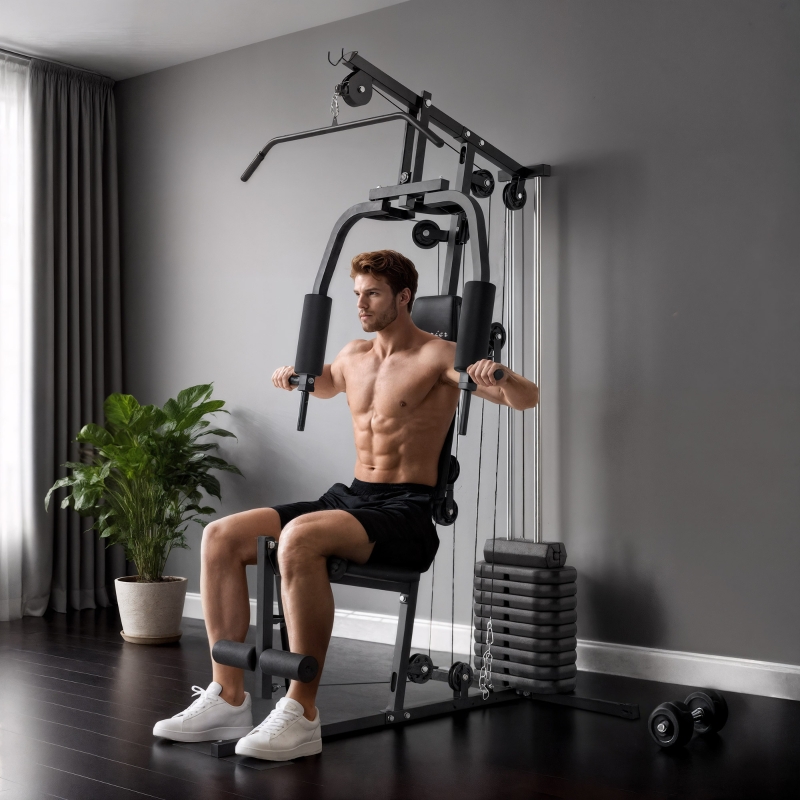
Credit: www.aosom.ca
Frequently Asked Questions
What Equipment Is Essential For A Full Body Home Gym?
Essential equipment includes dumbbells, resistance bands, a bench, and a pull-up bar. These tools target all major muscle groups effectively.
How Can I Build Muscle With A Home Gym Setup?
Use progressive overload by gradually increasing weights or resistance. Combine strength training exercises targeting different muscles for balanced growth.
Is A Full Body Home Gym Suitable For Beginners?
Yes, it’s ideal for beginners. You can start with light weights and simple exercises, gradually increasing intensity safely.
How Much Space Do I Need For A Home Gym?
A compact space of around 50-100 square feet is sufficient. Focus on multi-functional equipment to maximize limited areas.
Conclusion
Building a full body home gym saves time and money. You can exercise anytime, in your own space. It helps you stay healthy and strong every day. Choose equipment that fits your needs and budget. Small steps lead to big fitness results.
Enjoy the freedom to work out your way. Start simple, grow your gym over time. Your health is worth the effort and care.







