
Are you ready to transform your home workouts but unsure which exercise bike suits you best? Dive into the world of exercise bike types, where each model offers unique benefits tailored to your fitness goals and lifestyle.
Imagine having the perfect bike that not only fits your space but also motivates you to pedal towards a healthier you. Whether you’re a beginner or a seasoned cyclist, understanding the different types of exercise bikes can revolutionize your fitness routine.
Stick with us as we unravel the features, advantages, and ideal matches for each type, ensuring you make an informed decision that keeps you excited to hop on your bike every day.

Credit: www.menshealth.com
Benefits Of Exercise Bikes
Exercise bikes offer a range of benefits that can fit almost any lifestyle or fitness goal. Whether you want to burn calories, build stamina, or just stay active, these machines provide a convenient and effective way to get moving. You might be surprised how much a few minutes on an exercise bike can improve your day.
Improves Cardiovascular Health
Riding an exercise bike regularly strengthens your heart and lungs. It helps increase your heart rate safely, which improves blood circulation and reduces the risk of heart disease. You don’t need to push too hard; even moderate sessions can make a big difference over time.
Supports Weight Loss And Muscle Tone
Exercise bikes help you burn calories efficiently, aiding weight loss when combined with a healthy diet. They also engage your leg muscles, including quads, hamstrings, and calves. Over time, you’ll notice better muscle tone and endurance without the joint strain that running can cause.
Offers Low-impact Workout
If you have joint pain or arthritis, exercise bikes are a smart choice. They provide a smooth, low-impact workout that’s gentle on your knees, hips, and ankles. You can push yourself without worrying about injury, making it easier to stick with your routine.
Convenience And Accessibility
One of the biggest perks is that you can use an exercise bike anytime, regardless of weather or time constraints. It fits easily into your home or office space. This means you can squeeze in a quick session while watching TV or during your lunch break.
Boosts Mental Health And Focus
Physical activity on an exercise bike releases endorphins, which improve your mood and reduce stress. It can also increase your concentration and energy levels throughout the day. Have you ever noticed how a quick bike ride clears your mind and helps you focus better afterward?
Magnetic Resistance Bikes
Magnetic resistance bikes offer a smooth and quiet cycling experience that many users appreciate. These bikes use magnets to create resistance instead of traditional friction pads, which means less noise and wear over time. If you value a peaceful workout environment, magnetic resistance might be the perfect choice for your exercise routine.
How Magnetic Resistance Works
Magnetic resistance bikes use magnets placed near the flywheel to control the difficulty of pedaling. When you adjust the resistance, the magnets move closer or farther from the flywheel, changing the magnetic field strength. This makes pedaling harder or easier without any physical contact.
This contactless system means less maintenance because there are no parts rubbing against each other. You’ll notice the ride feels smoother, and the resistance adjustments are often very precise. Have you ever struggled with noisy exercise equipment? Magnetic resistance can solve that problem.
Pros And Cons
| Pros | Cons |
|---|---|
| Quiet operation, great for home use | Usually more expensive than friction bikes |
| Low maintenance due to no physical contact | Resistance may feel less natural to some users |
| Smooth and consistent resistance adjustments | Electronic models require power source, adding complexity |
| Durable and long-lasting components | Some models may have limited maximum resistance |
Choosing a magnetic resistance bike means weighing quieter rides and less upkeep against a higher price tag. Consider what matters more to you: silence and smoothness or budget-friendly options. How important is noise level in your workout space?
Friction Resistance Bikes
Friction resistance bikes offer a simple yet effective way to get your workout done. These bikes use a basic system where a pad presses against the flywheel to create resistance. This straightforward design makes them popular among beginners and those looking for a budget-friendly option.
Mechanics Of Friction Resistance
The key component in friction resistance bikes is the brake pad. When you increase resistance, this pad pushes harder against the flywheel, making it tougher to pedal.
This system is mechanical and doesn’t rely on electronics, which means fewer parts can break. However, friction pads can wear out over time and may need replacing.
Think about the last time you adjusted the tension on a friction bike—did you notice it gets harder to pedal smoothly as the pads wear? That’s the natural effect of friction resistance working through physical contact.
Advantages And Drawbacks
- Advantages:Friction resistance bikes are usually cheaper and easy to maintain. Their mechanical nature means you don’t need batteries or power outlets, making them versatile for any space.
- Drawbacks:Noise can be an issue, as the rubbing sound may distract you during workouts. Also, the brake pads wear out and need replacement, adding to long-term costs.
- Resistance adjustment isn’t always smooth, which can make gradual intensity changes tricky. Have you ever struggled to find the right resistance level on one of these bikes?
Despite these drawbacks, friction resistance bikes provide a solid workout if you’re okay with some maintenance and noise. They prove that simple mechanics can still deliver effective exercise.
Fan Resistance Bikes
Fan resistance bikes stand out because of their unique way of creating workout intensity. Unlike magnetic or friction bikes, these use a large fan to generate resistance. The harder you pedal, the stronger the resistance becomes, giving you a natural challenge that adjusts to your effort.
Working Principle
The core of a fan resistance bike is its big, spinning fan. When you pedal, the fan blades cut through the air, and this airflow creates resistance. This means resistance grows with your speed—pedal faster, and it gets tougher.
This self-adjusting system means you don’t need to change settings manually. The bike responds instantly to your effort, which can keep you more engaged during workouts.
Key Benefits And Limitations
- Benefits:The resistance is smooth and natural, matching your pedaling power perfectly.
- Benefits:Fan bikes also provide a cooling breeze as you pedal, which can help during intense sessions.
- Limitations:They tend to be noisier than magnetic bikes, so if you prefer quiet workouts, this might be a downside.
- Limitations:Fan resistance bikes can be bulkier due to the large fan, making them less ideal for small spaces.
Have you ever noticed how your effort feels more connected on a fan bike? This immediate feedback can push you to pedal harder without even thinking about it. If you want a workout that reacts directly to your strength and speed, fan resistance bikes might fit your style perfectly.
Recumbent Exercise Bikes
Recumbent exercise bikes offer a comfortable and low-impact workout option. They have a unique design that supports the back and reduces strain. This type of bike suits those who want gentle exercise with good support.
Design Features
- Seat with backrest for better support
- Pedals positioned in front of the body
- Wider, larger seat for comfort
- Lower step-through frame for easy access
- Digital displays showing speed, distance, and calories
- Adjustable seat and handlebars for a custom fit
Ideal Users
- People with lower back pain or joint issues
- Older adults needing gentle exercise
- Beginners new to cardio workouts
- Anyone seeking low-impact, seated exercise
- Rehabilitation patients recovering from injuries

Credit: www.cyclingweekly.com
Upright Exercise Bikes
Upright exercise bikes mimic the traditional outdoor cycling position, putting you in a seated posture similar to riding a road bike. They are a popular choice for those who want a straightforward, no-fuss cardio workout. You might find these bikes in gyms, but they also fit well in home setups due to their compact design.
Posture And Comfort
On an upright exercise bike, you sit with your back straight and hands on the handlebars in front of you. This posture engages your core and back muscles more than other bike types. If you’ve ever felt neck or lower back strain on a bike, adjusting the seat height can make a big difference in comfort.
Many users appreciate the upright bike’s similarity to outdoor riding, which makes workouts feel natural. However, the seats tend to be narrower and harder, so adding a padded seat cover can improve comfort for longer sessions. You should also check if the bike allows easy handlebar adjustments to avoid shoulder tension.
Best Use Cases
- Cardio workouts:Upright bikes are ideal for steady-state cardio that helps improve heart health and endurance.
- Weight loss:These bikes support calorie burning through moderate to intense sessions, especially when you vary resistance levels.
- Rehabilitation:If you’re recovering from an injury, the upright bike’s natural position offers low-impact exercise without excessive strain.
- Indoor cycling training:Cyclists who want to maintain road cycling form during off-seasons often prefer upright bikes.
Think about your fitness goals and how you feel while riding. Are you aiming for comfort during longer rides or quick, intense workouts? Your answers will help decide if an upright exercise bike fits your routine perfectly.
Foldable Exercise Bikes
Foldable exercise bikes offer a practical solution for people with limited space. These bikes can be easily collapsed and stored away. They fit nicely in small apartments, offices, or any tight area. Despite their compact size, they provide effective workouts. Foldable bikes combine convenience and fitness in one device.
Space-saving Benefits
Foldable bikes take up very little room. You can fold and tuck them under a bed or inside a closet. This feature makes them perfect for small living spaces. Moving them around is simple due to their lightweight design. They keep your home clutter-free and organized. You get the benefits of an exercise bike without sacrificing space.
What To Expect
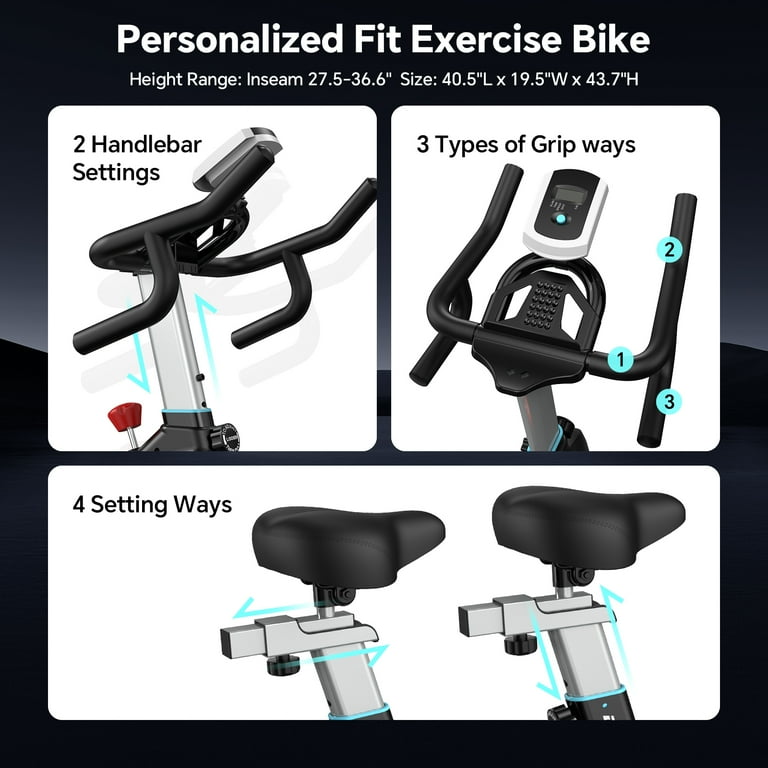
These bikes usually offer basic features for steady cardio workouts. Most have adjustable resistance levels to match your fitness needs. Expect a quiet ride, suitable for home use without noise disturbance. The seats and handlebars often adjust for comfort. Some models include small digital displays to track time and calories. They provide a straightforward way to stay active.
Credit: www.walmart.com
Smart Exercise Bikes
Smart exercise bikes have changed how you approach indoor cycling. These bikes combine fitness with technology, making workouts more engaging and tailored to your needs. If you want to track progress and stay motivated, a smart bike can be a game changer.
Technology Integration
Smart exercise bikes come equipped with advanced technology that connects to your devices seamlessly. Many models feature Bluetooth and Wi-Fi, allowing you to sync workout data with apps on your phone or tablet.
This connectivity helps you monitor your heart rate, speed, distance, and calories burned in real-time. Some bikes even adjust resistance automatically based on your workout program, so you don’t have to manually change settings.
Imagine your bike adjusting to hill climbs or sprints just like riding outdoors—this keeps your workout challenging and engaging without extra effort from you.
Interactive Features
Interactive features take smart exercise bikes beyond simple pedaling. Many offer live classes, virtual rides through scenic routes, and competitive leaderboards to push your performance.
You can join group rides with people worldwide or compete against yourself by beating past records. These features create a sense of community and motivation that can make workouts feel less like a chore.
Have you ever felt bored on a stationary bike? Interactive screens and real-time feedback can transform your experience, turning exercise into an immersive activity that you look forward to every day.
Key Factors To Consider
Choosing the right exercise bike means looking beyond just the brand or style. You need to consider what fits your lifestyle, space, and goals. These key factors will help you pick a bike that you’ll actually use and enjoy.
Budget And Price Range
Exercise bikes come in a wide range of prices. Setting a clear budget saves you from overspending on features you might never use. Think about what matters most to you—durability, tech features, or simplicity.
Some bikes under $300 offer basic workouts, while models above $1,000 bring advanced tracking and comfort. Ask yourself: How often will you use the bike, and what features will keep you motivated?
Space Availability
Where will you place your exercise bike? Space is a critical factor that often gets overlooked. Measure your available area before buying to avoid surprises.
Compact folding bikes suit small apartments, while larger models with more stability need dedicated space. If your living area is tight, consider a bike that folds or can be easily moved.
Fitness Goals
Your fitness goals determine the type of exercise bike you need. Are you training for endurance, weight loss, or just staying active? Different bikes support different workout styles.
Spin bikes mimic outdoor cycling and offer high-intensity workouts, while upright bikes suit casual rides. Recumbent bikes provide back support, great for rehabilitation or low-impact exercise.
Comfort And Adjustability
Comfort directly affects how long you’ll stick to your workouts. Look for adjustable seats and handlebars to match your body size and shape. Poor fit can lead to discomfort or injury.
Some bikes offer padded seats, ergonomic designs, and easy resistance changes. Have you tried sitting on a bike before buying? Testing comfort can save you regret later.
Tips For Maintenance
Keeping your exercise bike in top shape ensures a smooth, safe, and effective workout every time. Regular maintenance saves you money and frustration by preventing breakdowns and extending the bike’s lifespan. Here are some practical tips to help you care for your exercise bike efficiently.
Cleaning Your Exercise Bike Regularly
Dust and sweat can build up on your bike, affecting its performance and hygiene. Wipe down the frame, handlebars, and seat with a damp cloth after each use to avoid corrosion and sticky surfaces.
Don’t forget to clean the pedals and display screen gently. A clean bike feels better to use and motivates you to stay consistent with your workouts.
Lubricating Moving Parts
Friction wears down parts quickly. Apply lubricant to the chain, flywheel, and other moving components every few weeks to keep them running smoothly.
Use bike-specific lubricants for the best results. Avoid over-lubricating—too much oil can attract dirt and cause more harm than good.
Checking And Tightening Bolts
Vibrations from your workout loosen bolts and screws over time. Regularly inspect these to ensure everything stays secure and stable.
Loose bolts can lead to unsafe riding conditions or damage to the bike. Keep a set of tools handy so you can tighten parts as soon as you notice any wobble.
Monitoring The Resistance System
Whether your bike uses magnetic, friction, or air resistance, keeping this system in good shape is crucial. Look for signs of wear or reduced responsiveness in resistance levels.
Adjust or replace worn pads and check cables for fraying if your bike uses mechanical resistance. Smooth resistance means a better workout and less strain on your machine.
Inspecting The Seat And Handlebars
Comfort is key during workouts. Check the seat and handlebars for cracks, loose bolts, or uncomfortable wear.
Adjust the height and position regularly to avoid strain on your body. A well-maintained seat and handlebars improve your posture and prevent injuries.
Testing The Electronics
If your bike has a digital display or heart rate monitor, test these components regularly. Ensure batteries are fresh and connections are clean.
Malfunctioning electronics can distract you or give inaccurate workout data. Reliable gadgets help you track progress and stay motivated.
Frequently Asked Questions
What Are The Main Types Of Exercise Bikes?
The main types include upright, recumbent, and indoor cycling bikes. Each type offers different riding positions and benefits. Upright bikes mimic outdoor cycling, recumbent bikes provide more comfort, and indoor cycling bikes suit intense workouts. Choose based on your fitness goals and comfort preferences.
Which Exercise Bike Is Best For Beginners?
Recumbent exercise bikes are best for beginners. They offer a comfortable seating position and lower back support. This reduces strain and helps new users exercise longer. The pedals are positioned in front, making it easier to pedal and maintain balance.
How Do Indoor Cycling Bikes Differ From Upright Bikes?
Indoor cycling bikes have a more aggressive riding position. They mimic outdoor racing bikes with a forward-leaning posture. Upright bikes have a more relaxed, upright posture. Indoor cycling bikes are ideal for high-intensity workouts and improved cardiovascular fitness.
Are Exercise Bikes Effective For Weight Loss?
Yes, exercise bikes are effective for weight loss. They burn calories and improve cardiovascular health. Regular cycling combined with a balanced diet helps reduce body fat. Different bike types offer varying intensity levels to match your fitness plan.
Conclusion
Choosing the right exercise bike depends on your fitness goals and space. Each type offers unique benefits. Upright bikes save space and feel like regular bikes. Recumbent bikes give extra back support and comfort. Spin bikes are great for intense workouts.
Think about your needs and budget before buying. A good bike helps you stay active and healthy. Start with what suits you best and enjoy the ride.







