
Are you looking to level up your fitness game without the hassle of free weights or crowded group classes? A machine workout routine might be just what you need.
Imagine walking into the gym, knowing exactly which machines to use and how to use them effectively. No more guesswork, just a clear path to achieving your fitness goals. With the right machine workout routine, you can target specific muscle groups, improve your strength, and enhance your overall fitness in a structured way.
Plus, it’s a great option if you’re seeking a safer and more controlled workout environment. Stick around to discover how you can transform your gym sessions into powerhouse workouts that deliver real results. Whether you’re a beginner or a seasoned gym-goer, this guide is tailored for you. Let’s get started on sculpting the physique you desire, one machine at a time.
Benefits Of Machine Workouts
Machine workouts offer many benefits for fitness enthusiasts. They help target specific muscles effectively. Using machines can improve workout quality and reduce injury risks. These workouts suit all fitness levels, especially beginners. Consistent resistance and guided motion make exercises easier to perform and track.
Enhanced Muscle Isolation
Machines allow precise targeting of individual muscles. This isolation helps strengthen weak areas and correct imbalances. It also improves muscle definition and tone. Controlled movements reduce the chance of using other muscles unintentionally. This focus leads to better workout results.
Safety And Support
Machines provide stability and control during exercises. They guide the correct movement path, lowering injury risks. Supportive seats and handles improve balance. This feature benefits those recovering from injuries or with limited mobility. Users can lift weights safely without a spotter.
Beginner-friendly Design
Workout machines are easy to use and understand. Instructions are often displayed on the machine itself. Beginners can quickly learn proper form and technique. Adjustable settings allow gradual progress based on fitness level. This design boosts confidence and motivation to exercise.
Consistent Resistance
Machines offer steady resistance throughout the entire movement. This consistency improves muscle engagement and strength gains. Users can set exact weights for each session. Progress becomes easier to track and measure. It also ensures balanced muscle development on both sides.
Key Machines For Muscle Growth
Machines play an important role in muscle growth. They guide your movements and reduce injury risks. Using machines helps target specific muscles effectively. They are great for both beginners and experienced lifters. Consistent use of key machines builds strength and muscle size steadily.
Leg Press
The leg press machine strengthens your thighs, hips, and glutes. It allows heavy lifting with support for your back. This machine helps improve lower body power and muscle tone. Adjust the seat to keep your knees safe during exercise.
Chest Press
The chest press focuses on your chest, shoulders, and triceps. It mimics the bench press but with controlled motion. Using this machine increases upper body strength and muscle mass. Keep your back flat and push steadily for best results.
Lat Pulldown
The lat pulldown targets the back muscles, especially the latissimus dorsi. It helps widen your back and improve posture. Use a wide grip for full muscle activation. Pull the bar down to your chest with smooth control.
Shoulder Press
The shoulder press builds your deltoids and upper arms. It strengthens the muscles that support overhead movements. Sit upright and press the handles above your head. Avoid locking your elbows at the top to protect joints.
Seated Row
The seated row machine works the middle back and biceps. It improves posture and pulls strength. Keep your back straight and pull the handle toward your waist. Control the movement to maximize muscle engagement.
Leg Curl And Extension
Leg curl and extension machines focus on hamstrings and quadriceps. They isolate these muscles for balanced leg development. Adjust the machine to fit your leg length. Perform slow, controlled reps for better muscle growth.
Designing Your Machine Routine
Designing your machine workout routine takes planning and focus. A clear plan helps you make steady progress and avoid injuries. Machines guide your movements, making workouts safer and easier for beginners. Tailoring your routine to your goals maximizes results and keeps you motivated.
Setting Clear Goals
Start by deciding what you want to achieve. Do you want to build strength, lose weight, or improve endurance? Setting clear goals helps you choose the right machines and exercises. Write down your goals to stay focused and track progress. Goals should be specific and realistic.
Balancing Muscle Groups
Work all major muscle groups for a balanced body. Include exercises for legs, back, chest, shoulders, and arms. Balance prevents muscle imbalances that cause pain or injury. Alternate between upper and lower body machines in your routine. This approach improves overall strength and posture.
Choosing Reps And Sets
Reps are the number of times you do an exercise. Sets are groups of reps. For strength, do fewer reps with heavier weight. For endurance, do more reps with lighter weight. A common plan is 3 sets of 8 to 12 reps. Adjust reps and sets based on your goals and fitness level.
Incorporating Progressive Overload
Progressive overload means increasing the challenge over time. Raise the weight, reps, or sets to keep improving. This forces muscles to grow stronger and adapt. Track your workouts to know when to increase the load. Small, steady increases work best to avoid injury.
Credit: www.jefit.com
Sample Machine Workout Plans
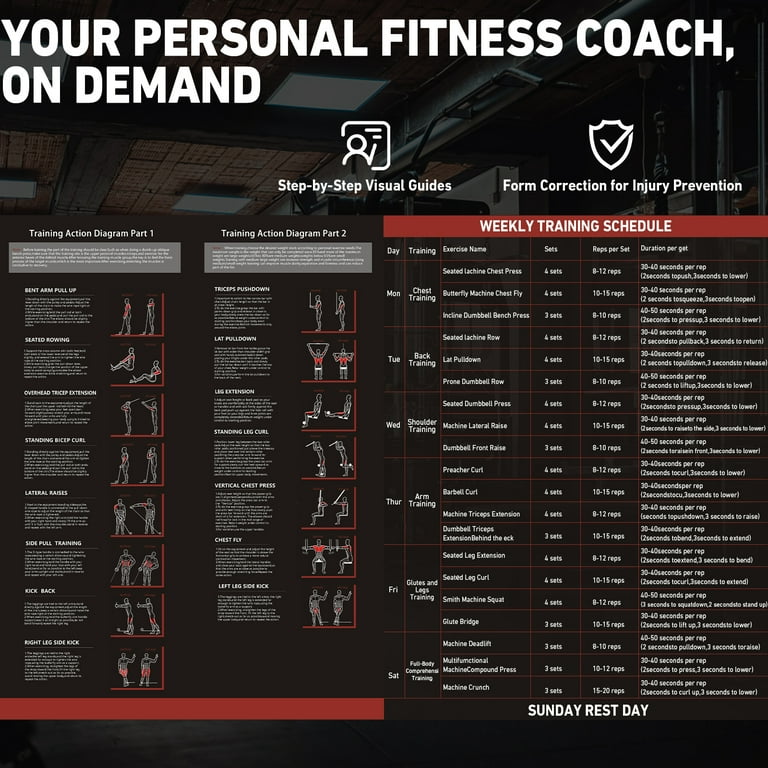
Sample machine workout plans help structure your gym time effectively. They guide your progress from easy to hard exercises. Each plan targets different fitness levels and goals. These routines focus on building strength, endurance, and muscle tone using machines.
Beginner Routine
- Leg Press: 3 sets of 12 reps
- Chest Press: 3 sets of 10 reps
- Lat Pulldown: 3 sets of 10 reps
- Seated Row: 3 sets of 10 reps
- Shoulder Press: 2 sets of 10 reps
- Leg Curl: 3 sets of 12 reps
- Ab Crunch Machine: 3 sets of 15 reps
Rest for 60 seconds between sets. Use light weights to learn proper form.
Intermediate Routine
- Leg Press: 4 sets of 12 reps
- Chest Press: 4 sets of 12 reps
- Lat Pulldown: 4 sets of 12 reps
- Seated Row: 4 sets of 12 reps
- Shoulder Press: 3 sets of 12 reps
- Leg Curl: 4 sets of 12 reps
- Ab Crunch Machine: 4 sets of 20 reps
Increase weight slightly. Keep rest periods at 45 seconds for more challenge.
Advanced Routine
| Exercise | Sets | Reps | Rest |
|---|---|---|---|
| Leg Press | 5 | 15 | 30 seconds |
| Chest Press | 5 | 15 | 30 seconds |
| Lat Pulldown | 5 | 15 | 30 seconds |
| Seated Row | 5 | 15 | 30 seconds |
| Shoulder Press | 4 | 15 | 30 seconds |
| Leg Curl | 5 | 15 | 30 seconds |
| Ab Crunch Machine | 5 | 25 | 30 seconds |
Use heavier weights. Short rests keep your heart rate up.
Tips For Maximizing Muscle Gains
Maximizing muscle gains from your machine workout routine goes beyond just showing up at the gym. It demands attention to detail in how you perform exercises, how you recover, what you eat, and how you monitor your progress. Paying close attention to these areas can turn your effort into real, visible results faster than you might expect.
Proper Form And Technique
Using machines with correct form is key to targeting the right muscles and avoiding injury. Focus on controlled, smooth movements rather than rushing through reps. If you’re unsure about your technique, don’t hesitate to ask a trainer or watch instructional videos to get it right.
Remember, even the best machine won’t help if you’re not engaging the muscle properly. Small adjustments in posture or grip can make a big difference in which muscles activate during your workout.
Rest And Recovery
Your muscles grow when you rest, not while you’re working out. Allow at least 48 hours between working the same muscle groups to let them repair and strengthen. Overworking can lead to fatigue and stalled progress.
Quality sleep and stress management also play a huge role. Have you noticed days when you’re well-rested, your lifts feel easier? That’s your body ready to build muscle.
Nutrition For Muscle Growth
You can’t out-train a poor diet. Eating enough protein supports muscle repair and growth. Aim for sources like chicken, fish, beans, or tofu.
Don’t forget carbs and fats—they provide the energy needed for intense workouts and recovery. Try to eat balanced meals around your training times to fuel your body effectively.
Tracking Progress
Keep a workout journal or use an app to log exercises, weights, and reps. This helps you see patterns and know when to increase the challenge. Are you lifting heavier or doing more reps than last week? That’s progress.
Photos or body measurements can also show changes that the scale might miss. Tracking keeps you motivated and focused on your goals.

Credit: thenordstick.com
Common Mistakes To Avoid
Many people make simple mistakes during machine workouts that reduce results. Avoid these errors to train smarter and safer. Understanding common pitfalls helps you get the best from every session.
Machines guide your movement but do not replace good form and balance. Overlooking important steps can lead to injury or slow progress.
Overreliance On Machines
Relying only on machines limits muscle development and flexibility. Machines fix your path, reducing natural movement. This can weaken stabilizing muscles and reduce overall strength. Include other training types for balance and better fitness.
Ignoring Free Weights
Free weights improve coordination and engage more muscles. Skipping them misses these benefits and slows progress. They help build functional strength useful in daily activities. Combine machine workouts with free weight exercises for full benefits.
Poor Machine Settings
Wrong seat height or weight settings cause discomfort and reduce workout effectiveness. Improper alignment can lead to strain or injury. Always adjust machines to fit your body before starting. Take time to learn correct settings for each machine.
Skipping Warm-up And Cool-down
Jumping straight into intense exercise increases injury risk. Warm-ups prepare muscles and joints for movement. Cool-downs help recovery and reduce soreness. Spend at least 5 minutes warming up and cooling down during every workout.
Credit: www.walmart.com
Frequently Asked Questions
What Is A Machine Workout Routine?
A machine workout routine uses gym machines to target specific muscles. It offers controlled movements, safety, and is beginner-friendly.
How Often Should I Follow A Machine Workout Routine?
Aim for 3 to 4 sessions per week. Consistency helps build strength and improves muscle tone effectively.
Can Machine Workouts Replace Free Weights?
Machine workouts complement free weights but don’t fully replace them. Machines provide stability; free weights enhance balance and coordination.
What Are The Benefits Of Machine Workouts?
Machine workouts reduce injury risk, isolate muscles well, and are easy to learn. They suit all fitness levels.
Conclusion
A machine workout routine helps build strength safely and effectively. It suits beginners and those who want guided movement. Machines support proper form and reduce injury risk. Regular use improves muscle tone and endurance. Combine these exercises with good nutrition and rest.
Stay consistent to see steady progress over time. Remember, small steps lead to big changes. Keep your focus and enjoy the process. This routine fits well into busy lifestyles too. Give it a try and feel the benefits soon.







