
You use gym equipment to stay healthy and strong, but do you know what to clean it with? Your workout gear can hide sweat, dirt, and germs that might cause infections or bad odors.
Cleaning your equipment the right way keeps you safe and makes your workouts more enjoyable. You’ll discover simple, effective ways to clean your gym gear using products you probably already have at home. Stick with me, and you’ll never worry about dirty equipment again.
Credit: blog.dynamofitness.com.au
Essential Cleaning Supplies
Keeping your gym equipment clean is more than just a routine chore—it’s essential for your health and the longevity of the machines. Having the right cleaning supplies on hand makes the task easier and more effective. Let’s look at what you really need to keep your gear spotless and safe.
Types Of Cleaning Agents
Choosing the right cleaning agent depends on what kind of equipment you have and the level of dirt or sweat buildup. Common options include:
- Disinfectant sprays:These kill germs and bacteria quickly, perfect for high-touch surfaces like handles and seats.
- All-purpose cleaners:Good for general dirt and grime without harsh chemicals.
- Specialty gym wipes:Convenient and pre-moistened with sanitizers, ideal for quick cleanups between workouts.
Have you noticed how some machines seem to attract more sweat and grime? Using the right cleaner can make a huge difference in maintaining hygiene.
Natural Vs Chemical Cleaners
Natural cleaners, like vinegar and baking soda, are gentle and eco-friendly. They work well for removing sweat stains and mild odors but may not kill all bacteria effectively.
Chemical cleaners, on the other hand, offer stronger disinfection but can sometimes irritate skin or damage equipment finishes if not used properly. It’s a balance—you want a cleaner that’s tough on germs but safe for your gear and your skin.
Think about what matters most to you: Are you aiming for a green cleaning routine or maximum germ kill? Your choice will shape your cleaning supplies.
Tools For Effective Cleaning
Having the right tools makes cleaning faster and more thorough. Essential items include:
- Microfiber cloths:These trap dust and sweat better than regular towels and won’t scratch surfaces.
- Soft-bristle brushes:Useful for scrubbing textured grips or pedals without damage.
- Spray bottles:Handy for mixing and applying cleaning solutions evenly.
I used to clean with paper towels until I switched to microfiber cloths—what a difference! They absorb more and leave no streaks.

Credit: zogics.com
Cleaning Different Equipment Materials
Use mild soap and water to clean gym equipment surfaces without damaging materials. Avoid harsh chemicals on rubber, leather, and metal parts to keep them in good condition. Wipe equipment dry after cleaning to prevent rust and wear.
Cleaning gym equipment is essential for maintaining hygiene and functionality. Different materials require different cleaning approaches. This ensures longevity and user safety. Here’s a guide on cleaning various equipment materials effectively.Metal Frames And Handles
Metal parts are common in gym equipment. Use a mild detergent mixed with water. Wipe surfaces with a soft cloth. This removes dirt and sweat effectively. Dry immediately to prevent rust. Avoid abrasive cleaners that can scratch the metal. Regular cleaning keeps the metal shiny and rust-free.Rubber And Foam Surfaces
Rubber and foam are used in grips and mats. Clean with a gentle soap solution. Use a soft sponge to wipe the surfaces. Rinse with a damp cloth to remove soap residue. Allow to air dry completely. Avoid harsh chemicals that can degrade these materials. Regular care keeps them flexible and intact.Upholstered Pads And Seats
Upholstered parts need careful attention. Use a mild fabric cleaner or soapy water. Apply with a soft cloth and scrub gently. Dry with a clean towel to prevent moisture damage. Stains require immediate attention with a suitable spot cleaner. Regular cleaning prevents wear and extends life.Electronic Displays And Controls
Electronic parts need a different approach. Use a microfiber cloth to wipe dust and fingerprints. Dampen the cloth slightly with water. Avoid direct application of liquids to prevent damage. Never use harsh chemicals on electronics. Regular cleaning ensures clarity and functionality of displays.Step-by-step Cleaning Process
Cleaning gym equipment properly keeps it safe and in good shape. A clear process helps avoid damage and removes germs effectively. Follow these simple steps to clean gym tools well.
Pre-cleaning Preparation
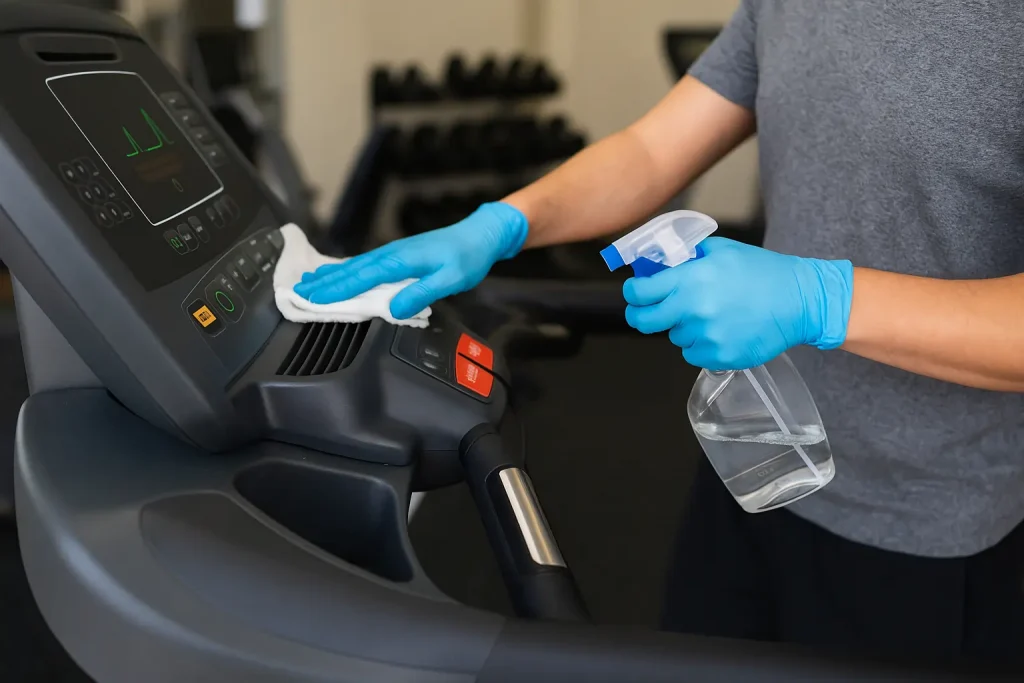
Gather cleaning supplies: mild soap, water, disinfectant spray, and soft cloths. Wear gloves to protect your hands. Turn off any electrical machines and unplug them. Remove loose dirt and sweat with a dry cloth. Check the equipment for any damage before cleaning.
Disinfecting High-touch Areas
Focus on handles, buttons, and seats. Spray disinfectant on a cloth, not directly on equipment. Wipe all high-touch areas thoroughly. Let the disinfectant sit for the time on the label. Avoid harsh chemicals that can damage surfaces.
Drying And Maintenance Tips
Use a clean, dry cloth to remove moisture. Allow equipment to air dry fully before use. Regularly check moving parts and tighten loose screws. Clean gym equipment at least once a day in busy areas. Store cleaning supplies nearby for easy access.
Frequency And Scheduling
Keeping gym equipment clean requires a clear plan for frequency and scheduling. Regular cleaning stops germs and sweat buildup. It also keeps machines working well and safe to use. Set specific times for cleaning tasks to keep the gym fresh and inviting. This helps users feel comfortable and reduces illness risk.
Daily Cleaning Tasks
Focus on wiping down high-touch surfaces every day. Use disinfectant sprays or wipes on handles, seats, and buttons. Clean sweaty mats and benches after each use. Empty trash bins and replace liners daily. This routine keeps germs from spreading fast.
- Wipe equipment handles and seats
- Disinfect buttons and touchscreens
- Clean mats and benches after use
- Empty trash bins and replace liners
Weekly Deep Cleaning
Set aside time once a week for a thorough cleaning. Remove dust from vents and fans. Use stronger cleaners on frames and hard-to-reach spots. Check for mold or mildew around damp areas. Deep cleaning prevents buildup and extends equipment life.
- Dust vents and fans
- Clean frames and joints
- Inspect and remove mold or mildew
- Sanitize water fountains and lockers
When To Replace Cleaning Supplies
Cleaning tools lose effectiveness over time. Replace sponges, cloths, and wipes regularly. Check expiration dates on sprays and disinfectants. Use fresh supplies to maintain hygiene standards. Old or dirty tools spread germs instead of removing them.
- Replace cloths and sponges monthly
- Check and discard expired cleaners
- Restock disinfectant wipes weekly
- Store supplies in a clean, dry place
Safety Tips During Cleaning
Cleaning gym equipment is essential, but safety during the process is just as important. Handling cleaning agents and equipment carefully protects both you and the gear you use daily. Paying attention to safety tips can prevent accidents and extend the life of your gym tools.
Handling Chemicals Safely
Always read labels on cleaning products before use. Some chemicals can irritate your skin or eyes, so wearing gloves and eye protection is a smart move. Never mix cleaning agents like bleach and ammonia; this can create dangerous fumes.
Work in a well-ventilated area to avoid breathing in harsh chemicals. If you feel dizzy or lightheaded, stop immediately and get fresh air. Keep cleaning products out of reach of children and pets to prevent accidental poisoning.
Protecting Equipment Integrity
Not all gym equipment reacts well to every cleaner. Avoid using abrasive materials that can scratch surfaces or damage screens on machines. Instead, choose gentle, non-corrosive cleaners designed for fitness gear.
Test any new cleaner on a small, hidden area first to check for discoloration or damage. Wipe equipment dry after cleaning to prevent rust or buildup. Remember, preserving your equipment saves you money and keeps your workouts safe.
Avoiding Common Mistakes
Skipping the cleaning routine is a common mistake that leads to germs and unpleasant odors. Another error is over-wetting equipment, which can cause electrical issues or rust. Use just enough cleaner and a soft cloth for the best results.
Don’t rush the process; take time to clean all surfaces thoroughly. Are you sure you’re cleaning high-touch areas like handles and buttons properly? Missing these spots can leave germs behind, defeating the purpose of your efforts.
Diy Cleaning Solutions
Cleaning gym equipment at home can be simple and effective. DIY cleaning solutions use common ingredients that kill germs and remove sweat. These solutions save money and avoid harsh chemicals.
Making your own cleaner lets you control the ingredients. Many options are safe for gym surfaces and the environment. They also smell fresh and leave no sticky residue. Below are some easy recipes and tips to keep your gym gear spotless.
Homemade Disinfectant Recipes
- Mix equal parts water and white vinegar in a spray bottle. Add a few drops of tea tree oil for extra germ-fighting power.
- Combine 1 cup water, 1 cup rubbing alcohol, and 1 tablespoon liquid dish soap. Shake well before use.
- Use a solution of 3% hydrogen peroxide sprayed directly on equipment. Let it sit for 5 minutes, then wipe clean.
Eco-friendly Cleaning Hacks
- Use lemon juice mixed with water to cut grease and freshen surfaces.
- Make a baking soda paste with water to scrub tough stains on handles and mats.
- Reuse old cotton cloths or microfiber towels as cleaning rags to reduce waste.
Cost-effective Alternatives
- Use diluted vinegar instead of expensive commercial disinfectants.
- Opt for castile soap as a gentle, multi-purpose cleaner for various gym equipment.
- DIY spray bottles can be refilled multiple times, saving money over single-use products.
Maintaining Spotless Gear Long-term
Keeping gym equipment clean is essential for health and performance. Dirt and sweat build-up can damage machines and spread germs. Maintaining spotless gear long-term requires more than just wiping down surfaces after use. It involves regular checks, proper storage, and promoting good habits among users. These steps help extend the life of your equipment and ensure a safe workout environment.
Regular Inspection Routines
Inspect equipment often to catch dirt and damage early. Check handles, seats, and screens for grime. Look for rust or wear on metal parts. Clean surfaces with a gentle disinfectant suitable for gym gear. Replace or repair broken parts immediately. Regular inspections prevent small problems from becoming costly repairs.
Storage Best Practices
Store gym equipment in a dry, cool place to avoid rust and mold. Use covers for machines not in use. Keep smaller items like dumbbells and mats organized on racks. Avoid stacking heavy items to prevent damage. Proper storage protects gear from dust and moisture, preserving its condition.
Encouraging User Hygiene
Encourage users to wipe down equipment after use with provided cleaning wipes. Place hand sanitizer stations near gym areas. Remind users to wash hands before and after workouts. Promote wearing clean workout clothes and using personal towels. Good hygiene reduces germs and keeps equipment cleaner for everyone.
Credit: vaporfresh.com
Frequently Asked Questions
What Is The Best Cleaner For Gym Equipment?
The best cleaner is a mixture of water and mild soap. Alternatively, use disinfectant wipes or sprays designed for fitness gear. Avoid harsh chemicals that can damage surfaces or cause skin irritation.
How Often Should Gym Equipment Be Cleaned?
Gym equipment should be cleaned after every use. Regular cleaning prevents bacteria build-up and keeps equipment safe. Deep cleaning weekly is recommended for shared or commercial gym equipment.
Can I Use Vinegar To Clean Gym Equipment?
Yes, diluted vinegar is a natural disinfectant. Mix equal parts water and vinegar to clean surfaces. Avoid using undiluted vinegar as it may damage some materials.
Is It Safe To Use Bleach On Gym Equipment?
Bleach can disinfect but must be diluted properly. Use a mild bleach solution and rinse thoroughly to avoid damage. Frequent use may degrade equipment surfaces and cause skin irritation.
Conclusion
Cleaning gym equipment keeps it safe and ready to use. Use mild cleaners like soap and water or disinfectant wipes. Avoid harsh chemicals that may damage surfaces or harm skin. Wipe down machines after every use to stop germs from spreading.
Regular cleaning also helps equipment last longer. Stay consistent and make it a habit. Clean gear means a healthier workout space for everyone. Simple steps make a big difference in gym hygiene. Keep your fitness area fresh and safe every day.







