
Are you ready to push your limits and transform your fitness routine? A military workout plan might be exactly what you need.
Imagine having the strength, endurance, and mental toughness of a soldier. This type of workout isn’t just about building muscles; it’s about building a resilient mindset and a body that can handle anything. You don’t have to enlist to experience the benefits.
With this plan, you can train like the best right from your home or at the gym. Get ready to discover how you can elevate your fitness game and achieve results you never thought possible. Intrigued? Keep reading to uncover the secrets of a military workout plan and how it can revolutionize your health and fitness journey.

Credit: www.aol.com
Benefits Of Military Workouts
Military workouts offer more than just a way to get fit—they transform your body and mind in ways that standard exercise routines rarely do. These workouts are designed to push your limits, helping you build strength, stamina, and mental resilience. Have you ever wondered why soldiers seem unstoppable, both physically and mentally? The benefits of their training hold the answer.
Boosting Physical Strength
Military workouts focus heavily on building functional strength that you can use in real-life situations. They use bodyweight exercises like push-ups, pull-ups, and squats, combined with weighted movements, to develop muscle power evenly across your body.
This approach helps you avoid muscle imbalances and reduces the risk of injury. When I started training this way, I noticed my daily activities became easier—lifting heavy boxes or climbing stairs felt less taxing.
Enhancing Mental Toughness
Physical effort alone isn’t the goal; military workouts force you to push through discomfort and fatigue. This repeated challenge rewires your brain to handle stress better and stay focused under pressure.
Think about the last time you wanted to quit during a tough workout. Military training teaches you to keep going despite that urge. Over time, this builds a mindset of resilience that helps you face challenges outside the gym too.
Improving Endurance And Stamina
Military workouts improve your cardiovascular health by blending high-intensity intervals with longer endurance drills. This mix trains your heart and lungs to work efficiently, so you recover faster and perform better.
After adding these workouts to my routine, I noticed I could run longer distances without feeling exhausted. What areas in your life could benefit if your energy levels stayed high all day?
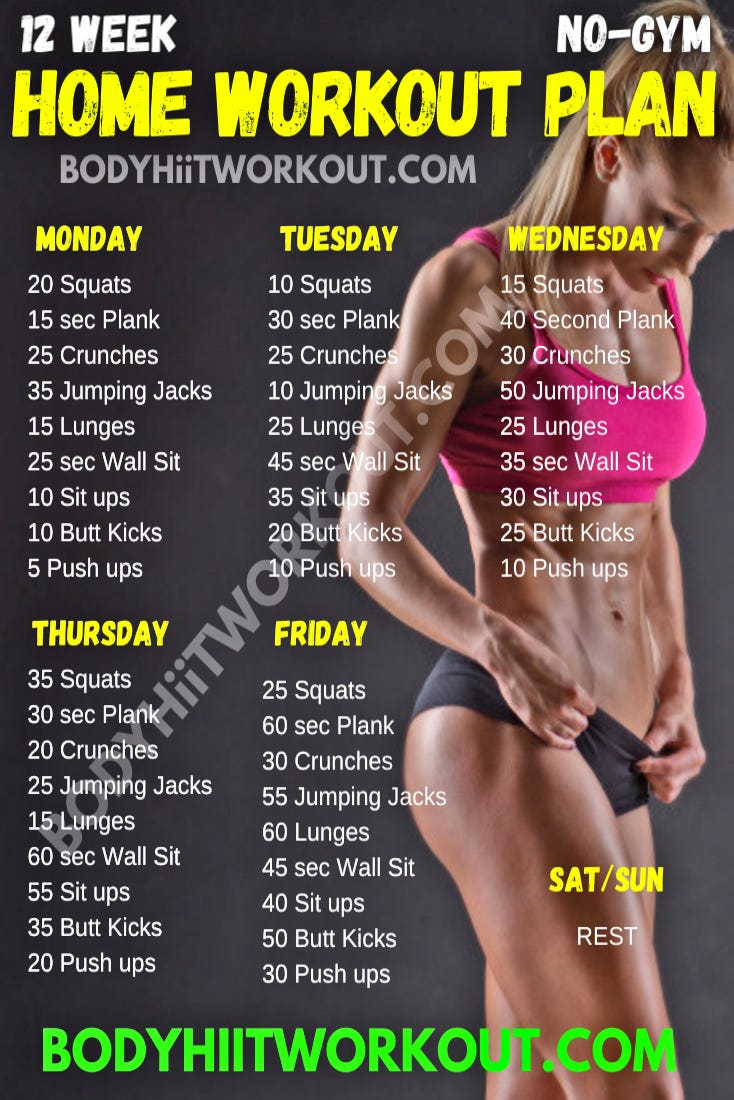
Credit: www.mercattoria.com.br
Key Components Of Military Training
Military training builds a strong body and mind. It prepares soldiers for tough physical challenges. Key components focus on strength, endurance, and flexibility. Each part plays a vital role in overall fitness.
Strength Training Exercises
Strength is essential in military fitness. Exercises target major muscle groups. Common moves include push-ups, pull-ups, and squats. Weightlifting helps build muscle power and endurance. Bodyweight exercises improve functional strength. These workouts boost performance in daily military tasks.
Cardiovascular Conditioning
Endurance is key for long missions and fast recovery. Running, cycling, and swimming increase heart and lung capacity. Interval training pushes the body to adapt quickly. Consistent cardio improves stamina and energy levels. It helps soldiers stay active under stress and fatigue.
Flexibility And Mobility Work
Flexible muscles reduce injury risk and improve movement. Stretching routines focus on hips, shoulders, and back. Mobility drills enhance joint range and control. Yoga and dynamic stretches prepare the body for action. This work supports strength and endurance training by keeping the body agile.
Effective Strength-building Exercises
Strength-building is a key part of any military workout plan. It improves muscle power, endurance, and overall fitness. Effective exercises target multiple muscle groups. This approach builds balanced strength for demanding physical tasks. Choose exercises that are simple yet challenging. They should increase strength without risking injury. Focus on movements that mimic real-life activities and enhance functional power.
Bodyweight Movements
Bodyweight exercises require no equipment. They build strength using your own body as resistance. Common moves include push-ups, pull-ups, and squats. These exercises improve muscle tone and endurance. They also enhance coordination and balance. Bodyweight workouts can be done anywhere. They are ideal for military training due to their simplicity and effectiveness.
Weighted Lifts
Weighted lifts add external resistance to workouts. This resistance helps build muscle size and strength faster. Popular lifts include deadlifts, bench presses, and squats. Use proper form to avoid injury. Start with lighter weights and increase gradually. Weighted lifts target major muscle groups. They improve power needed for lifting and carrying heavy loads.
Functional Training Techniques
Functional training focuses on natural body movements. It prepares muscles for everyday and combat activities. Exercises involve multiple muscle groups working together. Examples include kettlebell swings, medicine ball throws, and tire flips. These techniques improve strength, agility, and stability. Functional training enhances overall military fitness and readiness.
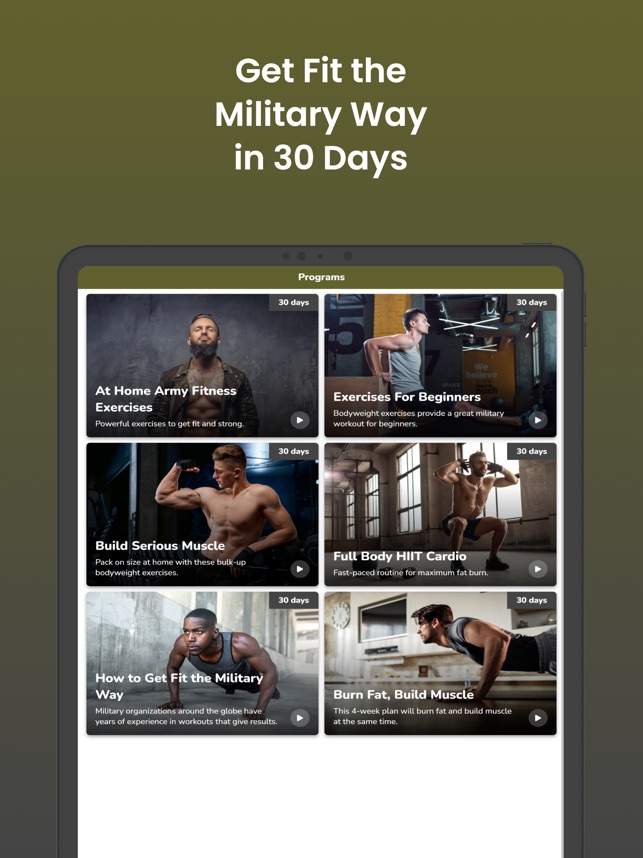
Credit: apps.apple.com
Sample Weekly Workout Plan
Here’s a sample weekly workout plan designed to build strength, endurance, and agility like military training. Each day targets a specific area of fitness, helping you stay balanced and avoid burnout. Ready to push yourself? This plan will challenge your limits while keeping recovery in mind.
Day 1: Upper Body Focus
Start your week by building upper body strength. Concentrate on exercises like push-ups, pull-ups, and dumbbell rows. These moves improve your chest, back, shoulders, and arms all at once.
- 3 sets of 15 push-ups
- 3 sets of 10 pull-ups (use assistance if needed)
- 3 sets of 12 dumbbell rows per arm
- 3 sets of 15 shoulder presses
How strong can your upper body get in just one week? Keep track and try to increase reps next session.
Day 2: Lower Body Strength
Focus on your legs and glutes today. Squats, lunges, and deadlifts will help you build power for running, jumping, and carrying loads. Don’t rush—form matters more than speed.
- 4 sets of 20 bodyweight squats
- 3 sets of 15 lunges per leg
- 3 sets of 12 deadlifts (use weights you can handle safely)
- 3 sets of 20 calf raises
Notice how your legs feel stronger or more tired? That’s a good sign your muscles are adapting.
Day 3: Cardio And Core
Cardio and core are key for stamina and stability. Combine running intervals with planks and leg raises to maximize your workout in less time. Keep your core tight to protect your back during all activities.
- 5 rounds of 1-minute sprint, 2-minute walk
- 3 sets of 60-second planks
- 3 sets of 20 leg raises
- 3 sets of 30-second mountain climbers
Ever tried sprinting then immediately holding a plank? It’s tougher than it sounds. How long can you hold your plank after a sprint?
Day 4: Full Body Circuit
Combine upper body, lower body, and cardio moves into one circuit. This keeps your heart rate up and challenges your muscles in different ways. Perform each exercise back-to-back with minimal rest.
- 15 push-ups
- 20 squats
- 10 pull-ups
- 15 burpees
- 20 lunges (10 per leg)
- Repeat circuit 3 times
Notice how quickly your heart races during the circuit? That’s your endurance improving.
Day 5: Active Recovery
Give your body a break without stopping completely. Light activities like walking, stretching, or yoga help reduce soreness and keep you moving. Recovery days prevent injury and keep you consistent.
- 30-minute brisk walk or easy jog
- 15 minutes of stretching focusing on tight areas
- Optional yoga or foam rolling session
How does your body feel after a recovery day? Use that feeling to plan your next workout intensity.
Nutrition Tips For Fast Muscle Gain
Nutrition plays a key role in fast muscle gain. Eating the right foods fuels your body for tough military workouts. Proper nutrition helps build strong muscles and speeds recovery. Focus on eating balanced meals and staying hydrated. Supplements can also support your muscle growth journey. Here are some essential nutrition tips to help you gain muscle quickly and safely.
Macronutrient Balance
Muscle growth needs a good balance of macronutrients: protein, carbohydrates, and fats. Protein repairs and builds muscle fibers. Aim for lean sources like chicken, fish, eggs, and beans. Carbohydrates give energy for intense workouts. Choose whole grains, vegetables, and fruits for steady fuel. Healthy fats support hormone production and overall health. Include nuts, seeds, and olive oil in your diet. Eating the right amounts helps muscles grow without excess fat.
Hydration Strategies
Water is essential for muscle function and recovery. Dehydration can reduce strength and slow muscle gain. Drink water before, during, and after workouts. Keep a water bottle close to remind yourself. Electrolytes like sodium and potassium help maintain fluid balance. Include foods like bananas, spinach, and yogurt. Avoid sugary drinks that can cause energy crashes. Proper hydration supports endurance and muscle repair.
Supplements To Consider
Supplements can support your diet but should not replace real food. Protein powders help meet daily protein needs. Creatine improves strength and muscle size. Branched-chain amino acids (BCAAs) may reduce muscle soreness. A multivitamin ensures you get all essential nutrients. Consult a healthcare provider before starting supplements. Use them wisely alongside a balanced diet and workout plan.
Recovery And Injury Prevention
Recovery and injury prevention are key to any military workout plan. Training hard without proper rest can cause harm. Your body needs time to heal and rebuild. Good recovery helps improve strength and endurance. Avoiding injuries keeps you consistent and ready for action.
Rest And Sleep Importance
Rest allows muscles to repair and grow stronger. Sleep boosts energy and sharpens focus. Aim for 7 to 9 hours of quality sleep each night. Avoid screens before bed to improve sleep quality. Take short breaks during workouts to reduce fatigue.
Stretching And Foam Rolling
Stretching increases flexibility and reduces muscle tightness. Do dynamic stretches before workouts to warm up. Static stretches after workouts help muscles relax. Foam rolling breaks up muscle knots and improves blood flow. Use foam rollers gently on sore areas for 5 to 10 minutes.
Recognizing Overtraining Signs
Overtraining can cause fatigue, aches, and poor performance. Watch for constant tiredness and trouble sleeping. Mood changes like irritability can signal overtraining. Persistent soreness and injury risk rise with too much training. Reduce workout intensity or take rest days if these signs appear.
Tracking Progress And Staying Motivated
Tracking progress is key in a military workout plan. It helps measure improvements and keeps motivation alive. Seeing small wins boosts confidence and pushes you forward. Staying motivated means focusing on your goals every day. Consistency builds strength and endurance over time. Without tracking, progress feels slow and hard to see.
Setting Realistic Goals
Realistic goals keep your workout plan on track. Set targets that match your fitness level. Goals should be clear and simple to follow. For example, aim to do 20 push-ups in a row. Gradually increase the number as you improve. Realistic goals prevent frustration and keep you moving.
Using Workout Journals
Workout journals help record daily exercises and results. Write down sets, reps, and how you feel. Tracking details shows progress over weeks and months. Journals make it easier to spot strengths and weaknesses. Use a notebook or a fitness app to log workouts. Reviewing past entries motivates you to keep going.
Joining Supportive Communities
Supportive communities provide motivation and advice. Connect with others who follow military workout plans. Share your achievements and challenges with the group. Encouragement from others helps maintain focus. Online forums, social media groups, or local clubs work well. Being part of a community creates a sense of belonging.
Frequently Asked Questions
What Is A Military Workout Plan?
A military workout plan is a structured exercise routine inspired by military training. It focuses on strength, endurance, and agility. The plan includes running, push-ups, sit-ups, and other bodyweight exercises to build overall fitness and discipline.
How Often Should I Follow A Military Workout?
For optimal results, follow a military workout plan 4-6 times per week. Consistency is key to improving strength and endurance. Rest days are important for muscle recovery and preventing injury.
Can Beginners Do A Military Workout Plan?
Yes, beginners can start a military workout plan. Begin with modified exercises and lower intensity. Gradually increase difficulty as fitness improves. It’s important to listen to your body and maintain proper form.
What Are The Benefits Of A Military Workout Plan?
Military workouts improve cardiovascular health, muscle strength, and mental toughness. They enhance endurance, flexibility, and overall physical fitness. This plan also builds discipline and resilience, useful for everyday life.
Conclusion
A military workout plan builds strength and endurance fast. It trains your body and mind to stay strong. Consistency matters most for real progress. Keep pushing yourself with each session. Rest and good food help your muscles grow. Use this plan to improve fitness every day.
Small steps lead to big results. Stay focused and enjoy the journey ahead.







