
Are you tired of diets that promise quick results but leave you feeling stuck and frustrated? The Metabolic Confusion Diet might be the change your body needs.
This unique approach keeps your metabolism guessing, helping you burn fat more effectively without starving yourself or counting every calorie. Imagine a diet that works with your body, not against it—giving you energy, flexibility, and real results. Keep reading to discover how this surprising strategy can transform your weight loss journey and make dieting feel less like a chore and more like a smart, sustainable lifestyle choice.
What Is Metabolic Confusion Diet
The Metabolic Confusion Diet is a unique eating plan designed to keep the body’s metabolism active. It involves changing calorie intake daily to prevent the body from adapting. This diet aims to help with weight loss and improve metabolic health.
By varying calorie consumption, the body does not slow down its energy use. This can avoid the common plateau seen in many diets. The diet mixes low-calorie and high-calorie days in a structured way.
How Metabolic Confusion Works
The diet confuses the metabolism by alternating calorie levels. On some days, you eat fewer calories. On others, you increase your calorie intake. This variation prevents the body from adjusting to a fixed calorie amount.
This approach encourages the body to burn fat more efficiently. It can improve energy levels and reduce hunger. The key is to follow the plan consistently for best results.
Benefits Of The Metabolic Confusion Diet
- Prevents metabolic slowdown
- Supports steady weight loss
- Reduces hunger and cravings
- Boosts energy and mood
- Encourages healthy eating habits
Who Should Try This Diet
This diet suits people who struggle with weight loss plateaus. It helps those who want a flexible eating plan. Anyone willing to track calorie intake daily can benefit.
It is not recommended for people with certain health conditions. Always check with a healthcare provider before starting any new diet.

Credit: www.amazon.com
How Metabolic Confusion Sparks Fat Loss
Metabolic Confusion Diet sparks fat loss by changing how your body uses energy. It stops your metabolism from getting used to one routine. This keeps your body burning calories efficiently. By mixing low and high-calorie days, it challenges your metabolism. This helps prevent fat storage and supports steady weight loss.
How Fluctuating Calories Boost Metabolism
Changing calorie intake prevents your metabolism from slowing down. On low-calorie days, your body uses stored fat for energy. On higher-calorie days, your metabolism stays active and strong. This cycle keeps your body guessing and burning more calories overall.
Preventing Metabolic Adaptation
Eating the same way every day makes your metabolism slow. Your body thinks it needs less energy. Metabolic confusion stops this by switching your calorie intake regularly. This prevents your metabolism from adapting and slowing fat loss.
Using Hormones To Promote Fat Burning
Metabolic confusion affects hormones like leptin and insulin. These hormones control hunger and fat storage. Changing calorie levels helps balance them better. This balance makes it easier for your body to burn fat, not store it.
Maintaining Muscle While Losing Fat
Metabolic confusion supports muscle retention by mixing calorie intake. Higher calorie days provide energy to preserve muscles. This is important because muscles help burn more calories even at rest. Keeping muscle mass supports long-term fat loss.
Key Principles Behind The Diet
The Metabolic Confusion Diet works by constantly changing how your body uses energy. Instead of sticking to one fixed plan, it switches things up to keep your metabolism alert. This approach helps prevent your body from adapting and slowing down calorie burning, which often happens with traditional diets.
Calorie Cycling Explained
Calorie cycling means you eat different amounts of calories on different days. Some days you consume more, and other days less. This keeps your metabolism guessing, so it doesn’t slow down like it might with a steady low-calorie diet.
For example, you might eat 2,000 calories one day, then drop to 1,200 the next. This variation helps your body burn fat more efficiently. Have you noticed how eating the same thing every day can get boring and stall progress? Calorie cycling solves that.
Macronutrient Variation
The diet also changes the balance of carbs, proteins, and fats regularly. Some days you focus on higher protein, other days more carbs or fats. This variety helps your body use different fuel sources and avoids metabolic slowdown.
Think about your last diet—did it always have the same carb or fat intake? Switching macronutrients can improve energy levels and fat loss. Try adjusting your meals weekly to see how your body responds.
Meal Timing Strategies
When you eat matters just as much as what you eat. The Metabolic Confusion Diet encourages you to vary meal timing to support metabolism. This might mean changing when you have your largest meal or how often you eat during the day.
For instance, some days you may have a big breakfast and light dinner, while on others, you reverse it. This keeps your body adapting and prevents it from settling into a predictable routine. Are you ready to experiment with your meal schedule to boost your metabolism?
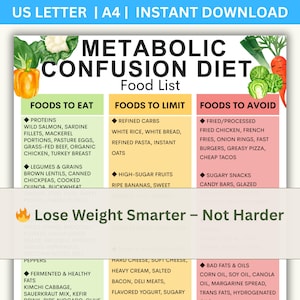
Credit: www.etsy.com
Benefits Of Metabolic Confusion
The Metabolic Confusion Diet offers unique benefits that can change how your body handles food and energy. It targets how your metabolism reacts to different calorie intakes, keeping it active and responsive. This approach can help you avoid common dieting issues, making your weight loss journey more effective and sustainable.
Boosting Metabolism
Switching between high-calorie and low-calorie days keeps your metabolism guessing. This variation stops your body from slowing down to conserve energy, which often happens on strict diets. You might notice more energy and better digestion as your metabolism stays active.
Imagine your metabolism as a fire that needs constant fuel changes to stay burning bright. By confusing it, you prevent it from adapting and slowing down, which can speed up fat burning.
Preventing Weight Loss Plateaus
Have you ever hit a point where your weight won’t budge despite your efforts? Metabolic Confusion helps avoid this by constantly changing your calorie intake, so your body doesn’t get used to one pattern. This keeps your fat loss steady over time.
Many people struggle with plateaus, but with this diet, your body is less likely to stall because it’s always responding to a new challenge. This can keep you motivated and on track toward your goals.
Sustaining Energy Levels
One of the hardest parts of dieting is feeling drained or tired. Metabolic Confusion provides your body with enough fuel on high-calorie days to recharge. On low-calorie days, your body learns to use energy efficiently without feeling depleted.
You might find you have more steady energy throughout the day, avoiding the crashes common in other diets. This balance helps you stay active and focused, which is key to long-term success.
Setting Up Your Metabolic Confusion Plan
Setting up your metabolic confusion plan requires clear steps. This plan changes your calorie intake daily. This change helps keep your metabolism active and efficient. Careful planning makes the diet easier and more effective.
Calculating Your Calorie Needs
First, find out how many calories your body needs. This number depends on your age, weight, height, and activity level. Use a calorie calculator or consult a nutrition guide. Calculate your maintenance calories—the amount to keep your weight stable.
Plan to alternate between higher and lower calorie days. Higher calorie days support energy and muscle. Lower calorie days help burn fat. Balance these days carefully to avoid losing muscle or energy.
Designing Your Meal Schedule
Create a meal schedule that fits your daily routine. Plan meals for both high and low calorie days. Aim for three main meals and one or two snacks. Keep meal times consistent to help your body adjust.
Vary your portion sizes according to calorie needs. On high calorie days, eat larger meals. On low calorie days, reduce portions but keep meals satisfying. This variety confuses your metabolism and aids weight loss.
Choosing The Right Foods
Focus on whole, nutrient-rich foods. Include lean proteins, healthy fats, and complex carbs. Proteins help build and repair muscles. Healthy fats support brain and hormone function. Complex carbs provide steady energy.
- Lean meats like chicken, turkey, and fish
- Vegetables such as broccoli, spinach, and carrots
- Whole grains like brown rice, oats, and quinoa
- Nuts and seeds for healthy fats
- Fruits in moderation for vitamins and fiber
Limit processed foods and sugary snacks. They add empty calories and disrupt metabolism. Drink plenty of water to stay hydrated and support digestion.
Sample Meal Plans And Recipes
Sample meal plans and recipes help simplify the Metabolic Confusion Diet. They guide calorie intake and nutrient balance for each day type. Meal ideas keep you on track and prevent boredom. Recipes show how to combine foods for best results.
Here are practical examples to try for high-calorie, low-calorie, and balanced macronutrient days.
High-calorie Day Ideas
- Breakfast: Oatmeal with peanut butter, banana, and honey
- Snack: Greek yogurt with mixed nuts and berries
- Lunch: Grilled chicken breast, quinoa, and steamed broccoli
- Snack: Smoothie with protein powder, spinach, and almond milk
- Dinner: Salmon fillet, sweet potato, and asparagus
Low-calorie Day Ideas
- Breakfast: Scrambled egg whites with spinach and tomatoes
- Snack: Cucumber slices with hummus
- Lunch: Mixed green salad with grilled turkey and lemon dressing
- Snack: Apple slices with a small handful of almonds
- Dinner: Steamed white fish with cauliflower rice and green beans
Balanced Macronutrient Meals
| Meal | Protein | Carbohydrates | Fats |
|---|---|---|---|
| Breakfast | Eggs | Whole grain toast | Avocado |
| Lunch | Grilled chicken | Brown rice | Olive oil |
| Dinner | Lean beef | Quinoa | Nuts |
Common Mistakes To Avoid
Starting the Metabolic Confusion Diet can feel exciting, but it’s easy to slip into habits that slow your progress or cause frustration. Avoiding common mistakes will keep your journey smoother and more effective. Let’s look at some pitfalls you might not notice right away but can make a big difference.
Ignoring Consistency
Consistency is key with metabolic confusion, yet many people expect quick results and give up too soon. Your metabolism needs time to adjust to the changing calorie and macronutrient patterns.
Skipping days or frequently switching your eating schedule can confuse your body even more. Ask yourself: Are you sticking to your plan regularly enough to see changes?
Overcomplicating Meal Prep
Some try to make every meal complicated, thinking it will speed up results. This often leads to burnout or cheating on the diet.
Simple meals with whole foods work best. Focus on easy recipes and prepare ingredients in bulk to save time and reduce stress.
Neglecting Hydration
Water is often overlooked but plays a huge role in metabolic function and digestion. Dehydration can slow down your metabolism and leave you feeling tired.
Make a habit of drinking water throughout the day. Try setting reminders or carrying a water bottle to keep your intake steady.

Credit: www.amazon.in
Who Should Try Metabolic Confusion
Wondering if the Metabolic Confusion Diet is the right fit for you? This eating plan isn’t for everyone, but it can be a powerful tool for certain people. Understanding who benefits most can save you time and help you reach your health goals more effectively.
Ideal Candidates
You might be a great candidate if you’ve hit a plateau with traditional diets. Metabolic confusion works well for those who want to keep their metabolism guessing by varying calorie and nutrient intake.
People who enjoy flexibility in their meals often find this diet easier to stick with. If you like mixing high-carb days with low-carb days or playing with calorie amounts, this approach fits your lifestyle.
It also suits individuals who want to avoid the boredom of repetitive meals. By changing your eating patterns regularly, you can maintain motivation and prevent diet fatigue.
Precautions And Considerations
This diet requires careful planning, so it might not be ideal if you prefer simple, rigid routines. Tracking your intake to ensure metabolic confusion can be challenging without some attention to detail.
Those with certain medical conditions, such as diabetes or thyroid issues, should consult a healthcare provider before starting. Sudden changes in calorie intake or macronutrient balance can affect blood sugar and hormone levels.
Also, if you have a history of eating disorders, fluctuating calorie days might not be safe for you. It’s important to prioritize mental health alongside physical goals.
Could this flexible style push you to enjoy eating more, or would it make meal planning stressful? Understanding your own habits and preferences is key before jumping in.
Tracking Progress And Adjustments
Tracking your progress on the Metabolic Confusion Diet is essential to see if your approach is working and to make smart changes when needed. Paying attention to more than just the number on the scale can give you a clearer picture of how your body is responding. This helps you stay motivated and adjust your plan to fit your unique needs.
Using Metrics Beyond Weight
Weight alone doesn’t tell the whole story. You might notice your clothes fitting better or feeling more energetic, which are important signs of progress. Measuring your waist, hips, or body fat percentage can reveal changes that the scale misses.
Tracking how well you sleep, your mood, and energy levels throughout the day can also offer clues about your diet’s impact. Have you felt stronger during workouts or less hungry between meals? These signals show that your metabolism is adapting, even if the scale moves slowly.
When To Modify Your Plan
Ask yourself: Has your weight or measurements stalled for more than two weeks? Are you feeling constantly tired or hungry? These can be signs your body needs a tweak in your diet.
If you’re not seeing progress, consider adjusting the length of your high-calorie and low-calorie days or the types of foods you eat. Sometimes, adding more protein or swapping out certain carbs can make a big difference.
Remember, small changes can have a big impact. Don’t hesitate to experiment and listen closely to how your body responds. What has worked best for you so far, and what might you try next to keep your progress moving forward?
Frequently Asked Questions
What Is The Metabolic Confusion Diet?
The Metabolic Confusion Diet involves alternating between high and low-calorie days. This strategy aims to prevent the body from adapting to a specific calorie intake. This approach can potentially boost metabolism and promote fat loss. It’s designed to keep your metabolism guessing and may enhance weight loss results.
How Does Metabolic Confusion Boost Weight Loss?
Metabolic confusion boosts weight loss by preventing metabolic adaptation. By alternating calorie intake, it keeps your metabolism active. This approach may enhance fat burning and prevent weight loss plateaus. It encourages the body to efficiently use energy, which can lead to more effective weight management.
Is The Metabolic Confusion Diet Safe?
The Metabolic Confusion Diet is generally safe for most people. However, it’s important to ensure balanced nutrition. Consulting a healthcare professional before starting any diet is advisable. This ensures it aligns with your individual health needs and goals. Always prioritize a balanced and sustainable approach.
Can Metabolic Confusion Prevent Weight Loss Plateaus?
Yes, metabolic confusion can prevent weight loss plateaus. By varying calorie intake, it keeps your metabolism active. This approach reduces the likelihood of adaptation, which often causes plateaus. It encourages consistent weight loss by challenging the body’s energy utilization, leading to more effective results.
Conclusion
The Metabolic Confusion Diet offers a fresh way to manage weight. It changes your eating patterns to keep your body guessing. This can help prevent slow metabolism and weight loss plateaus. Many find it easier to follow than strict diets.
Remember to listen to your body’s signals and stay consistent. Small changes can lead to better health over time. Keep your goals clear and be patient with progress. This diet could fit well for those who want variety. Give your metabolism a chance to adapt and respond.







