
Are you ready to transform your fitness routine without stepping foot in a gym? Dive into the world of men’s calisthenics, where you become your own gym equipment.
Forget about expensive memberships and complicated machines. With calisthenics, you leverage the power of your own body weight to build strength, flexibility, and endurance. Imagine sculpting your physique while working out anywhere, anytime, and achieving results that are not only visible but also functional.
This workout plan is designed with you in mind—tailored for men who crave simplicity, efficiency, and results. Curious about how you can unlock your body’s potential with a calisthenics workout plan? Keep reading to discover the secret to a fitter, stronger you.
Benefits Of Calisthenics For Men
Calisthenics offers a powerful way for men to build a strong, balanced body without relying on heavy equipment or gym memberships. This workout style uses your own body weight to challenge muscles and improve overall fitness. Let’s look at how calisthenics can specifically benefit you and your workout routine.
Improved Muscle Strength
Calisthenics helps you build real, functional strength by engaging multiple muscle groups at once. Exercises like push-ups, pull-ups, and dips target your upper body, while squats and lunges strengthen your legs. As you progress, increasing reps or trying advanced moves pushes your muscles to grow stronger naturally.
Have you noticed how your body adapts when you keep challenging it with just your own weight? That’s the purest form of strength training.
Enhanced Flexibility And Mobility
Unlike heavy weightlifting, calisthenics encourages full range of motion. Movements involve stretching and contracting muscles in dynamic ways, which improves joint health and mobility. This means you’ll feel more agile and experience fewer aches during daily activities.
Think about how often you stretch or move freely throughout your day. Adding calisthenics can make that easier and more natural.
Convenience And Cost-effectiveness
One of the biggest benefits is how easy it is to start—no gym or expensive gear needed. You can train anywhere: at home, in a park, or even a hotel room. This saves you both money and time, making it simpler to stay consistent with your fitness goals.
What would it mean for your routine if workouts fit seamlessly into your daily life, without extra costs?
Key Principles For Muscle Growth
Building muscle with calisthenics requires more than just showing up and doing reps. You must understand key principles that drive real growth. These principles help you focus your energy efficiently and avoid plateaus.
Progressive Overload In Bodyweight Training
Progressive overload means gradually increasing the difficulty of your exercises to challenge your muscles. Unlike weightlifting, you can’t just add plates, so you need creative ways to make moves harder.
Try variations like elevating your feet during push-ups or slowing down your pull-up negatives. Adding more reps or sets also counts, but changing the exercise intensity works best for steady gains.
Importance Of Proper Form
Good form protects you from injuries and targets the right muscles. If your technique slips, other muscles take over, reducing effectiveness.
Focus on controlled movements and avoid rushing through reps. Imagine doing a slow, deep push-up rather than a fast, shallow one. This small change can transform your results.
Balancing Volume And Recovery
You might feel tempted to train every day, but muscles need time to repair and grow. Too much volume without recovery leads to fatigue and stalls progress.
Listen to your body and schedule rest days. A good plan might include 3-4 intense sessions per week, with lighter activity or rest in between. How often do you let your muscles recover?
Essential Calisthenics Exercises
Building a solid foundation in calisthenics starts with mastering essential exercises that target all major muscle groups. These moves use your body weight to develop strength, stability, and control without needing a gym. Understanding and practicing these key exercises will help you progress faster and avoid common pitfalls.
Push Movements For Chest And Triceps
Push exercises focus on muscles like your chest and triceps, which are critical for upper body strength. The classic push-up is a perfect example—it’s simple but effective, allowing you to adjust difficulty by changing hand placement or elevating your feet.
Try variations like diamond push-ups to target your triceps more intensely, or wide push-ups to emphasize your chest. These exercises improve shoulder stability and arm strength, essential for daily activities and advanced moves.
Pull Movements For Back And Biceps
Pull exercises activate your back and biceps, balancing the work done by push movements. Pull-ups and chin-ups are staples here, requiring a bar or sturdy overhead surface.
If you’re just starting, negative pull-ups (slowly lowering yourself) help build strength. As you improve, try different grips—wide, narrow, or mixed—to hit muscles from various angles.
Lower Body Exercises
Strong legs support your whole body and improve overall performance. Squats and lunges are key lower body moves that work your quads, hamstrings, and glutes.
To add challenge, try pistol squats, which focus on single-leg strength and balance. Don’t overlook calf raises—they’re simple but crucial for ankle stability.
Core Strengthening Moves
Your core is the powerhouse for every calisthenics movement. Planks, leg raises, and hollow body holds develop the deep muscles that support posture and control.
Consistency matters here—holding a plank for just a few seconds longer each day builds endurance. Have you noticed how a strong core makes other exercises easier and more efficient?
Structuring Your Weekly Workout
Creating a solid weekly workout plan is key to progress in calisthenics. A well-structured routine balances training and recovery. It ensures all muscle groups get enough attention and rest. Planning workouts helps maintain motivation and consistency.
Different split routines suit different goals and schedules. Some prefer fewer workout days with more rest. Others like more frequent sessions targeting specific muscle groups. Choosing the right structure depends on fitness level and time availability.
Sample 3-day Split Routine
- Day 1:Push exercises (push-ups, dips, shoulder taps)
- Day 2:Pull exercises (pull-ups, chin-ups, body rows)
- Day 3:Legs and core (squats, lunges, planks, leg raises)
This plan allows full recovery between sessions. It targets major muscle groups with enough intensity. Ideal for beginners and those with limited time.
Sample 5-day Split Routine
- Day 1:Chest and triceps
- Day 2:Back and biceps
- Day 3:Legs
- Day 4:Shoulders and core
- Day 5:Full body or skill practice
This routine allows focused work on each muscle group. It supports faster strength and skill gains. Best for intermediate to advanced trainees.
Rest And Active Recovery Days
Rest days are essential for muscle repair and growth. Skipping rest can lead to burnout or injury. Use active recovery to stay mobile and reduce soreness.
- Light stretching or yoga
- Easy walking or cycling
- Foam rolling or mobility drills
Plan rest days after intense workouts. Listen to your body’s signals to adjust rest periods.
Nutrition Tips For Muscle Gain
Nutrition plays a huge role in building muscle with your calisthenics workout plan. Without the right fuel, your body can’t repair and grow the muscles you work so hard to develop. Understanding how to eat for muscle gain will make your progress faster and more consistent.
Calorie Surplus And Macronutrients
You need to eat more calories than you burn to gain muscle. But it’s not just about eating more—it’s about eating smart. Focus on a balanced mix of macronutrients:
- Proteins:Aim for 1.6 to 2.2 grams per kilogram of body weight daily to support muscle repair.
- Carbohydrates:Provide energy for your workouts and recovery; whole grains and fruits are great sources.
- Fats:Don’t neglect healthy fats like nuts, seeds, and olive oil for hormone production.
Tracking your meals helped me see exactly where I was under-eating protein, which slowed my gains. How do your meals stack up in terms of these macros?
Hydration And Supplementation
Muscle cells need water to function properly. Dehydration can reduce your strength and delay recovery. Drink water consistently throughout the day, not just during workouts.
Supplements can help fill nutritional gaps but aren’t magic. Whey protein is convenient after workouts. Creatine supports strength and endurance. Consider a multivitamin if your diet lacks variety.
Have you noticed a drop in performance on days you skip water or meals? Small choices like these add up.
Meal Timing For Recovery
Eating at the right times can speed up muscle repair. Try to consume a protein-rich meal or snack within 30 to 60 minutes after your workout. This window is when your muscles are most receptive to nutrients.
Regular meals spaced every 3 to 4 hours help keep your energy steady and prevent muscle breakdown. Don’t wait too long between meals or before bedtime without protein.
What’s your post-workout routine? Changing meal timing might be the simple tweak that boosts your recovery.
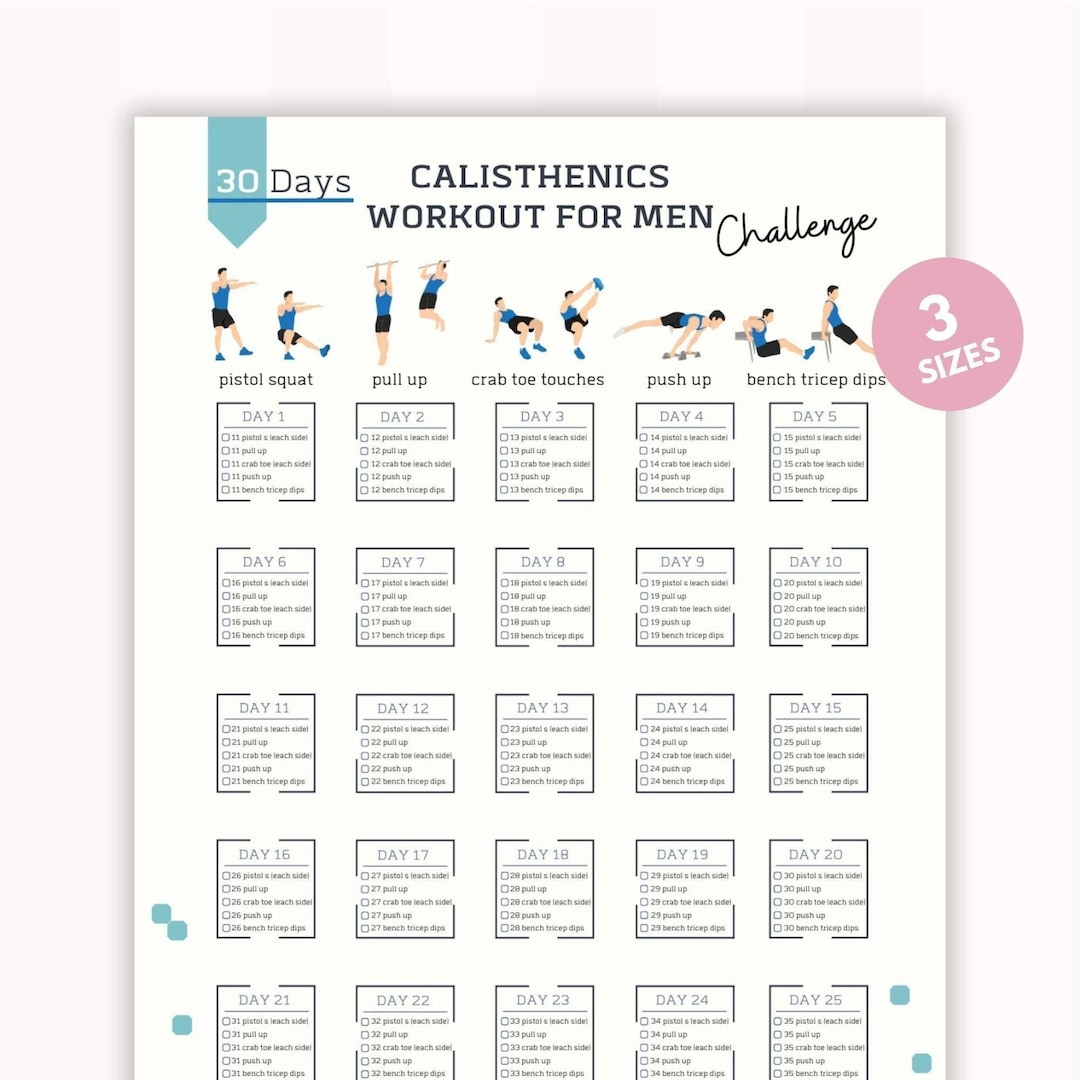
Credit: www.etsy.com
Tracking Progress And Staying Motivated
Tracking progress and staying motivated are key to success in any mens calisthenics workout plan. Seeing improvements fuels confidence and keeps workouts exciting. Without clear tracking, it is easy to lose focus or skip sessions. Motivation grows when small wins are visible and celebrated. Simple tools and smart goals can make a big difference in commitment and results.
Using Workout Logs
Workout logs help record exercises, reps, and sets. Writing down details makes progress clear and easy to review. Logs show which moves improve and which need more work. They provide a sense of achievement by marking personal bests. Use a notebook or an app to keep track daily. Consistent logging builds a visual history of gains.
Setting Realistic Goals
Realistic goals keep motivation steady and avoid frustration. Break big goals into small, clear steps. Focus on achievable targets like increasing reps or mastering a new move. Celebrate each step reached to boost confidence. Goals should be specific, measurable, and time-bound. Adjust goals based on progress to stay challenged yet positive.
Overcoming Plateaus
Plateaus are common and test determination. They mean progress has slowed or stopped temporarily. Change your routine by adding new exercises or increasing intensity. Rest and recovery also help break plateaus. Stay patient and persistent; results will return. Tracking progress highlights plateaus early and guides adjustments.
Common Mistakes To Avoid
Many men start calisthenics workouts with high energy but make common mistakes that slow progress. Avoiding these errors improves results and reduces injury risk. Focus on proper habits from the start to build strength safely.
Neglecting Warm-up And Cool-down
Skipping warm-up can cause muscle strains and stiffness. Spend 5-10 minutes on light cardio and stretching before exercises. Cooling down helps muscles recover and reduces soreness. Stretch gently after workouts to improve flexibility.
Skipping Rest Days
Rest days let muscles heal and grow stronger. Training every day without breaks leads to fatigue and injury. Plan at least 1-2 rest days weekly. Use rest days to relax or try light activities like walking.
Ignoring Proper Technique
Incorrect form reduces workout benefits and causes injuries. Focus on slow, controlled movements. Use mirrors or record yourself to check posture. Learn basics well before adding more reps or harder moves.

Credit: www.youtube.com

Credit: www.amazon.com
Frequently Asked Questions
What Is A Men’s Calisthenics Workout Plan?
A men’s calisthenics workout plan uses bodyweight exercises to build strength, flexibility, and endurance. It requires minimal equipment and suits all fitness levels.
How Often Should Men Do Calisthenics Workouts?
Men should do calisthenics workouts 3 to 5 times a week. Consistency helps build muscle and improve overall fitness effectively.
Which Exercises Are Best For Beginners In Calisthenics?
Best beginner exercises include push-ups, squats, planks, and lunges. These build foundational strength and prepare the body for advanced moves.
Can Calisthenics Improve Muscle Definition For Men?
Yes, calisthenics enhances muscle definition by targeting multiple muscle groups. It increases strength and tones the body without heavy weights.
Conclusion
This mens calisthenics workout plan helps build strength and flexibility. You can do exercises anywhere, with no special tools. Stick to the routine and watch your body improve. Consistency matters more than speed or heavy weights. Start slow, focus on form, and increase reps over time.
Enjoy the process and feel the progress every day. This plan fits all fitness levels and goals. Keep moving, stay motivated, and see real results soon.







