
Are you ready to take your fitness to the next level? Imagine training like a Marine, building strength, endurance, and resilience.
A Marine workout routine isn’t just about physical exercise; it’s a test of willpower and determination. Think about the confidence you’ll gain and the energy you’ll feel. This isn’t your typical gym session. It’s about pushing boundaries and discovering what you’re truly capable of.
Want to learn how you can transform your routine into something extraordinary? Keep reading, because this workout could be the game-changer you’ve been searching for.
Marine Workout Basics
The Marine workout basics focus on strength, endurance, and discipline. This routine builds both mental and physical toughness. Marines train to handle tough environments with limited resources. The workout combines bodyweight exercises, cardio, and functional training. Every session aims to improve overall fitness and resilience.
Core Principles
Marine workouts center on three main ideas:
- Consistency:Daily training builds habit and strength.
- Functional Fitness:Exercises mimic real-life movements.
- Endurance:Long sessions boost stamina and mental grit.
These principles guide all exercises in the program. They prepare the body for any challenge.
Essential Equipment
Marine workouts need minimal gear, focusing on bodyweight. Some useful equipment includes:
- Pull-up bar for upper body strength
- Jump rope for cardio and coordination
- Weighted vest to add resistance
- Medicine ball for power and core work
Most exercises rely on your own body weight. Equipment helps increase difficulty as fitness improves.
Training Environment
Workouts can happen anywhere. Marines often train outdoors to simulate real conditions. Common settings include:
- Open fields or parks
- Beach or sandy areas
- Obstacle courses
- Basic gym spaces
Fresh air and rough terrain add challenge. This environment builds adaptability and toughness.

Credit: www.amazon.com
Strength Training Exercises
Strength training exercises form the backbone of a marine workout routine. These exercises build muscle, improve endurance, and increase overall power. They prepare the body for the physical demands of marine tasks. A balanced strength routine includes bodyweight movements, weightlifting, and functional drills. Each type targets different muscle groups and skills essential for marine readiness.
Bodyweight Movements
Bodyweight exercises use your own weight for resistance. They improve strength, flexibility, and control. Common moves include:
- Push-ups to build upper body strength
- Pull-ups for back and arm muscles
- Squats to strengthen legs and hips
- Planks to enhance core stability
These exercises require no equipment and can be done anywhere. They develop functional strength needed in marine training.
Weightlifting Techniques
Weightlifting increases muscle mass and power. It uses weights like barbells, dumbbells, or kettlebells. Key lifts include:
- Deadlifts for full-body strength
- Bench press targeting the chest and arms
- Overhead press to build shoulder muscles
- Rows for back and grip strength
Proper form is crucial to avoid injury. Weightlifting boosts the ability to carry heavy loads and perform intense physical tasks.
Functional Fitness Drills
Functional fitness drills mimic real-life movements. They train multiple muscle groups together. Examples are:
- Farmer’s carry with heavy weights to build grip and core
- Sandbag lifts and throws for explosive power
- Box jumps to increase leg strength and agility
- Battle ropes for endurance and upper body strength
These drills prepare the body for the unpredictable and dynamic challenges faced by marines.
Cardio And Endurance
Building strong cardio and endurance is essential for anyone aiming to follow a Marine workout routine. These elements enhance your stamina and overall performance, helping you push through intense physical challenges. The key is to engage in exercises that keep your heart rate up while training your muscles to endure longer periods of activity.
High-intensity Interval Training
High-Intensity Interval Training (HIIT) is a powerful way to boost your endurance quickly. Short bursts of intense effort followed by brief rest periods challenge your cardiovascular system efficiently.
Try sprinting for 30 seconds, then walking for 1 minute, and repeat this cycle for 15 to 20 minutes. You’ll notice your stamina improves, and your body adapts faster to demanding workouts.
Running And Swimming
Running and swimming are classic endurance builders that work different muscle groups and breathing patterns. Running improves your leg strength and lung capacity, while swimming offers a full-body workout that’s easy on your joints.
Mix your sessions between steady-state runs and swim laps at a moderate pace. This variety prevents burnout and keeps your endurance gains balanced across muscle groups.
Circuit Training
Circuit training combines strength and cardio exercises in a sequence, minimizing rest to keep your heart rate elevated. This method trains your body to recover quickly and maintain energy through varied movements.
Design a circuit with exercises like push-ups, jump squats, burpees, and planks. Perform each for 30-45 seconds, then move to the next without pause. How long can you keep the pace before needing a break?

Credit: www.amazon.com
Flexibility And Recovery
Flexibility and recovery are essential parts of any Marine workout routine. They help keep your body agile and strong, reducing the risk of injury and improving overall performance. Focusing on these areas allows you to bounce back faster and stay ready for the next challenge.
Stretching Routines
Stretching is not just a warm-up or cool-down step; it’s a key practice for maintaining joint health and muscle elasticity. Spend at least 10 minutes stretching after each workout to target major muscle groups like hamstrings, shoulders, and hip flexors.
- Try dynamic stretches before workouts to improve blood flow.
- Use static stretches post-exercise to relax tight muscles.
- Include mobility drills such as hip circles and arm swings to boost range of motion.
Have you noticed how a simple stretch can instantly relieve tension after a tough session? Don’t skip this step—it’s a game-changer for your body’s flexibility.
Rest And Sleep
Rest is where your body repairs and builds strength. Without enough quality sleep, your muscles stay sore, and your performance drops.
Try to get 7-9 hours of uninterrupted sleep every night. Creating a bedtime routine, like avoiding screens and relaxing with deep breathing, can improve your sleep quality significantly.
Ask yourself: Are you giving your body the downtime it truly needs to recover and grow stronger?
Injury Prevention
Preventing injury is about smart training and listening to your body. Overdoing it can cause strains that set you back for weeks.
- Balance intense workouts with low-impact activities like swimming or walking.
- Pay attention to early signs of discomfort and adjust your routine accordingly.
- Use proper gear and techniques to protect joints and muscles.
Remember, avoiding injury is not about avoiding effort—it’s about working smarter so you can keep pushing forward without interruption.
Nutrition For Strength
Building strength needs more than just hard workouts. Proper nutrition fuels your muscles and helps them grow. Eating the right foods at the right time supports recovery and power. Understanding key nutrition parts makes your marine workout more effective.
Macronutrient Balance
Strength comes from a good mix of proteins, carbs, and fats. Protein repairs and builds muscle tissue. Carbs give energy for intense training sessions. Healthy fats support hormone levels and overall health.
- Protein: lean meats, fish, eggs, beans
- Carbohydrates: whole grains, fruits, vegetables
- Fats: nuts, seeds, olive oil, avocado
Balance these macronutrients daily to keep your body fueled and strong.
Meal Timing
When you eat affects strength gains and recovery. Eating protein and carbs before workouts fuels muscles. After workouts, meals with protein help rebuild muscle fibers. Spreading meals evenly through the day keeps energy steady.
- Pre-workout: small meal 1-2 hours before training
- Post-workout: protein and carbs within 30-60 minutes
- Regular meals: every 3-4 hours to maintain energy
Supplements
Supplements can help but don’t replace real food. Protein powders provide quick protein after workouts. Creatine boosts strength and power during training. Fish oil supports joint and heart health.
- Whey or plant-based protein powder
- Creatine monohydrate
- Omega-3 fish oil capsules
Use supplements wisely alongside a balanced diet for best results.
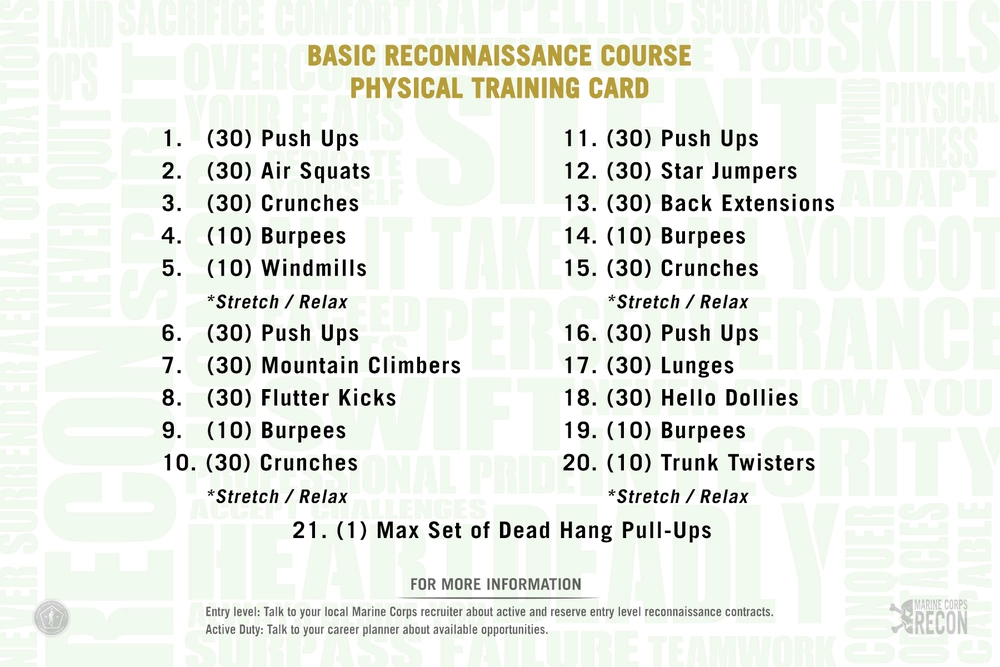
Credit: www.dvidshub.net
Tracking Progress
Tracking progress is essential in a Marine workout routine. It helps measure improvements and keeps motivation high. Monitoring your progress shows what works and what needs change. This way, you stay focused and reach your fitness goals efficiently.
Setting Goals
Start with clear and realistic goals. Goals give direction and purpose to every workout session. They can be strength targets, endurance levels, or skill improvements. Write down your goals and review them regularly. This keeps your efforts focused and meaningful.
Workout Logs
Keep a detailed log of every workout. Note exercises, sets, reps, and weights used. Record how you feel during and after each session. Logs provide a clear picture of progress over time. They also highlight patterns and areas that need more attention.
Adjusting The Routine
Use your progress data to adjust your routine. Increase weights or reps as you get stronger. Change exercises to prevent plateaus and keep muscles challenged. Regular adjustments ensure steady growth and prevent boredom. Stay flexible and respond to your body’s feedback.
Frequently Asked Questions
What Is A Marine Workout Routine?
A Marine workout routine is a fitness plan designed to build strength, endurance, and agility. It includes cardio, strength training, and flexibility exercises. This routine mimics the physical demands faced by Marines in training and combat.
How Often Should I Do Marine Workouts Weekly?
Marine workouts are typically done 5 to 6 days a week. Consistency helps improve endurance and muscle strength. Rest days are essential for recovery and injury prevention.
What Exercises Are Included In Marine Workouts?
Common exercises include running, push-ups, sit-ups, pull-ups, and swimming. Strength training with weights and bodyweight exercises is also included. These exercises target overall fitness and combat readiness.
Can Beginners Follow A Marine Workout Routine?
Yes, beginners can follow a modified Marine workout routine. Start with lower intensity and gradually increase difficulty. Focus on form and consistency to avoid injury and improve fitness safely.
Conclusion
A marine workout routine builds strength and endurance fast. It focuses on bodyweight exercises you can do anywhere. Training like this improves your balance and flexibility too. Consistency is key to seeing real progress. Start slow, then increase intensity as you feel ready.
This routine suits all fitness levels and goals. Stay patient and keep pushing yourself daily. Your body and mind will thank you for it. Simple steps lead to strong, healthy results over time.







