
Are you about to start a low iodine diet and wondering what it really means for you? Whether you’re preparing for a medical test or managing a thyroid condition, understanding this special diet is key to your success.
You might feel overwhelmed by all the food rules and restrictions, but don’t worry—this guide will make it simple and clear. Keep reading to discover exactly what you can eat, what to avoid, and how to make your low iodine diet easy and effective for your health.
Purpose Of A Low Iodine Diet
The low iodine diet limits iodine intake to prepare the body for certain thyroid treatments. It helps control how much iodine the thyroid uses. Reducing iodine can make some treatments more effective. This diet is a short-term plan followed under medical advice. It supports better treatment outcomes and safer care.
Role In Thyroid Treatment
The low iodine diet plays a key role in thyroid disease care. It lowers iodine levels in the body, which helps doctors target thyroid cells better. This is important before radioactive iodine therapy. The diet makes the thyroid more sensitive to treatment. It can improve the success rate of destroying unwanted thyroid tissue.
When To Follow The Diet
The diet is usually followed before specific thyroid treatments. Doctors often recommend it before radioactive iodine scans or therapy. The period on the diet typically lasts 1 to 2 weeks. Patients should follow clear instructions from healthcare providers. It is not meant for long-term use but only to enhance treatment effects.
Credit: freshjax.com
Foods To Avoid
When following a low iodine diet, knowing which foods to avoid is essential for managing your iodine intake effectively. Cutting out high-iodine foods can feel challenging, but it’s a key step toward better health. Let’s break down the major food groups you should watch out for.
High-iodine Foods
Some foods naturally contain high levels of iodine and should be limited or avoided completely. Seaweed, including nori, kelp, and wakame, ranks at the top of this list. Even small amounts can quickly increase your iodine intake beyond your target.
Other high-iodine foods include iodized salt and certain types of multivitamins. Always check labels carefully to avoid hidden sources of iodine. Have you ever checked your salt brand for iodine content? It might surprise you.
Processed And Packaged Items
Many processed foods contain iodized salt or dairy derivatives, which increase iodine levels. Foods like bread, canned soups, and fast food often use iodized salt or ingredients rich in iodine.
Reading ingredient lists is your best defense here. Avoid anything labeled with “iodized salt” or containing ingredients like whey or casein, which are dairy by-products. Have you noticed how many packaged snacks list these ingredients?
Seafood And Dairy
Seafood is well-known for its high iodine content. Fish, shrimp, crab, and other shellfish should be avoided on a low iodine diet. Even fish oils and certain supplements derived from seafood can contribute unwanted iodine.
Dairy products like milk, cheese, yogurt, and butter are also significant sources of iodine. Many people don’t realize how much iodine dairy adds to their diet. Cutting these out might feel tough, but it’s crucial for keeping iodine levels low.
Safe Foods To Eat
Choosing safe foods is key when following a Low Iodine Diet. You want to avoid iodine-rich items while still enjoying meals that satisfy your taste buds and nutritional needs. Let’s break down what you can eat without worry.
Fresh Fruits And Vegetables
Fresh fruits and vegetables are your best friends here. Most fresh produce contains very little iodine, making them safe choices. Apples, berries, carrots, lettuce, and cucumbers all fit perfectly.
Remember to avoid seaweed or anything grown near the ocean, as those can have hidden iodine. Washing your veggies well is always a good idea, but it won’t change iodine content much.
Grains And Proteins
Plain grains like white rice, pasta, and bread made without iodized salt are safe. Whole grains are often okay, but always check labels for added salt or dairy ingredients.
For proteins, fresh chicken, beef, or pork without seasoning or marinades work well. Eggs and dairy products are off-limits because they usually have iodine. If you’re unsure about a packaged product, look for “iodine-free” on the label or stick to fresh cuts.
Suitable Beverages
Water, herbal teas, and freshly brewed coffee are safe to drink. Avoid milk, soy milk, or any drinks made from dairy or seaweed extracts.
One surprising tip: some bottled waters contain added minerals, including iodine. Check labels carefully if you rely on bottled water often.
Meal Planning Tips
Planning meals on a low iodine diet can feel tricky at first, but with a few smart strategies, you can make it manageable and even enjoyable. The key is knowing what to buy, how to prepare it, and which foods to avoid. Let’s dive into practical tips that will help you stay on track without feeling overwhelmed.
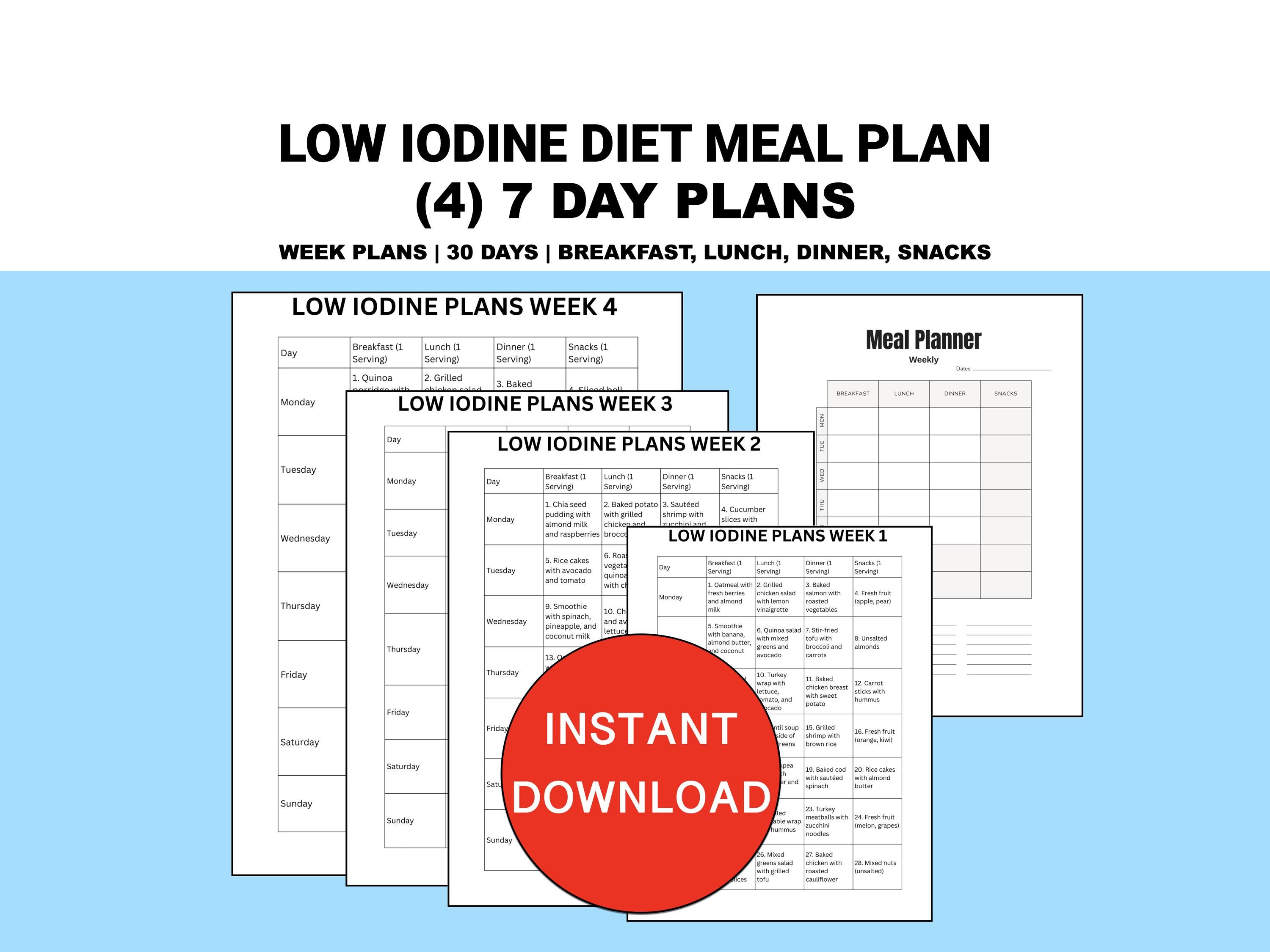
Sample Meal Ideas
Thinking about what to eat doesn’t have to be stressful. Simple meals like grilled chicken breast with steamed vegetables or a fresh garden salad with olive oil dressing fit perfectly.
Breakfast options could include oatmeal made with water or almond milk topped with fresh fruit. Snacks like apple slices with unsalted peanut butter keep things tasty and safe. These ideas keep iodine intake low while still offering variety.
Shopping Strategies
Shopping for a low iodine diet requires a sharper eye. Focus on fresh, whole foods like fruits, vegetables, and lean meats.
Visit the produce section first and avoid processed or packaged foods that often contain hidden iodine. Planning your grocery list in advance helps prevent impulse buys that might not fit your diet.
Ask yourself: Are you choosing foods with minimal ingredients? This habit can save you from accidentally consuming iodine-rich additives.
Reading Food Labels
Labels hold the secrets to what’s really inside your food. Look carefully for ingredients like iodized salt, seaweed, or dairy derivatives—they all add iodine.
Sometimes iodine hides under names like calcium iodate or potassium iodide. If you’re unsure about a product, it’s okay to skip it.
Have you tried scanning labels with a checklist? It’s a practical way to stay confident while shopping and avoid unexpected iodine sources.
Potential Challenges
Following a low iodine diet can be tough. It demands careful food choices and constant attention to ingredients. Many face struggles that test their patience and willpower. Understanding these challenges helps prepare better and stay on track.
Managing Cravings
Cravings for salty or processed foods are common. These foods often contain hidden iodine. It helps to find low iodine snacks that satisfy hunger and taste. Drinking water or herbal tea can reduce sudden cravings. Planning meals ahead stops impulsive eating.
Eating Out Safely
Restaurants rarely list iodine content on menus. Asking about ingredients is necessary but can feel awkward. Choose simple dishes without sauces, dairy, or seafood. Salads with fresh vegetables and olive oil are safer options. Carry a small list of allowed foods for quick reference.
Nutritional Considerations
Restricting iodine affects nutrient intake. Some iodine-rich foods also provide important vitamins. It is crucial to include alternative sources of nutrients like calcium and protein. Consulting a dietitian helps create balanced meal plans. Supplements might be needed but only under medical advice.
Credit: sterlingbiotech.in
Monitoring Thyroid Health
Keeping a close eye on your thyroid health is essential when following a low iodine diet. This diet plays a significant role in preparing your body for certain medical treatments, and monitoring ensures you stay safe and effective throughout the process. Understanding how to test and adjust your diet based on your thyroid’s response can make a real difference in your health journey.
Testing And Follow-up
Regular testing is the backbone of monitoring thyroid health. Your doctor will likely order blood tests to measure thyroid hormone levels and thyroid-stimulating hormone (TSH). These tests reveal how well your thyroid is responding to the low iodine diet and any treatments.
Don’t underestimate the value of follow-up appointments. They provide opportunities to discuss symptoms, review test results, and make necessary changes. If your energy dips or you notice new symptoms, these are signals worth bringing up during your visits.
Adjusting The Diet
Adjusting your diet is not about strict rules but about listening to your body and test results. If tests show your iodine levels are too low or too high, your healthcare provider may suggest tweaking your food choices.
For example, you might need to reduce iodine-rich foods like dairy or seaweed further, or sometimes, you might be allowed to add back small amounts. Tracking what you eat alongside your symptoms can help you and your doctor find the right balance.
Have you noticed how small changes in your diet affect your well-being? Paying attention to these shifts can empower you to manage your thyroid health more effectively.
Credit: www.etsy.com
Frequently Asked Questions
What Is A Low Iodine Diet?
A low iodine diet limits iodine intake to reduce thyroid hormone production. It is often used before radioactive iodine treatments for thyroid conditions. This diet typically avoids seafood, dairy products, iodized salt, and certain food colorings. Following a low iodine diet helps ensure better treatment effectiveness and accurate diagnostic results.
Why Follow A Low Iodine Diet?
Following a low iodine diet helps prepare the body for radioactive iodine treatment. It enhances the treatment’s effectiveness by depleting the body’s iodine stores. This diet is crucial for patients with thyroid cancer or hyperthyroidism, ensuring more accurate results and effective management of the condition.
How Long Should You Follow This Diet?
Generally, a low iodine diet is followed for two weeks before treatment. It’s crucial to adhere strictly to the diet during this period. Consult your healthcare provider for personalized guidance. They will provide specific duration recommendations based on your medical needs and treatment plan.
What Foods Are Restricted On This Diet?
The low iodine diet restricts seafood, dairy, iodized salt, and foods with red dye 3. It also limits processed foods and bakery items. Always check labels for iodine content. Fresh fruits, vegetables, and unsalted homemade foods are encouraged. Consult a dietitian for detailed guidance.
Conclusion
A low iodine diet helps prepare your body for certain medical tests or treatments. It reduces iodine levels to improve results. Planning meals with low iodine foods is simple with the right guidance. Always follow your doctor’s advice to stay safe and healthy.
This diet is temporary and important for your care. Small changes make a big difference in success. Stay patient and consistent for the best outcome.







