
Are you navigating the often confusing world of dietary changes and looking for something that suits your needs? Imagine a diet that can help ease your digestive discomfort while still being simple to follow.
This is where the low fiber, low residue diet comes into play. It’s designed with your comfort and health in mind, focusing on foods that are gentle on your digestive system. You might wonder how it works, what you can eat, and why it’s beneficial.
Stick around as we delve into the essentials of this diet, providing you with clear insights and practical tips. You’ll discover how this eating plan can make a real difference in your daily life, helping you feel better and more at ease. Let’s explore how you can benefit from a low fiber, low residue diet.
What Is A Low Fiber Low Residue Diet
A Low Fiber Low Residue Diet is designed to reduce the amount of undigested food passing through your intestines. It limits foods that are high in fiber and residue, which can irritate or block your digestive tract. This diet is often prescribed before medical procedures or to manage certain digestive conditions.
Understanding Fiber And Residue
Fiber is the part of plant foods your body can’t digest. Residue refers to the leftover material in your bowel after digestion, including fiber and other undigested substances. Reducing these helps ease bowel movements and decrease irritation.
Who Needs This Diet?
This diet is commonly recommended if you have conditions like Crohn’s disease, ulcerative colitis, or after certain surgeries. It also helps prepare your bowel for tests like a colonoscopy. Have you ever experienced discomfort after eating fibrous foods? This diet aims to prevent that.
What Foods Are Allowed?
- Refined grains like white bread and white rice
- Well-cooked vegetables without skins or seeds
- Lean meats, eggs, and dairy products
- Clear juices and broths
These foods produce less waste, making digestion smoother and less painful.
What Foods Should You Avoid?
- Whole grains and bran
- Raw fruits and vegetables, especially with skins or seeds
- Nuts, seeds, and popcorn
- Legumes like beans and lentils
Cutting these out may seem challenging but focusing on allowed foods helps your gut heal faster.
Foods To Include
Choosing the right foods is key for a low fiber low residue diet. This diet helps reduce the amount of undigested food moving through the intestines. It supports digestive health and eases symptoms like bloating or diarrhea.
Focus on foods that are easy to digest and low in fiber. These foods can help maintain energy and nutrition without stressing the digestive system. Here are some good options to include in your diet.
Low Fiber Fruits And Vegetables
- Bananas (ripe and soft)
- Canned peaches or pears (without skin)
- Cooked carrots
- Cooked zucchini without skin
- Well-cooked green beans
- Potatoes without skin
- Squash, peeled and cooked
Grains And Breads
- White bread
- White rice
- Refined pasta
- Low fiber cereals like corn flakes
- Plain crackers
Protein Sources
- Lean meats like chicken and turkey (without skin)
- Eggs
- Tofu
- Fish and seafood
- Peanut butter (smooth, small amounts)
Dairy And Alternatives
- Milk (if tolerated)
- Yogurt without fruit pieces
- Cheese (mild varieties)
- Lactose-free dairy products
- Fortified plant-based milk (almond or rice)
Foods To Avoid
A Low Fiber Low Residue Diet requires careful attention to what you eat. Avoiding certain foods can help reduce irritation and ease digestion. Knowing which foods to skip is key to managing your symptoms effectively.
High Fiber Fruits And Vegetables
Fruits and vegetables with high fiber content are off the list. Raw vegetables like broccoli, cauliflower, and celery can be tough on your digestive system. Similarly, fruits such as berries, apples with skin, and pears contain fibers that may cause discomfort.
Even dried fruits like raisins and prunes have concentrated fiber and should be avoided. You might find it helpful to focus on cooked or canned vegetables without skins instead. Have you noticed how peeling fruits can sometimes reduce your digestive issues?
Whole Grains And Seeds
Whole grains are rich in fiber but can increase residue in your gut. Foods like brown rice, whole wheat bread, and oatmeal are best avoided. Seeds, including flaxseeds and chia seeds, add bulk that your system may not handle well right now.
Switching to refined grains such as white rice or white bread can make digestion smoother. Remember, fiber is good for most people, but your body might need a break to heal. What refined grain alternatives have you tried that worked well?
Nuts And Legumes
Nuts and legumes pack a punch of fiber and protein but can be hard to digest. Peanuts, almonds, lentils, and beans often cause gas and bloating during a low residue diet. These foods increase stool bulk and should be avoided to reduce irritation.
You may want to replace them with eggs, tofu, or lean meats as protein sources. Have you found any low-residue protein options that keep you feeling full and satisfied?
Certain Beverages
Some drinks can also impact your low residue diet. Avoid beverages with seeds or pulp like fresh orange juice or smoothies with fruit skins. Carbonated drinks and alcohol may irritate your digestive tract as well.
Sticking to water, clear broths, and herbal teas without additives usually works best. How do you stay hydrated while managing your diet restrictions?

Credit: www.amazon.com
Benefits For Digestion
The low fiber low residue diet supports digestion by easing the workload on the digestive system. It limits the intake of foods that leave residue in the intestines. This helps reduce irritation and inflammation, promoting a smoother digestive process.
This diet is especially useful for people with sensitive digestion or certain medical conditions. It helps maintain comfort and supports healing. Here are some key benefits for digestion.
Reducing Bowel Movements
This diet decreases the frequency and volume of bowel movements. It limits fiber-rich foods that add bulk to stool. Smaller, less frequent stools reduce strain on the intestines. This can prevent discomfort and urgency.
Minimizing Gastrointestinal Irritation
Low fiber foods cause less friction against the intestinal walls. This reduces irritation and inflammation in the digestive tract. It helps calm symptoms like cramping, bloating, and pain. Gentle digestion supports overall gut health.
Supporting Recovery From Surgery Or Illness
After surgery or during illness, the digestive system needs rest. A low residue diet minimizes waste in the intestines. This reduces stress on healing tissues. It aids faster recovery and lowers the risk of complications.
Meal Planning Tips
Planning meals on a low fiber, low residue diet can feel restrictive at first, but it doesn’t have to be dull or complicated. With a little thought, you can create meals that are both satisfying and aligned with your dietary needs. The key lies in balancing nutrients, choosing the right foods, and using cooking methods that make digestion easier.
Balancing Nutrients
Focus on including protein, fats, and carbohydrates in every meal to keep your energy steady. Lean meats like chicken or fish, eggs, and smooth nut butters provide good protein without adding fiber. White rice, refined pasta, and well-cooked vegetables like carrots or zucchini are easier on your digestive system while supplying necessary carbs.
Don’t forget healthy fats such as olive oil or avocado, which help you absorb vitamins and keep you full longer. You might wonder, how can you avoid missing out on fiber completely? Instead of cutting out all vegetables, choose low-fiber options and prepare them so they’re gentle on your gut.
Sample Meal Ideas
- Breakfast:Scrambled eggs with white toast and a small portion of canned peaches (without skin).
- Lunch:Grilled chicken breast, mashed potatoes, and steamed zucchini.
- Dinner:Baked fish with white rice and cooked carrots.
- Snacks:Yogurt, smooth peanut butter on white bread, or a banana.
Mixing these simple meals throughout your week helps maintain variety without overwhelming your system. Have you tried swapping your usual whole grain bread for white bread to see how your digestion improves?
Cooking Techniques
Steaming, boiling, and baking are your best friends here. These methods soften foods and reduce the fiber content, making digestion easier. For instance, peeling and boiling carrots until tender removes much of the fiber’s tough outer layers.
Pureeing soups or blending smoothies with low-fiber fruits like bananas or melon can make meals smooth and easy to tolerate. Avoid frying or grilling with heavy spices, as these can irritate your digestive tract. Have you noticed how much gentler your stomach feels after a simple steamed meal compared to fried foods?

Credit: www.amazon.com
Common Challenges
Following a low fiber low residue diet can be tough. Many people face challenges that affect their food choices and health. Understanding these challenges helps in managing the diet better. Here are some common issues people experience.
Maintaining Variety
Eating the same foods every day leads to boredom. The diet limits many fruits, vegetables, and grains. Finding new recipes that fit the diet is important. Trying different allowed foods keeps meals interesting and enjoyable. Use herbs and spices to add flavor without adding fiber.
Managing Nutritional Deficiencies
Removing high-fiber foods can reduce vitamins and minerals. Nutrients like vitamin C, iron, and calcium may be low. Choose low fiber foods rich in nutrients to balance the diet. Sometimes supplements are needed to fill gaps. Regular check-ups help track nutrient levels and adjust the diet.
Eating Out Safely
Restaurant meals often contain hidden fibers and spices. It is hard to know what ingredients are in dishes. Ask for simple meals with white rice, cooked meats, and peeled vegetables. Avoid salads, whole grains, and fried foods. Planning ahead and checking menus online makes eating out easier and safer.
When To Follow This Diet
A low fiber low residue diet helps reduce the amount of undigested food in the intestines. This diet is important for people with certain digestive problems. It limits foods that are hard to digest and leave residue in the gut.
Knowing when to follow this diet can help manage symptoms and aid healing. Doctors usually recommend it during specific medical situations or after surgeries. It is not meant for long-term use unless advised by a healthcare provider.
Medical Conditions Requiring Low Residue
Several medical conditions may require a low residue diet to ease symptoms. These include:
- Inflammatory bowel diseases like Crohn’s disease and ulcerative colitis
- Diverticulitis flare-ups
- After bowel surgery to allow healing
- Severe diarrhea or bowel obstruction
- Radiation therapy affecting the digestive tract
Following this diet helps reduce bowel movements and irritation. It gives the digestive system time to rest and repair.
Duration And Transitioning Back
The diet usually lasts for a short period, often a few days to weeks. The exact time depends on the condition and doctor’s advice. Sticking to the diet longer than necessary may cause nutrient deficiencies.
After symptoms improve, slowly add fiber-rich foods back to the diet. Start with small amounts of easy-to-digest fruits and vegetables. Watch for any return of symptoms during this process.
Gradual changes help the gut adjust without causing discomfort. Consulting a dietitian can make the transition smoother and safer.
Consulting Healthcare Providers
Consulting healthcare providers is essential when considering a Low Fiber Low Residue Diet. This diet can significantly impact your digestive health, so professional guidance ensures it fits your unique needs and medical conditions. Your healthcare team can help you avoid potential pitfalls while optimizing your diet for better comfort and healing.
Personalizing Your Diet
Your body reacts differently to changes in diet. Healthcare providers can tailor a Low Fiber Low Residue Diet based on your specific health status, lifestyle, and symptoms.
They might suggest specific foods to avoid or include, such as soft cooked vegetables instead of raw ones, or refined grains instead of whole grains. This personalization can make the diet easier to follow and more effective.
Have you noticed certain foods triggering discomfort? Discuss these with your provider—they can adjust your plan accordingly to reduce symptoms without compromising nutrition.
Monitoring Symptoms
Tracking how your body responds to the diet helps both you and your healthcare provider make informed decisions. Keep a simple food and symptom diary to record what you eat and how you feel afterward.
This habit highlights patterns and helps identify foods that cause irritation or relief. Your provider can use this information to fine-tune your diet, making adjustments that improve your overall well-being.
What small changes can you observe day-to-day? Sometimes, subtle shifts in energy or digestion reveal more than you expect. Regular check-ins with your healthcare team keep you on the right path.
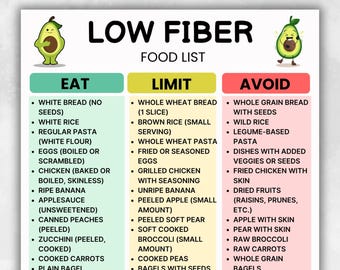
Credit: www.etsy.com
Frequently Asked Questions
What Is A Low Fiber Low Residue Diet?
A low fiber low residue diet limits foods that increase stool bulk. It reduces fiber intake to ease digestion and bowel workload. This diet helps manage conditions like Crohn’s disease, diverticulitis, and after surgery.
Which Foods Are Allowed On This Diet?
Allowed foods include white bread, refined cereals, tender cooked vegetables without skins, and lean meats. Dairy products like milk and yogurt are usually permitted. Avoid whole grains, nuts, seeds, raw fruits, and high-fiber vegetables.
Who Should Follow A Low Residue Diet?
People with inflammatory bowel disease, bowel obstructions, or after certain surgeries benefit from this diet. It helps minimize bowel irritation and reduces stool volume. Always consult a healthcare provider before starting.
How Long Should One Stay On This Diet?
Duration varies depending on medical advice and condition severity. Some follow it short-term during flare-ups; others may need longer. Regular evaluation ensures nutritional needs are met while symptoms improve.
Conclusion
A low fiber low residue diet helps reduce bowel activity. It eases digestion and lowers discomfort. Choosing the right foods is key. Avoiding high-fiber items supports healing and rest. Always follow your doctor’s advice closely. This diet can aid recovery from certain conditions.
Stay patient and consistent for best results. Small changes bring steady progress. Your gut will thank you in time.







