
Looking to build strength and stay fit without leaving your home? A good power rack can be the game-changer you need for your home gym.
It’s not just a piece of equipment—it’s your safety net, your workout partner, and the key to unlocking serious progress. If you want to lift heavier, train smarter, and protect yourself from injury, choosing the right power rack is crucial.
Keep reading, and you’ll discover exactly what makes a power rack perfect for your space and goals. Your strongest self is just one smart decision away.

Credit: www.amazon.ca
Choosing The Right Power Rack
Choosing the right power rack is essential for a safe and effective home gym setup. The perfect rack fits your space, supports your workout style, and lasts through many training sessions. Understanding what to look for helps make a smart choice.
Key Features To Consider
- Adjustable safety bars for different exercises
- Multiple height settings for versatility
- Attachment options like pull-up bars or dip stations
- Easy assembly and clear instructions
- Stability to prevent wobbling during lifts
Space And Size Requirements
Measure the room where you will place the power rack. Leave extra space around it for movement and added equipment. Consider ceiling height, especially if the rack has a pull-up bar. Compact racks suit smaller rooms better. Larger racks offer more workout options but need more space.
Weight Capacity And Durability
Check the maximum weight the rack can hold. It should support your heaviest lifts safely. Look for racks made of strong steel with thick frames. Quality welds add to the rack’s strength. Durable racks last longer and keep you safe during intense workouts.
Safety Features To Prioritize
Strong safety pins and sturdy spotter arms protect during heavy lifts. Secure bolts and a stable frame prevent wobbling and accidents. Choose racks with safety catches for added peace of mind.
When setting up a home gym, prioritizing safety features in a power rack is crucial. Accidents can happen, especially when lifting heavy weights without a spotter. So, how do you ensure your workouts are safe? Let’s dive into the key safety features that you should prioritize when choosing a power rack for your home gym.Spotter Arms And Safety Pins
Spotter arms and safety pins are your best friends when it comes to lifting heavy weights alone. They act as a safety net, catching the barbell if you can’t complete a lift. Make sure they are adjustable and can be set at the right height for various exercises. Having tried lifting without them, I realized how essential they are for peace of mind. It’s not just about safety; it’s about lifting with confidence, knowing that you have a backup.Stability And Construction
A stable power rack is a safe power rack. Look for racks made from high-quality materials like heavy-duty steel. Check the weight capacity and ensure it can handle more than your maximum lift comfortably. The base should be wide and sturdy, preventing any wobbling during workouts. Once, while doing squats, I felt the rack shift slightly—definitely not something you want to experience.Additional Safety Accessories
Consider adding extra safety accessories to your power rack. These could include J-hooks, which securely hold the barbell, or band pegs for added resistance training. A good question to ask yourself is: What additional safety features would make my workouts more comfortable and secure? Reflecting on your unique needs can guide you in choosing the right accessories. Think about the exercises you’ll be doing most often, and invest in accessories that enhance safety for those specific movements.Top Power Racks For Strength Training
Power racks are essential for strength training at home. They provide safety and support for heavy lifts. Choosing the right power rack depends on your budget and fitness goals. There are options for beginners, intermediate lifters, and serious athletes. This guide covers the best power racks to fit your needs.
Budget-friendly Options
Affordable power racks offer solid performance without high costs. These racks suit beginners and casual users. They often include safety bars and adjustable hooks. Most fit well in small home gyms. Look for racks with strong steel frames and easy assembly. Popular models usually support up to 700 lbs or more.
Mid-range Power Racks
Mid-range racks deliver better stability and extra features. They often come with pull-up bars and multiple adjustment points. These racks handle heavier weights safely. Ideal for regular lifters wanting more durability. Quality welds and thicker steel are common. Some include attachments for dips or landmine exercises.
Premium Models For Serious Lifters
Premium power racks suit advanced lifters and pros. They offer heavy-duty construction and maximum safety. These racks support weights over 1,000 lbs easily. Extra features include spotter arms, band pegs, and storage options. Designed for intense training and longevity. They often come with warranties and better customer support.

Credit: www.northernfitness.ca
Customizing Your Power Rack
Customizing your power rack helps make your home gym more efficient and tailored to your needs. A well-customized rack supports various workouts and keeps your space organized. Small changes can improve safety, comfort, and workout variety. Focus on attachments, storage, and upkeep to get the most from your power rack.
Attachments And Add-ons
Attachments expand your rack’s use beyond basic lifting. Consider these popular options:
- Dip bars for upper body strength
- Pull-up bars to add bodyweight exercises
- Landmine attachments for rotational movements
- Safety spotter arms for safer heavy lifts
- J-cups to hold the barbell securely
Choose attachments that match your workout style and space. Easy-to-install add-ons save time and effort.
Storage Solutions
Keeping your gear organized speeds up workouts and reduces clutter. Use these storage ideas:
- Weight plate holders attached to the rack
- Barbell storage hooks or sleeves
- Accessory trays for collars and clips
- Storage shelves for small equipment
Proper storage protects your gear and keeps your gym tidy.
Maintenance Tips
Regular maintenance ensures your power rack stays safe and durable. Follow these tips:
- Check bolts and screws for tightness weekly
- Clean sweat and dust off after each use
- Lubricate moving parts to avoid rust and wear
- Inspect welds and joints for any damage
Routine care extends your rack’s life and keeps workouts safe.
Setting Up A Safe Home Gym Space
Creating a safe home gym space is crucial, especially when you’re working with heavy equipment like a power rack. Safety isn’t just about avoiding injuries—it’s about building confidence in your workouts so you can push yourself without hesitation. Let’s break down the key areas that will keep your gym safe and efficient.
Flooring And Matting
The right flooring protects both your body and your equipment. Hard surfaces can cause slips or damage your weights if dropped.
Use thick rubber mats or interlocking foam tiles to cushion impacts and reduce noise. These mats also prevent your power rack from sliding during heavy lifts.
Think about the area around your rack. Is it wide enough to move freely? A clutter-free, cushioned floor can help you maintain balance and avoid accidents.
Lighting And Ventilation
Good lighting is more than just convenience—it helps you maintain proper form. Dim or uneven lighting can cause you to misjudge distances or angles, increasing injury risk.
Install bright, even lighting that mimics daylight. Natural light is ideal, but if your space lacks windows, LED lights work well.
Airflow also matters. A stuffy room can drain your energy and make workouts uncomfortable. Use fans or open windows to keep fresh air circulating.
Organizing Equipment
Clutter is a hidden hazard. Weights and accessories scattered around can trip you up or block your workout space.
Use shelves, hooks, and racks to store smaller items like resistance bands or dumbbells. Keep heavier plates and bars neatly stacked and accessible.
Ask yourself: Is everything easy to reach without stretching or bending awkwardly? Organizing your gear not only saves time but also keeps your gym safe.
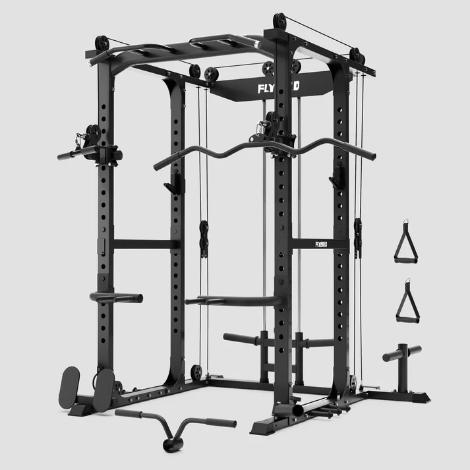
Credit: www.garagegymreviews.com
Frequently Asked Questions
What Features Make A Power Rack Ideal For Home Gyms?
A good home power rack offers sturdy construction, adjustable safety bars, and multiple height settings. It should fit limited space and support various exercises like squats and pull-ups. Look for easy assembly and storage options for convenience.
How Much Space Does A Power Rack Need At Home?
Power racks typically require a minimum of 6 feet by 4 feet space. Ensure enough room for movement around the rack and overhead clearance for lifting safely. Measure your workout area before purchasing to avoid fit issues.
Can A Power Rack Support Different Workout Types?
Yes, quality power racks accommodate strength training, squats, bench presses, and pull-ups. They often include attachments like dip bars and resistance band pegs to expand workout variety. Choose a rack with versatile features to maximize your home gym.
What Weight Capacity Should A Home Power Rack Have?
Select a power rack with at least 700 to 1,000 pounds weight capacity for safety. This range supports most lifting routines and ensures durability. Check manufacturer specifications to match your strength level and future progress.
Conclusion
Choosing a good power rack makes your home gym safer and more effective. It supports many exercises, helping you build strength at home. Focus on durability, size, and features that fit your space. A solid power rack lasts long and grows with your fitness needs.
Invest wisely and enjoy better workouts every day. Your home gym deserves the best tools to help you stay strong and healthy.







