
Are you tired of your same old workout routine and looking for a simple yet effective way to boost your fitness game? If so, you’re about to discover a game-changer.
Plank exercises are not just another fitness fad; they are a powerhouse for strengthening your core, enhancing stability, and improving overall posture. But did you know there are different types of plank exercises that can target various muscle groups and add excitement to your workouts?
By exploring these variations, you can challenge your body in new ways and avoid workout monotony. Get ready to transform your fitness journey and keep your muscles guessing with the different types of plank exercises that will keep you engaged and motivated. Read on to unlock the secrets to a stronger, more resilient you.
Benefits Of Plank Exercises
Plank exercises offer many benefits for the body and mind. They target multiple muscle groups and improve overall fitness. Regular planking helps build a strong foundation for daily activities and sports.
Planks are simple yet effective. They require no equipment and can be done anywhere. The benefits extend beyond just physical strength, supporting better health and well-being.
Improving Core Stability
Planks strengthen the core muscles, including the abs and lower back. A strong core stabilizes the body during movement. This stability reduces the risk of injuries and improves balance. It also helps with smooth and efficient motion in sports and daily tasks.
Enhancing Posture
Plank exercises help align the spine and shoulders correctly. A strong core supports good posture and reduces slouching. This lowers strain on the neck and back. Better posture boosts confidence and reduces fatigue throughout the day.
Boosting Overall Strength
Planks engage muscles beyond the core, like arms, legs, and glutes. Holding a plank builds endurance and muscle tone across the body. This full-body workout improves strength without heavy weights. It also enhances muscle coordination and control.
Credit: zeenews.india.com
Basic Plank Variations
Basic plank variations build core strength and improve stability. They suit all fitness levels and require no equipment. These exercises focus on holding a steady position to engage muscles deeply.
Each plank type targets different muscle groups and changes the difficulty slightly. Starting with the basics helps create a strong foundation for more advanced moves.
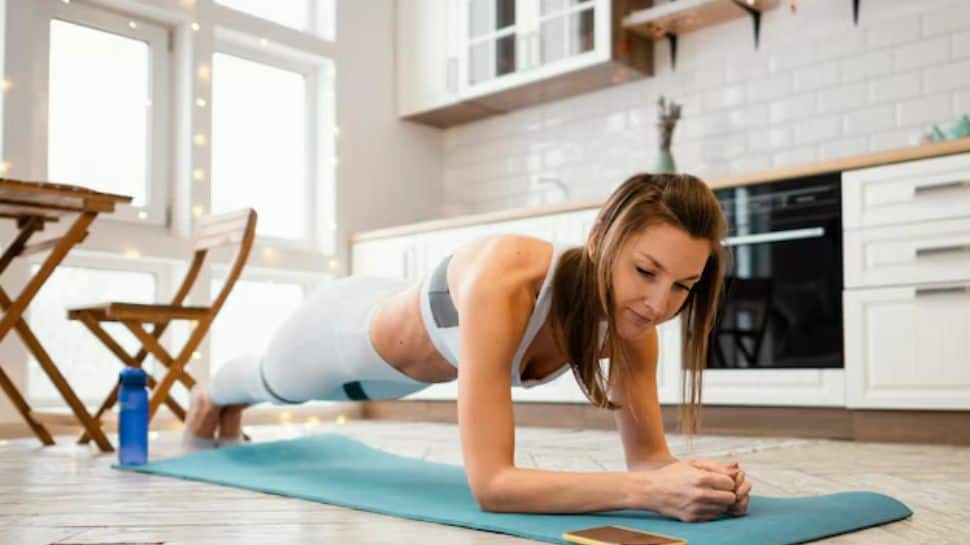
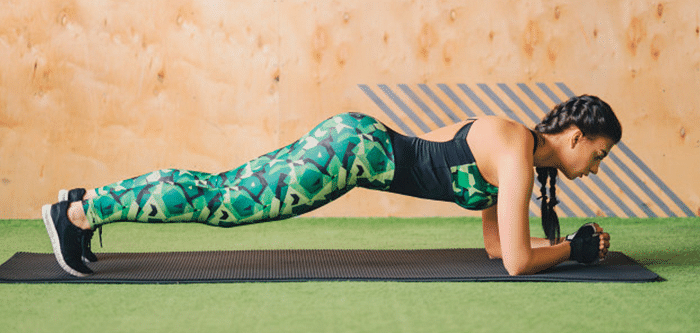
Forearm Plank
The forearm plank involves resting on your forearms and toes. Keep your body in a straight line from head to heels. This position reduces wrist strain and focuses on the core and shoulders.
Hold the position without letting hips drop or rise. Engage your abdominal muscles to maintain stability.
Straight Arm Plank
The straight arm plank uses your hands instead of forearms. Your arms stay fully extended, with hands under the shoulders. This variation adds extra work to your arms and chest.
Keep your body aligned and hold steady. Avoid sagging your hips or arching your back.
Knee Plank
The knee plank is a beginner-friendly version. Rest on your knees and forearms or hands, keeping a straight line from head to knees. This reduces the load on your core and arms.
Focus on controlled breathing and tight muscles. This plank helps build strength before trying harder versions.
Advanced Plank Types
Advanced plank types challenge your core in new ways, helping you build strength, stability, and balance. These variations demand more control and engage different muscle groups, pushing your fitness limits. Trying these can reveal surprising weaknesses and strengths in your body.
Side Plank
The side plank targets your obliques and improves lateral stability. Instead of facing the floor, you balance on one arm and the side of one foot, keeping your body in a straight line. This move feels tough at first, but it dramatically enhances your core’s ability to resist twisting.
Try holding a side plank for 20 to 30 seconds on each side. Notice which side feels weaker—this can guide your training focus. Adding a side plank to your routine can improve your posture and reduce back pain.
Reverse Plank
The reverse plank turns the exercise upside down, engaging your glutes, hamstrings, and lower back along with your core. You lift your body facing the ceiling, supported by your hands and heels. This variation helps counteract the forward hunched posture many of us develop.
Hold the reverse plank for as long as you can maintain a straight line. It’s common to feel tightness in your shoulders and hips, which means these areas need more attention. How often do you activate these muscles in your daily life?
Plank With Leg Lift
Adding a leg lift to your plank increases the demand on your core and glutes. While holding a standard plank, lift one leg off the ground and hold it steady. This challenges your balance and forces your core to work harder to maintain stability.
Start by lifting each leg for 10 to 15 seconds, then switch. You might find one leg easier to lift than the other—focus on strengthening the weaker side. This variation is excellent for runners or anyone looking to improve single-leg strength and control.
Credit: fitpass.co.in
Dynamic Plank Movements
Dynamic plank movements add motion to the classic plank pose. These exercises increase heart rate and engage more muscles. They improve strength, stability, and coordination.
Dynamic planks work the core and challenge the upper body and legs. They burn more calories than static holds. Perfect for those who want variety and intensity in workouts.
Plank To Push-up
Start in a forearm plank position. Press up onto one hand, then the other, moving into a full push-up position. Lower back down to forearms one arm at a time. Repeat smoothly to build arm strength and core stability.
Plank Jacks
Begin in a high plank with hands under shoulders. Jump feet out wide, then back together like a jumping jack. Keep hips steady and core tight. This move boosts cardio and tones abs and legs.
Mountain Climber Plank
Hold a high plank position. Drive one knee toward the chest quickly. Alternate legs in a running motion. Keep hips low and core engaged. Mountain climbers improve endurance and work the entire body.
Plank Variations For Targeted Muscles
Plank exercises target various muscle groups by changing the body position. Different plank variations focus on specific muscles. This helps build balanced strength and improve stability. Exploring these variations can make your workout more effective and less boring.
Oblique Focused Planks
Oblique planks work the side muscles of your abdomen. These muscles help with twisting and bending motions. Side planks are a popular version. Hold your body on one arm while stacking your feet. Keep your body straight from head to heels. This challenges the obliques and improves core stability.
Lower Back Strengthening Planks
Lower back planks help protect your spine and improve posture. The reverse plank is a key exercise. Sit with your legs extended and hands behind you. Lift your hips to form a straight line. This strengthens the lower back, glutes, and hamstrings. It balances the front and back of your core.
Glute Activation Planks
Glute-focused planks target your butt muscles. These muscles support your hips and lower back. Try plank leg lifts. From a standard plank, lift one leg while keeping hips level. This activates the glutes and challenges your balance. Strong glutes improve overall movement and reduce injury risk.
Common Mistakes To Avoid
Mastering plank exercises means paying close attention to your form. Small mistakes can reduce the effectiveness of your workout and even cause injury. Let’s look at some common errors to avoid so you get the best results from your planks.
Sagging Hips
Letting your hips drop is one of the most frequent mistakes. It puts strain on your lower back and weakens your core engagement.
Imagine holding a plank and noticing your hips slowly sinking—this means your core isn’t doing its job. To fix this, tighten your abdominal muscles and keep your body in a straight line from head to heels.
Raised Hips
On the flip side, raising your hips too high reduces the plank’s effectiveness. It shifts the work away from your core and onto your shoulders and legs.
Try to visualize your body as a straight board. If your hips stick up like a mountain peak, you’re not challenging your core enough. Lower your hips until your body forms a flat line.
Neck Strain
Looking forward or tucking your chin too much can cause neck pain. Your neck should be neutral, aligned with your spine.
Picture holding a book on your head to keep your neck steady. Keep your gaze toward the floor, just ahead of your hands, to avoid unnecessary tension. Have you noticed neck discomfort after planks? Adjusting your head position might be the fix.
Tips To Improve Plank Performance
Improving plank performance takes more than just holding the position. Small changes in technique and practice can lead to better results. Focus on key areas like breathing, alignment, and gradually increasing hold time. These tips help build strength and prevent injury.
Breathing Techniques
Breathing steadily during a plank keeps muscles oxygenated. Avoid holding your breath. Inhale deeply through the nose and exhale slowly through the mouth. This helps maintain focus and control. Controlled breathing reduces tension and improves endurance.
Proper Alignment
Correct body position maximizes plank benefits. Keep your head, neck, and spine in a straight line. Engage your core by pulling your belly button toward your spine. Shoulders should be directly above your elbows or hands. Avoid sagging hips or raised buttocks to prevent strain.
Progressive Duration
Start with shorter holds to build strength safely. Increase plank time by a few seconds each session. Consistent progression helps muscles adapt and grow stronger. Use a timer or app to track your improvements. Rest between sets to avoid fatigue and maintain form.
Integrating Planks Into Workouts
Planks are a versatile exercise that fit well into many workout styles. They improve strength, stability, and endurance. Integrating planks into your routine helps build a stronger core and supports overall fitness. You can include planks in warm-ups, core sessions, or full-body workouts to suit your goals.
Warm-up Routines
Start your workout with gentle plank variations. These warm-up planks prepare your muscles and joints for exercise. Try holding a forearm plank for 20 seconds. Add side planks to engage different muscle groups. These moves increase blood flow and reduce injury risk.
Core-focused Sessions
Planks are perfect for core workouts. Combine classic planks with dynamic variations like plank taps or knee-to-elbow moves. Aim for multiple sets of 30 to 60 seconds. Rest briefly between sets to maintain form. This strengthens abs, lower back, and hips effectively.
Full-body Workouts
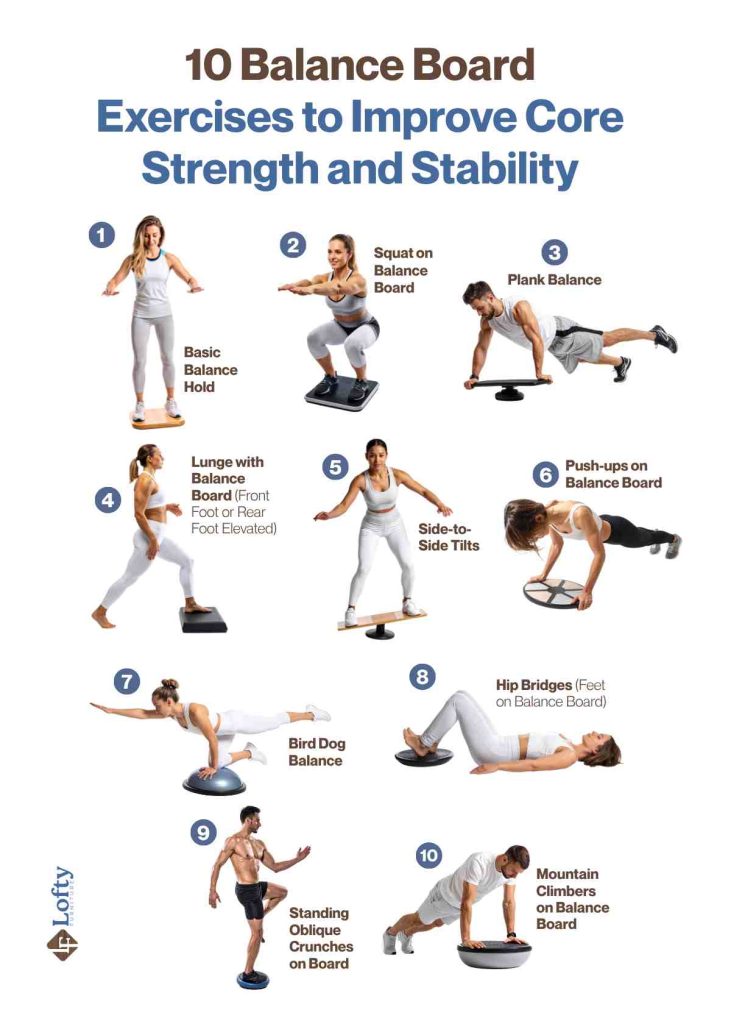
Include planks in circuits with other exercises. Pair them with push-ups, squats, or lunges. This approach challenges several muscle groups at once. It also boosts calorie burn and endurance. Change plank styles to keep workouts fresh and engaging.
Credit: loftyfurniture.com
Frequently Asked Questions
What Are The Main Types Of Plank Exercises?
The main plank types include forearm, side, reverse, and extended planks. Each targets different muscle groups for core strength and stability.
How Does A Side Plank Benefit Your Body?
Side planks strengthen obliques, improve balance, and enhance spinal support. They also help reduce lower back pain and improve posture.
Can Plank Exercises Improve Overall Core Strength?
Yes, planks engage multiple core muscles simultaneously, increasing endurance and stability. This leads to better posture and reduced injury risk.
How Long Should I Hold Each Plank Type?
Start with 20-30 seconds per plank, gradually increasing to 1 minute. Proper form matters more than duration for effective results.
Conclusion
Plank exercises build strength in your core and improve balance. Each type targets different muscles for a full workout. Try to include various planks in your routine. Start with easier versions, then increase difficulty slowly. Consistency helps you see better results over time.
Keep your form correct to avoid injuries. Enjoy the challenge and feel your body grow stronger. Planks suit all fitness levels and need no equipment. Give them a try and feel the difference today.







