
Are you curious about the carnivore diet but don’t know where to start? Sticking to only animal-based foods can feel overwhelming at first.
You might wonder what to eat, how to plan your meals, and if this way of eating is right for you. This guide breaks it all down into simple steps you can follow easily. By the end, you’ll have a clear, practical meal plan that fits your lifestyle.
Ready to take control of your health and fuel your body with the right foods? Let’s dive in and make your carnivore diet journey smooth and effective.
Basics Of The Carnivore Diet
The Carnivore Diet is straightforward but powerful. It focuses solely on animal-based foods, cutting out all plant products. This simplicity makes it easy to follow, but understanding what you can eat, what to avoid, and the potential benefits and risks is essential for success.
What To Eat
You’ll mainly eat meat, fish, and animal products. This includes:
- Beef, pork, lamb, and other red meats
- Chicken, turkey, and other poultry
- Fish and shellfish
- Eggs
- Animal fats like lard and tallow
- Some people also include dairy like cheese and butter if tolerated
Stick to high-quality, preferably grass-fed or wild-caught options for better nutrition and taste. Remember, this diet excludes all fruits, vegetables, grains, and legumes.
What To Avoid
Cut out anything plant-based entirely. This means:
- Fruits and vegetables
- Grains such as wheat, rice, and oats
- Legumes like beans, lentils, and peanuts
- Sugars and processed foods
- Vegetable oils and artificial additives
It might sound restrictive, but many find that focusing only on animal foods reduces inflammation and digestive issues. Are you ready to drop foods you’ve always considered “healthy” and see how your body reacts?
Benefits And Risks
The Carnivore Diet often leads to weight loss, reduced cravings, and improved mental clarity. Some people report fewer digestive problems and better energy levels. However, it’s not without risks.
Potential downsides include nutrient deficiencies, especially in vitamins C and fiber, and possible increased cholesterol levels. It’s important to listen to your body and consult a healthcare professional before starting, especially if you have existing health conditions.
Are you curious how your body might respond to removing all plant foods? Testing and careful observation can reveal surprising results.

Credit: www.amazon.com
Getting Started Easily
Starting the carnivore diet can feel simple and clear. Focus on eating mostly meat and animal products. No need to overthink or complicate meals. Planning ahead helps avoid confusion and keeps you on track.
Preparation saves time and effort. Keep your kitchen stocked with the right tools and foods. This makes daily cooking easier and more enjoyable. Here are some tips to help you begin smoothly.
Meal Prep Tips
- Cook large portions of meat at once.
- Store leftovers in airtight containers.
- Use simple seasonings like salt and pepper.
- Try different cuts of meat to avoid boredom.
- Prepare easy snacks such as boiled eggs or jerky.
Shopping List Essentials
- Beef (steaks, ground, ribs)
- Pork (chops, bacon, sausage)
- Chicken (thighs, breasts, wings)
- Fish (salmon, sardines, mackerel)
- Eggs
- Butter and animal fats
- Bone broth
Kitchen Tools Needed
- Sharp knives for cutting meat
- Cast iron skillet or grill pan
- Slow cooker or Instant Pot for easy cooking
- Food storage containers
- Meat thermometer to check doneness
- Cutting board dedicated to meat
Sample Meal Plans
Sample meal plans offer simple ideas for those new to the carnivore diet. Meals focus on meat, fish, and animal fats for easy daily choices. Beginners find these plans helpful to start and stay on track.
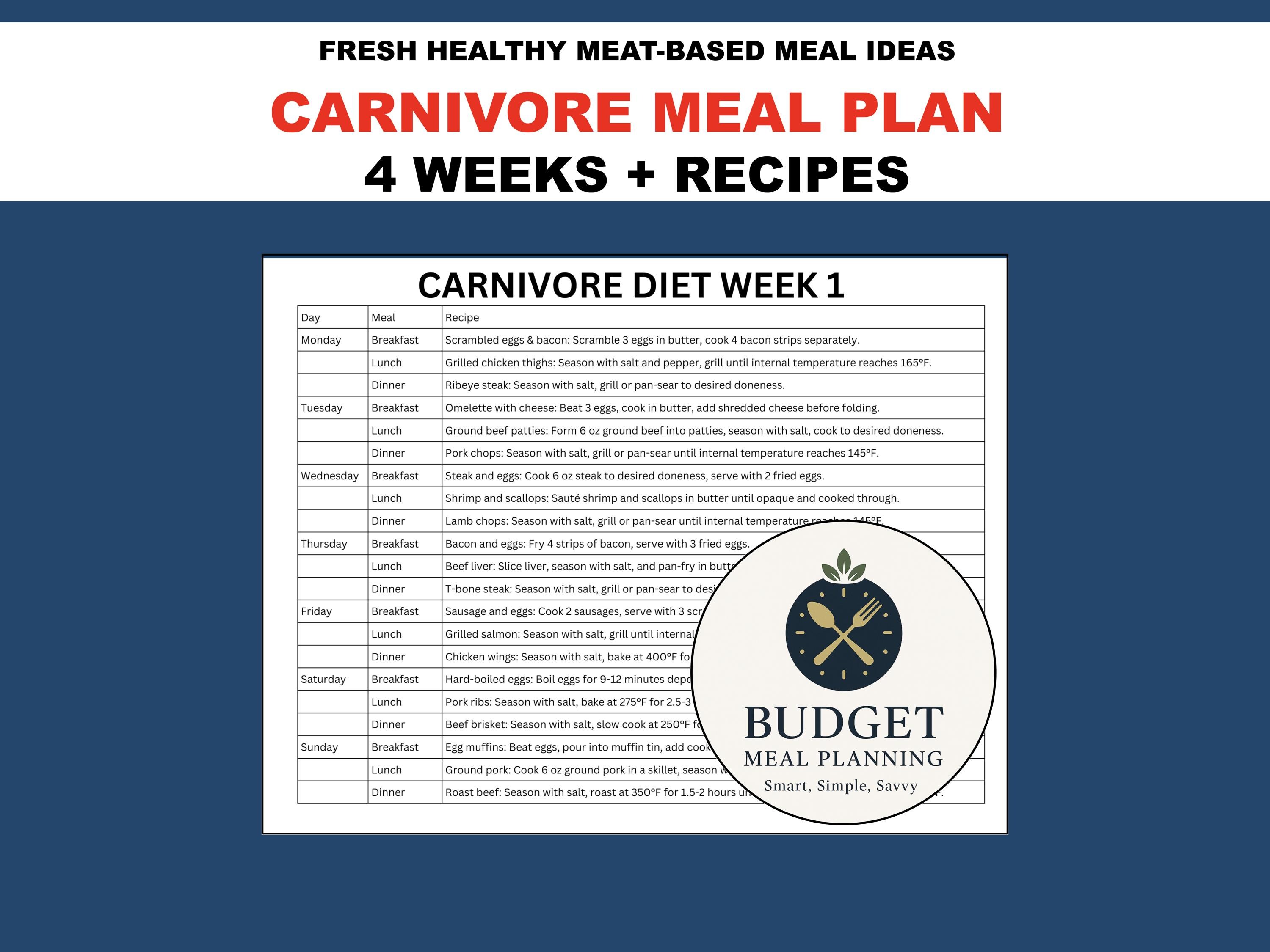
Embarking on a carnivore diet can be a thrilling journey into a world of simplicity and nourishment. For beginners, having a structured meal plan can be the key to success. Sample meal plans can guide you through your initial days, ensuring you maintain variety and enjoy your food. Let’s dive into a practical one-week plan, some simple recipes, and ideas for snacks and drinks.One-week Beginner Plan
Here’s a straightforward meal plan to kickstart your carnivore journey. It focuses on basic ingredients to make your transition smooth.| Day | Breakfast | Lunch | Dinner |
|---|---|---|---|
| Monday | Scrambled eggs with bacon | Grilled chicken thighs | Steak with butter |
| Tuesday | Omelet with cheese | Beef burger patties | Lamb chops |
| Wednesday | Sausage and egg muffins | Chicken wings | Pork ribs |
| Thursday | Fried eggs and sausage | Beef liver with onions | Salmon fillet |
| Friday | Eggs benedict (without bread) | Turkey slices | Roast beef |
| Saturday | Bacon and eggs | Pork belly | Grilled chicken breast |
| Sunday | Egg muffins with cheese | BBQ beef ribs | Duck breast |
Simple Recipes To Try
Cooking on a carnivore diet doesn’t have to be complicated. Here are some easy recipes to keep your meals exciting: – Bacon Wrapped Asparagus: Wrap a few asparagus spears in bacon and bake until crispy. A delightful side dish that pairs well with any protein. – Cheesy Scrambled Eggs: Beat eggs and add shredded cheese before cooking in a hot pan. Creamy and delicious, perfect for breakfast or a snack. – Garlic Butter Steak: Sear your favorite cut of steak and finish with a generous pat of garlic butter. Simple yet decadent. These recipes are not just easy; they are flavorful and satisfying. Do you have your own twist on these classics?Snacks And Drinks
Snacking can be tricky on a carnivore diet, but it doesn’t have to be boring. Here are some ideas:- Beef Jerky: A portable and protein-rich snack that can keep you satiated between meals.
- Cheese Slices: A quick and tasty snack that you can enjoy anytime.
- Bone Broth: Not only a drink but also a nourishing snack that supports joint health.
- Black Coffee: A morning staple that provides a boost without added sugars.
- Herbal Tea: A soothing option for those seeking variety.
Credit: www.etsy.com
Tracking Progress
Tracking progress on the carnivore diet is key to understanding how your body responds and adapting to your needs. Paying attention to specific signals can help you stay motivated and make better choices. Tracking isn’t just about numbers—it’s about how you feel and perform day to day.
Monitoring Energy Levels
Energy swings can tell you a lot about how well your carnivore diet is working. Keep a daily journal noting when you feel energetic and when you feel sluggish. This helps identify patterns linked to meal timing or food choices.
Ask yourself: Are you feeling more alert during the afternoon or crashing after meals? Adjusting meal size or frequency based on your energy can make a big difference. Sometimes adding more fat or switching protein sources can stabilize energy.
Dealing With Cravings
Cravings often signal nutrient gaps or emotional triggers. Track what you crave and when these urges hit. Are cravings stronger during stress or boredom?
Writing this down helps you respond intentionally rather than impulsively. If you crave carbs, consider if your protein and fat intake is adequate. Sometimes drinking water or going for a short walk can break the cycle.
Adjusting The Plan
Your initial carnivore meal plan is a starting point—not a fixed rulebook. Use your energy notes and craving logs to tweak your meals. Maybe you need more variety in meat cuts or to add bone broth for minerals.
Don’t hesitate to experiment with meal timing—some do better with two meals, others prefer three smaller ones. Check in weekly with your body and mood. How do your changes affect your daily life?
Common Challenges
Starting a carnivore diet can bring many changes. Some challenges often appear during the first weeks. Knowing these issues helps prepare for them. This makes the journey smoother and more successful.
Handling Social Situations
Social events can be tough on a carnivore diet. Most meals include carbs and vegetables. Finding pure meat options is not always easy. It helps to plan ahead. Bring your own food when possible.
Explaining your diet choice politely can reduce pressure. Friends and family may not understand at first. Stay confident and focus on your health goals.
Overcoming Plateaus
Weight loss or energy gains may stall after some time. This plateau can feel frustrating. Adjusting meal sizes and types can help. Try varying cuts of meat or adding organ meats.
Tracking your progress keeps motivation high. Small changes often restart progress. Patience and persistence are key.
Managing Digestive Changes
Digestive systems react differently to a meat-only diet. Some experience constipation or diarrhea initially. Drinking plenty of water supports digestion. Salt intake also helps balance fluids.
Giving your body time to adapt is important. If issues persist, consult a healthcare professional. Gradual changes and listening to your body improve comfort.
Tips For Long-term Success
Sticking to the carnivore diet for a long time needs focus and smart choices. Success does not come from quick fixes but from steady habits. Simple tips can keep your journey smooth and rewarding. These tips help you stay on track without feeling bored or overwhelmed.
Maintaining Motivation
Set clear, small goals to track progress. Celebrate each success, no matter how small. Find a support group or online community to share experiences. Remind yourself why you started the diet. Keep a journal to note how you feel each day. Visualize the benefits you want to achieve. Change your mindset to focus on health, not just weight.
Incorporating Variety
Eating only meat can feel repetitive. Try different types of meat like beef, chicken, pork, and fish. Use various cooking methods such as grilling, roasting, or slow cooking. Add animal-based fats like butter or tallow for flavor. Include organ meats to boost nutrition. Experiment with simple herbs and spices allowed on the diet. This variety keeps meals interesting and nutrients balanced.
When To Seek Professional Advice
Monitor how your body reacts to the diet. Check for unusual symptoms like fatigue or digestive issues. Consult a healthcare professional before starting if you have health problems. Get regular blood tests to track important markers. Reach out to a dietitian familiar with carnivore eating. Professionals can help adjust the plan safely. Never ignore signs that your body needs attention.

Credit: www.amazon.com
Frequently Asked Questions
What Foods Are Allowed On A Carnivore Diet Meal Plan?
The carnivore diet includes mainly meat, fish, eggs, and animal fats. It excludes all plant-based foods like fruits, vegetables, grains, and legumes. Focus on beef, pork, chicken, and fatty fish for balanced nutrition. Organ meats are also encouraged for vitamins and minerals.
How Do Beginners Start A Carnivore Diet Meal Plan?
Start by eliminating all carbs and plant foods. Gradually increase intake of animal products like beef, eggs, and fish. Drink plenty of water and monitor your body’s response. Keep meals simple and consistent to allow your body to adjust.
Can I Lose Weight With A Carnivore Diet Meal Plan?
Yes, many people lose weight on a carnivore diet. It reduces carbs and sugars, which lowers insulin levels and burns fat. High protein intake also helps control hunger and preserves muscle mass during weight loss.
Are There Any Common Side Effects For Beginners?
Common side effects include headaches, fatigue, and digestive changes. These symptoms often occur during the initial adaptation phase. They usually resolve within a few days to weeks as your body adjusts to the new diet.
Conclusion
Starting a carnivore diet can feel simple and clear. Focus on eating mainly meat and animal products. Plan your meals with variety to keep it interesting. Drink plenty of water and listen to your body. Small steps help you adjust and stay on track.
Remember, consistency matters more than perfection. Enjoy the process and notice how your body feels. This plan can guide your first days with ease. Stay patient and give your body time to adapt. Success comes from steady effort and good choices.







