
Are you tired of crowded gyms and expensive memberships? Imagine a fitness routine that doesn’t require equipment and can be done anywhere, anytime.
Welcome to the world of calisthenics! This workout routine uses your own body weight to build strength, flexibility, and endurance. It’s simple yet incredibly effective. Whether you’re a fitness newbie or a seasoned athlete, calisthenics can transform your body and boost your confidence.
Ready to discover the secrets of a workout that fits seamlessly into your lifestyle? Dive into this guide and unleash the power of your own body!
Benefits Of Calisthenics
Calisthenics offers more than just a way to exercise; it transforms how you move, feel, and control your body. The benefits are clear and varied, making it a smart choice for anyone looking to improve their fitness without complicated equipment. Let’s break down what makes calisthenics stand out and why it might be the workout routine you’ve been searching for.
Improved Strength And Flexibility
Calisthenics builds strength by using your own body weight as resistance. This natural form of training helps muscles grow evenly and become more functional.
Unlike traditional weightlifting, calisthenics exercises often require you to move through a full range of motion. This encourages flexibility while you gain strength, reducing the risk of injury.
Have you noticed how your muscles feel more balanced and less stiff after a session? That’s the combined power of strength and flexibility working together.
Enhanced Body Control
Every movement in calisthenics demands coordination and balance. You gain a better understanding of how your body moves in space, improving your overall control.
For example, mastering a handstand or a muscle-up requires focus and precise muscle engagement. As you progress, these skills translate into better posture and everyday movement efficiency.
How often do you think about how you move? Calisthenics makes you more aware of your body’s capabilities and limitations.
Cost-effective Fitness
Calisthenics requires minimal to no equipment, making it one of the most budget-friendly fitness routines. You don’t need a gym membership or expensive machines.
This means you can workout anywhere—at home, in a park, or while traveling—without worrying about access to facilities.
What would it mean for your fitness journey if you could train anytime, anywhere, without spending extra money?
Essential Equipment
Essential equipment helps build strength and improve skills in calisthenics. These tools offer support and variety for workouts. They suit beginners and advanced athletes alike.
Using the right equipment makes exercises safer and more effective. It also adds challenge and fun to your routine. Focus on quality and versatility when choosing gear.
Pull-up Bars
Pull-up bars are key for upper body exercises. They allow you to do pull-ups, chin-ups, and hanging leg raises. Bars come in many styles: doorframe, wall-mounted, or free-standing.
Install bars securely to avoid accidents. Pull-up bars strengthen back, arms, and shoulders. They also improve grip strength and core stability.
Resistance Bands
Resistance bands add extra challenge to bodyweight moves. They come in different thicknesses for varying resistance levels. Use them for assisted pull-ups or added tension in push-ups.
Bands are lightweight and easy to carry. They help improve flexibility and muscle activation. Resistance bands suit all fitness levels and goals.
Gymnastic Rings
Gymnastic rings offer a full-body workout with instability. They improve coordination, balance, and joint strength. Rings allow for a wide range of exercises like dips, rows, and muscle-ups.
Rings attach to sturdy anchors indoors or outdoors. Adjust the height for different moves. They challenge muscles in new ways and boost overall fitness.
Basic Calisthenics Moves
Basic calisthenics moves build a strong foundation for your workout routine. These exercises use your body weight to improve strength, balance, and flexibility. They are simple but effective for all fitness levels. Starting with basic moves helps you progress safely and steadily.
Push-ups Variations
Push-ups target your chest, shoulders, and triceps. You can change the hand position to work different muscles. Here are common variations:
- Standard push-ups: Hands shoulder-width apart, lower your body to the floor.
- Wide push-ups: Hands placed wider than shoulders for more chest activation.
- Diamond push-ups: Hands close together under your chest, forming a diamond shape.
- Incline push-ups: Hands on a raised surface, easier for beginners.
- Decline push-ups: Feet elevated, increases difficulty.
Squats And Lunges
Squats and lunges strengthen your legs and glutes. These moves improve your balance and mobility.
- Bodyweight squats: Feet shoulder-width apart, bend knees and lower hips.
- Jump squats: Add a jump to increase power and cardio.
- Forward lunges: Step forward and bend both knees to 90 degrees.
- Reverse lunges: Step backward to work muscles differently.
- Side lunges: Step sideways to target inner and outer thighs.
Planks And Core Exercises
Strong core muscles support your whole body. Planks and related exercises improve stability and posture.
- Forearm plank: Hold your body straight on your forearms and toes.
- Side plank: Balance on one forearm and the side of one foot.
- Mountain climbers: Bring knees toward your chest in a plank position.
- Leg raises: Lie on your back and lift your legs slowly.
- Bicycle crunches: Alternate elbow to opposite knee while lying down.

Credit: www.living.fit
Designing Your Routine
Designing your calisthenics workout routine is key to steady progress. A well-planned routine keeps your training effective and enjoyable. Focus on clear goals, balanced exercises, and proper rest. These elements help your body grow stronger and avoid injuries.
Setting Clear Goals
Start with simple and clear goals. Decide what you want to improve. It could be strength, endurance, or flexibility. Write down your goals to stay focused. Set small milestones to track your progress. Adjust your routine as you reach each milestone.
Balancing Push And Pull Exercises
A balanced routine includes both push and pull movements. Push exercises work muscles like chest, shoulders, and triceps. Pull exercises target back, biceps, and rear shoulders. Balance these to prevent muscle imbalances and injuries. Examples of push moves: push-ups, dips. Examples of pull moves: pull-ups, bodyweight rows.
Incorporating Rest Days
Rest days are as important as workout days. They allow muscles to recover and grow. Plan at least one or two rest days each week. Use rest days for light stretching or walking. Avoid intense activities on these days to prevent burnout. Listen to your body and rest more if needed.
Progression Techniques
Progression techniques help improve strength and skill in calisthenics workouts. They push your muscles and nerves to adapt. This makes exercises more effective over time. Using these techniques keeps your routine fresh and challenging. It helps you avoid plateaus and keeps motivation high.
Increasing Repetitions
One simple way to progress is by doing more reps. Adding repetitions builds endurance and strength. Start by counting your current max reps. Aim to increase by one or two reps each session. This steady growth helps muscles grow without injury. Track your reps to see clear progress.
Adding Advanced Variations
Try harder versions of your exercises for better gains. For example, move from regular push-ups to diamond push-ups. Or from knee-assisted pull-ups to full pull-ups. Advanced variations target muscles differently and increase difficulty. Use proper form to avoid strain. Step up only after mastering the basics.
Using Time Under Tension
Slow down each movement during exercises. This means lowering and lifting muscles slowly. More time under tension makes muscles work harder. It increases muscle growth and control. Try counting 3 to 5 seconds per phase. This method also improves balance and focus.
Sample Workout Plans
Sample workout plans help structure your calisthenics training. They provide clear guidance on exercises and reps. Plans vary by skill level to match your strength and endurance. Following a routine builds consistency and tracks progress. Choose a plan that fits your current ability and goals.
Beginner Routine
- Push-ups: 3 sets of 8-10 reps
- Bodyweight Squats: 3 sets of 10-12 reps
- Plank: Hold for 20-30 seconds, 3 rounds
- Glute Bridges: 3 sets of 12 reps
- Jumping Jacks: 2 sets of 30 seconds
This routine focuses on basic strength and endurance. Rest 30-60 seconds between sets. Perform the workout 3 times per week for best results.
Intermediate Routine
- Diamond Push-ups: 4 sets of 10-12 reps
- Pistol Squats (assisted): 3 sets of 6-8 reps per leg
- Side Plank: Hold for 30 seconds each side, 3 rounds
- Leg Raises: 4 sets of 12 reps
- Burpees: 3 sets of 10 reps
This routine increases intensity and targets more muscle groups. Rest 45-60 seconds between sets. Aim for 4 workouts per week to build strength.
Advanced Routine
- Archer Push-ups: 4 sets of 12-15 reps
- One-Leg Squats: 4 sets of 8-10 reps per leg
- Hanging Leg Raises: 4 sets of 15 reps
- Handstand Hold: Hold for 30-45 seconds, 3 rounds
- Muscle-Ups: 3 sets of 5-8 reps
This routine focuses on strength, balance, and control. Rest 60-90 seconds between sets. Perform 4-5 sessions weekly for advanced progress.
Nutrition Tips For Results
Proper nutrition plays a key role in enhancing your calisthenics workout results. Eating the right foods helps build muscle, improve recovery, and boost energy levels. Focus on balanced meals and smart habits to support your training efforts.
Protein Intake
Protein fuels muscle repair and growth after workouts. Aim to include a source of protein in every meal. Good options include chicken, fish, eggs, beans, and dairy products. Consuming 1.2 to 2 grams of protein per kilogram of body weight daily supports muscle gain.
Snacks like Greek yogurt or protein shakes provide quick, easy protein boosts. Spread protein intake evenly throughout the day for best results.
Hydration Strategies
Water keeps your muscles working and helps prevent cramps. Drink water before, during, and after exercise. A good rule is to sip small amounts regularly rather than gulping large amounts at once.
Signs of dehydration include tiredness and dizziness. To maintain hydration, drink at least 8 glasses of water daily. Add electrolyte drinks if training lasts longer than an hour.
Meal Timing
Eating at the right times supports energy and recovery. Have a balanced meal 2-3 hours before your workout. Include carbs for energy and some protein to start muscle repair.
After training, eat a meal or snack with protein and carbs within 30 minutes. This helps muscles recover faster and refills energy stores. Regular meals throughout the day keep energy levels steady for better performance.

Credit: www.youtube.com
Common Mistakes To Avoid
Starting a calisthenics workout routine can be exciting. Many beginners make common mistakes that slow progress or cause injury. Avoiding these errors helps you train smarter and safer. Pay attention to your body and technique to get the best results.
Overtraining
Doing too many exercises without rest harms muscles and joints. Overtraining causes fatigue, soreness, and injury risk. Muscles need time to recover and grow stronger. Plan rest days and listen to your body’s signals. Quality beats quantity in every workout session.
Poor Form
Incorrect posture reduces workout effectiveness and risks injury. Each calisthenics move requires proper alignment and control. Focus on slow, controlled movements before increasing reps or difficulty. Use mirrors or record yourself to check form. Good technique builds strength safely over time.
Ignoring Warm-ups
Skipping warm-ups can lead to muscle strains or joint pain. Warm-ups prepare your body by increasing blood flow and flexibility. Spend 5 to 10 minutes on light cardio and dynamic stretches. This simple step improves performance and lowers injury chances. Never start intense exercises cold.
Tracking Your Progress
Tracking your progress in a calisthenics workout routine helps you stay motivated and see real improvements. It shows what works and what needs change. Small wins add up, making your journey clearer and more rewarding.
Using Workout Logs
Workout logs record exercises, sets, and reps. They help track your strength and endurance over time. Writing down details keeps your routine organized. You can spot patterns and know when to increase difficulty.
Use a notebook or a fitness app. Note the date, exercise, reps, and how you felt. This simple habit guides your next session and boosts consistency.
Monitoring Physical Changes
Tracking body changes helps measure your progress beyond reps. Take photos weekly or biweekly to see muscle growth and posture improvements. Measure key areas like arms, waist, and legs.
Check your weight and body fat percentage if possible. These numbers show how your body adapts. Remember, changes take time, so be patient and keep observing.
Adjusting Goals
Set clear, achievable goals at the start. Review them regularly based on your progress. If a goal feels too easy or too hard, change it. Adjusting keeps you challenged and prevents boredom.
Use progress data to decide if you need more reps, harder moves, or rest days. Flexible goals make your routine effective and enjoyable.
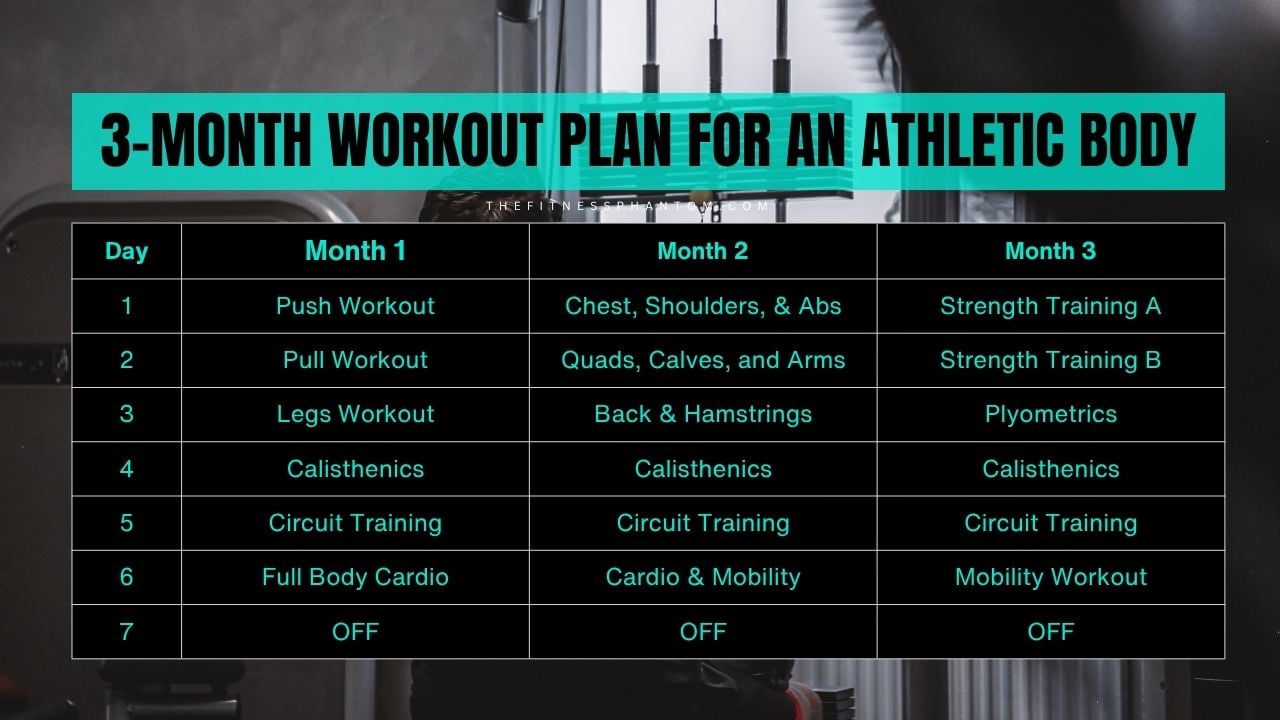
Credit: thefitnessphantom.com
Frequently Asked Questions
What Is A Calisthenics Workout Routine?
A calisthenics workout routine uses bodyweight exercises to build strength and flexibility. It requires minimal equipment and suits all fitness levels. This routine improves muscle tone, endurance, and coordination through movements like push-ups, pull-ups, and squats.
How Often Should I Do Calisthenics Workouts?
For best results, perform calisthenics workouts 3 to 5 times weekly. Allow rest days for muscle recovery and growth. Consistency helps improve strength, mobility, and overall fitness over time.
Can Calisthenics Help With Weight Loss?
Yes, calisthenics boosts metabolism and burns calories effectively. Combining it with a healthy diet promotes fat loss. The full-body movements increase muscle mass, which helps burn more calories even at rest.
Do I Need Equipment For Calisthenics Exercises?
Most calisthenics exercises require no equipment, using only your body weight. Basic tools like a pull-up bar or resistance bands can enhance workouts but aren’t essential. This makes calisthenics accessible anywhere.
Conclusion
Calisthenics workouts build strength using your body weight. You can do them anywhere, anytime, with no equipment. Start slow and increase reps as you get stronger. Consistency matters more than intensity at first. This routine improves flexibility, balance, and muscle tone.
It suits all fitness levels and ages. Keep practicing regularly for steady progress. Stay patient and enjoy the process. Your body will thank you. Simple moves, big benefits.







