
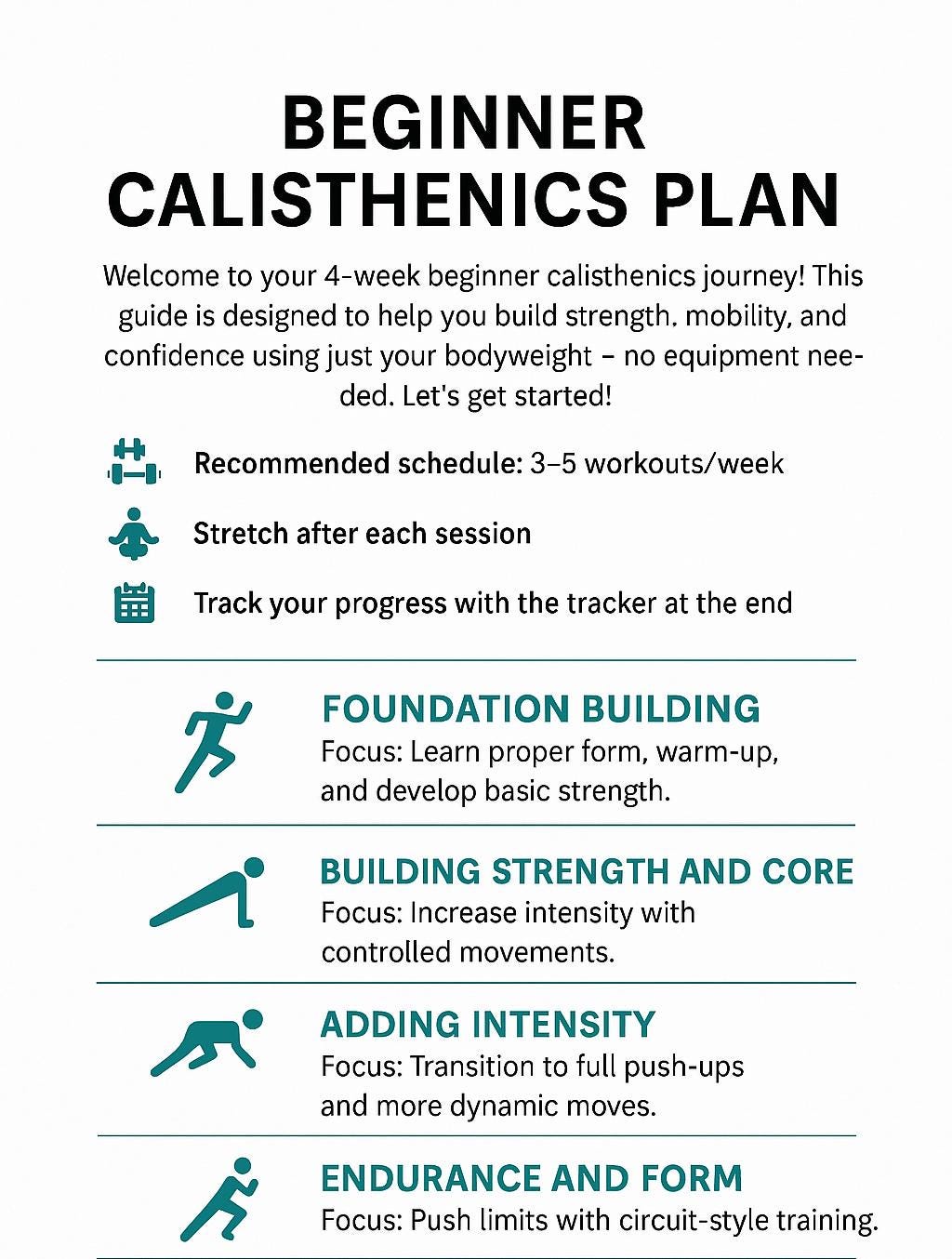
Looking to get fit without the hassle of gym memberships or heavy equipment? A beginner calisthenics workout routine might be just what you need.
Imagine sculpting your body using only your own weight, all while working out from the comfort of your home or the great outdoors. You’re not just building muscle; you’re crafting a new lifestyle. This guide is here to show you how to start, with simple exercises that can be done anytime, anywhere.
Feel the excitement of mastering your body’s capabilities and watch your confidence soar with each movement. Ready to transform your fitness journey? Let’s dive in and get started!

Credit: www.reddit.com
Benefits Of Calisthenics
Calisthenics offers many benefits for beginners. It builds strength using your own body weight. It improves flexibility and helps your body move better. You can exercise anywhere without needing special tools. It also teaches you control over your movements. These advantages make calisthenics a great workout choice.
Improved Strength And Flexibility
Calisthenics strengthens muscles gradually. Exercises like push-ups and squats work many muscle groups. This helps your body become stronger overall. Stretching moves increase your flexibility. Flexible muscles reduce injury risk during workouts. Regular practice makes your body more agile and balanced.
No Equipment Needed
Calisthenics does not require weights or machines. You only use your body weight for resistance. This makes it easy to start anywhere. No gym membership or special gear is necessary. You can exercise at home, park, or travel spots. This freedom helps you stay consistent with workouts.
Enhanced Body Control
Calisthenics improves your coordination and balance. It trains your muscles to work smoothly together. You learn to control your body better in each movement. This skill helps in daily activities and other sports. Better body control also reduces the chance of falls and injuries.
Credit: www.etsy.com
Essential Warm-up Exercises
Warming up is a crucial step before starting any beginner calisthenics workout routine. It prepares your body for exercise, reduces the risk of injury, and improves your overall performance. Taking just 5 to 10 minutes to warm up properly can make a big difference in how you feel during and after your workout.
Dynamic Stretching
Dynamic stretching involves moving your muscles through a full range of motion to boost blood flow and loosen tight areas. Think leg swings, arm circles, and hip openers. These movements help activate the muscles you’ll use in your workout, making your body ready for action.
Have you noticed how static stretches can sometimes leave you feeling stiff? Dynamic stretches keep your body engaged and flexible without sacrificing movement.
Joint Mobility Drills
Your joints need attention just like your muscles. Joint mobility drills focus on improving the movement and flexibility of areas like your shoulders, wrists, hips, and knees. Simple exercises like wrist circles or hip rotations can prevent discomfort during calisthenics moves like push-ups or squats.
Try adding these drills to your warm-up and see how your joints feel during exercises that require stability and control.
Light Cardio
Light cardio gets your heart rate up and warms your muscles gently. Jumping jacks, brisk walking, or jogging in place for 3 to 5 minutes are effective ways to increase circulation. This not only fuels your muscles with oxygen but also mentally prepares you for the workout ahead.
What’s your favorite quick cardio move to get energized? Finding one you enjoy can make warming up something you look forward to rather than just a routine.
Basic Calisthenics Moves
Basic calisthenics moves form the foundation of any workout routine. These exercises use your body weight to build strength, improve flexibility, and enhance endurance. They are simple to perform and require no equipment. Starting with basic moves helps you develop proper form and avoid injuries. These exercises target multiple muscle groups and improve overall fitness.
Push-ups Variations
Push-ups work your chest, shoulders, and triceps. Start with standard push-ups on your toes or knees. To challenge yourself, try wide-arm push-ups to hit your chest more. Diamond push-ups focus on your triceps. Keep your body straight and lower yourself slowly. Push back up with control. This builds upper body strength and stability.
Bodyweight Squats
Bodyweight squats strengthen your legs and glutes. Stand with feet shoulder-width apart. Lower your hips as if sitting on a chair. Keep your chest up and knees behind your toes. Rise back to standing. Squats improve leg power and balance. They help with daily movements like walking and climbing stairs.
Plank Holds
Planks strengthen your core, shoulders, and back. Get into a forearm or straight-arm plank position. Keep your body in a straight line from head to heels. Hold the position without sagging or lifting hips. Start with 20 seconds and increase over time. Planks improve posture and reduce back pain.
Glute Bridges
Glute bridges target your glutes and lower back. Lie on your back with knees bent and feet flat. Lift your hips toward the ceiling by squeezing your glutes. Hold at the top for a moment, then lower down slowly. This move strengthens your hips and improves stability. It also helps with hip mobility and reduces lower back strain.
Structuring Your Workout
Structuring your workout is key to making steady progress in calisthenics. Without a clear plan, you might train too hard or too little, which can slow your improvement or cause injury. A well-organized routine balances effort and recovery, helping you build strength and confidence effectively.
Sets And Reps For Beginners
Start with manageable sets and reps to avoid burnout. Aim for 3 sets of 8 to 12 repetitions per exercise. This range helps you build strength while learning proper form.
If you find 12 reps easy, add more reps or try a slightly harder variation. On the other hand, if 8 reps feel too tough, reduce the reps or use an easier version. Your goal is to challenge your muscles without sacrificing technique.
Rest Periods
Rest between sets is just as important as the exercises themselves. Beginners should rest for 60 to 90 seconds to allow muscles to recover. This keeps your energy up and prevents poor form caused by fatigue.
As you get stronger, experiment with shorter rest times to increase workout intensity. Ask yourself: does reducing rest improve your endurance or just make you sloppy? Listen to your body and adjust accordingly.
Progressive Overload
Progressive overload means gradually making your workouts harder to keep building strength. You can add reps, sets, or try more challenging exercise variations over time. This steady increase forces your muscles to adapt and grow.
Track your workouts to see what’s working and when to push harder. For example, if you can do 3 sets of 12 push-ups easily for a week, try adding a fourth set or switching to decline push-ups. Small changes keep your routine fresh and effective.
Sample Weekly Routine
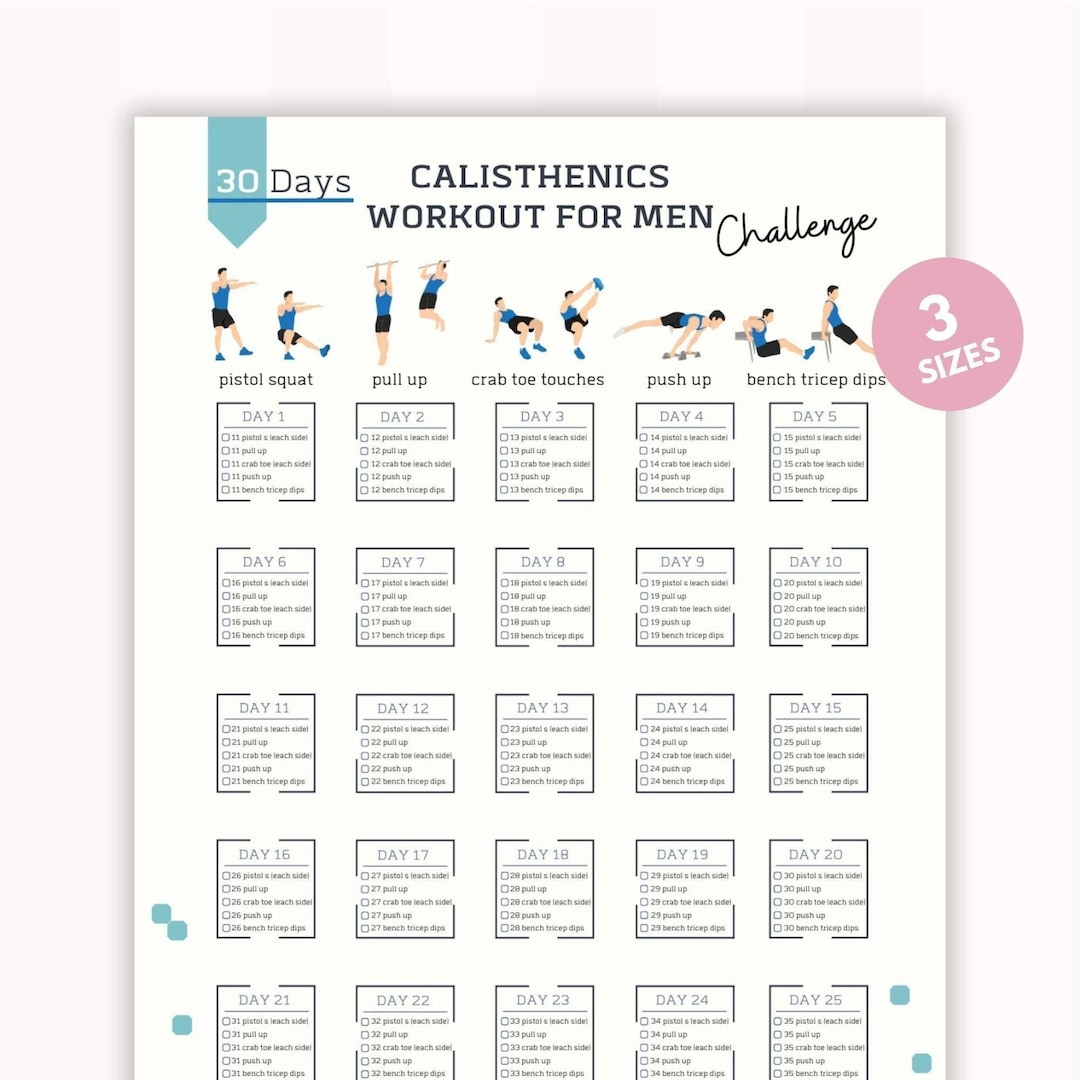
Starting a calisthenics workout routine can feel overwhelming. A clear weekly plan helps build strength and confidence. This sample routine targets different muscle groups each day. It balances effort and rest for steady progress.
Day 1: Upper Body Focus
- Push-ups: 3 sets of 8-12 reps
- Incline push-ups: 3 sets of 10 reps
- Negative pull-ups: 3 sets of 5 reps
- Plank shoulder taps: 3 sets of 20 taps
- Rest 60 seconds between sets
Day 2: Lower Body Focus
- Bodyweight squats: 3 sets of 15 reps
- Walking lunges: 3 sets of 12 reps per leg
- Glute bridges: 3 sets of 15 reps
- Calf raises: 3 sets of 20 reps
- Rest 60 seconds between sets
Day 3: Core And Mobility
- Plank hold: 3 sets of 30 seconds
- Leg raises: 3 sets of 12 reps
- Bird-dog: 3 sets of 10 reps per side
- Cat-cow stretch: 3 sets of 10 reps
- Child’s pose stretch: Hold for 1-2 minutes
Credit: www.etsy.com
Tips To Stay Motivated
Staying motivated during your beginner calisthenics workout routine can be challenging, especially when progress feels slow or obstacles appear. Motivation is not just about energy; it’s about creating habits and systems that keep you moving forward. Here are practical ways to keep your drive alive and make your fitness journey enjoyable and consistent.
Tracking Progress
Seeing how far you’ve come can fuel your motivation like nothing else. Keep a workout journal or use a fitness app to record reps, sets, and how you feel after each session.
Notice patterns in your improvement. Did you do more push-ups this week than last? Celebrate those small wins to stay encouraged.
Photos and videos also help. They show changes that numbers might miss, like better form or muscle definition. How often do you check your progress?
Setting Realistic Goals
Set goals that challenge you but are achievable. If you aim too high, frustration may take over quickly.
Break big goals into smaller steps. Instead of “master a muscle-up,” try “do 10 pull-ups” first. This approach gives you clear targets and frequent victories.
Write your goals down and review them weekly. Adjust if needed. Are your goals pushing you just enough?
Joining A Community
Working out alone can get lonely. Join online forums, local groups, or classes where you can share your journey and learn from others.
Community support offers accountability and encouragement. When you struggle, others can lift you up.
Watching others progress might inspire you to push harder. Have you found a group that makes you feel connected?
Common Mistakes To Avoid
Starting a calisthenics journey is exciting, but beginners often stumble over common pitfalls that can slow progress or cause injury. Recognizing these mistakes early helps you build strength safely and effectively. Let’s look at the most frequent errors and how to avoid them.
Skipping Warm-ups
Many beginners rush into workouts without warming up, thinking it wastes time. However, skipping warm-ups can increase your risk of muscle strains and joint pain. Even a simple 5-minute routine of light cardio and dynamic stretches prepares your body and mind for exercise.
Think about the last time you jumped straight into a workout. Did you feel stiff or sore afterward? Warming up improves blood flow and flexibility, making every movement smoother and safer.
Poor Form
Bad technique is a major obstacle in calisthenics. Performing exercises with poor form reduces effectiveness and can lead to injuries like wrist pain or lower back strain. Focus on mastering basic movements slowly before increasing reps or intensity.
For example, during push-ups, keep your body in a straight line and avoid letting your hips sag. Record yourself or use a mirror to check your posture. Would you rather do fewer reps correctly or many with poor form?
Overtraining
It’s tempting to push hard every day, but overtraining can backfire. Your muscles need time to recover and grow stronger. Without rest, you risk fatigue, decreased performance, and even burnout.
Listen to your body’s signals. Are you feeling unusually tired or sore? Scheduling rest days and mixing low-intensity workouts help maintain balance. Quality always beats quantity in your fitness routine.
Frequently Asked Questions
What Is The Best Beginner Calisthenics Workout Routine?
A good beginner routine includes push-ups, squats, planks, and lunges. Perform 3 sets of 8-12 reps. Focus on form and gradual progression for best results.
How Often Should Beginners Do Calisthenics Workouts?
Beginners should start with 3 sessions per week. This allows muscle recovery and prevents injury. Gradually increase frequency as strength improves.
Can Calisthenics Help Build Muscle For Beginners?
Yes, calisthenics builds muscle using bodyweight exercises. Consistent workouts and proper nutrition promote muscle growth effectively for beginners.
What Equipment Is Needed For Beginner Calisthenics?
Minimal equipment is needed; just a mat and pull-up bar helps. Most exercises use body weight, making calisthenics accessible anywhere.
Conclusion
Starting calisthenics helps build strength and flexibility. Practice these simple exercises regularly. Watch your body grow stronger day by day. Stay patient and keep your focus clear. Rest well and eat healthy to support progress. Track your workouts to see small improvements.
Enjoy the journey toward a fitter you. Keep moving, stay consistent, and feel proud. Small steps lead to big changes over time. This routine sets a strong foundation for fitness.







