
Are you considering a bariatric diet plan to support your weight loss journey? If you’re here, you might be searching for the best ways to ensure lasting success after bariatric surgery or simply exploring effective strategies for weight management.
You deserve a plan that’s not only effective but also easy to follow and fits seamlessly into your lifestyle. Imagine feeling more energetic, healthier, and confident with every meal you enjoy. This isn’t just about losing weight; it’s about transforming your life.
Dive into the secrets of a bariatric diet plan and discover how it can become your ally in achieving your health goals. Ready to unlock the path to a healthier you? Let’s delve deeper.
Credit: www.etsy.com
Bariatric Surgery And Diet Connection
Bariatric surgery changes how your body processes food. This change makes diet very important after surgery. The connection between surgery and diet helps your body heal and lose weight safely. Following the right diet plan supports good health and long-term success.
How Surgery Affects Nutrition
Bariatric surgery reduces stomach size or changes digestion. This limits the amount of food you can eat at once. Nutrient absorption also changes because parts of the digestive system may be bypassed.
These changes can cause:
- Lower calorie intake
- Reduced vitamin and mineral absorption
- Need for supplements
Understanding these effects helps you choose foods that support your body’s needs.
Importance Of Diet Post-surgery
The diet after bariatric surgery is crucial for healing and weight loss. Eating the right foods helps prevent complications like nausea or vomiting.
Key points of the post-surgery diet include:
- Small, frequent meals
- High protein intake
- Limited sugar and fat
- Plenty of fluids
- Vitamin and mineral supplements
Following these guidelines improves energy levels and supports overall health.
Phases Of Bariatric Diet
The bariatric diet plan follows distinct phases to help your body heal and adjust after surgery. Each phase has specific food types and textures. This approach supports weight loss and ensures proper nutrition. Understanding these phases helps you stick to the diet safely and effectively.
Clear Liquid Phase
This phase starts immediately after surgery. It includes only clear liquids like water, broth, and sugar-free drinks. The goal is to keep you hydrated without stressing your stomach. Avoid any solid foods or thick liquids during this time.
Full Liquid Phase
After the clear liquid phase, you can add full liquids. These include protein shakes, milk, and creamy soups. They provide more nutrients while still being easy to digest. Avoid anything with chunks or solid pieces.
Pureed Foods Phase
In this phase, foods are blended into a smooth texture. Think pureed vegetables, soft fruits, and lean meats. This phase helps your stomach get used to thicker foods. Chewing is minimal, as foods are soft and easy to swallow.
Soft Foods Phase
Soft foods are next, including cooked vegetables, soft fruits, and tender meats. Foods should be easy to chew and swallow. Avoid crunchy, hard, or sticky foods. This phase prepares your stomach for more variety.
Regular Foods Phase
The final phase allows most regular foods in small amounts. Focus on protein-rich foods and vegetables. Avoid high-sugar and high-fat foods to maintain weight loss. Portion control is key to avoid stretching your stomach.
Essential Nutrients After Surgery
After bariatric surgery, your body needs a different approach to nutrition. The changes in your digestive system mean you must focus on getting the right nutrients in the right amounts. Without this, your recovery could slow down, and you might face health issues. Understanding which nutrients are essential helps you stay strong and feel your best every day.
Protein Needs
Protein is the building block for healing and muscle maintenance after surgery. Your body requires more protein than before, even if your appetite is smaller. Aim for soft, easy-to-digest protein sources like Greek yogurt, eggs, or protein shakes to meet your daily needs.
Have you noticed how much better your energy feels when you hit your protein goals? Small, frequent meals rich in protein can make a big difference in your recovery. Keep a food diary to track your protein intake—it helps you stay accountable.
Vitamin And Mineral Supplements
Your body can no longer absorb nutrients the same way after surgery. This makes supplements vital to prevent deficiencies. Common supplements include multivitamins, calcium with vitamin D, iron, and vitamin B12.
Ignoring these supplements can lead to symptoms like fatigue, hair loss, or bone pain. Talk with your doctor regularly to adjust doses based on blood tests. Taking supplements consistently can prevent long-term complications.
Hydration Tips
Staying hydrated is a challenge after bariatric surgery because you can’t drink large amounts at once. Sip water slowly throughout the day to avoid dehydration. Aim for at least 64 ounces daily, but listen to your body’s signals.
Avoid drinking fluids 30 minutes before and after meals to prevent feeling too full too fast. If plain water bores you, try flavored water with no added sugar or herbal teas. How do you remind yourself to drink enough water every day?

Credit: barilife.com
Meal Planning Strategies
Meal planning plays a key role in a successful bariatric diet plan. It helps control hunger and supports steady weight loss. Planning meals carefully ensures the right nutrients in the right amounts. This approach makes eating healthier easier and more satisfying.
Portion Control Techniques
Controlling portion sizes is essential after bariatric surgery. Small portions prevent discomfort and aid digestion. Use smaller plates or bowls to help limit serving sizes. Measure food with cups or a kitchen scale for accuracy. Eating slowly allows the brain to register fullness. Stop eating as soon as you feel satisfied.
Balanced Meal Composition
Each meal should include proteins, healthy fats, and carbohydrates. Protein supports muscle repair and keeps you full longer. Choose lean meats, eggs, or dairy products. Include vegetables for fiber and vitamins. Healthy fats come from sources like avocado, nuts, or olive oil. Limit simple sugars and processed foods to maintain steady energy.
Snack Options
Snacks can keep energy levels steady between meals. Choose protein-rich snacks like Greek yogurt or a small handful of nuts. Fresh fruit or cut vegetables provide vitamins and fiber. Avoid sugary or high-fat snacks that add empty calories. Keep snacks small to avoid overeating at mealtime.
Foods To Avoid
Choosing the right foods after bariatric surgery is crucial for your recovery and long-term success. Some foods can slow down your progress or cause discomfort. Knowing which items to avoid helps you stay on track and feel your best every day.
High-sugar And High-fat Items
Foods loaded with sugar and fat are risky after bariatric surgery. They can cause dumping syndrome, which leads to nausea, cramps, and diarrhea. Candy, pastries, fried foods, and creamy sauces often contain hidden sugars and unhealthy fats that sabotage your diet.
Think about that time you reached for a doughnut, hoping for a quick energy boost, but ended up feeling sluggish and sick. Avoiding these foods prevents those unpleasant moments and supports steady weight loss.
Carbonated Beverages
Carbonated drinks like soda and sparkling water can cause bloating and gas. Your smaller stomach can’t handle the bubbles well, leading to discomfort and stretching. Plus, many sodas contain sugar or artificial sweeteners that interfere with your diet goals.
Instead, try sipping plain water or herbal teas throughout the day. How often do you notice how much better you feel without that fizzy feeling weighing you down?
Alcohol And Caffeine
Alcohol slows healing and adds empty calories that don’t nourish your body. It can also increase the risk of ulcers and dehydration. Caffeine, found in coffee and energy drinks, may irritate your stomach and disrupt sleep patterns.
You don’t have to give these up forever, but limiting them during your recovery is key. Could cutting back on your morning coffee or evening drink improve your energy and digestion?
Credit: www.greatideas.net.au
Behavioral Tips For Success
Success with a bariatric diet plan depends heavily on behavior changes. Adopting new eating habits and staying mindful helps maintain weight loss. Small, consistent actions build a strong foundation for long-term health.
Mindful Eating Habits
Pay close attention to hunger and fullness signals. Eat slowly and chew food well. Avoid distractions like TV or phones during meals. Focus on the taste and texture of each bite. This helps prevent overeating and improves digestion.
Tracking Progress
Keep a food and mood journal to record daily intake. Note portion sizes, meal times, and feelings before and after eating. Regularly tracking progress helps identify patterns and triggers. It also boosts motivation by showing small achievements over time.
Managing Cravings
Cravings can challenge your diet plan. Manage them by drinking water or walking for a few minutes. Choose healthy snacks like fruits or nuts if hungry. Distract your mind with hobbies or light exercise. Preparing meals ahead reduces temptation and supports better choices.
Common Challenges And Solutions
Following a bariatric diet plan is not always easy. Many people face challenges that slow their progress or cause frustration. Understanding these common obstacles helps manage them better. Here are some typical issues and practical solutions to keep your journey on track.
Dealing With Plateaus
Weight loss plateaus happen when your body adjusts to your new routine. The scale may stop moving despite your efforts.
Try changing your meal plan or increasing physical activity. Even small changes can restart weight loss. Tracking food intake helps spot hidden calories. Patience is key; plateaus often pass with time.
Handling Nutritional Deficiencies
Bariatric surgery can limit nutrient absorption. Deficiencies in vitamins and minerals may cause fatigue or other health problems.
Follow your doctor’s advice on supplements. Eat a variety of nutrient-rich foods like lean proteins, vegetables, and whole grains. Regular blood tests help catch deficiencies early. Proper nutrition supports healing and energy.
Overcoming Emotional Eating
Emotions can trigger eating even when not hungry. Stress, boredom, or sadness often lead to extra snacking.
Find other ways to cope, such as walking or talking with friends. Keep healthy snacks available to avoid unhealthy choices. Mindful eating helps you focus on hunger signals and portion sizes. Support groups can provide encouragement and advice.
Sample Meal Plans
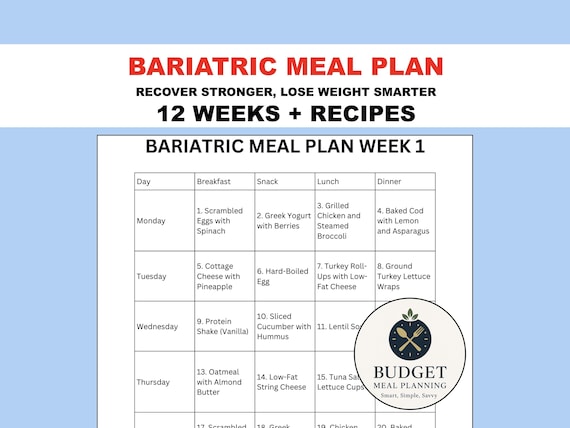
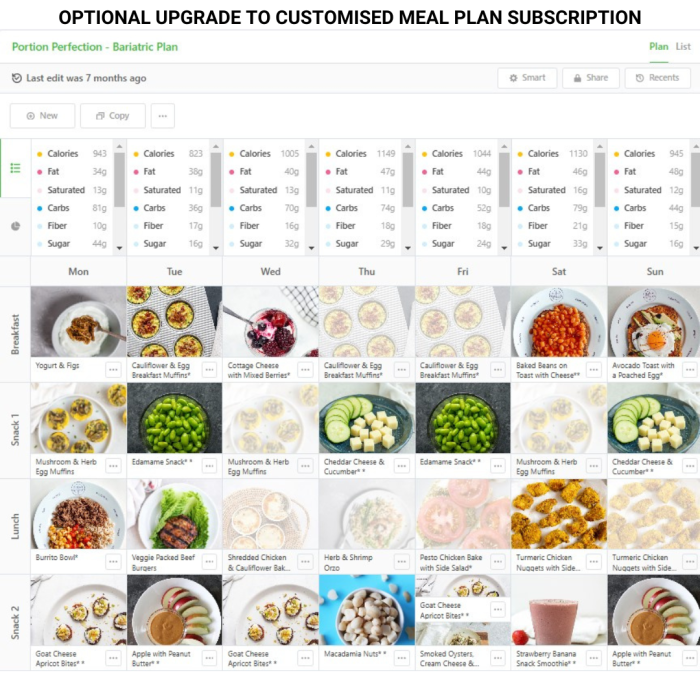
Sample meal plans help simplify the bariatric diet journey. They provide clear guidance on what to eat each day. Structured meal plans keep nutrition balanced and portion sizes controlled. This approach supports steady weight loss and healthy healing. Below are practical examples to get started easily.
One-week Bariatric Diet Sample
| Day | Breakfast | Lunch | Dinner | Snack |
|---|---|---|---|---|
| Monday | Greek yogurt with berries | Grilled chicken salad | Baked salmon with steamed broccoli | String cheese |
| Tuesday | Scrambled eggs with spinach | Turkey and avocado wrap | Lean beef stir-fry with veggies | Cottage cheese |
| Wednesday | Protein smoothie with banana | Quinoa and black bean bowl | Roasted chicken with green beans | Hard boiled egg |
| Thursday | Oatmeal with almond butter | Tuna salad lettuce wraps | Grilled shrimp and asparagus | Greek yogurt |
| Friday | Low-fat cheese omelet | Chicken and vegetable soup | Baked cod with cauliflower mash | Mixed nuts (small portion) |
| Saturday | Protein pancakes with berries | Egg salad on whole wheat toast | Turkey meatballs with zucchini noodles | Apple slices with peanut butter |
| Sunday | Chia pudding with cinnamon | Grilled veggie and hummus wrap | Lean pork chop with sautéed spinach | Low-fat string cheese |
Quick And Easy Recipes
- Protein-Packed Smoothie:Blend ½ cup Greek yogurt, ½ banana, 1 scoop protein powder, and ice.
- Simple Chicken Salad:Mix grilled chicken, lettuce, tomatoes, cucumber, and light dressing.
- Veggie Stir-Fry:Sauté mixed vegetables with a splash of low-sodium soy sauce.
- Egg Muffins:Beat eggs, add chopped veggies, pour into muffin tins, bake 20 minutes.
- Quick Tuna Wrap:Combine tuna with light mayo, add to a whole wheat wrap with spinach.
Frequently Asked Questions
What Foods Are Allowed In A Bariatric Diet Plan?
A bariatric diet focuses on high-protein, low-sugar, and low-fat foods. Lean meats, eggs, dairy, vegetables, and small portions of fruits are preferred. Avoid sugary drinks, fried foods, and high-carb snacks to ensure successful weight loss and proper healing after surgery.
How Soon Can I Eat Solid Foods After Bariatric Surgery?
Typically, patients start with liquids for 1-2 weeks post-surgery. Gradually, pureed and soft foods are introduced over several weeks. Solid foods are usually reintroduced after 4-6 weeks, based on individual tolerance and surgeon guidance.
Why Is Protein Important In A Bariatric Diet?
Protein supports muscle maintenance and healing after surgery. It also promotes fullness and helps prevent muscle loss during weight loss. Most bariatric plans recommend 60-80 grams of protein daily from sources like lean meat, dairy, and protein supplements.
Can I Drink Water With Meals On A Bariatric Diet?
No, drinking water during meals can cause discomfort and reduce nutrient absorption. It’s best to drink fluids 30 minutes before or after meals. Staying hydrated between meals helps prevent dehydration and supports overall health.
Conclusion
A bariatric diet plan supports healthy weight loss after surgery. It focuses on small, balanced meals rich in protein and nutrients. Drinking plenty of water helps your body heal and stay energized. Avoiding sugary and fatty foods reduces discomfort and helps maintain progress.
Staying consistent with your diet can improve long-term results. Remember, patience and care are key to success. This plan guides you step by step towards better health and well-being. Keep following it, and you will see positive changes soon.







