
Looking to sculpt a strong, toned back that not only looks amazing but also supports your daily activities? You’re in the right place.
A well-rounded back workout routine is essential for women who want to improve posture, reduce the risk of injury, and enhance overall strength. Imagine the confidence of wearing your favorite outfit, knowing your back is strong and sculpted. In this blog, you’ll discover an effective back workout routine tailored just for you.
Unlock the secrets to a healthier, more powerful you, and feel the difference in every move you make. Ready to transform your back and boost your confidence? Keep reading to find out how.
Benefits Of Back Workouts For Women
Focusing on your back muscles brings more benefits than you might expect. Strengthening your back improves your overall body function and helps you feel more confident in your daily life. Let’s look at how back workouts specifically benefit women and why adding them to your routine makes a big difference.
Improved Posture And Alignment
Strong back muscles help keep your spine properly aligned. This reduces the tendency to slouch, especially if you spend long hours sitting at a desk or using your phone. Over time, better posture can relieve neck and shoulder pain, making everyday movements more comfortable.
Have you noticed how standing tall changes your confidence instantly? That’s your back muscles at work supporting your posture.
Enhanced Muscle Tone And Definition
Back workouts sculpt and define muscles you don’t often see in the mirror but play a big role in your silhouette. Toned lats, traps, and rhomboids create a balanced, athletic look that complements your arms and shoulders.
Adding exercises like rows or lat pulldowns can help you achieve that sleek, strong appearance. Plus, improved muscle tone boosts your metabolism, helping you burn more calories even at rest.
Increased Strength And Endurance
Building back strength improves your ability to perform tasks that require pulling, lifting, or holding objects. This means carrying groceries, lifting children, or even doing house chores becomes easier and less tiring.
Endurance in your back muscles also helps you maintain good form during workouts and reduces the risk of injury. How often do you push through discomfort only to realize your back was the weak link?
Support For Daily Activities
Your back supports nearly every movement you make throughout the day. Strengthening it enhances balance, stability, and coordination, which are crucial for activities like walking, bending, and reaching.
Think about how much smoother your day would be with less strain or fatigue in your back. Strong back muscles also protect your spine from wear and tear, helping you stay active for years to come.
Essential Back Muscles To Target
Strong back muscles improve posture and reduce pain. Targeting key muscles helps build strength and shape. Focus on these essential back muscles for balanced workouts and better results.
Latissimus Dorsi
The latissimus dorsi, or lats, are the largest back muscles. They stretch from the mid-back to the sides. Strong lats create a V-shaped silhouette and support arm movement. Exercises like pull-ups and rows target these muscles well.
Trapezius
The trapezius covers the upper back and neck area. It controls shoulder movement and supports the head. Strengthening traps improves posture and reduces neck stiffness. Shrugs and face pulls activate this muscle group effectively.
Rhomboids
Rhomboids lie between the shoulder blades. They pull the shoulder blades together and stabilize the upper back. Weak rhomboids cause rounded shoulders and poor posture. Rows and reverse fly exercises focus on these muscles.
Erector Spinae
The erector spinae runs along the spine’s length. It helps keep the back straight and supports lifting. Strong erector spinae prevent lower back pain and improve core stability. Deadlifts and back extensions work these muscles well.
Equipment For Effective Back Training
Choosing the right equipment is key to a strong back workout routine. Using proper tools helps target muscles effectively. It also reduces the risk of injury. This section covers common equipment for women’s back training. Each tool offers unique benefits for shaping and strengthening the back.
Dumbbells And Kettlebells
Dumbbells and kettlebells are versatile tools. They allow a range of exercises like rows and deadlifts. These weights improve muscle tone and build strength. You can adjust the weight to match your fitness level. Perfect for home workouts or gym sessions.
Resistance Bands
Resistance bands add tension to movements without heavy weights. They come in different strengths and sizes. Bands help improve muscle endurance and control. Great for beginners and those recovering from injury. Easy to carry and store anywhere.
Pull-up Bars
Pull-up bars target upper back and shoulder muscles. They help develop grip strength and endurance. Using a pull-up bar can improve posture and core stability. Suitable for various fitness levels with assisted options. A simple tool with big benefits.
Cable Machines
Cable machines provide constant resistance throughout exercises. They allow smooth, controlled movements for back muscles. Perfect for rows, lat pulldowns, and face pulls. Adjustable settings fit different strength levels. Widely available in most gyms.
Warm-up Exercises To Prepare Your Back
Warming up your back before exercise helps prevent injury and improves performance. It prepares muscles and joints for movement. Warm-up exercises increase blood flow to your back muscles.
These exercises also help improve flexibility and range of motion. A good warm-up can reduce muscle stiffness. It makes your back ready for a stronger workout.
Dynamic Stretches
Dynamic stretches involve gentle movements that take your muscles through their full range. These stretches increase flexibility and prepare your back for exercise.
- Arm circles: Move your arms in circles forward and backward.
- Torso twists: Rotate your upper body side to side.
- Cat-cow stretch: Arch and round your back slowly.
Light Cardio
Light cardio raises your heart rate and warms up your entire body. This helps increase blood flow to your back muscles.
- Walking briskly for 5 minutes
- Jumping jacks at a slow pace
- Marching in place with high knees
Activation Drills
Activation drills turn on specific muscles in your back. These drills help improve muscle control and strength during your workout.
- Scapular squeezes: Pinch your shoulder blades together and hold.
- Bird-dog: Extend opposite arm and leg while keeping your back straight.
- Wall angels: Slide your arms up and down against a wall.
Sculpting Back Workout Routine
Building a strong, sculpted back can transform your posture and boost your confidence. A targeted back workout routine helps tone muscles and improve your overall strength. Each exercise below focuses on different parts of your back to create a balanced and defined look.
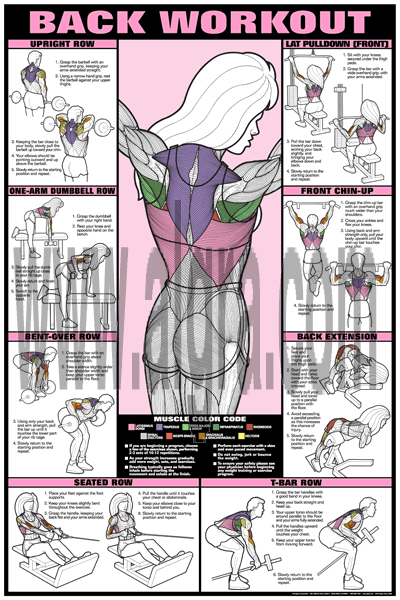
Bent-over Dumbbell Rows
This move targets your upper and middle back while also engaging your arms. Keep your back flat and hinge at the hips as you pull the dumbbells toward your waist.
Start with lighter weights to perfect your form. How does it feel to really squeeze your shoulder blades together at the top of each row?
Lat Pulldowns
Lat pulldowns focus on your latissimus dorsi, the broad muscle that gives your back its width. Use a controlled motion to pull the bar down to your chest, avoiding any swinging.
Try varying your grip width to see which spot you feel the most muscle activation. Do you notice a difference between a wide and narrow grip?
Seated Cable Rows
This exercise strengthens your mid-back and helps improve posture. Sit tall and pull the handle toward your torso, keeping your elbows close to your body.
Focus on pulling with your back muscles instead of your arms. Can you feel the difference when you slow down the movement?
Reverse Flyes
Reverse flyes target the rear deltoids and upper back, areas often neglected in regular workouts. Use light weights and raise your arms out to the sides with a slight bend in your elbows.
Try to keep your shoulder blades pinched together at the top of the movement. How does your posture change when you strengthen these smaller muscles?
Strengthening Exercises For Back Power
Building back power is key to improving your posture, boosting overall strength, and preventing injuries. Strengthening exercises target the muscles in your upper and lower back, helping you feel more confident and capable in daily activities. These moves not only sculpt your back but also support your core and enhance endurance.
Deadlifts
Deadlifts are a powerhouse exercise that works your entire back, along with your glutes and hamstrings. Start with light weights to master the form—keep your back straight and lift with your legs. Feel the difference as your lower back and core engage, providing a solid foundation for stronger lifts.
Pull-ups And Assisted Pull-ups
Pull-ups challenge your upper back and arms, building serious strength. If a full pull-up feels too tough, use a resistance band or an assisted pull-up machine to support your weight. Each rep helps you get closer to unassisted pull-ups, improving your grip and shoulder stability.
Renegade Rows
Renegade rows combine core stability with back strengthening. Holding a plank position, row a dumbbell towards your ribs, one arm at a time. This move targets your lats and rhomboids while forcing your abs to stay tight—perfect for overall body control.
Superman Holds
Superman holds isolate your lower back muscles without any equipment. Lie face down, lift your arms and legs off the ground, and hold the position for 20-30 seconds. This simple move improves endurance and helps balance the strength gained from heavier lifts.
Toning Tips For Faster Results
Getting toned faster requires smart choices in your back workout routine. Focus on how you train and recover. Small changes can bring big results. Here are effective toning tips to boost your progress and shape your back.
High-rep Sets With Moderate Weight
Use moderate weights that challenge your muscles without causing strain. Perform high repetitions, usually 12 to 15 reps per set. This approach helps burn fat and shape muscles. It also improves muscle endurance and tone. Keep your movements controlled and steady for best results.
Circuit Training
Combine several back exercises into a circuit with little rest in between. This keeps your heart rate up and burns more calories. Circuit training tones muscles and improves overall fitness. Try including exercises like rows, lat pulldowns, and reverse flys. Repeat the circuit 3 to 4 times for a strong workout.
Proper Rest And Recovery
Rest is key for muscle growth and toning. Allow your back muscles 48 hours to recover between workouts. Sleep well to support muscle repair and energy. Stretch gently after workouts to reduce soreness. Avoid overtraining to prevent injury and fatigue.

Credit: www.youtube.com
Common Mistakes To Avoid
A strong back workout routine can transform your posture, boost confidence, and build lasting strength. Yet, many women unknowingly make mistakes that slow progress or increase injury risk. Recognizing these common pitfalls helps you train smarter and get better results.
Poor Form And Technique
Using incorrect form is one of the biggest obstacles to an effective back workout. It not only limits muscle engagement but also puts unnecessary strain on joints and ligaments.
For example, rounding your shoulders during rows reduces the activation of your upper back muscles and can lead to shoulder pain. Focus on controlled movements, keeping your spine neutral and shoulders pulled back.
Ask yourself: Are you moving the weight with your back muscles or just swinging it? If you notice momentum taking over, slow down and reset your position.
Overtraining
Training your back every day or pushing beyond your limits can backfire. Overtraining causes fatigue, muscle soreness, and even injury, stalling progress.
Muscle growth happens during rest, so give your back time to recover between sessions. Aim for 2-3 focused back workouts per week with at least 48 hours of rest in between.
Listen to your body—do you feel stronger or constantly tired? Overtraining might be why your gains are stuck.
Neglecting Other Muscle Groups
Focusing only on your back creates muscle imbalances that affect posture and movement quality. Your body works as a system, so training opposing muscles like chest and core is essential.
Ignoring these areas can cause your back to compensate, increasing injury risk and reducing overall strength. Add exercises like planks, push-ups, and chest presses to your routine.
Think about your daily activities—do you feel tightness or discomfort in areas other than your back? A balanced routine can fix those issues and improve your results.
Tracking Progress And Staying Motivated
Tracking your progress during a back workout routine is key to staying motivated and seeing real results. Without keeping an eye on how far you’ve come, it’s easy to lose focus or feel stuck. But when you measure your improvements and celebrate small wins, your workouts become more rewarding and you’ll want to push harder.
Setting Realistic Goals
Set goals that match your current fitness level and lifestyle. Instead of aiming to master advanced moves right away, start with achievable targets like increasing reps or improving your form. Clear goals give you a sense of direction and make progress feel tangible.
Ask yourself: What do you want your back strength to look like in a month? How many sessions can you realistically commit to each week? Answering these helps you avoid frustration and keeps motivation high.
Using Workout Journals
Writing down your workouts can reveal patterns and improvements you might miss otherwise. Track exercises, weights, reps, and how you feel after each session. This record helps you spot what’s working and where you need to adjust.
Try noting small wins too, like better posture or less soreness. These details make your progress more visible and encourage consistency. Plus, looking back at your journal on tough days reminds you how far you’ve come.
Celebrating Milestones
Recognize every milestone, no matter how small. Did you add 5 more pounds to your row? Hold a plank longer? These are victories worth celebrating. Reward yourself with something meaningful—like new workout gear or a relaxing day off.
Celebrations keep your journey positive and reinforce your commitment. What’s a recent win you can celebrate today? Taking a moment to acknowledge success boosts your confidence and fuels your next workout.

Credit: www.womanandhome.com
Credit: www.algra.com
Frequently Asked Questions
What Are The Best Back Exercises For Women?
Effective back exercises for women include rows, lat pulldowns, and deadlifts. These target major back muscles and improve posture. Incorporate resistance bands or dumbbells for added intensity. Consistency and proper form maximize strength and tone in your back muscles.
How Often Should Women Do Back Workouts Weekly?
Women should aim for 2-3 back workout sessions per week. This frequency allows muscle recovery and growth. Combine back training with other muscle groups for balanced fitness. Avoid overtraining to prevent injury and optimize results.
Can Back Workouts Help Improve Posture In Women?
Yes, back workouts strengthen postural muscles like rhomboids and traps. Strong back muscles support the spine and reduce slouching. Regular training improves overall posture and decreases back pain. Consistent exercise leads to better alignment and confidence.
Should Women Use Heavy Weights For Back Training?
Women benefit from using moderate to heavy weights in back training. Heavier weights build muscle strength and improve bone density. Focus on controlled movements to avoid injury. Gradually increase weights as strength improves for best results.
Conclusion
A strong back supports your whole body and improves posture. Try these exercises regularly to build strength and tone muscles. Start with light weights and increase slowly to avoid injury. Consistency matters more than speed or heavy lifting. Enjoy the process and notice your progress over time.
A healthy back helps in daily activities and boosts confidence. Keep moving and stay committed to your routine. Your body will thank you for the effort.







