
Are you ready to take your fitness game to the next level? You’ve nailed the basics, and now it’s time to push your limits with an intermediate workout routine.
This is where the magic happens. You’re not just maintaining your fitness; you’re building strength, endurance, and confidence. Imagine the thrill of seeing real progress, feeling more energetic, and knowing you’re on the right path. In this blog, we’ll guide you through a routine that challenges your muscles and keeps you motivated.
Keep reading, and discover how to transform your workouts from good to great. Let’s get started on unlocking your potential!
Credit: www.lemon8-app.com
Key Principles For Intermediate Gains
Building on your basic workout foundation requires understanding some key principles that help you make steady progress. These principles focus on how you challenge your body, organize your training, and give yourself enough time to recover. Mastering these can turn your routine from average to effective and keep your motivation high as you see real changes.
Progressive Overload
Progressive overload means gradually increasing the demands on your muscles. This could be adding more weight, doing more reps, or increasing workout intensity. For example, if you bench press 100 pounds for 8 reps today, try pushing for 9 reps or 105 pounds next time.
Have you tracked your lifts or reps in the past week? Small, consistent increases force your muscles to adapt and grow stronger over time. Without this, your progress will stall and workouts will feel easier but less effective.
Balanced Training Split
A balanced training split divides your workouts so you target different muscle groups on different days. This avoids overworking one area while neglecting others, which can lead to imbalances and injuries.
You might do legs on Monday, back and biceps on Tuesday, rest on Wednesday, then chest and triceps on Thursday. This structure gives each muscle group enough attention and recovery time, helping you build strength evenly.
Recovery And Rest
Recovery is when your muscles repair and grow stronger, so skipping rest days can actually slow your progress. Your body needs time to heal after challenging workouts, especially at the intermediate level where intensity is higher.
Simple habits like getting 7-9 hours of sleep, staying hydrated, and stretching can speed up recovery. How often do you listen to your body and take a rest day? Pushing through fatigue might feel productive, but it often leads to burnout or injury.

Credit: spotebi.com
Effective Workout Structure
Building an effective workout structure is key to making steady progress in your fitness journey. It’s not just about what exercises you do, but how you organize them to maximize strength, endurance, and recovery. A well-planned routine keeps you motivated and helps avoid plateaus.
Warm-up Techniques
Starting your workout with a proper warm-up is essential. It prepares your muscles and joints for the work ahead, reducing the risk of injury. Simple dynamic stretches like leg swings, arm circles, or light jogging can raise your heart rate and increase blood flow.
Try spending 5 to 10 minutes on warm-up moves that mimic the exercises you’ll do. For instance, if you plan to squat, do bodyweight squats first. This approach makes your muscles ready and improves your overall performance.
Compound Vs Isolation Exercises
Compound exercises work multiple muscle groups at once, making them efficient and time-saving. Movements like squats, deadlifts, and bench presses engage several joints and muscles, helping you build strength faster.
Isolation exercises, on the other hand, target one specific muscle group. Think bicep curls or leg extensions. These are useful for fixing muscle imbalances or focusing on weak spots after your main lifts.
Balancing both types in your routine ensures you build overall strength while refining specific muscles. Ask yourself: are you focusing enough on the big lifts before adding isolation work?
Rep Ranges And Sets
Your choice of reps and sets shapes the results you get from your workouts. Lower reps (4-6) with heavier weights build strength, while moderate reps (8-12) increase muscle size. Higher reps (15+) improve muscular endurance.
For most intermediate lifters, aiming for 3 to 4 sets per exercise offers a good balance of volume and intensity. Rest periods between sets also matter; shorter rests boost endurance, longer rests help strength recovery.
Experiment with rep ranges and see how your body responds. Are you pushing too hard or not enough? Adjust based on how you feel and what goals you want to hit.
Sample Weekly Routine
Having a well-structured weekly routine helps you stay consistent and see real progress. This sample schedule balances strength, muscle growth, and recovery to keep your workouts effective without burning you out. Let’s break down how you can organize your week for the best results.
Day 1: Upper Body Strength
Focus on heavy lifts that target your chest, back, shoulders, and arms. Use compound movements like bench press, pull-ups, and overhead press to build solid strength.
- Bench Press – 4 sets of 5 reps
- Pull-Ups – 4 sets to failure
- Overhead Press – 3 sets of 6 reps
- Barbell Rows – 4 sets of 6 reps
- Tricep Dips – 3 sets of 8 reps
Heavy lifting on this day challenges your muscles and nervous system. Are you pushing yourself enough to feel that tension?
Day 2: Lower Body Power
Train your legs with explosive and strength-building exercises. Squats, deadlifts, and lunges will improve your power and stability.
- Back Squats – 4 sets of 5 reps
- Deadlifts – 3 sets of 5 reps
- Walking Lunges – 3 sets of 12 steps
- Leg Press – 3 sets of 8 reps
- Calf Raises – 4 sets of 15 reps
Try to increase weight gradually without sacrificing form. Can you feel your legs getting stronger each week?
Day 3: Rest And Recovery
Rest days are just as important as workout days. Use this time to stretch, hydrate, and focus on nutrition.
Consider light activities like walking or yoga to keep your body moving without strain. How well are you listening to your body’s need for rest?
Day 4: Hypertrophy Focus
Shift your focus to muscle growth with higher reps and moderate weights. This day targets muscle size through volume and controlled movement.
- Incline Dumbbell Press – 4 sets of 12 reps
- Lat Pulldowns – 4 sets of 12 reps
- Dumbbell Shoulder Press – 3 sets of 15 reps
- Leg Curls – 3 sets of 15 reps
- Bicep Curls – 3 sets of 15 reps
Slow down your reps to focus on the muscle working. Can you feel the burn without rushing through the sets?
Day 5: Full Body Workout
End your week with a workout that hits all major muscle groups. This keeps your body balanced and improves overall conditioning.
- Deadlifts – 3 sets of 6 reps
- Push-Ups – 4 sets of 15 reps
- Bulgarian Split Squats – 3 sets of 8 reps per leg
- Plank – 3 sets of 1-minute holds
- Face Pulls – 3 sets of 15 reps
This session challenges your endurance and strength at the same time. How does your body feel when you combine all muscle groups in one workout?
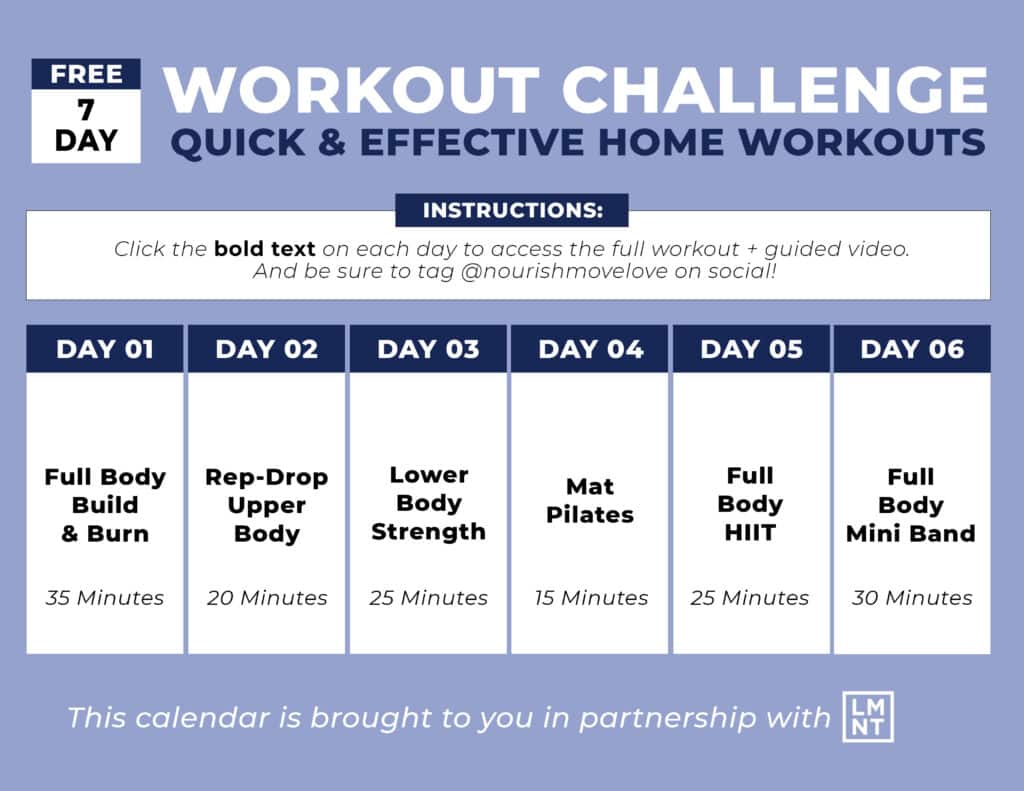
Credit: www.nourishmovelove.com
Nutrition Tips For Muscle Growth
Nutrition plays a crucial role in your muscle growth journey. What you eat fuels your workouts and repairs your muscles afterward. Without the right nutrition, your hard work in the gym might not translate into the gains you want.
Macronutrient Breakdown
Your muscles need the right balance of macronutrients: proteins, carbohydrates, and fats. Aim for about 1.6 to 2.2 grams of protein per kilogram of body weight daily to support muscle repair and growth.
Carbohydrates provide the energy you need for intense workouts. Don’t cut them too low; a good range is 3 to 5 grams per kilogram of body weight. Healthy fats are also essential for hormone production—about 20-30% of your daily calories should come from fats.
Meal Timing Strategies
When you eat can be just as important as what you eat. Try to have a balanced meal with protein and carbs about 1-2 hours before your workout to fuel your session.
Post-workout nutrition is critical. Consuming protein and carbs within 30-60 minutes after training helps kickstart muscle recovery.
Think about spreading your protein intake evenly across 3-5 meals throughout the day. This supports muscle protein synthesis more effectively than eating most of your protein in one meal.
Supplements To Consider
Supplements aren’t magic, but they can support your nutrition plan. Whey protein powder is a convenient way to hit your protein goals, especially when you’re busy.
Creatine monohydrate is one of the most researched supplements and can help improve strength and muscle mass over time.
Don’t forget about omega-3 fatty acids—they help reduce inflammation and support overall health, which aids recovery.
Have you tried any supplements that made a noticeable difference in your progress? Sometimes small additions can push you past a plateau.
Tracking Progress And Adjustments
Tracking progress and making adjustments are key to an effective intermediate workout routine. They help you stay motivated and improve results. Monitoring your performance shows what works and what needs change. Small tweaks can boost your strength, endurance, and muscle growth.
Using Workout Logs
Workout logs record exercises, sets, reps, and weights. Writing these details helps you see progress clearly. Logs keep you honest and focused on goals. They also highlight patterns like improvements or struggles.
Use a notebook or an app. Track daily workouts and note how you feel. This data guides your next workout choices. Workout logs build good habits and create a sense of achievement.
Recognizing Plateaus
A plateau happens when progress slows or stops. It can feel frustrating and cause loss of motivation. Watch for signs like no strength gains or muscle growth over weeks.
Plateaus often mean your body has adapted to the current routine. It needs new challenges to grow further. Recognizing this early helps prevent long periods without improvement.
Adapting Your Plan
Adjust your routine based on your progress and plateaus. Change variables like weight, reps, sets, or rest time. Try new exercises to target muscles differently.
Switching up your workouts keeps your body guessing. It sparks new growth and avoids boredom. Adaptations should be small and gradual. This reduces injury risk and keeps progress steady.
Common Mistakes To Avoid
Many people make common mistakes during intermediate workouts. These errors can slow progress and increase injury risk. Avoiding these pitfalls helps maintain steady gains and keeps workouts safe.
Overtraining Risks
Training too hard without enough rest can cause fatigue and injury. The body needs time to recover and rebuild muscle. Overtraining reduces strength and energy. Pay attention to signs like persistent soreness and poor sleep. Balance workout intensity with rest days.
Ignoring Form And Technique
Poor form limits results and raises injury chances. Correct technique targets the right muscles effectively. Focus on slow, controlled movements. Use mirrors or ask for feedback to improve posture. Avoid using heavy weights that cause you to cheat form.
Neglecting Mobility Work
Skipping mobility exercises reduces flexibility and joint health. Tight muscles limit movement and increase injury risk. Include stretching and dynamic warm-ups in your routine. Mobility work improves posture and performance. Spend a few minutes daily on mobility drills for best results.
Frequently Asked Questions
What Is An Intermediate Workout Routine?
An intermediate workout routine suits those with basic fitness experience. It balances strength, cardio, and flexibility exercises. This routine challenges your body progressively to improve muscle tone and endurance. It bridges beginner and advanced levels effectively for steady fitness gains.
How Often Should I Do Intermediate Workouts Weekly?
Perform intermediate workouts 3 to 5 times per week. This frequency allows muscle recovery and growth. Consistency is key for progress without burnout. Include rest days and vary workout intensity to avoid plateaus and injuries.
What Exercises Are Included In An Intermediate Routine?
An intermediate routine includes compound lifts, cardio, and core work. Common exercises are squats, lunges, push-ups, and planks. It may also incorporate dumbbells and resistance bands. The goal is full-body strength and cardiovascular improvement.
How Long Should Each Intermediate Workout Session Last?
Each session should last 45 to 60 minutes. This duration allows effective warm-up, workout, and cool-down. It ensures you target all muscle groups without overtraining. Keeping sessions consistent maximizes fitness results efficiently.
Conclusion
Sticking to an intermediate workout routine builds strength and endurance. It helps your body grow stronger step by step. Keep challenging yourself with new exercises and steady progress. Rest and good nutrition support your hard work. Stay consistent and patient; results come with time.
Enjoy the journey of getting healthier and fitter. Every small effort adds up to big changes. Your body will thank you for the care you give. Keep moving forward, one workout at a time.







