
Are you ready to take your strength to the next level? A solid bench press workout plan can transform your chest, shoulders, and arms faster than you think.
Whether you’re a beginner or looking to break through a plateau, the right routine will help you build muscle, increase power, and boost your confidence. Imagine hitting new personal records and feeling stronger every time you step under the bar.
Keep reading to discover a simple, effective plan designed just for you—one that fits your goals and pushes you toward real results.
Benefits Of Bench Press
The bench press is more than just a staple in the gym; it’s a powerful exercise that offers several key benefits. Whether you want to build muscle, boost your strength, or improve your overall athletic ability, the bench press delivers. Understanding these benefits helps you stay motivated and focused during your workouts.
Muscle Groups Targeted
The bench press primarily works your chest muscles, specifically the pectoralis major. But it doesn’t stop there.
- Your shoulders, especially the anterior deltoids, play a big role in stabilizing and pushing the weight.
- The triceps assist in extending your arms during the lift.
- Even your back and core muscles engage to keep your body stable on the bench.
Knowing which muscles are active can help you adjust your form and focus on areas that need extra work.
Strength And Power Gains
Adding bench presses to your workout routine builds upper body strength quickly. This exercise allows you to lift heavy weights, which forces your muscles to grow and adapt.
Over time, you’ll notice your ability to push heavier loads improves, translating into real power gains. Have you tracked how much your bench press has increased over weeks or months? Watching those numbers climb can be incredibly motivating.
Improved Athletic Performance
Strong chest, shoulder, and arm muscles improve your performance in many sports. Whether you play football, basketball, or swim, the bench press helps you generate force and power.
It also enhances your stability and control, reducing the risk of injuries during dynamic movements. Have you ever felt more confident in your athletic abilities after a solid strength training session? That boost often comes from exercises like the bench press.
Essential Equipment
Starting a bench press workout plan requires the right tools. The essential equipment ensures safety, comfort, and effectiveness. Using proper gear helps improve performance and reduce injury risk.
Choosing The Right Bench
Select a bench that is sturdy and stable. It should support your full body weight plus the barbell. A flat bench is best for beginners to learn proper form. Adjustable benches allow incline and decline positions for varied workouts. Check the bench padding for comfort during pressing. Non-slip feet keep the bench steady on the floor.
Barbells And Plates
Use a standard or Olympic barbell based on your gym setup. Olympic bars are thicker and heavier, usually 20 kg. Plates come in different weights to match your strength level. Choose plates with clear weight markings for easy selection. Rubber-coated plates reduce noise and protect the floor. Secure plates with collars to prevent movement during lifts.
Safety Gear
Safety gear is vital for injury prevention. Use wrist wraps to support your wrists and reduce strain. Weightlifting gloves improve grip and protect hands from calluses. A lifting belt helps stabilize your lower back during heavy lifts. Spotter arms or safety pins catch the bar if you fail a lift. Always have a spotter present for maximum safety.
Proper Bench Press Form
Proper bench press form is essential for building strength safely and effectively. It helps prevent injuries and ensures you target the right muscles. Correct form also improves your lifting performance and boosts confidence.
Hand Placement And Grip
Place your hands evenly on the bar to keep balance. A wider grip targets your chest more. A narrower grip works your triceps and shoulders. Wrap your thumbs around the bar for a secure hold. Avoid a loose grip to prevent slipping.
Body Positioning
Lie flat on the bench with your feet firmly on the ground. Keep your back slightly arched and shoulder blades pulled together. Your eyes should be under the bar before you lift. Maintain a stable and tight core throughout the lift. This position supports your spine and maximizes power.
Breathing Techniques
Take a deep breath before lowering the bar. Hold your breath as you lower to maintain core stability. Exhale forcefully while pushing the bar upward. Proper breathing improves strength and control during the exercise. It also helps reduce the risk of dizziness or fatigue.
Credit: www.eosfitness.com
Beginner Workout Plan
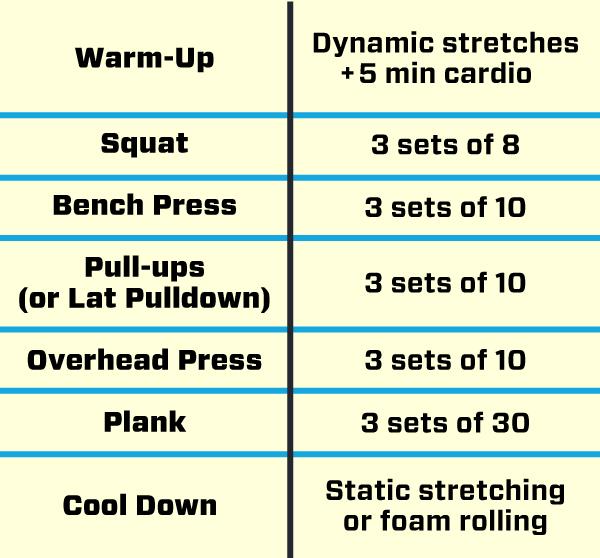
Starting a bench press workout plan as a beginner sets a strong foundation. It builds muscle, improves strength, and boosts confidence. A clear, simple plan helps avoid injuries and keeps progress steady. Focus on proper form and controlled movement. This beginner plan guides you through warm-ups, reps, and growth tips.
Warm-up Routines
Warming up prepares your muscles and joints. Start with 5 to 10 minutes of light cardio. Try jogging or jumping rope to increase blood flow. Follow with dynamic stretches like arm circles and shoulder rotations. Do a few sets of push-ups or light bench presses with just the bar. This reduces injury risk and improves performance.
Reps And Sets
Begin with lighter weights to learn the movement. Aim for 3 sets of 8 to 12 reps. This range builds muscle and strength safely. Rest for 60 to 90 seconds between sets. Focus on slow, steady motions. Keep your feet flat on the floor and wrists straight. Avoid bouncing the bar off your chest.
Progression Tips
Increase weight gradually to keep improving. Add small increments, about 5 pounds each week. Track your progress in a workout journal. If form breaks, reduce weight and try again. Include rest days to let muscles recover. Consistency beats intensity for beginners. Stick to the plan and progress will follow.
Intermediate Training Strategies
Intermediate bench press training requires smart strategies to break plateaus and build strength. This phase focuses on balancing workout variety, intensity, and recovery. Small changes can lead to steady progress and better muscle gains. The key lies in adjusting your routine thoughtfully without overtraining.
Incorporating Variations
Changing your bench press style targets different muscles and prevents boredom. Try close grip, incline, or decline bench presses to work your chest, shoulders, and triceps differently. Use dumbbells or chains for added challenge. These variations improve overall strength and muscle balance.
Volume And Intensity Adjustments
Adjust your sets, reps, and weight to keep your muscles growing. Increase volume by adding more sets or reps. Raise intensity by lifting heavier weights with fewer reps. Cycle between high volume and high intensity weeks to avoid burnout. Track progress to know when to make changes.
Rest And Recovery
Rest days are crucial for muscle repair and growth. Allow at least 48 hours between heavy bench press sessions. Use light workouts or stretching on off days. Proper sleep and nutrition support recovery. Overtraining leads to injury and stalled progress.

Credit: www.hungry4fitness.co.uk
Advanced Bench Press Techniques
Taking your bench press to the next level means refining your technique and challenging your muscles in new ways. Advanced bench press techniques help break through plateaus and build strength more efficiently. These methods demand focus and control, pushing your limits safely and effectively.
Pause Reps
Pause reps involve holding the barbell at the bottom of the lift for a brief moment before pressing it back up. This eliminates the stretch reflex, making your muscles work harder from a dead stop.
Try pausing for 1-2 seconds right above your chest. This improves your power off the chest and builds stability in your shoulders.
Have you noticed that your bench press stalls just after the bar touches your chest? Pause reps could be the key to overcoming that sticking point.
Tempo Training
Tempo training controls the speed of your lift during each phase: lowering, pausing, and pressing. Slowing down your eccentric (lowering) phase increases time under tension, enhancing muscle growth.
For example, lower the bar for 3 seconds, pause for 1 second, then press up explosively. This method forces you to maintain tightness and control throughout the movement.
What if you could build both strength and muscle size by simply adjusting the rhythm of your bench press? Tempo training can do exactly that.
Accessory Exercises
Accessory exercises target supporting muscles and improve weaknesses that limit your bench press. Focusing on triceps, shoulders, and upper back will boost your overall performance.
- Close-Grip Bench Press:Targets the triceps to lock out the lift.
- Face Pulls:Strengthen rear delts and improve shoulder stability.
- Incline Dumbbell Press:Develops upper chest and balances muscle development.
Have you ever thought about how a stronger upper back can improve your bench press stability? Accessory exercises build that foundation.
Common Mistakes To Avoid
Avoiding common mistakes in your bench press workout can make a huge difference in your strength gains and injury prevention. Many lifters get stuck in bad habits without realizing how these errors slow progress or lead to pain. Let’s break down some key pitfalls you should watch out for to keep your bench press safe and effective.
Poor Form
Using poor form is one of the biggest reasons bench press workouts fail. If your elbows flare out too wide or your back arch is exaggerated, you risk shoulder injuries. Keep your feet flat on the floor, shoulders retracted, and wrists straight to protect your joints.
Think about how your body feels during each rep. Are you straining awkwardly or controlling the bar smoothly? Focus on slow, deliberate movements rather than rushing through sets. This approach helped me break a plateau and finally add 10 pounds to my max.
Overtraining
Bench pressing every day or pushing to failure constantly might seem dedicated, but it backfires quickly. Your muscles need time to recover and grow stronger. Training the bench press 2-3 times per week with rest days in between allows better performance and fewer injuries.
Ask yourself: is your progress stalling or are you feeling unusually fatigued? Those are signs you might be overdoing it. Adjust your volume and intensity, then watch your strength rebound.
Ignoring Warm-ups
Skipping warm-ups is a common mistake that puts you at risk for strains and limits your lifting capacity. Warm muscles respond better and reduce joint stress during heavy presses. Spend 5-10 minutes doing light cardio and dynamic stretches targeting your chest, shoulders, and triceps.
Try a few lighter sets before your working sets to prime your nervous system. You’ll notice smoother reps and less discomfort. How often do you warm up before bench pressing? If it’s rarely, start today and feel the difference.
Nutrition For Strength Gains
Nutrition plays a key role in building strength through your bench press workout plan. Proper food choices fuel muscles and help recovery. Eating the right balance of nutrients supports muscle growth and energy levels. Focus on meals that help repair muscle fibers and improve lifting performance.
Macronutrient Breakdown
Protein is crucial for muscle repair and growth. Aim for 1.2 to 2 grams per kilogram of body weight daily. Carbohydrates provide energy for intense workouts. Choose complex carbs like oats, rice, and sweet potatoes. Healthy fats support hormone production and overall health. Include sources like nuts, seeds, and olive oil.
Supplements To Consider
- Whey protein helps meet daily protein needs quickly.
- Creatine improves strength and power during lifts.
- Branched-chain amino acids (BCAAs) reduce muscle soreness.
- Beta-alanine can delay muscle fatigue in intense sets.
- Fish oil supports joint health and reduces inflammation.
Hydration Tips
Drink water before, during, and after your workouts. Proper hydration improves muscle function and recovery. Avoid sugary drinks that can dehydrate you. Electrolyte drinks can help if you sweat a lot. Keep a water bottle handy to sip throughout the day.
Tracking Progress
Tracking progress in your bench press workout plan is essential for continuous improvement. Without monitoring your efforts, it’s hard to know if you’re moving forward or just spinning your wheels. Keeping a close eye on your lifts helps you stay motivated and make smart adjustments.
Recording Workouts
Write down every detail of your bench press sessions. Note the weight, reps, sets, and how you felt during the lift. This simple habit gives you clear evidence of your strength gains over time.
Using a workout journal or a fitness app can make recording easier and more organized. Have you tried tracking your workouts digitally? It often helps spot patterns you might miss otherwise.
Setting Realistic Goals
Setting goals that are challenging but achievable keeps you motivated. Instead of aiming to add 50 pounds in a month, target smaller increases like 5 pounds every two weeks.
Think about what fits your current lifestyle and recovery ability. Are you pushing too hard or not enough? Adjust goals based on how your body responds to prevent burnout or plateaus.
Adjusting Plans Based On Results
Use your recorded data to tweak your workout plan. If progress stalls, consider changing your sets, reps, or rest time. Sometimes, adding variety like pause reps or incline presses can jumpstart gains.
Ask yourself: Is my current routine helping me get stronger or just maintaining? Your plan should evolve with your results, not stay fixed.
Injury Prevention And Recovery
Injury prevention and recovery are essential parts of any bench press workout plan. Protecting your muscles and joints helps maintain progress and avoid setbacks. Careful attention to form and recovery practices reduces the risk of common injuries.
Recovery allows your body to heal and grow stronger. Ignoring pain or discomfort can lead to long-term issues. A smart approach balances effort with rest and care.
Common Injuries
- Shoulder impingement – pain caused by pinched tendons during lifting.
- Rotator cuff strains – injury to small muscles around the shoulder joint.
- Elbow tendonitis – inflammation from repetitive stress on the elbow tendons.
- Wrist sprains – caused by poor wrist positioning or sudden twists.
- Lower back strain – often from improper form or lack of core support.
Stretching And Mobility
Stretching improves blood flow and flexibility. It helps prepare muscles for lifting and reduces stiffness after workouts.
- Focus on shoulder and chest stretches before bench pressing.
- Include wrist mobility exercises to prevent strain.
- Incorporate thoracic spine rotations to improve posture.
- Use dynamic stretches before workouts and static stretches after.
When To Seek Professional Help
Persistent pain that lasts more than a few days needs attention. Sharp or worsening pain requires immediate care.
- Consult a physical therapist for tailored rehab exercises.
- Visit a doctor if swelling or bruising appears.
- Stop workouts that increase pain or cause discomfort.
- Use professional advice to adjust your form and technique.
Credit: medium.com
Frequently Asked Questions
How Often Should I Do Bench Press Workouts Weekly?
For optimal results, perform bench press workouts 2 to 3 times per week. This frequency allows muscle recovery and growth. Avoid training the same muscle group on consecutive days to prevent injury and fatigue.
What Is The Best Warm-up For Bench Press?
Start with light cardio for 5 minutes, followed by dynamic stretches. Perform 2 to 3 warm-up sets using lighter weights before your main bench press sets. This prepares muscles and reduces injury risk.
How Many Sets And Reps Are Ideal For Bench Press?
Aim for 3 to 5 sets of 6 to 12 reps for strength and muscle growth. Adjust weights to maintain proper form and challenge your muscles without overexertion.
Can Bench Press Improve Overall Upper Body Strength?
Yes, bench press targets chest, shoulders, and triceps. It builds upper body strength and muscle mass effectively. Incorporate it regularly for balanced upper body development.
Conclusion
Building a strong bench press routine takes time and dedication. Remember to start with a weight you can handle. Increase gradually as you gain strength. Consistency is key to progress. Listen to your body and avoid overtraining. Proper form prevents injuries and boosts results.
Don’t forget to rest and recover. A balanced diet supports your workout goals. Stay patient and committed to see improvements. Celebrate small victories along the way. Your hard work will pay off. Happy lifting!







