
Are you struggling to find time for exercise in your busy schedule? Do you often feel overwhelmed by the idea of going to the gym?
You’re not alone. Many people face the same challenge. That’s why a 30-minute workout routine at home could be your perfect solution. Imagine feeling more energetic, healthier, and happier, all without leaving your living room. Picture yourself achieving your fitness goals in less time than it takes to watch an episode of your favorite show.
This routine is designed to fit seamlessly into your day, offering maximum benefits in minimal time. Ready to discover how you can transform your body and boost your mood in just half an hour? Let’s dive in and get you started on the path to a healthier you.
Credit: www.lemon8-app.com
Benefits Of A 30-minute Workout
Exercising for just 30 minutes at home offers many great benefits. It fits well into daily life and improves health quickly. Short workouts can help build strong habits. They support both body and mind. Understanding these benefits shows why a 30-minute workout is a smart choice.
Boosting Metabolism Fast
A 30-minute workout speeds up your metabolism. This means your body burns more calories even after exercise. High-intensity moves increase heart rate and energy use. This effect lasts for hours post-workout. Regular sessions help maintain a faster metabolism long-term. This supports weight management and energy levels.
Fitting Exercise Into Busy Schedules
Many people struggle to find time for fitness. Thirty minutes is enough to get a good workout. It can fit into lunch breaks or early mornings. No need for long gym visits or travel. Short workouts reduce excuses and increase consistency. You can easily combine them with daily chores.
Improving Mental Health Quickly
Exercise boosts mood and reduces stress fast. Even a brief workout releases feel-good chemicals in the brain. It helps clear the mind and increase focus. Physical activity lowers anxiety and promotes better sleep. Regular sessions create a positive cycle for mental health. A quick workout can brighten your entire day.
Credit: slowjam-japan.jp
Essential Equipment For Home Workouts
Starting a workout routine at home does not require a lot of fancy equipment. The right tools can help you stay consistent and make your sessions more effective. Essential equipment means having what you need without clutter or confusion.
With just a few items, you can perform a wide range of exercises. These items help target different muscle groups and improve strength, flexibility, and endurance. Let’s explore the basics and some helpful extras for your home workout space.
Minimal Gear Needed
Many effective workouts need just a few simple items. A good exercise mat provides comfort and support. Resistance bands add challenge without heavy weights. A jump rope helps with cardio and coordination. These items are affordable and easy to store.
Using Household Items
You can use everyday objects for strength and balance exercises. A sturdy chair works for step-ups and tricep dips. Water bottles or canned goods serve as light weights. Towels can help with stretching or sliding movements. These options save money and reduce clutter.
Optional Fitness Accessories
Some accessories improve workout variety and intensity. Dumbbells or kettlebells add weight for muscle building. A foam roller aids in muscle recovery and flexibility. A stability ball enhances core strength and balance. These are helpful but not necessary to start training.
Warm-up Moves To Prepare Your Body
Warming up before your 30-minute workout is essential to get your body ready and reduce the risk of injury. It raises your heart rate gradually and loosens your muscles, making your movements smoother and more effective. Skipping this step can leave you stiff and less focused during your session.
Dynamic Stretching Tips
Dynamic stretching involves active movements that gently stretch your muscles and increase blood flow. Try leg swings, arm circles, or walking lunges to wake up your body. These stretches don’t hold a position but keep your muscles moving, which helps prepare them for the workout ahead.
Start slow and increase your range of motion as you go. Notice how your body feels—are your shoulders and hips loosening up? If you feel tightness, spend a bit more time on those areas.
Joint Mobility Exercises
Your joints need attention too. Mobility exercises focus on improving the movement of your joints, which can prevent discomfort during your workout. Simple moves like ankle rolls, wrist rotations, and neck circles can make a big difference.
Think about your joints as hinges; if they’re stiff, your whole movement suffers. Spend 5 minutes gently moving each joint through its full range. This small effort will pay off with better form and less strain during your exercises.
Full-body Workout Plan
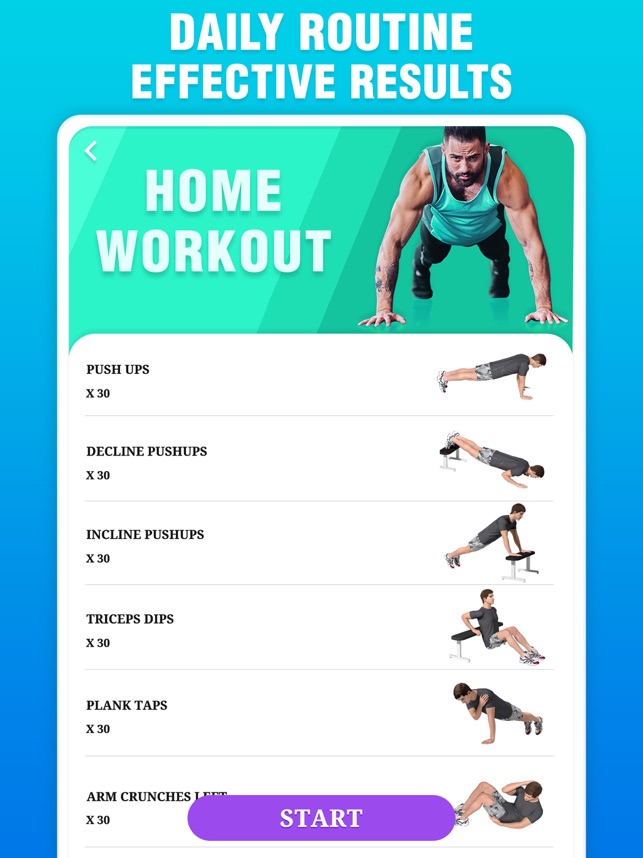
A full-body workout plan targets all major muscle groups in a single session. It saves time and boosts overall fitness. This routine combines cardio, strength, and core exercises. It fits perfectly into a busy schedule and requires minimal equipment.
Cardio Bursts
Cardio bursts increase your heart rate quickly. They improve endurance and burn calories fast. Try jumping jacks, high knees, or mountain climbers. Perform each move for 30 seconds, then rest for 15 seconds. Repeat for 3 rounds to boost energy and stamina.
Strength Training Exercises
Strength training builds muscle and tones your body. Use bodyweight moves like squats, push-ups, and lunges. Focus on form to avoid injury. Do 3 sets of 12 reps each. Add light weights or resistance bands if available. Strength work improves metabolism and supports daily activities.
Core Strengtheners
Core exercises strengthen your abs, back, and hips. Try planks, bicycle crunches, and leg raises. Hold planks for 30 seconds and do 15 reps for other moves. A strong core improves posture and balance. Include core work at the end of your session for best results.
Cool-down And Stretching
Cooling down and stretching after a 30-minute workout is important. It helps your body recover and reduces muscle soreness. Taking time to cool down also improves flexibility and prevents injuries. A good cool-down routine slows your heart rate back to normal. Stretching keeps your muscles long and loose, making you feel relaxed and refreshed.
Effective Stretching Techniques
Focus on major muscle groups you used during your workout. Hold each stretch for 20 to 30 seconds. Avoid bouncing or forcing your body into a stretch. Use slow, steady movements to ease into the stretch. Here are key stretches to include:
- Hamstring stretch: Sit with legs straight, reach for your toes.
- Quadriceps stretch: Stand, pull one foot toward your buttocks.
- Calf stretch: Place hands on a wall, step one foot back, press heel down.
- Shoulder stretch: Bring one arm across your chest and hold with the other arm.
- Triceps stretch: Raise one arm overhead, bend the elbow, and press gently.
Breathing Exercises For Relaxation
Deep breathing helps calm your mind and body after exercise. It lowers your heart rate and reduces tension. Try this simple breathing routine:
- Breathe in slowly through your nose for four seconds.
- Hold your breath for four seconds.
- Exhale slowly through your mouth for six seconds.
- Repeat this cycle three to five times.
Focus on your breath and feel your body relax. This technique can improve your overall workout recovery and help you feel peaceful.
Modifications For Different Fitness Levels
Everyone has a different fitness level and pace. Modifications make the workout routine safe and effective for all. Adjusting exercises helps you build strength and confidence. Choose options that match your current ability. Gradually increase intensity to improve over time.
Beginner-friendly Options
- Perform exercises at a slower pace to reduce strain.
- Use a chair for support during squats or lunges.
- Limit jumping moves; step instead of jump.
- Reduce the number of repetitions to avoid fatigue.
- Take longer breaks between sets to recover.
- Focus on proper form to prevent injury.
Advanced Variations
- Add weights like dumbbells or water bottles for resistance.
- Increase speed to raise heart rate and intensity.
- Try plyometric moves such as jump squats or burpees.
- Combine exercises for a full-body challenge.
- Shorten rest periods to boost endurance.
- Include balance and core work for extra strength.
Tips For Staying Motivated
Staying motivated during a 30-minute workout routine at home can be challenging. Motivation fades quickly without clear direction or a pleasant environment. Small habits make a big difference. Use these tips to keep your energy and focus high.
Setting Realistic Goals
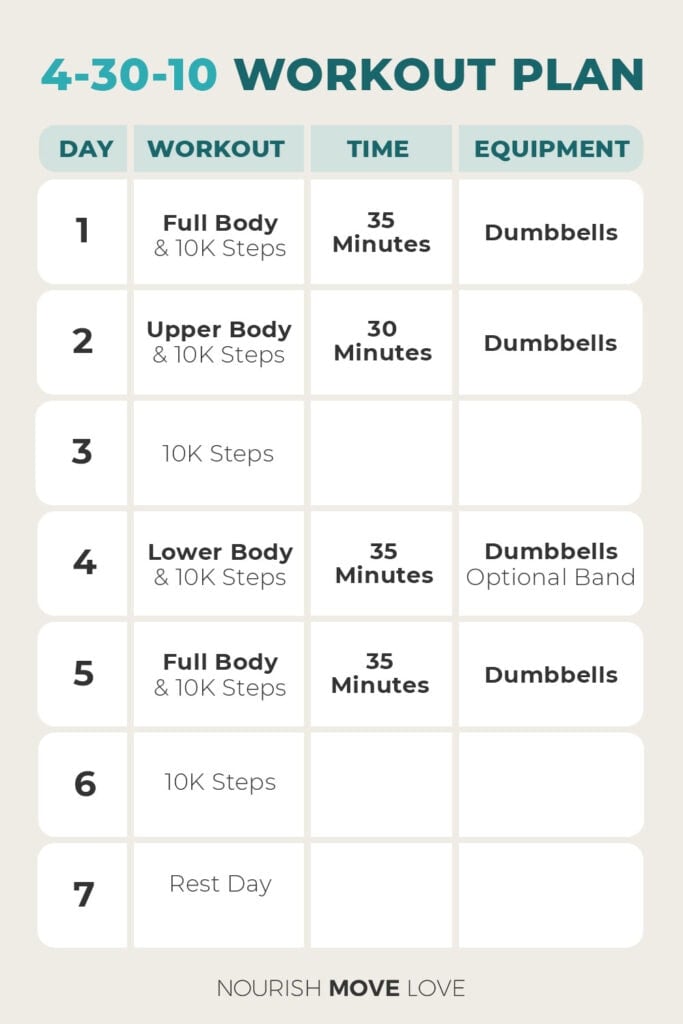
Set goals that fit your current fitness level. Avoid aiming too high too fast. Small, clear goals keep motivation alive. For example, aim to complete three workouts a week instead of seven. Celebrate each goal you reach. This builds confidence and eagerness to continue.
Tracking Progress
Track your workouts to see real improvement. Use a notebook, app, or calendar to mark each session. Write down exercises, time, and how you felt. Watching progress grow is rewarding. It pushes you to keep going, even on tough days.
Creating A Workout Space
Designate a spot in your home for exercise. Keep it tidy and free of distractions. Add a mat, water bottle, and timer. A dedicated space signals your brain it’s workout time. This makes starting easier and workouts more enjoyable.
Credit: www.nourishmovelove.com
Frequently Asked Questions
What Exercises Are Best For A 30 Minute Workout?
Focus on compound movements like squats, push-ups, lunges, and planks. These target multiple muscle groups efficiently. Combining strength and cardio exercises maximizes calorie burn and muscle toning within the limited time frame.
How Often Should I Do A 30 Minute Workout?
Aim for at least 3 to 5 times per week. Consistency is key for progress. Regular workouts improve endurance, strength, and overall fitness without overwhelming your schedule.
Can Beginners Follow A 30 Minute Home Workout?
Yes, beginners can start with modified versions of exercises. Focus on form and gradually increase intensity. This routine is adaptable, making it suitable for all fitness levels.
What Equipment Do I Need For A 30 Minute Home Workout?
Minimal equipment is required, such as a yoga mat and resistance bands. Bodyweight exercises work well too. This keeps the routine accessible and easy to do anywhere.
Conclusion
This 30-minute workout routine fits easily into your day. No gym needed, just space at home. Regular exercise boosts energy and mood quickly. You can build strength and stay healthy with these moves. Try to do the routine three times weekly.
Consistency is key for real results. Enjoy feeling stronger and more active soon. Simple steps lead to big changes. Start today and see how you feel. Small efforts add up over time. Keep moving, stay positive, and take care.







