
Imagine achieving your fitness goals without needing a gym membership or expensive equipment. Sounds appealing, right?
That’s exactly what a calisthenics workout plan offers you. This fitness approach, using just your body weight, can transform your strength, flexibility, and overall health. Whether you’re new to exercise or looking to diversify your routine, calisthenics can be your ticket to a fitter, stronger you.
But here’s the catch: not all workout plans are created equal. So, how do you ensure your efforts are effective and sustainable? Keep reading to discover how you can craft the perfect calisthenics workout plan tailored to your needs. Unleash your potential and see why this fitness trend is capturing the attention of workout enthusiasts everywhere.

Credit: www.living.fit
Benefits Of Calisthenics
Calisthenics offers more than just a way to exercise; it reshapes how your body moves and feels every day. The benefits stretch far beyond simple muscle building, affecting your overall physical health and how you engage with the world around you. What if your workout didn’t require a gym or expensive gear, yet still made you stronger, more flexible, and coordinated?
Improved Strength And Flexibility
Calisthenics challenges your muscles using your body weight, which builds functional strength that you use in daily life. Unlike machines that isolate muscles, calisthenics activates multiple muscle groups simultaneously, helping you gain strength evenly.
Over time, these movements also improve your flexibility because they require you to move through full ranges of motion. Have you noticed how a simple stretch can feel better after a few weeks of consistent practice? That’s your body adapting and becoming more agile.
Enhanced Muscle Coordination
Beyond muscle size, calisthenics trains your nervous system to coordinate muscle groups effectively. This means your movements become smoother, faster, and more controlled, which can reduce the risk of injury.
Think about the last time you climbed stairs or lifted something heavy—calisthenics improves those everyday actions by teaching your muscles to work together. Do you want to move with more confidence and less effort?
Minimal Equipment Needed
One of the biggest advantages of calisthenics is that it requires very little equipment. Your body is your gym, which makes it easy to work out anywhere—at home, in a park, or while traveling.
This simplicity removes common excuses like “I don’t have access to a gym” or “I can’t afford equipment.” With just a pull-up bar or even a sturdy chair, you can start building strength today.
Key Principles For Muscle Gain
Building muscle through calisthenics demands more than just showing up. You need to apply smart strategies that challenge your body, fuel your progress, and keep you moving forward even when results seem slow. Understanding these key principles can transform your workout plan from guesswork into a clear path for muscle gain.
Progressive Overload Techniques
Muscle growth happens when your body faces increasing challenges. In calisthenics, this can mean adding reps, sets, or trying harder variations of exercises.
For instance, if you can easily do 10 push-ups, try elevating your feet or switching to archer push-ups. These tweaks force your muscles to work harder.
Ask yourself: Are you pushing your limits each workout, or sticking to the same routine? Your muscles won’t grow without that extra push.
Proper Nutrition And Recovery
You can’t out-train a poor diet. Muscle gain requires enough protein to repair and build fibers, plus enough calories to fuel growth.
Think about including lean meats, eggs, dairy, or plant-based proteins like beans and lentils. Don’t forget healthy fats and carbs to keep your energy up.
Recovery matters just as much as training. Sleep and rest days let your muscles heal. Missing these will stall your progress.
Consistency And Patience
Muscle gain is a slow process. You won’t see big changes overnight, but sticking with your plan day after day makes a difference.
Try setting small weekly goals, like increasing reps or holding a plank a few seconds longer. Celebrate those wins to keep motivated.
What’s one habit you can commit to right now that will keep you consistent? Your future self will thank you for it.
Essential Calisthenics Exercises
Essential calisthenics exercises form the backbone of any effective workout plan. These movements use your body weight to build strength, improve mobility, and boost endurance without the need for fancy equipment. Understanding which exercises target specific muscle groups helps you design a balanced routine that challenges every part of your body.
Push Movements For Chest And Triceps
Push exercises focus on the muscles in your chest and triceps. Classic moves like push-ups and dips are staples here. They don’t just strengthen your upper body—they improve joint stability and muscle coordination.
- Push-Ups:Variations like wide, diamond, or incline push-ups target different parts of the chest and triceps.
- Dips:Performed on parallel bars or between sturdy surfaces, dips are excellent for triceps and lower chest development.
Have you noticed how changing hand positions alters the muscle engagement during push exercises? Experimenting with your form can unlock new strength gains.
Pull Movements For Back And Biceps
Pull exercises strengthen your back and biceps, helping improve posture and upper body strength. Pull-ups and chin-ups are the cornerstone movements here. These exercises demand control and grip strength, making them challenging yet rewarding.
- Pull-Ups:Focus on a full range of motion to maximize back muscle activation.
- Chin-Ups:With an underhand grip, chin-ups put more emphasis on the biceps.
Have you tried assisted pull-ups or negative reps when you’re building up strength? These strategies can help you progress faster and safely.
Leg Exercises For Lower Body Strength
Strong legs are essential for overall fitness and injury prevention. Bodyweight squats and lunges are effective leg exercises that build power and balance. You don’t need weights to challenge your lower body if you focus on form and tempo.
- Squats:Deep squats engage quads, hamstrings, and glutes effectively.
- Lunges:Forward, reverse, or walking lunges improve unilateral leg strength and stability.
- Glute Bridges:Target your glutes and hamstrings while protecting your lower back.
What’s your current leg workout like? Adding variety with different squat and lunge styles can make your legs stronger and less prone to fatigue.
Core Workouts For Stability
Your core is the foundation of all movement. Exercises like planks and leg raises develop the muscles that keep your body stable and balanced. A strong core improves your performance in every other calisthenics move.
- Planks:Challenge your endurance by holding a straight body position.
- Leg Raises:Engage your lower abs and hip flexors effectively.
- Russian Twists:Add rotational movement for oblique activation.
How often do you focus on your core? Even short, consistent sessions can dramatically improve your overall strength and posture.
Structuring Your Workout Plan
Structuring your calisthenics workout plan is crucial to make steady progress and avoid hitting plateaus. A well-organized plan helps you build strength, improve endurance, and master new skills without getting overwhelmed. Tailoring your routine to your current fitness level keeps you motivated and ensures that every session counts.
Beginner Routines
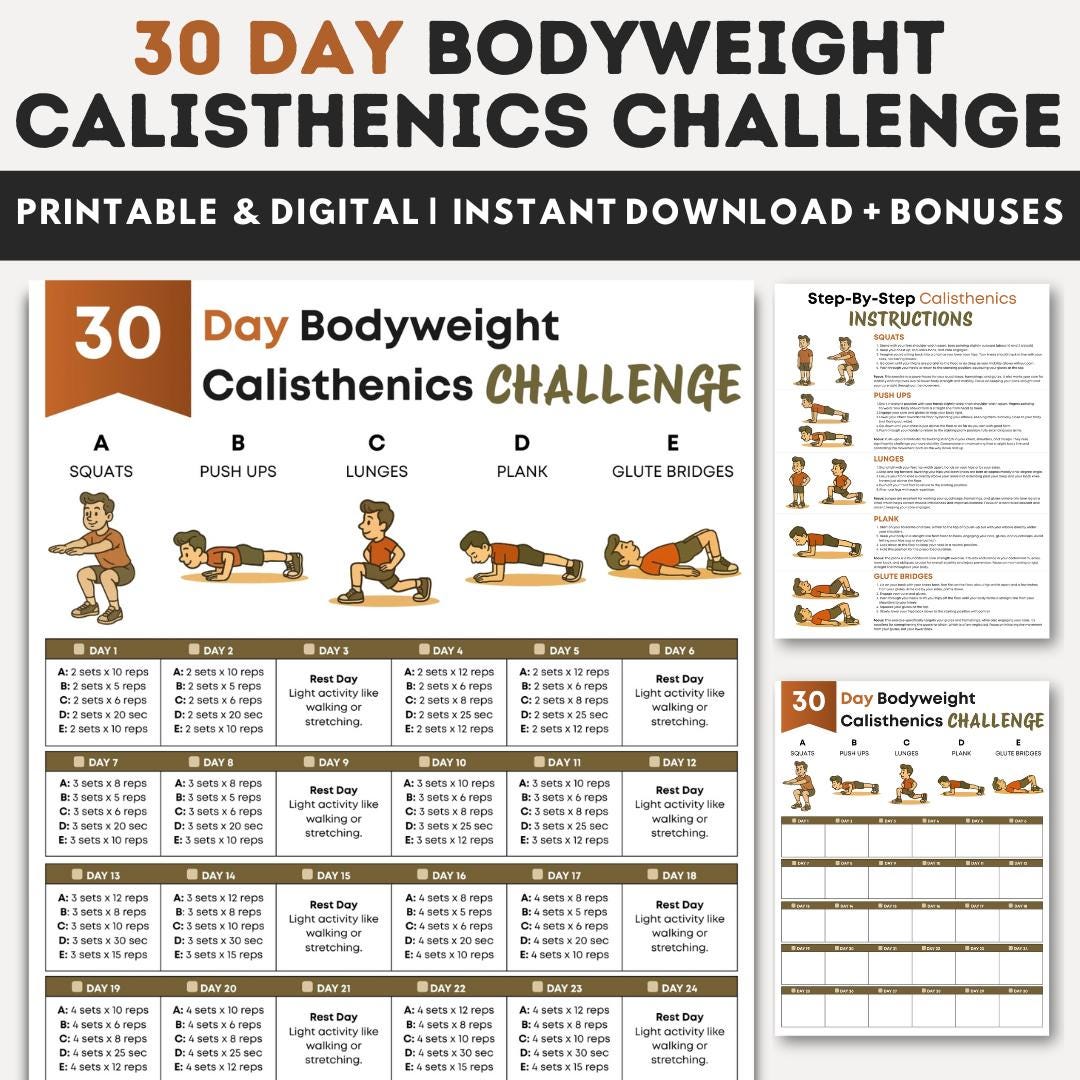
Start with simple exercises that focus on mastering form and building a solid foundation. Movements like push-ups, bodyweight squats, and planks are great for beginners. Aim for 3 sets of 8-12 reps, with enough rest between sets to maintain good technique.
Don’t rush into complicated moves too soon. Consistency matters more than intensity at this stage. Have you tried tracking your reps and sets daily to see small improvements? That can be a powerful motivator.
Intermediate Progressions
Once basic movements feel easy, it’s time to add variations and increase difficulty. You can try decline push-ups, pistol squats assisted by a chair, or side planks for more challenge. Gradually increase reps or reduce rest time to push your limits.
Adding circuits or supersets can boost intensity and save time. For example:
| Exercise | Reps | Sets |
|---|---|---|
| Diamond Push-ups | 10-15 | 3 |
| Bulgarian Split Squats | 8-12 each leg | 3 |
| Hollow Body Hold | 30 seconds | 3 |
Are you focusing enough on recovery and form as you increase volume? That balance keeps your progress sustainable.
Advanced Training Strategies
Advanced routines target strength, skill, and endurance with complex moves like muscle-ups, handstand push-ups, and front levers. Training splits that focus on different muscle groups or skills on different days can help manage fatigue.
Use tools like tempo control and isometric holds to increase time under tension. For example, slowing down the lowering phase of a pull-up can dramatically increase difficulty. Have you experimented with pause reps or partial range of motion to break through plateaus?
Tracking your progress with a workout journal or app can reveal patterns you might miss otherwise. What new skill or strength goal will you chase next?
Tracking Progress And Adjustments
Tracking your progress and making adjustments is crucial for any calisthenics workout plan. Without monitoring, it’s easy to plateau or risk injury by pushing too hard or not enough. Keeping an eye on how your strength evolves and tweaking your routine will help you stay on track toward your goals.
Monitoring Strength Gains
Keeping a workout journal or using an app can help you record reps, sets, and exercise variations. Notice when moves that once felt tough become easier—that’s a clear sign you’re getting stronger.
Try testing your max reps for key exercises like pull-ups or push-ups every few weeks. This simple check lets you see real progress and motivates you to keep pushing. Have you ever surprised yourself by doing more reps than you thought possible?
Adjusting Volume And Intensity
If your workouts start feeling too easy, it’s time to increase the challenge. You can add more reps, sets, or try harder variations of exercises.
On the other hand, if you feel constantly drained or sore, reducing volume or intensity can prevent burnout. Listen to your body and adjust accordingly—your workout should push you but not break you.
Incorporating Rest And Recovery
Rest days are just as important as workout days. They allow your muscles to repair and grow stronger.
Pay attention to how you feel after rest periods. If you wake up refreshed and ready to train, your recovery strategy is working. If not, consider adding more rest or active recovery like light stretching or walking.
Common Mistakes To Avoid
Starting a calisthenics workout plan is exciting but can be tricky. Many people make simple mistakes that slow progress or cause injury. Avoiding these errors helps you stay safe and see results faster.
Skipping Warm-ups And Cool-downs
Warm-ups prepare your muscles for exercise. They increase blood flow and reduce injury risk. Skipping warm-ups can cause strains or sprains. Cool-downs help your body recover. They lower heart rate and prevent stiffness. Never skip these important parts.
Neglecting Form And Technique
Good form is key in calisthenics. Poor technique can lead to injuries and poor results. Focus on controlled movements and proper posture. Use mirrors or record yourself to check form. Take time to learn exercises correctly before increasing intensity.
Overtraining And Burnout
Rest days are as important as workout days. Overtraining causes fatigue and muscle soreness. It can lead to burnout and loss of motivation. Listen to your body and allow time for recovery. Balance workout intensity with rest for steady progress.
Supplementing Calisthenics Workouts
Supplementing your calisthenics workouts can take your strength and endurance to new heights. Adding the right tools and nutrition can challenge your muscles in fresh ways and speed up your progress. It’s not just about doing more reps; it’s about training smarter to break through plateaus.
Using Resistance Bands
Resistance bands add extra tension during your movements, making exercises like pull-ups, push-ups, and squats more challenging. They come in different strengths, so you can adjust the difficulty as you get stronger. I once used bands to assist my pull-ups when I couldn’t do a full rep, and soon enough, I built enough strength to drop the bands completely.
They’re also portable and inexpensive, perfect if you want to vary your workouts without bulky equipment. Have you tried adding bands to your routine to feel the difference in muscle activation?
Incorporating Weighted Vests
Wearing a weighted vest increases the load your body carries during bodyweight exercises, pushing your muscles to adapt. It’s a straightforward way to make familiar moves like dips, lunges, and planks tougher. Adding just 10-20 pounds can dramatically increase the intensity without changing your form.
When I first added a weighted vest, I noticed my endurance improved within weeks because my muscles had to work harder throughout every rep. You can control the weight, so start light to avoid injury and build up gradually. Are you ready to feel your body work harder with every move?
Nutrition Supplements For Muscle Growth
Fueling your muscles properly is as important as the workout itself. Supplements like protein powders, creatine, and branched-chain amino acids (BCAAs) can support muscle repair and growth after calisthenics sessions. I found that having a protein shake within 30 minutes after training helped reduce soreness and speed recovery.
However, supplements should enhance a balanced diet, not replace whole foods. Think about your daily protein intake and whether supplements can fill any gaps. What small nutrition changes could boost your muscle gains?
Credit: www.etsy.com

Credit: www.scribd.com
Frequently Asked Questions
What Is A Calisthenics Workout Plan?
A calisthenics workout plan uses bodyweight exercises for strength and flexibility. It requires minimal equipment and suits all fitness levels. It focuses on movements like push-ups, pull-ups, and squats to build muscle and improve endurance.
How Often Should I Do Calisthenics Workouts?
For best results, perform calisthenics workouts 3 to 5 times per week. Rest days are important for muscle recovery. Beginners should start with 2 to 3 sessions weekly and gradually increase frequency as strength improves.
Can Calisthenics Help With Weight Loss?
Yes, calisthenics workouts boost metabolism and burn calories effectively. Combining high-intensity exercises with proper diet aids fat loss. It improves muscle tone and cardiovascular health, making it a great weight loss method.
Do I Need Equipment For Calisthenics Training?
Minimal equipment is needed, but some exercises may use bars or rings. Most calisthenics moves rely on body weight alone. This makes it accessible and easy to perform anywhere, including at home or outdoors.
Conclusion
Calisthenics workouts help build strength using your body weight. They need little space and no special tools. You can do them anywhere, anytime. Start with simple moves and add more as you improve. Consistency is key to see real progress.
This plan guides you step by step. Stay patient and enjoy the process. Your body will thank you for the effort. Keep moving and stay strong every day.







