
Are you tired of expensive gym memberships and complicated workout routines? Imagine sculpting your body and building strength without the need for costly equipment or a crowded gym.
With a calisthenics workout plan, you can achieve just that—and the best part? It’s absolutely free. Picture yourself mastering push-ups, pull-ups, and squats, transforming your physique using just your body weight. This guide is designed to unlock the secrets of calisthenics, giving you a simple, effective workout plan that fits perfectly into your busy schedule.
Dive in to discover how you can start your fitness journey today with zero cost and maximum results. Ready to redefine your fitness routine? Let’s get started.
Benefits Of Calisthenics
Calisthenics offers a unique way to build your body using just your weight and natural movements. It’s not only about muscle growth but also about improving overall body function. When you start a calisthenics workout plan, you’ll notice benefits that go beyond what traditional gym exercises provide.
Improves Strength And Flexibility
Calisthenics challenges your muscles in multiple ways. You don’t just build strength; you also increase flexibility because many movements require full range of motion.
For example, exercises like push-ups and pull-ups strengthen your upper body, while movements like lunges and squats improve leg strength and flexibility. Have you ever felt stronger and more agile after a simple bodyweight routine?
Enhances Cardiovascular Health
Many calisthenics exercises, especially when done in circuits or with high repetitions, boost your heart rate. This not only burns calories but also improves your cardiovascular endurance.
You can combine jumping jacks, burpees, and mountain climbers to create a heart-pumping workout that improves your stamina without needing a treadmill or bike. How often do you get your heart rate up without even leaving your living room?
No Equipment Needed
One of the best benefits is that calisthenics requires no special equipment. This means you can workout anywhere—at home, in the park, or even while traveling.
This accessibility removes common barriers like gym memberships or buying expensive gear. What would change in your fitness routine if you could exercise anytime, anywhere?

Credit: www.scribd.com
Getting Started With Calisthenics
Starting calisthenics can feel simple but powerful. It uses your body weight to build strength and flexibility. No gym or equipment needed. Just your body and some space. This makes it perfect for anyone wanting to get fit at home or outside.
Understanding the basics helps you avoid injury and gain results faster. Focus on learning movements well. Set clear and reachable goals. Prepare your body with warm-up and cool-down routines.
Basic Movements To Master
- Push-ups: Build upper body and core strength.
- Squats: Strengthen legs and hips.
- Planks: Improve core stability and endurance.
- Pull-ups: Develop back and arm muscles.
- Leg raises: Target lower abs and hip flexors.
Practice these moves regularly. Keep your form clean. Progress by increasing reps or sets slowly.
Setting Realistic Goals
Start with small targets. For example, 10 push-ups or 20-second planks. Track your progress weekly. Adjust goals based on your improvement. This keeps motivation high and reduces frustration.
Focus on consistency over intensity. Even short daily workouts help build habits. Celebrate small wins to stay encouraged.
Warm-up And Cool-down Tips
- Warm-up with light cardio, such as jogging in place.
- Include dynamic stretches like arm circles and leg swings.
- Warm-up should last 5 to 10 minutes.
- Cool down with static stretches targeting worked muscles.
- Hold each stretch for 20 to 30 seconds.
- Breathe deeply to relax your body.
Proper warm-up and cool-down reduce injury risk. They prepare muscles for work and aid recovery.
Beginner Workout Plan
Starting a calisthenics workout plan as a beginner can feel challenging. The right plan helps build strength gradually. It also improves form and endurance safely. A beginner workout focuses on basic movements and steady progress. This section outlines a simple plan to follow daily.
Daily Routine Breakdown
Begin with a warm-up to prepare your body. Spend 5 to 10 minutes on light cardio and stretching. The main workout includes exercises like:
- Push-ups
- Bodyweight squats
- Planks
- Glute bridges
- Jumping jacks
Finish with a cool-down to relax muscles. Stretch gently for 5 minutes after the workout.
Reps And Sets Recommendations
Start with low reps and sets to avoid injury. Aim for 3 sets of each exercise. Each set should have 8 to 12 reps. Focus on form, not speed or quantity. If an exercise feels too hard, reduce reps. Increase reps slowly as you get stronger.
Rest And Recovery
Rest days are key for muscle growth and repair. Take at least one full rest day per week. Allow 30 to 60 seconds rest between sets. Listen to your body to avoid overtraining. Quality sleep and good nutrition support recovery too.
Intermediate Workout Plan
The intermediate calisthenics workout plan builds on basic strength and skills. It challenges muscles with harder exercises. It also improves endurance and coordination. This plan suits those who have mastered beginner moves. It introduces new techniques to push limits safely. Consistency and good form remain key in progress.
Incorporating Advanced Moves
Advanced moves add variety and challenge muscles differently. Examples include:
- Archer pull-ups
- Explosive push-ups
- Pistol squats
- L-sit holds
Start with easier versions and increase difficulty gradually. Focus on control and smooth movement. Avoid rushing through exercises to prevent injuries.
Increasing Intensity Safely
Intensity grows by adding reps, sets, or reducing rest time. Use these tips:
- Increase repetitions by 1-2 each session
- Add an extra set once comfortable
- Shorten rest by 10-15 seconds
- Mix exercises for balanced training
Listen to your body. Stop if pain occurs. Rest days help muscles recover and grow stronger.
Tracking Progress
Keep a workout journal or use a mobile app. Record:
- Exercises completed
- Number of reps and sets
- Rest duration
- Notes on difficulty
Review progress weekly. Adjust workouts based on strengths and weaknesses. Celebrate small gains to stay motivated.
Advanced Workout Plan
Taking your calisthenics training to the next level means tackling an advanced workout plan designed to challenge your strength, skill, and endurance. This phase pushes your body beyond basic movements, demanding precision and control. Are you ready to test your limits and see what your body can truly achieve?
Complex Movements And Variations
Advanced calisthenics includes movements that require full-body coordination and strength. Exercises like the muscle-up, front lever, and planche are not just about power but also balance and technique. Adding variations such as weighted pull-ups or one-arm push-ups can intensify your routine and prevent plateaus.
Try mixing these complex moves into your sessions gradually. Focus on mastering form before increasing reps or adding weight. This approach helps you build solid foundations and avoid frustration.
Building Muscle And Endurance
To grow muscle with calisthenics, you need to challenge your muscles with progressive overload. Use techniques like slow negatives, paused reps, and higher volume sets to stimulate growth. Endurance improves by combining strength exercises with circuit-style training and short rest periods.
Have you considered how your current routine balances muscle-building and stamina? Adjust your workouts to include both for better overall fitness. Adding variations in tempo and intensity keeps your muscles guessing and growing.
Avoiding Common Injuries
Advanced exercises come with a higher risk of injury if done incorrectly. Shoulder strains, wrist pain, and lower back issues are common in advanced calisthenics. Warm up thoroughly and strengthen supporting muscles to protect your joints.
Listen to your body and don’t push through sharp pain. Rest days and mobility work are crucial for recovery. Are you making injury prevention a priority in your training?
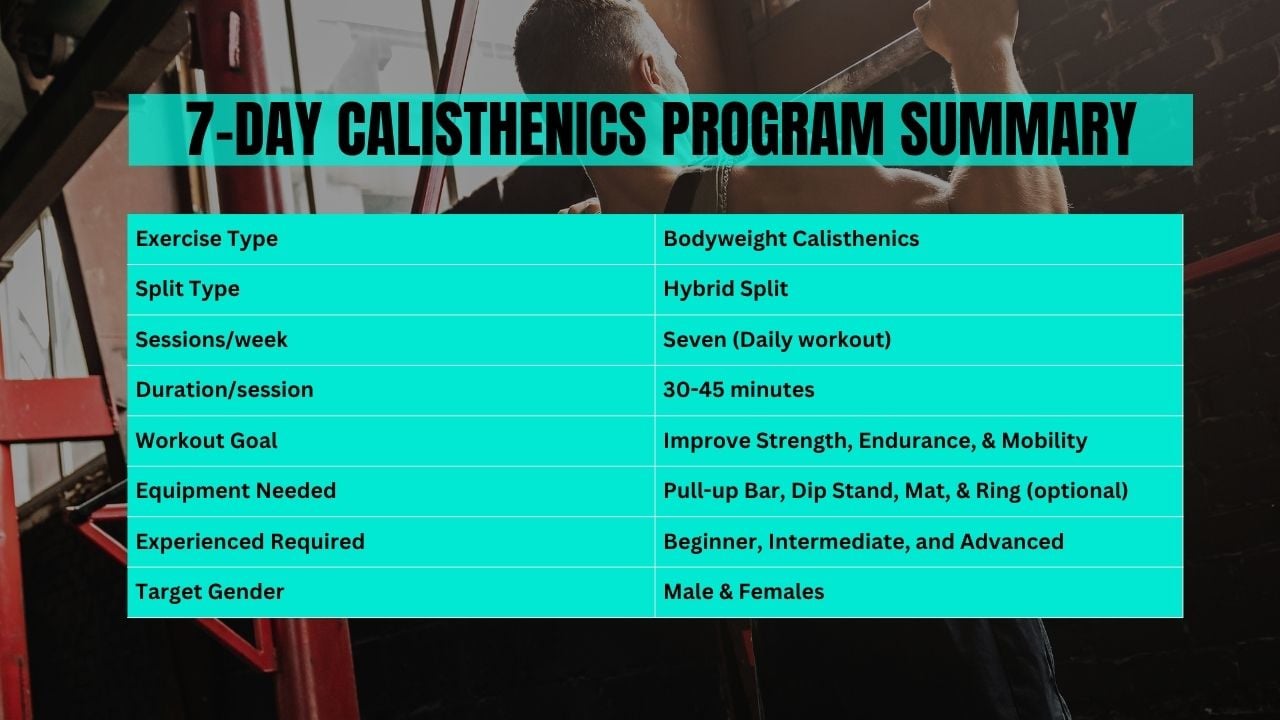
Credit: thefitnessphantom.com
Nutrition Tips For Calisthenics
Nutrition plays a key role in a successful calisthenics workout plan. Eating the right foods helps build strength, recover muscles, and boost energy. Knowing what to eat supports your body during training and improves overall results.
Focus on simple nutrition habits to fuel your workouts and keep your body healthy.
Balanced Diet Essentials
A balanced diet includes proteins, carbohydrates, and fats in the right amounts. Protein repairs and builds muscles. Carbohydrates give energy for exercises. Healthy fats support brain and joint health.
- Include lean meats, eggs, or plant proteins like beans and lentils.
- Choose whole grains such as brown rice, oats, and whole wheat bread.
- Add healthy fats from nuts, seeds, and olive oil.
- Eat plenty of vegetables and fruits for vitamins and minerals.
Hydration And Supplements
Water keeps your body working well during workouts. Drink water before, during, and after exercise. Avoid sugary drinks that can cause energy crashes.
Supplements are not always necessary but can help in some cases. Protein powders and multivitamins may support nutrition if your diet lacks variety.
Meal Timing For Performance
Eating at the right times improves workout energy and recovery. Have a balanced meal 1-2 hours before training. Focus on carbohydrates and protein in this meal.
After exercise, eat a meal or snack rich in protein and carbs to help muscles recover. Small, frequent meals can keep energy steady throughout the day.
Motivation And Consistency
Staying motivated and consistent is the real challenge in any calisthenics workout plan, especially when you’re following a free program without personal coaching. Motivation fuels your initial push, but consistency turns that spark into lasting progress. Without both, even the best routines can fall flat.
Setting Milestones
Breaking your goals into smaller, clear milestones helps maintain your focus and motivation. Instead of aiming to “get stronger,” aim to hold a plank for 30 seconds, then 45, then a minute. Each milestone you hit becomes a mini celebration and proof of progress.
Try writing down these milestones and tracking them weekly. It’s easier to stay committed when you see measurable improvements, no matter how small. What milestone could you set this week that feels achievable yet challenging?
Overcoming Plateaus
Plateaus are normal and can feel frustrating, but they don’t mean failure. When your progress stalls, switching up your exercises or increasing reps slightly can reignite growth. Sometimes, taking a rest day or focusing on form over speed can break the cycle.
Think about the last time you hit a plateau. What did you do to push past it? Instead of quitting or rushing, adjusting your plan thoughtfully can create new momentum.
Staying Accountable
Accountability keeps you honest, especially when motivation dips. Sharing your goals with a friend or joining an online community can provide support and gentle pressure to stick with your plan. Even posting your workout updates on social media can boost your commitment.
You might also keep a workout journal or use a fitness app to log your sessions. Having a record makes it harder to skip workouts without noticing. Who can you team up with to hold each other accountable this week?
Tracking Your Progress
Tracking your progress is essential to stay motivated and see real improvement in your calisthenics journey. Without a clear record, it’s easy to lose sight of how far you’ve come or miss signs that you need to tweak your routine. Knowing exactly what you’ve achieved helps you push harder and avoid plateaus.
Using Apps And Journals
Apps designed for calisthenics and fitness tracking make logging workouts quick and easy. You can record reps, sets, and rest times all in one place. Some apps even show your progress with charts, making it simple to visualize your gains over weeks or months.
If you prefer pen and paper, a journal works just as well. Writing down your workouts forces you to reflect on how you felt during each session. You might notice patterns—like which exercises feel tougher on certain days—helping you adjust your effort accordingly.
Measuring Strength Gains
Tracking strength means more than just counting reps. Pay attention to how your form improves and if you can hold positions longer or move through exercises more smoothly.
Try testing yourself every few weeks with specific benchmarks like max pull-ups or push-up holds. Keep these test results recorded. They give you clear evidence of strength gains beyond what numbers alone can show.
Adjusting Plans As Needed
Progress tracking reveals what’s working and what’s not. If you notice a stall in your numbers or feel constantly fatigued, it’s time to tweak your workout plan.
Don’t hesitate to change exercises, increase rest, or add more challenging moves when you’re ready. Listening to your tracked data helps you avoid injury and keeps your workouts effective and enjoyable.
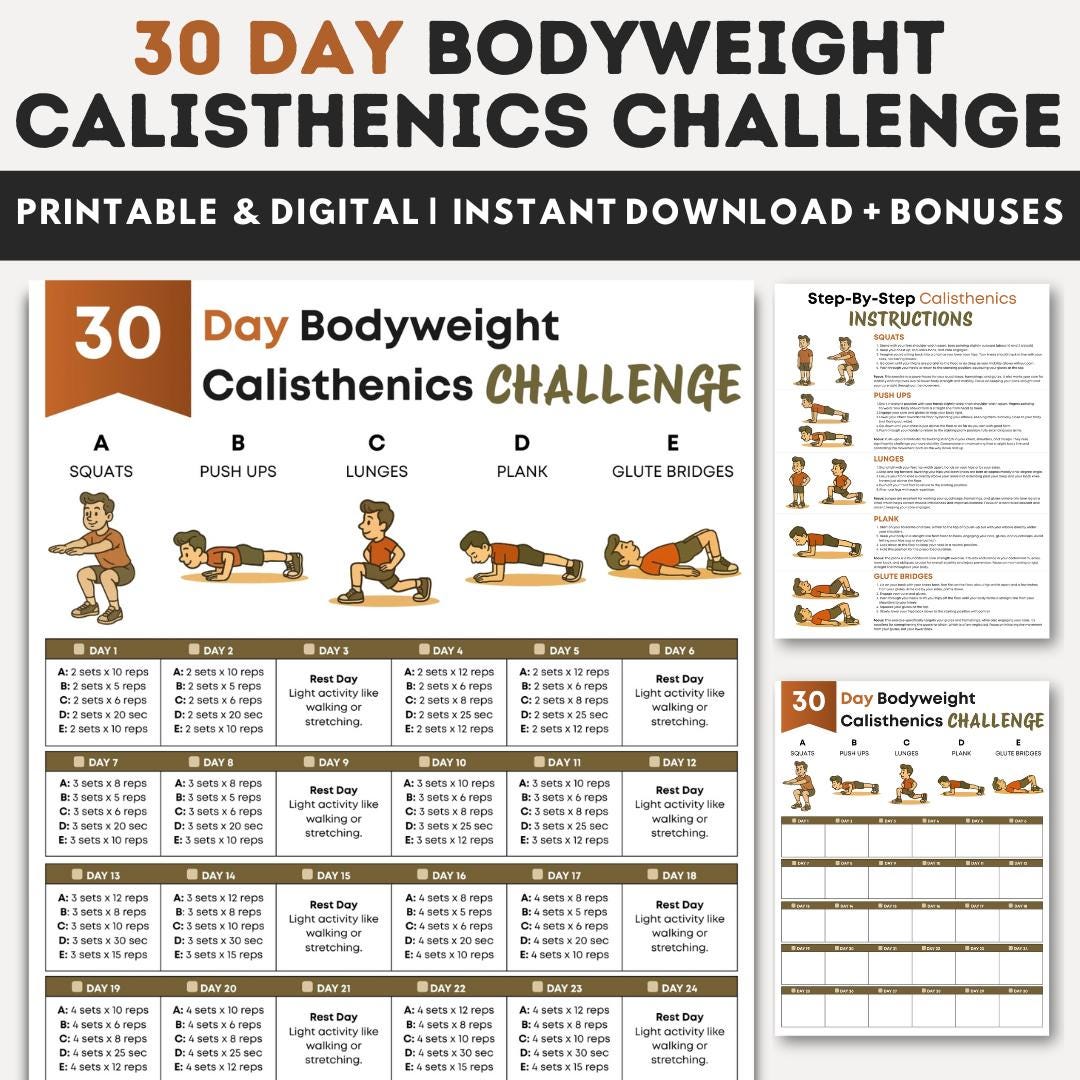
Credit: www.etsy.com
Frequently Asked Questions
What Is A Calisthenics Workout Plan?
A calisthenics workout plan uses bodyweight exercises to build strength and flexibility. It requires minimal or no equipment, making it accessible and effective for all fitness levels.
How To Start A Free Calisthenics Workout Plan?
Begin with basic exercises like push-ups, squats, and planks. Follow structured routines online for free. Gradually increase intensity to improve strength and endurance safely.
Can Calisthenics Improve Muscle Definition?
Yes, calisthenics enhances muscle tone by engaging multiple muscle groups. Consistent workouts increase muscle strength and definition without bulky equipment or weights.
How Often Should I Do Calisthenics Workouts?
For best results, aim for 3-5 sessions per week. Allow rest days for muscle recovery. Consistency is key to progress and avoiding injury.
Conclusion
This free calisthenics workout plan fits anyone’s daily routine. Bodyweight exercises build strength without special equipment. Start slow, stay consistent, and watch your progress grow. You control your pace and choose your moves. Enjoy the freedom to exercise anywhere, anytime.
Small steps lead to big changes in fitness. Keep practicing, and your body will thank you. This plan is simple, effective, and easy to follow. Stay active, stay healthy, and feel stronger every day.







