
Are you looking to get fit without stepping foot in a gym? A calisthenics workout plan might be exactly what you need.
Imagine building muscle, increasing flexibility, and boosting your overall health with nothing more than your own body weight. Sounds too good to be true? It’s not. Calisthenics offers a simple, effective, and equipment-free way to transform your fitness routine. Whether you’re a complete beginner or someone looking to spice up your exercise regime, this guide is crafted just for you.
Dive in to discover how you can unlock your full potential and achieve the fitness goals you’ve always dreamed of.
Credit: www.genspark.ai
Benefits Of Calisthenics
Calisthenics offers a unique set of benefits that make it an excellent choice for anyone starting a fitness journey. Its focus on natural body movements helps you build strength, flexibility, and control without complicated equipment. Let’s break down how these advantages can improve your workout experience and overall health.
Improved Strength And Flexibility
Calisthenics exercises like push-ups, squats, and lunges target multiple muscle groups at once. This not only builds strength but also improves your flexibility as your muscles and joints move through a full range of motion. You might notice that everyday activities become easier, like reaching for something high or bending down without discomfort.
No Equipment Needed
One of the biggest perks of calisthenics is that you don’t need a gym or fancy gear. Your own body weight provides all the resistance you need. This means you can work out anywhere—at home, in the park, or even while traveling—making it easier to stay consistent with your routine.
Enhanced Body Control
Calisthenics requires you to control your body movements carefully, which sharpens your balance and coordination. This skill is often overlooked but is crucial for injury prevention and improving athletic performance. Have you ever thought about how much control you have over your body during simple tasks? Calisthenics helps you develop that awareness every day.
Key Principles For Beginners
Starting a calisthenics workout plan as a beginner is exciting but can feel overwhelming. Knowing the key principles helps you build a solid foundation and avoid common pitfalls. These principles guide your progress and keep your workouts safe and effective.
Progressive Overload
Progressive overload means gradually making your exercises harder to build strength and endurance. You might start with knee push-ups, then move to full push-ups, and later add variations like decline push-ups. Small, consistent increases in difficulty push your muscles to adapt without causing injury.
Ask yourself: Are you challenging your muscles enough without straining them? Tracking reps, sets, or adding time under tension can help you see real progress.
Proper Form And Technique
Good form is more important than doing many repetitions. It protects your joints and muscles from injury and ensures you’re working the right muscles. For instance, keeping your body straight during a plank prevents back strain and makes the exercise effective.
Focus on mastering each movement slowly. Use mirrors or record yourself to check your form. Would you rather do fewer reps correctly or more reps poorly? The answer shapes your long-term results.
Consistency And Patience
Results don’t come overnight. Regular workouts, even if short, build habits and lead to improvements over time. Missing a day isn’t a failure—missing many days in a row is.
Stick to a schedule that fits your lifestyle. Consistency beats intensity when you’re just starting. How will you keep yourself motivated to return day after day?
Essential Exercises To Start
Starting a calisthenics workout plan can feel overwhelming, but focusing on a few essential exercises can build a strong foundation. These moves target major muscle groups and improve your overall strength and stability. You don’t need fancy equipment—just your body and determination.
Push-ups Variations
Push-ups are a classic calisthenics exercise that work your chest, shoulders, and triceps. Start with regular push-ups to build strength, and once comfortable, try variations like knee push-ups or incline push-ups to ease into the movement.
If you want more challenge, try diamond push-ups or decline push-ups to hit different muscle angles. How do you feel after your first set? Tracking progress with different variations keeps workouts fresh and motivating.
Bodyweight Squats
Squats target your legs and glutes and improve your balance. Begin by mastering the basic bodyweight squat with feet shoulder-width apart and chest lifted.
Focus on keeping your knees aligned with your toes and going as low as you comfortably can. Adding pauses or slow tempos can make squats tougher without weights.
Planks And Core Work
Strong core muscles help with posture and overall movement control. Planks are simple yet effective; hold a forearm or straight-arm plank for as long as you can maintain good form.
Try side planks to engage your obliques and add leg lifts to increase difficulty. Can you hold a plank for 30 seconds today and 45 seconds next week? Small improvements make a big difference.
Pull-ups And Rows
Pull-ups and rows build upper back and arm strength but can be tough when starting out. Use assisted pull-ups with a resistance band or do negative pull-ups by slowly lowering yourself down.
If you don’t have a bar, try inverted rows using a sturdy table or low bar. These exercises challenge your muscles in new ways and show you how strong your body really is.
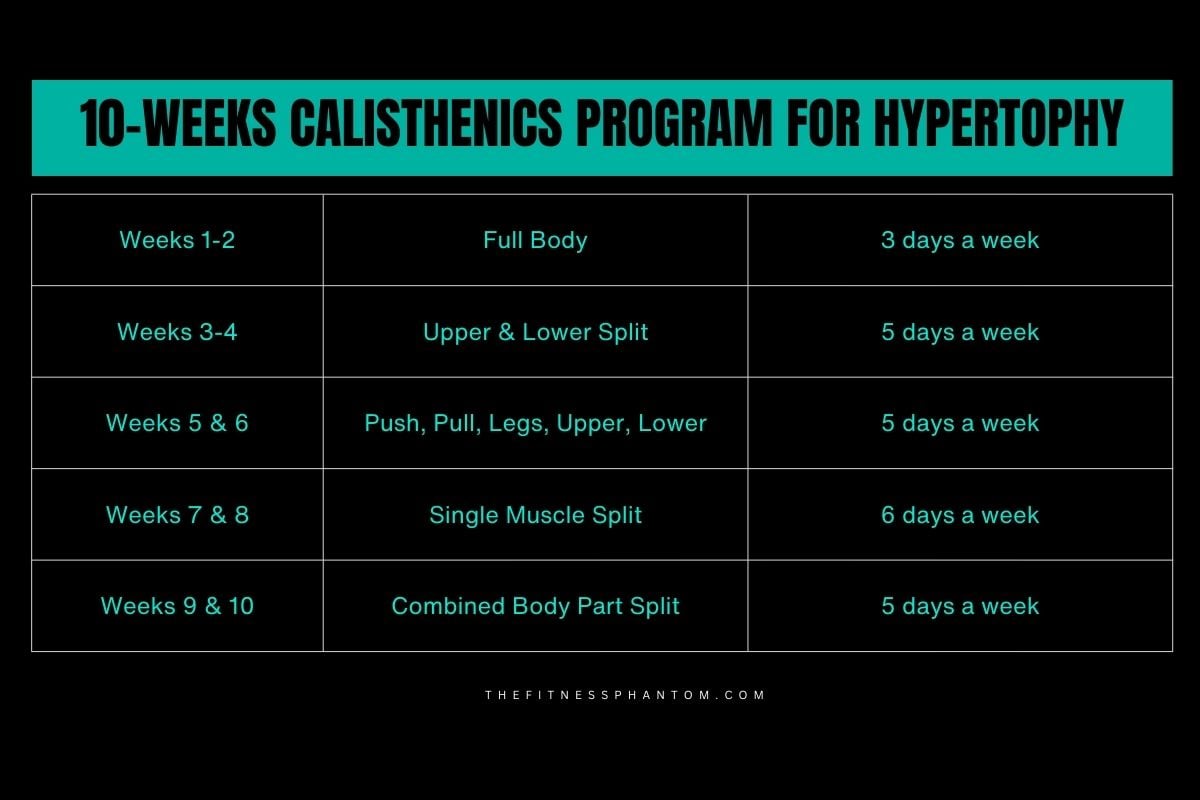
Credit: thefitnessphantom.com
Sample Weekly Workout Plan
Creating a well-structured weekly workout plan can make your calisthenics journey clearer and more effective. This sample plan balances effort and recovery while targeting different muscle groups. It’s designed to help you build strength steadily and avoid burnout.
Day 1: Upper Body Focus
Start your week by concentrating on upper body strength. Exercises like push-ups, pull-ups, and dips work your chest, back, and arms efficiently. Aim for 3 sets of 8-12 reps each, adjusting as you get stronger.
Don’t forget to warm up your shoulders and wrists to prevent injury. You might notice your grip strength improving quickly with consistent pull-up practice. How strong can your upper body become in just a few weeks?
Day 2: Lower Body And Core
Shift focus to legs and core today. Squats, lunges, and planks develop your lower body and stabilize your midsection. Try 3 sets of 10-15 reps for each leg exercise, plus 30-60 seconds for planks.
Engaging your core during leg moves boosts your balance and posture. You’ll soon feel the difference in everyday activities like walking or lifting objects. Are you ready to strengthen your foundation?
Day 3: Active Rest And Mobility
Rest days are crucial, but staying active helps recovery. Gentle stretching, yoga, or light walking improve your mobility and reduce muscle tightness. Spend 20-30 minutes focusing on areas that feel stiff or sore.
This day helps your body reset and prepares you for more intense workouts. Ever noticed how a good stretch can change your whole day?
Day 4: Full Body Circuit
Combine all major muscle groups with a circuit workout. Include push-ups, squats, pull-ups, dips, and planks in a sequence with minimal rest. Perform each exercise for 30-45 seconds and repeat the circuit 3 times.
This style boosts endurance and keeps your heart rate up. It’s a time-efficient way to challenge your body and track progress. How fast can you complete the circuit while maintaining good form?
Day 5: Core And Conditioning
Finish the week by targeting your core and improving overall conditioning. Try leg raises, mountain climbers, and bicycle crunches, focusing on controlled movements. Aim for 3 sets of 15-20 reps for each exercise.
Adding conditioning exercises helps burn fat and increase stamina. You’ll start noticing better control during other calisthenics moves. What new skills will your stronger core unlock?
Tips To Avoid Common Mistakes
Starting a calisthenics workout plan is exciting, but beginners often stumble over common mistakes that can slow progress or cause injury. Knowing how to avoid these pitfalls helps you build strength safely and effectively. Here are practical tips to keep your routine on track and your body healthy.
Avoiding Poor Form
Proper form matters more than how many reps you do. Sloppy technique can lead to injuries and less muscle activation.
Focus on controlled movements and maintain a neutral spine during exercises like push-ups and squats. Use a mirror or record yourself to check your posture.
Start with easier variations to master the form before moving to harder ones. For example, do wall push-ups before full push-ups if your arms shake or your back sags.
Managing Fatigue
Feeling tired during workouts is normal, but pushing through extreme fatigue can harm your progress. Listen to your body and recognize when fatigue affects your form.
Break your workout into manageable sets with short rests. If your muscles feel weak or shaky, stop and rest rather than forcing more reps.
Have you noticed your performance drops drastically after a certain point? That’s a sign to pause and recover before continuing.
Balancing Rest And Activity
Rest days are as important as workout days. Your muscles grow stronger when you give them time to repair.
Plan at least one or two rest days per week, especially if you’re new to calisthenics. Overtraining can cause burnout and injury.
Active rest, like gentle stretching or walking, can help maintain mobility without stressing your muscles. What’s your current routine for rest? Adjust it if you feel constant soreness or fatigue.
Tracking Progress And Staying Motivated
Tracking your progress and staying motivated are key to making your calisthenics workout plan effective and enjoyable. Without a clear way to measure your improvements, it’s easy to lose focus or feel stuck. Keeping an eye on your journey helps you push through challenges and keeps your enthusiasm alive.
Setting Realistic Goals
Start by defining goals that match your current fitness level. Instead of aiming to do 50 push-ups on day one, set a target like 10 quality reps with good form. This approach builds confidence and reduces the risk of injury.
Ask yourself: What feels achievable but still challenging? Breaking down big goals into smaller steps makes your progress visible and your efforts rewarding.
Recording Workouts
Keeping a workout journal or using a fitness app can make a huge difference. Note down the exercises, reps, sets, and how you felt during each session.
This record reveals patterns, highlights improvements, and helps you adjust your plan when needed. When I tracked my workouts daily, I noticed I was able to add more reps every week, which kept me motivated to push harder.
Celebrating Small Wins
Don’t wait until you master a handstand or complete a full pull-up to celebrate. Every extra rep, better form, or increased endurance is a victory.
- Did you hold a plank 10 seconds longer today?
- Managed one more push-up than last time?
- Felt less sore after your workout?
Recognize these moments. They build momentum and make your calisthenics journey enjoyable. What small win will you celebrate today?

Credit: www.scribd.com
Frequently Asked Questions
What Is The Best Beginner Calisthenics Workout Plan?
A beginner plan includes basic exercises like push-ups, squats, planks, and lunges. Start with 3 sets of 8-12 reps. Focus on form and gradually increase intensity. Consistency is key for progress and strength building.
How Often Should Beginners Do Calisthenics Workouts?
Beginners should do calisthenics 3 to 4 times per week. Allow rest days for muscle recovery. This frequency helps build strength without causing burnout or injury. Gradually increase workout days as endurance improves.
Can Calisthenics Help With Weight Loss For Beginners?
Yes, calisthenics boosts metabolism and burns calories effectively. It combines strength and cardio, aiding fat loss. Consistent workouts with a healthy diet result in visible weight loss and improved muscle tone.
Do Beginners Need Equipment For Calisthenics Workouts?
Most beginner calisthenics exercises require no equipment. Bodyweight movements like push-ups and squats are effective alone. Optional tools like resistance bands or pull-up bars can enhance progress but aren’t necessary initially.
Conclusion
Starting calisthenics is easy with a simple workout plan. Stick to the exercises, and your strength will grow. Practice regularly and watch your body get stronger. Rest days help your muscles recover and improve. Track your progress to stay motivated and focused.
Small steps lead to big changes over time. Enjoy the journey and celebrate each success. Your body will thank you for the effort. Keep moving, and you will see results soon.







