
Have you ever noticed how certain activities help you feel calm, focused, or energized? That’s the power of your senses working together.
A sensory diet is a personalized plan that uses everyday movements and sensations to help your brain stay balanced and alert. Whether you or someone you care about struggles with attention, anxiety, or sensory overload, understanding a sensory diet could change how you manage daily challenges.
Keep reading to discover simple, effective ways to tune into your body and improve your well-being.
What Is A Sensory Diet?
A sensory diet is more than just a list of activities; it’s a tailored plan designed to help you or someone you care about manage sensory needs throughout the day. It balances sensory input so the brain can function at its best. Think of it as a personalized toolkit that supports focus, calm, and overall well-being.
What Does A Sensory Diet Include?
A sensory diet includes specific activities that provide the right kind and amount of sensory stimulation. These activities can involve movement, touch, sound, or visual input. For example, jumping on a trampoline might help with proprioceptive input, while squeezing a stress ball can offer calming tactile feedback.
Who Can Benefit From A Sensory Diet?
Sensory diets are often helpful for individuals with sensory processing challenges, such as those with autism or ADHD. But anyone feeling overwhelmed or under-stimulated by their environment might find value in these plans. Have you ever noticed how a quick stretch or a deep breath can reset your focus? That’s sensory input at work.
How Is A Sensory Diet Created?
Creating a sensory diet usually involves working with an occupational therapist who understands sensory processing. They assess which sensory inputs help you feel regulated and which might cause discomfort. Your sensory diet then includes activities scheduled throughout the day to maintain balance and prevent meltdowns or fatigue.
Can You Customize Your Own Sensory Diet?
Yes, you can! Start by paying attention to what sensory experiences make you feel more alert or calm. Maybe you find that listening to soft music helps you concentrate, or that a quick walk outside resets your mood. Try adding these activities at regular intervals and see how they affect your day.

Credit: www.teacherspayteachers.com
Benefits For Focus And Calm
Finding ways to improve focus and stay calm can be challenging, especially in today’s busy world. A sensory diet offers practical benefits that help balance your sensory needs. It can make a real difference in how you handle daily tasks and emotions.
How Sensory Diets Improve Concentration
A sensory diet provides specific activities that help your brain process sensory information more effectively. This reduces distractions caused by sensory overload or under-stimulation.
For example, simple movements like jumping or deep pressure can help reset your attention. When you feel overwhelmed, these activities act like a mental reset button, allowing you to refocus more easily.
Calming Effects On The Nervous System
Engaging in sensory diet activities can soothe your nervous system. Gentle rocking, weighted blankets, or slow, rhythmic movements send calming signals to your brain.
This physical calmness often translates to emotional calmness. Have you noticed how a deep breath can change your mood? Sensory input works similarly, but on a deeper, physical level.
Practical Tips For Adding Sensory Activities To Your Day
- Include short breaks with sensory input during work or study—try squeezing a stress ball or stretching.
- Use tactile items like fidget toys to keep your hands busy and your mind focused.
- Incorporate calming scents or background white noise to create a peaceful environment.
What small sensory change can you try today to help your focus and calm?
Key Sensory Modalities
Sensory diets include activities that help the brain process different sensory inputs. These inputs come from key sensory modalities. Each modality plays a unique role in how we experience the world.
Understanding these senses helps create balanced sensory activities. This balance can improve focus, mood, and daily functioning.
Tactile Input
Tactile input involves the sense of touch. It helps us recognize textures, temperatures, and pressure. Activities like playing with sand or using textured objects provide tactile stimulation. This input can calm or alert the nervous system depending on the type.
Proprioceptive Input
Proprioceptive input comes from muscles and joints. It tells the brain about body position and movement. Pushing, pulling, or lifting heavy objects gives strong proprioceptive feedback. This input helps improve body awareness and coordination.
Vestibular Input
Vestibular input comes from the inner ear and controls balance. It helps us know if we are moving or still. Swinging, spinning, or rocking provide vestibular stimulation. This input supports balance, spatial orientation, and focus.
Auditory Input
Auditory input involves hearing sounds around us. It helps us understand speech, music, and environmental noises. Listening to calming music or nature sounds can soothe the brain. Loud or sudden noises may cause stress or distraction.
Visual Input
Visual input comes from what we see. It helps us recognize shapes, colors, and movement. Bright lights or busy environments can overwhelm some people. Soft lighting and organized spaces support better visual processing.
Creating A Simple Sensory Diet
Creating a simple sensory diet can transform daily routines into moments of focus and calm. It’s about understanding your unique sensory needs and adding activities that help your brain stay alert or relaxed. The key is making it easy to follow and fitting it naturally into your day.
Identifying Individual Needs
Start by paying attention to how your body reacts to different sensory inputs. Do loud noises overwhelm you, or do you crave more movement to feel grounded? Think about moments when you feel either restless or distracted—what sensory experiences were happening?
Ask yourself questions like:
- What types of touch do you find comforting or irritating?
- Does visual clutter make it hard to focus?
- Are certain smells or tastes calming or distracting?
Jot down your observations. This personal insight is the foundation for a sensory diet that truly works.
Choosing Activities
Pick simple activities that match your sensory needs. If you need more movement, try gentle stretching or walking. If you seek calming touch, try using a weighted blanket or squeezing a stress ball.
Here are some easy options to consider:
- Deep pressure hugs or using a compression vest
- Listening to soothing music or nature sounds
- Chewing crunchy snacks or sipping water slowly
- Engaging in quiet, repetitive tasks like folding laundry
Remember, the goal is to add activities that feel good and help you focus—not to create more stress.
Scheduling Sensory Breaks
Plan short sensory breaks throughout your day to reset your focus. These breaks can be as brief as five minutes but should be consistent. Setting reminders on your phone can help you build this habit.
Try to match the timing of breaks with moments you usually feel overwhelmed or distracted. For example, a quick walk outside before a meeting or a few deep breaths after a busy task can make a big difference.
Ask yourself: When do you need a pause the most? What sensory activity refreshes you quickly? Adjust your schedule as you learn what works best.
Easy Sensory Activities At Home
Easy sensory activities at home help balance the senses. These simple tasks support focus, calmness, and alertness. They fit into daily routines without stress or special tools. You can create a sensory diet with easy activities anyone can try. This section offers ideas to soothe or energize using common household items.
Calming Techniques
- Deep pressure massage with a soft towel or pillow
- Slow rocking on a chair or gentle swaying
- Listening to soft music or nature sounds
- Using a weighted blanket or heavy stuffed toy
- Gentle stretching or yoga poses
- Breathing exercises with slow, deep breaths
- Warm baths with calming scents like lavender
Alerting Techniques
- Jumping jacks or quick jumping on a trampoline
- Bright light exposure or moving to a sunny spot
- Crunchy snacks like carrots or apples for mouth input
- Playing with textured objects like stress balls or slime
- Fast-paced music or clapping rhythms
- Cold water splash on the face or wrists
- Quick walks or dancing to upbeat tunes
Combining Strategies
Mix calming and alerting activities for balance. Start with alerting moves like jumping or clapping. Then shift to calming actions like deep breathing or massage. This helps the body adjust and stay regulated. Tailor the mix to each person’s needs and mood. Use simple timers to switch between activities every 5 to 10 minutes. Keep the space quiet and safe for focus. Experiment with different combinations for best results.
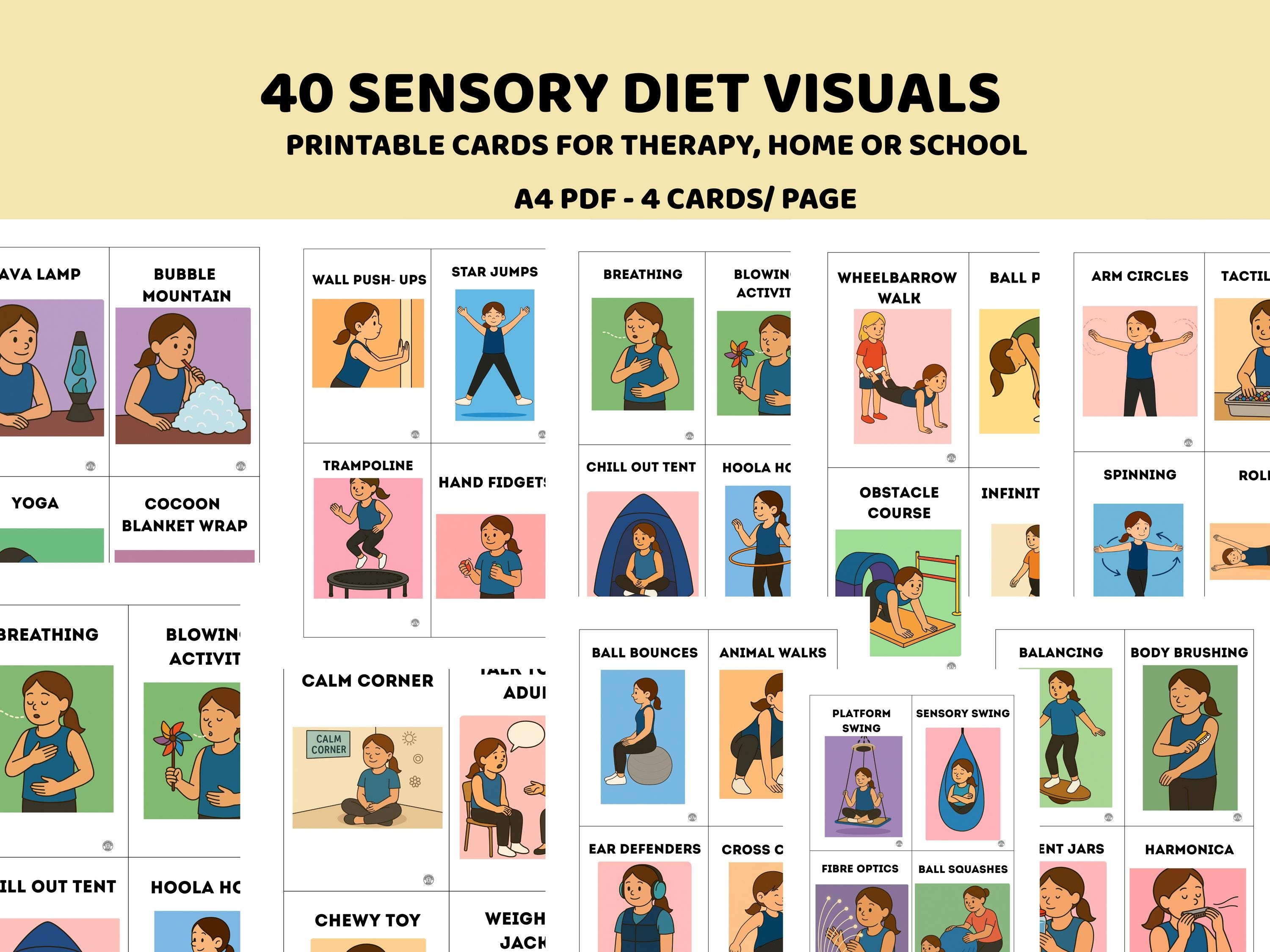
Credit: www.etsy.com
Sensory Diets For Different Ages
Sensory diets are not one-size-fits-all. They change as you grow and your sensory needs shift. Understanding how to adjust sensory activities for different ages can make a big difference in managing sensory challenges effectively.
Toddlers And Preschoolers
At this age, sensory diets focus on developing basic motor skills and sensory awareness. Activities like swinging, jumping, and playing with textured toys help toddlers explore their world safely.
Try adding simple, fun activities such as finger painting or crawling through tunnels. These engage multiple senses and support your child’s ability to stay calm and focused throughout the day.
Have you noticed how a quick spin or a soft squeeze can instantly calm a toddler? These little sensory breaks can be powerful tools for you and your child.
School-age Children
As children enter school, their sensory needs become more complex. Sensory diets here often include structured breaks to manage attention and energy levels.
You can add activities like wall push-ups, deep pressure hugs, or using a fidget tool during homework. These help children stay alert and organized without feeling overwhelmed.
Think about the classroom environment—does your child need movement breaks to reset? Small adjustments can improve focus and reduce frustration significantly.
Teens And Adults
For teens and adults, sensory diets help manage stress and sensory overload in daily life. Activities often target relaxation and grounding techniques.
Consider options like yoga, weighted blankets, or mindful breathing exercises. These tools can reduce anxiety and improve emotional regulation during busy or stressful days.
Have you tried integrating sensory breaks into your routine? Even short sensory activities can boost your mood and productivity in surprising ways.
Tips For Consistency And Success
Consistency is key to making a sensory diet effective. It helps the body and mind adapt better to sensory input. Small, regular actions lead to lasting improvements. Success grows from simple habits that fit easily into daily life.
Creating a routine that feels natural encourages sticking to the plan. Tracking progress helps identify what works best. Flexibility allows adjustments to meet changing needs. These tips build a strong foundation for success.
Establish A Daily Routine
Set specific times for sensory activities each day. Regular timing helps the body expect and prepare for sensory input. Use reminders or alarms to keep on schedule. Consistent routines reduce stress and improve results.
Use Visual Schedules And Checklists
Visual tools make routines easier to follow. Pictures or simple charts show what to do and when. Checklists provide a sense of accomplishment after each activity. These aids support memory and motivation.
Start With Simple Activities
Choose easy, enjoyable sensory tasks at first. Simple steps build confidence and willingness. Gradually add more activities as comfort grows. Avoid overwhelming the person with too much at once.
Monitor And Adjust Regularly
Keep track of responses to different activities. Note what brings calm or alertness. Change or replace tasks that do not help. Regular review keeps the sensory diet effective and relevant.
Involve Family And Caregivers
Support from others ensures consistent practice. Share the plan and goals with family members. Encourage everyone to help with reminders and participation. Teamwork creates a positive environment for success.
Celebrate Small Wins
Acknowledge progress, no matter how small. Positive feedback motivates continued effort. Use rewards or praise to encourage participation. Celebrations build confidence and reinforce good habits.

Credit: funstuff.com.au
Frequently Asked Questions
What Is A Sensory Diet And How Does It Work?
A sensory diet is a personalized plan of activities that help regulate sensory input. It supports focus, calmness, and overall sensory processing for individuals, especially children with sensory processing challenges.
Who Can Benefit From A Sensory Diet?
Children with sensory processing disorder, autism, ADHD, or developmental delays often benefit most. It helps improve attention, behavior, and emotional regulation in these individuals.
What Activities Are Included In A Sensory Diet?
Common activities include deep pressure, swinging, jumping, heavy work, and tactile play. These help provide necessary sensory input to maintain optimal alertness and calmness.
How Do Therapists Create A Sensory Diet Plan?
Occupational therapists assess sensory needs and challenges first. They then design tailored activities that fit daily routines and support individual sensory regulation goals.
Conclusion
A sensory diet supports a balanced and calm lifestyle. It helps manage sensory needs effectively. Simple activities can make a big difference. Tailor the plan to suit individual preferences. Consistency is key for best results. Small changes lead to big improvements over time.
Keep experimenting with different activities. Find what works best for you or your child. Remember, every person is unique. Patience and understanding are essential. A sensory diet brings harmony to daily life. Embrace it with an open mind. Enjoy the journey towards sensory balance and well-being.







