
Have you ever wondered if you could build muscle without the usual weightlifting routine? Imagine gaining strength and muscle with exercises that don’t require you to move at all.
This might sound like a dream, but it’s the promise of isometric exercises. You’ll discover the surprising truth about whether isometrics can help you build muscle. If you’re looking for a fresh approach to fitness or simply want to maximize your workout results, you won’t want to miss what comes next.
Are you ready to find out how isometrics could transform your muscle-building journey?
Isometrics Explained
Isometric exercises often get overlooked in muscle-building conversations, yet they hold unique benefits that many don’t fully understand. These exercises involve holding a position without changing the length of the muscle, which can lead to surprising strength gains. Let’s break down what isometrics really are and how they work in your body.
What Are Isometric Exercises
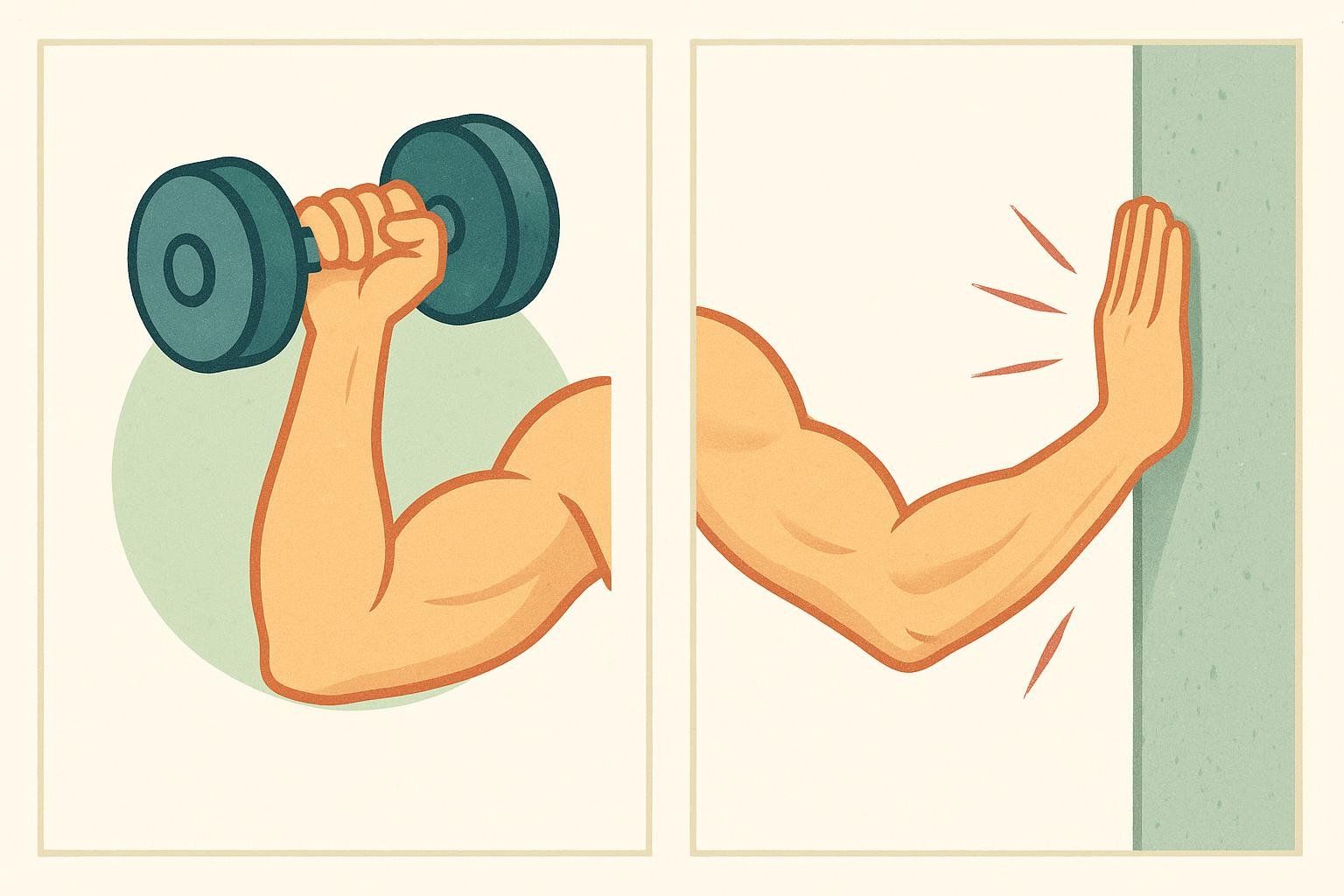
Isometric exercises involve contracting your muscles without any visible movement. You push or pull against an immovable object or hold a static position, keeping your muscles engaged.
Unlike traditional exercises that rely on movement, isometrics focus on maintaining tension in one spot. This can help improve muscle endurance and stability.
Think about holding a plank. Your core muscles stay tight, but your body doesn’t move. That’s an isometric hold in action.
Common Isometric Movements
Many people practice isometric moves without realizing it. Here are some common examples you can try:
- Plank:Hold your body straight while resting on your forearms and toes, engaging your core.
- Wall Sit:Sit against a wall as if you’re on a chair, keeping your thighs parallel to the floor.
- Glute Bridge Hold:Lift your hips and hold the position, squeezing your glutes.
- Isometric Push-Up Hold:Lower yourself halfway and hold, keeping tension in your chest and arms.
These moves demand control and focus. When you’ve held a plank or wall sit until your muscles shake, you know the power of isometrics firsthand.
Have you ever tried holding a position until you felt your muscles burn? That steady tension can build strength in a different way than lifting weights. So, how might adding these holds change your workout routine?
Credit: www.bodyspec.com
Muscle Growth Basics
Understanding how muscle growth works is key if you want to know whether isometrics can help build muscle. Muscle growth isn’t just about lifting weights or moving fast; it’s about how your muscles respond to stress and recover. Let’s break down the basics so you can see where isometrics fit in.
How Muscles Grow
Muscle growth happens when your muscle fibers undergo tiny damage during exercise. Your body then repairs these fibers, making them thicker and stronger than before. This process is called hypertrophy.
To trigger hypertrophy, you need to challenge your muscles beyond their usual limits. This can happen through:
- Mechanical tension – lifting heavy weights
- Muscle damage – creating micro-tears
- Metabolic stress – building up fatigue and “burn”
Have you noticed how your muscles feel sore after a tough workout? That soreness means your muscles are adapting and growing. But remember, growth also depends on rest, nutrition, and consistency.
Types Of Muscle Contractions
Muscles contract in three main ways, and understanding these helps explain how isometrics work.
| Contraction Type | Description | Example |
|---|---|---|
| Concentric | Muscle shortens while generating force | Raising a dumbbell during a bicep curl |
| Eccentric | Muscle lengthens while under tension | Lowering the dumbbell back down slowly |
| Isometric | Muscle generates force without changing length | Holding a plank or pushing against a wall |
Isometric contractions don’t involve movement, but they still create tension. The real question is: can this tension alone stimulate enough muscle growth? Knowing how these contractions work will help you decide how to add isometrics to your routine.
Isometrics And Muscle Hypertrophy
Isometric exercises involve holding a position under tension without changing muscle length. This type of training targets muscle fibers differently than traditional movements. Understanding how isometrics affect muscle growth helps in designing effective workout plans. Muscle hypertrophy means increasing muscle size through training stress. Isometric holds create tension that can stimulate muscle growth.
Scientific Evidence On Muscle Gains
Research shows isometric training can increase muscle strength and size. Studies report muscle fiber activation during sustained holds. Tension from isometrics triggers muscle protein synthesis, essential for growth. Isometric exercises improve muscle endurance and stability. Growth may be slower than with dynamic exercises but still significant. Muscle gains depend on intensity, duration, and frequency of holds.
Comparing Isometrics To Dynamic Training
Dynamic training involves movement through a range of motion. It causes muscle fibers to contract and stretch repeatedly. This action often leads to quicker visible muscle growth. Isometrics focus on static tension without movement. They excel at improving joint stability and muscle control. Combining both methods can enhance overall muscle development. Dynamic exercises build size and power. Isometrics add strength and endurance at specific angles.

Credit: www.youtube.com
Benefits Of Isometric Training
Isometric training offers unique benefits that go beyond traditional workouts. Holding a position under tension can help you build muscle and strength effectively, even if you’re not moving through a full range of motion. This type of training can fit into busy schedules and still deliver impressive results.
Strength Improvements
Isometric exercises force your muscles to contract without changing length, which can lead to significant strength gains. When you hold a plank or wall sit, your muscles develop endurance and power in that specific position. You might notice that your ability to maintain these holds improves quickly, reflecting increased muscle strength.
Think about how holding a push-up position challenges your chest, shoulders, and arms. This tension builds strength that translates well into dynamic movements. Have you tried pushing against an immovable object? That kind of resistance builds strength efficiently.
Joint Health And Stability
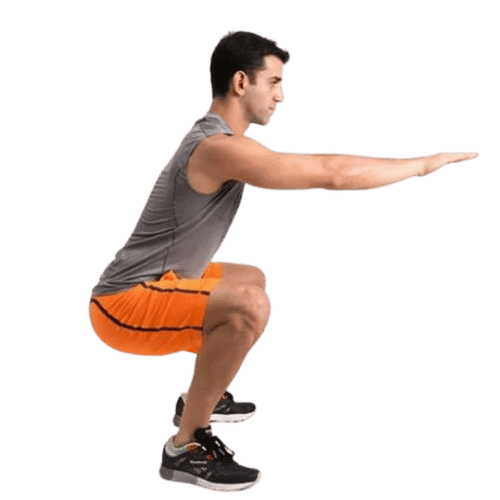
Isometric training can enhance joint stability by strengthening the muscles surrounding your joints. This support reduces the risk of injury during other physical activities. For example, holding a squat position strengthens your knees and hips by activating stabilizing muscles.
Improved joint stability also means better balance and control during daily movements. If you’ve experienced joint pain or discomfort, isometrics might be a gentle way to improve joint function without aggravating sensitive areas. How often do you focus on strengthening the muscles that protect your joints?
Limitations Of Isometric Workouts
Isometric workouts have benefits but also clear limits for muscle building. Understanding these limits helps set realistic expectations. It also guides how to balance isometrics with other exercises for better results.
Muscle Growth Plateaus
Isometric exercises involve holding a static position. This can cause muscles to adapt quickly. After some time, muscle growth may slow or stop. The lack of movement means muscles don’t experience enough change to keep growing.
Without increasing tension or challenge, muscles do not get stronger. This leads to a plateau in progress. To build more muscle, adding variety and movement is important.
Lack Of Range Of Motion
Isometric exercises keep joints fixed in one position. This limits the range of motion used during training. Muscles are not stretched or shortened fully.
Full range of motion helps muscles develop strength and size evenly. Isometrics do not train muscles through their entire length. This can cause imbalances and weak points.
Dynamic exercises that move joints improve flexibility and muscle function more than isometrics alone.
Effective Isometric Routines
Effective isometric routines focus on holding muscle contractions without movement. These exercises build strength and muscle endurance in specific positions. They help improve muscle tone and control.
Isometrics are simple to do and need little or no equipment. You can target various muscle groups by adjusting the hold positions. Consistency and proper form are key to seeing muscle gains.
Incorporating Isometrics For Muscle Building
Choose exercises that match your fitness level and goals. Hold each position for 15 to 60 seconds. Rest briefly between holds to maintain strength.
Combine isometric holds with regular workouts for balanced muscle growth. Use them to improve weak points and joint stability. Gradually increase hold time or intensity to challenge muscles.
Sample Workout Plans
| Exercise | Muscle Group | Hold Time | Sets |
|---|---|---|---|
| Wall Sit | Legs | 30 seconds | 3 |
| Plank | Core | 45 seconds | 3 |
| Glute Bridge Hold | Glutes | 30 seconds | 3 |
| Push-Up Hold (mid-lift) | Chest, Arms | 20 seconds | 3 |
- Rest 30 seconds between sets.
- Repeat routine 3 times a week.
- Focus on steady breathing during holds.
Combining Isometrics With Other Training
Combining isometric exercises with other training types enhances muscle growth and strength. Isometrics alone improve muscle tension but lack movement variety. Adding dynamic exercises helps build muscle size and improves overall fitness. A balanced routine creates better results than focusing on one method. This section explores how to mix isometrics with other workouts for optimal gains.
Dynamic Exercises For Better Results
Dynamic exercises involve moving muscles through a full range of motion. Examples include squats, push-ups, and lunges. These movements increase muscle size by working fibers in different ways. Combining them with isometrics helps target muscles from multiple angles. This approach improves strength, endurance, and flexibility.
- Use isometrics to hold positions and build tension.
- Follow with dynamic moves to stimulate muscle growth.
- Switch between static holds and active movements.
- Focus on major muscle groups for balanced development.
Periodization And Programming Tips
Periodization means planning workouts in phases to avoid plateaus. Structure your training by alternating isometric and dynamic sessions. This helps muscles recover and grow stronger over time. Use lighter loads during isometric days and heavier weights during dynamic days. Track progress and adjust intensity every few weeks.
- Start with 2-3 isometric sessions per week.
- Include 2-3 dynamic workouts focusing on movement.
- Rest or do light activity on off days.
- Gradually increase hold times and exercise difficulty.
Credit: vertimax.com
Frequently Asked Questions
Do Isometric Exercises Help Build Muscle Mass?
Yes, isometric exercises build muscle by engaging muscles without movement. They improve strength and endurance effectively, especially when combined with other workouts.
How Long Should Isometric Holds Be For Muscle Growth?
Hold isometric positions for 10 to 30 seconds. Longer holds increase muscle tension, promoting strength and hypertrophy when done consistently.
Can Isometrics Replace Traditional Weightlifting Workouts?
Isometrics complement but don’t fully replace weightlifting. They improve stability and strength but lack dynamic movement essential for full muscle development.
Which Muscles Benefit Most From Isometric Training?
Isometric training targets all muscles but is especially effective for core, legs, and upper body stabilizers, enhancing overall muscle control and strength.
Conclusion
Isometric exercises help build muscle by holding positions under tension. They improve strength and endurance without moving the joint. While they don’t cause big muscle size gains alone, they support overall muscle growth. Combining isometrics with other workouts works best for muscle building.
They also help with muscle control and injury recovery. Simple, steady, and focused effort makes a difference. Try adding isometric holds to your routine for balanced strength. Small steps lead to lasting results. Keep your workouts varied and consistent for the best effect.







