
Are you ready to take your leg workouts to the next level? Gym ball leg exercises offer a simple yet powerful way to strengthen and tone your legs while improving balance and flexibility.
Whether you’re looking to build muscle, burn fat, or prevent injury, these moves can help you reach your goals faster. Keep reading to discover easy-to-follow exercises that fit into any routine—no fancy equipment needed, just your gym ball and your commitment.
Your legs will thank you!
Benefits Of Gym Ball Leg Workouts
Gym ball leg workouts offer more than just a fun twist to your routine. They challenge your body in unique ways, making every movement count. You might find yourself gaining strength and balance without even realizing it.
Improved Balance And Stability
Using a gym ball forces your body to stay balanced during exercises. Your core and leg muscles work together to prevent you from falling off. This constant adjustment sharpens your overall stability, which benefits daily activities and sports.
Have you noticed how your legs feel more confident when standing or walking after regular gym ball workouts? That’s your improved balance kicking in.
Enhanced Muscle Strength
The unstable surface of a gym ball makes your leg muscles engage more deeply. You activate smaller stabilizing muscles that often get ignored with traditional exercises. This leads to stronger, well-rounded muscle development.
Adding gym ball leg exercises can help you break through strength plateaus. Your legs become more powerful without needing heavy weights.
Increased Flexibility
Many gym ball leg moves involve stretching and controlled movements that increase your range of motion. Unlike rigid gym machines, the ball allows you to move naturally and gently stretch tight muscles. Over time, this helps your legs stay limber and less prone to injury.
Think about how much easier it is to touch your toes or climb stairs after working on your leg flexibility with a gym ball.
Low Impact On Joints
Gym ball exercises reduce stress on your knees, hips, and ankles by providing a soft, cushioned surface. This makes them ideal if you have joint pain or are recovering from injury. You can strengthen your legs without causing extra wear and tear.
Would you prefer workouts that build strength but keep your joints happy? Gym ball leg exercises offer that balance perfectly.
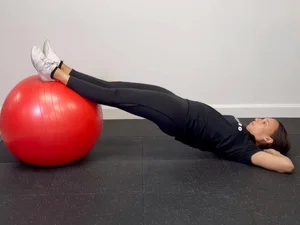
Credit: www.rehabhero.ca
Essential Gym Ball Exercises For Legs
Using a gym ball for leg exercises adds an extra challenge that improves balance and engages multiple muscle groups at once. These exercises not only strengthen your legs but also boost stability and coordination. Ready to make your leg workouts more effective and fun? Let’s look at essential gym ball exercises that target your legs efficiently.
Wall Squats With Gym Ball
Place the gym ball between your lower back and a wall. Slowly lower yourself into a squat, keeping your knees aligned with your toes. The ball supports your back while forcing your legs to work harder to stabilize your body.
Try holding the squat for 20-30 seconds to increase endurance. Can you feel your quads and glutes working differently with the ball’s support?
Hamstring Curls
Lie on your back with your heels resting on the gym ball. Lift your hips off the floor and roll the ball toward you by bending your knees. This move isolates the hamstrings, offering a deep burn without any weights.
Focus on slow, controlled movements to maximize muscle engagement. How much control do you have over the ball’s movement right now?
Glute Bridges
Start by lying on your back with your feet on top of the gym ball. Push your hips upward until your body forms a straight line from shoulders to knees. This targets your glutes and hamstrings while challenging your core for stability.
Hold the bridge for a few seconds before lowering down. Have you noticed how your glutes activate more with the ball under your feet?
Lunges With Ball Support
Hold the gym ball in front of you or rest it against a wall for balance. Step forward into a lunge, keeping your body upright. The ball helps you maintain stability, allowing you to focus on proper form and muscle engagement.
Try alternating legs and keeping your knee from going past your toes. How does the ball change your balance during this classic move?
Calf Raises On Gym Ball
Stand with your toes on top of the gym ball and your heels hanging off. Slowly raise your heels as high as possible, then lower them back down. This exercise challenges your calves and improves ankle stability.
Use a wall or chair for support if needed, but focus on controlled lifts. Can you feel the difference between calf raises on solid ground versus the ball?
Advanced Leg Moves Using Gym Ball
Advanced leg exercises with a gym ball boost strength and balance. These moves challenge muscles differently than regular workouts. Using the ball adds instability, forcing your body to engage more muscles. This type of training improves coordination and muscle control. It also helps in injury prevention by strengthening stabilizer muscles.
Try these advanced moves to build strong, toned legs. Each exercise targets key muscle groups for better performance.
Single-leg Hamstring Curl
Lie on your back with your heels on the gym ball. Lift one leg off the ball, keeping it straight. Pull the ball toward your hips using the other leg. Slowly extend the leg back to start. This move targets your hamstrings and improves balance.
Pistol Squats With Ball
Stand in front of the ball and hold it for support. Extend one leg forward and slowly lower into a squat on the other leg. Use the ball to keep your balance. Push back up to the standing position. This exercise builds strength and flexibility in each leg.
Ball Pass Leg Lifts
Lie on your back holding the gym ball between your feet. Lift your legs and arms at the same time. Pass the ball from your feet to your hands. Lower legs and arms without touching the floor. Pass the ball back to your feet. This move works your lower abs and leg muscles.
Dynamic Lunges With Ball
Hold the gym ball overhead with both hands. Step forward into a lunge, lowering your back knee toward the floor. Keep the ball steady and your core tight. Push back to the starting position and switch legs. This exercise improves leg strength and balance simultaneously.

Credit: www.youtube.com
Tips To Maximize Leg Workout Results
Maximizing your leg workout with a gym ball takes more than just showing up. Small tweaks in how you perform exercises can lead to bigger gains and fewer injuries. Paying attention to your technique and routine can make your sessions more effective and rewarding.
Proper Form And Alignment
Maintaining proper form ensures you target the right muscles without straining others. Keep your back straight and your core engaged during gym ball leg exercises. Align your knees with your toes to avoid unnecessary joint stress.
Have you noticed how a slight shift in posture can change the difficulty of a move? Focus on smooth, controlled motions rather than rushing through reps. This not only boosts muscle activation but also reduces the risk of injury.
Controlled Breathing Techniques
Breathing affects your strength and endurance during workouts. Inhale deeply as you prepare for the movement and exhale during the exertion phase, like when pushing against the ball. Holding your breath can cause tension and limit your performance.
Try counting your breaths to maintain a steady rhythm. This keeps your mind focused and muscles oxygenated. Have you ever felt your energy drop mid-exercise? It might be time to pay attention to how you breathe.
Progressive Intensity Increase
Gradually increasing the challenge is key to continuous improvement. Start with basic gym ball leg exercises and add more reps, sets, or resistance over time. Using a heavier ball or adding ankle weights can also push your limits.
Listen to your body—if an exercise feels too easy, it’s a signal to step up. How do you know when to increase intensity? When your muscles recover quickly and the movement feels less demanding, it’s time to advance.
Combining With Other Exercises
Mixing gym ball leg exercises with other workouts enhances overall leg strength and balance. Pair them with squats, lunges, or calf raises for a well-rounded routine. This variety prevents plateaus and keeps workouts interesting.
Consider adding stretches or mobility drills after your session to improve flexibility. Have you tried alternating between gym ball moves and free-weight exercises? This combination often leads to better muscle coordination and faster results.
Common Mistakes To Avoid
Gym ball leg exercises can be highly effective, but small mistakes can reduce their benefits or even cause injury. Paying attention to common errors helps you get the most out of your workout. Let’s look at some frequent slip-ups and how to avoid them.
Incorrect Ball Positioning
Placing the ball too high or too low can throw off your balance and strain your muscles. Your legs should rest comfortably on the ball, allowing you to maintain control without overreaching. If you feel unstable, adjust the ball until your body feels supported and aligned.
Have you ever felt like you were falling off the ball? That’s a clear sign the ball position needs tweaking. Small changes make a big difference in stability and effectiveness.
Overarching The Back
It’s common to arch your back too much when trying to keep balance, especially during leg lifts or curls. This puts unnecessary pressure on your spine and reduces the engagement of target muscles. Focus on keeping your core tight and spine neutral throughout the exercise.
Try to feel your abdominal muscles working to stabilize rather than letting your lower back take over. If you experience discomfort in the back, pause and reset your posture.
Rushing Through Repetitions
Speeding through reps might seem like you’re pushing harder, but it often leads to sloppy form and less muscle activation. Slow, controlled movements allow you to fully engage your leg muscles and improve coordination. Count to three when lowering or lifting your legs to maintain control.
Ask yourself: Are you feeling the burn in your muscles or just completing reps quickly? Quality beats quantity every time.
Ignoring Muscle Imbalances
Many people unknowingly favor one leg over the other, which can cause imbalances and injuries over time. Pay attention to how each leg performs during the exercise. If one side feels weaker or less stable, spend extra time strengthening it.
Consider working with a trainer or using a mirror to monitor your form. Addressing imbalances early prevents long-term issues and improves overall strength.

Credit: www.youtube.com
Equipment And Safety Considerations
Using a gym ball for leg exercises can boost your workout effectiveness, but the right equipment and safety measures are key. Skipping these basics often leads to discomfort or injury, which can derail your fitness goals. Paying attention to the size, pressure, and environment ensures you get the most from each session while staying safe.
Choosing The Right Gym Ball Size
Your height determines the ideal gym ball size to maintain proper posture and balance. Sitting on the ball, your knees should bend at a 90-degree angle with feet flat on the floor. If your knees are too high or too low, you risk straining muscles or losing stability during exercises.
Here’s a quick guide to pick the right size:
- Under 5’0″: 45 cm ball
- 5’0″ to 5’5″: 55 cm ball
- 5’6″ to 6’0″: 65 cm ball
- Over 6’0″: 75 cm ball
Have you ever felt off-balance during an exercise? Your ball size might be the culprit.
Maintaining Ball Pressure
Proper inflation affects how the ball supports your movements. Too soft, and it becomes unstable; too hard, and it loses comfort and shock absorption. Check the ball’s firmness by pressing it with your thumb—it should give slightly but not sink in.
Keep a pump handy to adjust pressure regularly, especially if you notice the ball feeling sluggish or overly bouncy. Remember, a well-inflated ball improves control and reduces the risk of slipping during leg exercises.
Safe Workout Environment
Clear space around your workout area to avoid tripping or knocking over objects. A flat, non-slip surface is ideal to prevent the ball from sliding unexpectedly. Avoid carpet or uneven floors that can hinder balance and cause falls.
Consider using a yoga mat for extra grip and cushioning. Lighting matters too—make sure you can see your surroundings clearly to stay focused and safe.
Warm-up And Cool-down
Starting with a warm-up primes your muscles and joints for the workout ahead. Simple leg swings or light cardio can increase blood flow and reduce injury risk. Stretching after the session helps your muscles recover and improves flexibility.
Neglecting warm-up or cool-down can leave you sore or stiff the next day. Have you ever skipped these steps and felt it later? Taking just 5-10 minutes for each can make a big difference.
Frequently Asked Questions
What Are The Benefits Of Gym Ball Leg Exercises?
Gym ball leg exercises enhance core stability, improve balance, and increase muscle strength. They also promote better coordination and flexibility. By using a gym ball, you engage multiple muscle groups simultaneously. This results in a more effective workout session, which can aid in toning and strengthening your legs.
How Do Gym Ball Leg Exercises Improve Balance?
Gym ball leg exercises require maintaining stability on an unstable surface. This engages core muscles and enhances proprioception. As you perform these exercises, your body works harder to maintain equilibrium. Over time, this practice improves your overall balance and coordination, which is beneficial in daily activities.
Can Beginners Perform Gym Ball Leg Exercises?
Yes, beginners can perform gym ball leg exercises. Start with basic movements like leg curls or seated leg lifts. Ensure proper form to prevent injuries and gradually increase intensity. Using a gym ball can be challenging initially, but with consistent practice, beginners will see improvements in strength and stability.
What Equipment Is Needed For Gym Ball Leg Exercises?
To perform gym ball leg exercises, you’ll need a gym ball and an exercise mat. Ensure the gym ball is the correct size for your height. Some exercises might also require dumbbells or resistance bands. Always check equipment for any damage before starting your workout to ensure safety.
Conclusion
Using a gym ball for leg exercises boosts strength and balance. It adds variety to your workout routine. You can target different leg muscles with ease. These exercises also improve coordination and stability. Try to do them regularly for best results.
Start slow and increase reps as you get stronger. A gym ball is a simple tool that helps you stay fit. Keep your movements controlled and focus on form. Enjoy the process and feel your legs grow stronger day by day.







