
Have you ever wanted to create your own drawing of gym equipment but didn’t know where to start? Whether you’re an artist, a fitness enthusiast, or someone looking to decorate your space, learning how to draw gym equipment can be both fun and rewarding.
Imagine being able to sketch a dumbbell, treadmill, or kettlebell with confidence and detail. You’ll discover simple steps and tips that make drawing gym gear easy and enjoyable. Ready to bring your workout ideas to life on paper? Keep reading to unlock your creative potential!
Choosing The Right Gym Equipment
Choosing the right gym equipment to draw can make your sketches more dynamic and interesting. It’s important to pick pieces that challenge your drawing skills while also being visually appealing. Think about what kind of gym environment you want to capture and the story your drawing will tell.
Popular Machines To Sketch
Gym machines often have unique shapes and details that can add depth to your drawing. Treadmills, ellipticals, and rowing machines provide sleek lines and curves that are fun to sketch. Weight machines with pulleys and cables offer mechanical complexity, perfect for practicing perspective and shading.
Consider how the machine’s form interacts with the user’s body. Capturing a person in motion on a bike or lifting weights on a leg press can bring energy to your artwork. Have you noticed how the cables and handles create interesting angles? Those details make your drawing stand out.
Free Weights And Accessories
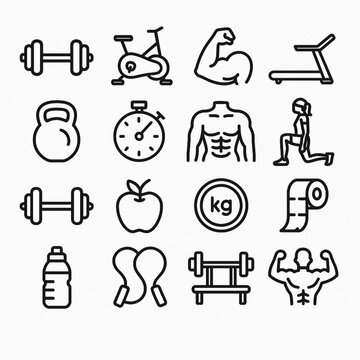
Free weights like dumbbells, kettlebells, and barbells are simpler but powerful subjects. Their shapes are straightforward, making them great for beginners learning proportions. Accessories such as resistance bands, yoga mats, and foam rollers add variety and texture to your composition.
Sketching free weights lets you focus on light and shadow, which enhances realism. You might also try drawing different materials—metal, rubber, or fabric—to improve your texturing skills. What’s your favorite piece of gym equipment to draw? Try mixing machines and free weights to create a balanced scene.

Credit: www.dreamstime.com
Basic Drawing Techniques
Drawing gym equipment might seem daunting at first, but mastering basic drawing techniques can make it simpler and more enjoyable. These techniques are essential for capturing the essence of each piece of equipment, ensuring your drawings are both accurate and expressive. Let’s dive into two fundamental approaches: sketching shapes and proportions, and using perspective and angles.
Sketching Shapes And Proportions
Begin with simple shapes to lay the groundwork for your gym equipment sketches. A treadmill, for instance, can start as a rectangle to represent the belt, while the handles can be sketched as thin cylinders. This method helps maintain proportion and balance in your drawings.
Always keep proportions in mind. Use your pencil as a measuring tool to compare sizes of different parts of the equipment. This practice ensures each element is in harmony, making your drawing more realistic.
Don’t be afraid to make adjustments as you go. Initial sketches are meant to be rough. Refining them gradually will lead to a more polished final piece.
Using Perspective And Angles
Perspective is crucial for adding depth to your drawings. Consider the angle from which you want the viewer to see the equipment. A bench press viewed from above will look very different than one viewed from the side.
Experiment with different angles to find the most dynamic view. Try sketching a set of weights from a low angle to emphasize their size and weightiness. This technique can dramatically enhance the impact of your drawing.
Remember to adjust the scale of objects based on their distance from the viewer. This technique, known as foreshortening, adds realism and depth to your work.
By mastering these basic drawing techniques, you can bring your sketches of gym equipment to life. Practice regularly and pay attention to detail to see your skills improve. Which technique are you excited to try first in your next drawing session?
Capturing Details And Textures
Capturing the intricate details and textures of gym equipment can transform a simple sketch into a vivid representation that feels almost tangible. Each surface, whether shiny metal or soft rubber, tells a story through its texture and reflection. Paying close attention to these elements helps you bring your drawing to life and keeps your audience engaged.
Drawing Metal And Rubber Surfaces
Metal surfaces often reflect light sharply and have smooth, sleek finishes. To draw metal effectively, focus on creating sharp edges and clear reflections. Use clean lines and controlled shading to mimic the polished look.
Rubber, on the other hand, has a matte, slightly textured surface that absorbs light differently. You can show this by using softer shading and subtle gradients. Don’t be afraid to add tiny imperfections or grain to suggest the material’s grip and flexibility.
Think about how these textures feel when you touch gym equipment. Can you capture that sensation in your drawing?
Adding Shadows And Highlights
Shadows and highlights are essential to suggest depth and form. Observe where the light source hits the equipment and where shadows naturally fall. Hard shadows work well on metal, while softer, diffused shadows suit rubber surfaces.
Use white space or a lighter pencil stroke to create highlights that give the impression of shine. Shadows should deepen as they move away from the light, adding dimensionality. Experiment with layering your shading to build a realistic texture.
Have you tried varying your pressure to see how it changes the shadow quality? This simple trick can make a big difference in showing the contrast between different materials.
Step-by-step Gym Equipment Sketches
Drawing gym equipment can seem intimidating at first, but breaking it down into clear, manageable stages makes the process enjoyable and rewarding. Focusing on simple shapes and gradually adding details can help you capture the essence of each piece. Have you ever noticed how even complex machines can be understood better by sketching their basic structure first?
Treadmill Drawing Process
Start by sketching the treadmill’s base with a long rectangle to represent the running belt platform. Add two vertical supports on either end to hold the console and handrails. Use simple shapes like cylinders for the rollers and squares or rectangles for the control panel.
Next, refine the handrails by rounding their edges and adding buttons or grips. Shade the belt area lightly to show texture. By focusing on the treadmill’s basic form first, you’ll find it easier to add details without getting overwhelmed.
Dumbbell Sketch Tutorial
Begin with two circles for the weights on each side. Connect them with a short, thick rectangle to form the handle. Keep your lines light so you can adjust proportions as needed.
Add details like the ridges on the handle for grip and subtle shading on the weights to give them dimension. Notice how the simplicity of the dumbbell’s shape makes it a great subject for practicing symmetry and shading techniques.
Rowing Machine Illustration
Outline the rowing machine’s main frame as a long, narrow rectangle. Add a smaller rectangle at one end to represent the seat, and draw two parallel lines extending from the frame for the rails. Sketch a circle or oval at the front to indicate the flywheel housing.
Include the handlebar by drawing a thin horizontal line connected to the flywheel with two short vertical lines. Adding small elements like footrests and the seat’s tracks will bring your sketch to life without complicating the initial structure.
Common Mistakes To Avoid
Drawing gym equipment can be challenging, especially when you want your sketches to look realistic and functional. Avoiding common mistakes will save you time and improve your results. Let’s look at some pitfalls that often trip up artists and how you can steer clear of them.
Incorrect Proportions
Getting the size and scale right is crucial. If the weights look too big or the treadmill too narrow, your drawing loses credibility. Pay close attention to the relationship between different parts of the equipment.
Try measuring real gym equipment or use reference photos to compare proportions. It’s easy to underestimate how bulky a dumbbell is compared to a bench. Have you checked if your barbell looks like it can actually hold those plates?
Overcomplicating Details
Adding too many details can overwhelm your drawing and distract from the overall shape. Instead of focusing on every nut and bolt, highlight key features that define the equipment.
For example, sketch the handles and display screens clearly, but avoid drawing every tiny screw. Keeping it simple helps maintain clarity and speeds up your work. What details truly matter to show that it’s gym equipment and not just a random machine?

Credit: www.freepik.com
Tools And Materials For Gym Sketching
Choosing the right tools and materials is key to drawing gym equipment effectively. The quality of your pencils, erasers, and paper affects your sketch’s detail and clarity. Digital tools offer new ways to create precise and clean drawings. Understanding these essentials helps you capture the strength and form of gym machines with ease.
Pencils And Erasers
Pencils come in different grades, from hard (H) to soft (B). Hard pencils create fine lines and light shading. Soft pencils give darker, richer lines for shadows and depth. Using a range of pencils helps add texture and contrast.
A good eraser does more than remove mistakes. Kneaded erasers lift graphite gently to lighten areas without damaging paper. Regular rubber erasers clear larger errors cleanly. Having both types allows precise corrections and highlights.
Paper Types And Digital Options
Paper choice affects the look and feel of your sketches. Smooth papers work well for detailed lines and clean shading. Textured papers add character and grip for graphite or charcoal. Heavier paper prevents smudging and tearing during erasing.
Digital tools offer flexibility and ease for gym equipment sketches. Tablets and styluses let you draw with layers and undo options. Software provides various brushes and effects to mimic traditional media. Digital sketching suits quick edits and sharing online.
Tips For Improving Sketch Accuracy
Improving the accuracy of your gym equipment drawings takes focus and smart techniques. Small adjustments can make a big difference in how realistic and precise your sketches look. Let’s dive into two key ways to sharpen your sketch accuracy and boost your confidence with every line you draw.
Using Reference Images
Reference images are your best friend when drawing gym equipment. They show you the exact shapes, proportions, and details you might miss otherwise.
Try to gather multiple photos of the same piece of equipment from different angles. This helps you understand its 3D structure better and avoid flat or distorted sketches.
Have you noticed how some parts of the equipment catch light differently? Zoom in on those highlights and shadows in your references. Adding these subtle details can instantly make your drawing pop.
Practicing Regularly
Accuracy improves with practice, but not just any practice—focused practice. Set aside short daily sessions where you focus solely on sketching gym gear, even if it’s just a quick 10-minute study.
Challenge yourself by drawing the same item multiple times, aiming to spot and fix errors each round. This repetition trains your eye and hand to work better together.
What if you kept a sketch journal for gym equipment? Over weeks, you’d see your progress clearly, which motivates you to keep pushing your skills further.
Credit: stock.adobe.com
Frequently Asked Questions
What Are The Basic Gym Equipment Drawings To Start With?
Basic gym equipment drawings include treadmills, dumbbells, benches, and stationary bikes. These are essential for beginners to understand gym layouts and design.
How Can Drawing Gym Equipment Improve Workout Planning?
Drawing gym equipment helps visualize space and equipment placement. It enhances workout efficiency and safety by planning the best gym layout.
Which Tools Are Best For Drawing Gym Equipment?
Digital tools like AutoCAD and SketchUp are ideal for precise gym equipment drawings. Simple sketches can be done with pencils and graph paper.
Why Is Accuracy Important In Gym Equipment Drawings?
Accurate drawings ensure proper equipment size and placement. This prevents overcrowding and helps maintain a safe workout environment.
Conclusion
Drawing gym equipment helps you learn shapes and details clearly. Practice improves your skills and builds confidence. Simple lines create strong, realistic images. Keep your drawings neat and use light shading. Try different equipment to vary your practice. Drawing also makes you notice how machines work.
Enjoy the process and stay patient with progress. Art and fitness come together in this fun way. Keep drawing often to see steady improvement. Your effort will show in every sketch you make.







