
Looking to boost your workouts without bulky machines? Band gym equipment might be exactly what you need.
These simple, portable tools can help you build strength, improve flexibility, and tone your body anywhere, anytime. Imagine getting a full-body workout that fits your schedule and space. Curious how band gym equipment can transform your fitness routine? Keep reading to discover the benefits, tips, and best ways to use these powerful bands for maximum results.
Your fitness journey just got easier—and more effective.

Credit: www.amazon.com
Benefits Of Band Gym Equipment
Band gym equipment offers many benefits for all fitness levels. It helps improve strength, flexibility, and overall fitness with low risk of injury. These bands suit various workouts and can target different muscle groups effectively. They are easy to use and fit into any routine.
Increased Strength
Resistance bands create tension during exercises. This tension forces muscles to work harder. It builds muscle strength over time. Bands allow controlled movements to avoid strain. They help tone muscles evenly and improve endurance.
Enhanced Flexibility
Stretching with bands increases muscle flexibility. Bands provide gentle support to extend the range of motion. Regular use reduces stiffness and improves joint health. Flexible muscles lower the chance of injuries during workouts.
Portability And Convenience
Bands are lightweight and take up little space. They fit easily into bags or pockets. Users can exercise anywhere—home, park, or gym. No need for bulky equipment or machines. This convenience encourages consistent workouts and better results.
Types Of Resistance Bands
Resistance bands come in various types, each designed to target different fitness needs and levels. Choosing the right band can make your workouts more effective and enjoyable. Understanding the main types helps you pick the perfect one for your goals.
Loop Bands
Loop bands are continuous circles made of thick latex. You can use them for exercises like squats, glute bridges, and lateral walks. Their design lets you add resistance around your legs, arms, or waist, giving you a strong and consistent tension.
I once struggled with activating my glutes during workouts, but adding loop bands made a noticeable difference. Have you ever felt that your muscles just don’t engage properly? Loop bands might be the simple fix you need.
Tube Bands
Tube bands are long tubes with handles on each end, perfect for mimicking weight machine exercises. They work great for upper body workouts like bicep curls, shoulder presses, and rows. Handles provide a secure grip and allow you to perform controlled, smooth movements.
If you want to replace bulky gym machines at home, tube bands offer a practical alternative. Think about exercises you do with dumbbells—tube bands can often replicate those motions with less strain on your joints.
Therapy Bands
Therapy bands, often flat and without handles, come in different resistance levels. They are ideal for rehabilitation and gentle strength training. Physical therapists frequently recommend them for improving flexibility and recovering from injuries.
Using therapy bands helped me regain wrist strength after a minor injury. Are you dealing with soreness or recovering from a setback? These bands offer low-impact options to rebuild your strength safely.
Choosing The Right Resistance Band
Choosing the right resistance band is key to effective workouts. The perfect band fits your strength and exercise goals. A good fit helps prevent injury and improves results. Consider your current fitness level and the exercises you plan.
Assessing Resistance Levels
Resistance bands come in different tension strengths. Light bands suit beginners or rehab exercises. Medium bands work well for most users. Heavy bands challenge advanced strength training. Test bands by stretching them to feel the resistance. Choose a band that allows control without strain.
Material Considerations
Resistance bands are made from latex or synthetic materials. Latex bands are flexible and durable. Non-latex bands are good for those with allergies. Check for smooth surface and no cracks. Quality materials last longer and avoid snapping during use. Look for bands that feel comfortable on your skin.
Length And Size Options
Length affects the types of exercises you can do. Short bands are ideal for upper body workouts. Longer bands allow more stretch for leg and full-body moves. Width impacts resistance too—wider bands offer more tension. Measure your space and exercise style to pick the right size. Having a variety of lengths helps diversify training.
Strength Training With Bands
Strength training with bands offers a flexible way to build muscle and improve fitness. Bands create resistance that challenges muscles during every move. They are light, portable, and suitable for all fitness levels.
Band exercises target different muscle groups effectively. You can train your upper body, lower body, and core with simple movements. Bands allow controlled motion and reduce joint stress.
Upper Body Exercises
Band exercises help build strong arms, shoulders, and back muscles. Try these moves:
- Banded bicep curls for arm strength.
- Shoulder presses to tone deltoids.
- Rows to strengthen upper back muscles.
- Tricep extensions for arm definition.
Use slow, controlled motions to maximize muscle work. Adjust band tension to fit your strength.
Lower Body Exercises
Bands add resistance to leg and glute workouts. Here are key exercises:
- Squats with bands for thighs and glutes.
- Lateral band walks to target hip muscles.
- Glute bridges with band for strong buttocks.
- Leg presses using bands for hamstrings and quads.
Focus on proper form to avoid injury. Bands help activate muscles deeply.
Core Strengthening
Strong core muscles improve posture and balance. Bands enhance core workouts like:
- Standing twists with a band for obliques.
- Banded planks for added resistance.
- Seated band crunches to engage abs.
- Leg raises combined with band tension.
Engage your core during every movement. Bands increase workout intensity safely.
Flexibility And Mobility Exercises
Flexibility and mobility exercises improve muscle length and joint movement. Band gym equipment helps perform these exercises safely and effectively. Using resistance bands increases stretch intensity and control.
Regular practice enhances body balance and posture. It reduces muscle stiffness and boosts overall athletic performance. Bands offer versatile options for all fitness levels.
Stretching Techniques
Resistance bands assist in deepening stretches without strain. Hold bands firmly to stretch muscles gently. Maintain slow, steady movements for best results.
- Hamstring stretch: Loop band around foot, pull leg upward slowly.
- Shoulder stretch: Hold band behind back, pull gently to open chest.
- Quadriceps stretch: Use band to pull foot toward buttocks, keeping knees aligned.
Joint Mobility Routines
Bands support smooth, controlled joint movements. They help warm up joints before workouts. Focus on slow circles and gentle bends with bands.
- Wrist circles: Hold band with both hands, rotate wrists slowly.
- Hip openers: Use band around thighs, move legs outward and inward.
- Ankle flexion: Loop band around foot, flex and point toes carefully.
Injury Prevention Tips
Use bands to strengthen muscles around joints. Strengthened muscles protect joints from stress. Always start with light resistance to avoid overstretching.
- Warm up muscles with band exercises before intense activities.
- Do not force stretches beyond comfort level.
- Focus on proper form and controlled breathing during exercises.
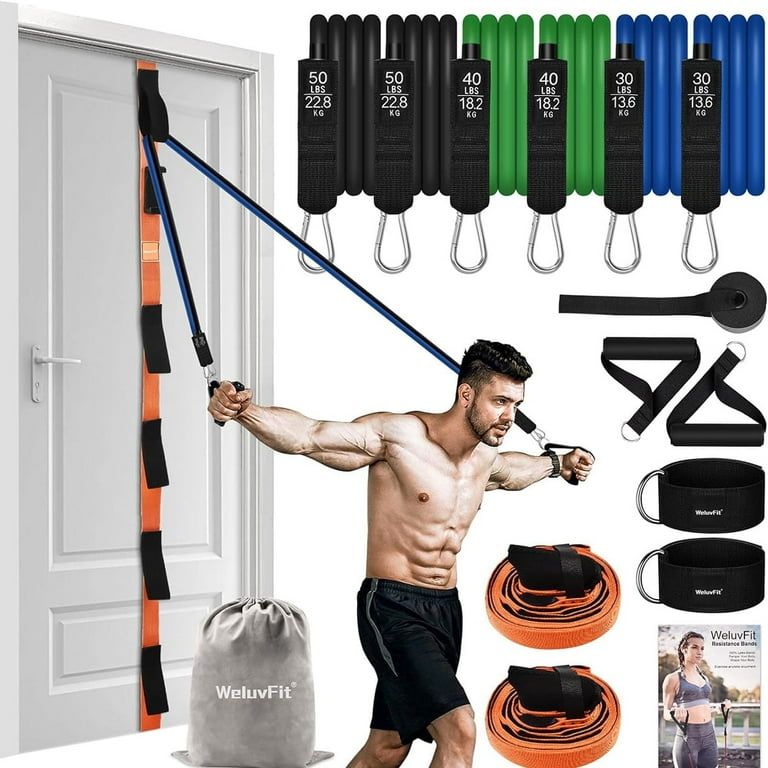
Credit: www.walmart.com
Incorporating Bands Into Workouts
Resistance bands are a simple way to boost any workout. They add tension to your muscles and increase strength. Bands fit well with many exercises and levels.
Using bands can help improve flexibility, balance, and muscle tone. They are easy to carry and use anywhere. Many people enjoy how bands make workouts more varied and fun.
Combining With Free Weights
Free weights build strength by using gravity and body control. Bands add extra resistance throughout the movement. Together, they challenge muscles in new ways.
- Use bands around dumbbells for bicep curls or shoulder presses.
- Attach bands to barbells to increase tension during squats or deadlifts.
- Combine bands with kettlebells for dynamic full-body exercises.
This mix helps improve muscle endurance and control. It also targets stabilizing muscles better.
Creating A Full-body Routine
A full-body workout with bands covers all major muscle groups. It balances strength and mobility. Start with warm-up moves using light bands.
- Upper body: band rows, chest presses, tricep extensions
- Lower body: band squats, glute bridges, leg lifts
- Core: band twists, seated crunches, planks with band tension
Keep rest times short to maintain intensity. Adjust band resistance for different exercises and goals.
Sample Workouts And Programs
| Workout | Exercises | Sets | Reps |
|---|---|---|---|
| Strength Focus | Band squats, band rows, band chest press | 3 | 10-12 |
| Endurance Circuit | Band lunges, band overhead press, band crunches | 4 | 15-20 |
| Full-Body Blast | Band deadlifts, band bicep curls, band side steps | 3 | 12-15 |
Try these workouts two to three times weekly. Change bands and reps to suit progress and needs.
Care And Maintenance Of Bands
Taking good care of your band gym equipment ensures it stays effective and safe for your workouts. Neglecting maintenance can lead to wear and tear, which might cause the bands to snap unexpectedly. Simple care habits can extend their life and keep your training consistent.
Cleaning Tips
Regular cleaning removes sweat, dirt, and oils that degrade the bands over time. Use a damp cloth with mild soap to wipe them down after each use.
Avoid harsh chemicals or abrasive cleaners—they can damage the material.
Let the bands air dry completely before storing them to prevent mold or mildew buildup. Have you noticed how a clean band feels smoother and performs better?
Storage Solutions
Proper storage prevents the bands from stretching out or getting damaged. Keep them in a cool, dry place away from direct sunlight, which can weaken the rubber.
Try hanging your bands on hooks or storing them flat in a drawer to avoid tangling or creasing.
Resist the urge to toss them in your gym bag without protection; this can cause nicks and cuts. How you store your bands can make all the difference in their lifespan.
Longevity And Durability
Inspect your bands regularly for any signs of cracks, tears, or thinning areas.
Replace any band that shows damage—you don’t want a snapped band during a workout.
Remember, bands last longer when you avoid overstretching beyond their limit. Have you ever pushed a band too far and regretted it? Staying within recommended resistance levels keeps them reliable and safe for your next session.
Safety Tips And Precautions
Using band gym equipment is effective and versatile. Safety is key to avoid injuries. Following safety tips ensures a good workout and protects your body. Always pay attention to how you use bands and your body’s signals.
Proper Technique
Hold the bands firmly to prevent slipping. Keep your movements slow and controlled. Maintain good posture during exercises. Avoid locking your joints to reduce strain. Stretch bands evenly to avoid sudden snaps. Use both hands or feet to balance tension.
Common Mistakes To Avoid
- Do not overstretch the bands beyond their limit.
- Avoid jerky or fast movements that can cause injuries.
- Never use damaged or worn-out bands.
- Do not anchor bands to unstable objects.
- Avoid poor posture that stresses muscles or joints.
Safe Progression Practices
Start with light resistance bands. Increase intensity slowly over time. Allow your muscles to adapt before adding more tension. Rest between sets to prevent overuse injuries. Focus on quality over quantity in each exercise. Listen to your body and stop if pain occurs.

Credit: www.amazon.com
Frequently Asked Questions
What Is The Best Band Gym Equipment For Beginners?
Resistance bands with light to medium tension are ideal for beginners. They offer versatility and low impact for safe workouts. Choose bands made from durable latex for longevity and comfort during exercises.
How Do Band Gym Equipment Improve Muscle Strength?
Bands create constant tension on muscles, promoting strength gains. They activate stabilizer muscles and improve endurance. Using bands regularly enhances muscle tone and functional fitness effectively.
Can Band Gym Equipment Replace Traditional Weights?
Bands can complement but not fully replace weights. They provide resistance and flexibility but lack the heavy load needed for maximal strength. Combining both yields balanced fitness results.
Are Band Gym Equipment Portable And Easy To Use?
Yes, bands are lightweight and compact, perfect for travel. They require minimal space and can be used anywhere. Their ease of use suits all fitness levels.
Conclusion
Band gym equipment offers a simple way to improve strength and flexibility. It fits any workout style and space. Use bands to target different muscles easily. They are light, portable, and cost-effective. You can exercise at home or on the go.
Consistent use brings better muscle tone and endurance. Start with basic moves and increase intensity slowly. Bands suit all fitness levels and goals. Choose the right band to match your needs. Stay active and enjoy the benefits of band training.







