
Are you curious about what it takes to meet the Army fitness requirements at your age? Whether you’re just starting your fitness journey or aiming to join the Army, understanding these standards is key to your success.
Your age plays a big role in what’s expected, and knowing the details can help you prepare smarter and stay motivated. Keep reading to discover exactly how the Army measures fitness by age and how you can meet—and even exceed—those goals.
Your future self will thank you.
Basic Army Fitness Standards
Army fitness standards change based on age to ensure fair testing. Younger soldiers face higher physical demands than older ones. These age-based requirements help maintain strength and endurance across all service members.
Basic Army Fitness Standards Joining the army is not just about bravery and discipline; it’s also about meeting specific fitness standards. These standards ensure that every soldier is physically capable of handling the demands of military life. Understanding these requirements can be a game-changer for anyone planning to enlist.Physical Tests Overview
The army’s fitness tests are designed to assess your endurance, strength, and agility. Typically, they include activities like push-ups, sit-ups, and a timed run. Each of these exercises evaluates a different aspect of your physical fitness, ensuring you can meet the physical challenges on the field. Ever tried doing push-ups for two minutes straight? It’s tougher than you think, but with consistent practice, it’s achievable. The key is to gradually build your strength and stamina.Minimum Requirements By Gender
Fitness standards differ by gender, reflecting physiological differences. Men and women have separate benchmarks to ensure fairness and equality. For men, the minimum requirement might include completing a set number of push-ups and sit-ups, and running two miles within a certain time frame. Women have adjusted numbers, taking into account differences in body composition. Here’s a quick glance at what you might expect:| Test | Men | Women |
|---|---|---|
| Push-ups | 40 in 2 minutes | 20 in 2 minutes |
| Sit-ups | 50 in 2 minutes | 50 in 2 minutes |
| 2-Mile Run | 16 minutes | 19 minutes |
Age Categories In Fitness Testing
Understanding the age categories in Army fitness testing is crucial for tailoring your preparation effectively. Each age group faces slightly different standards that reflect physical capabilities and expectations. Knowing where you fit can help you set realistic goals and track your progress with confidence.
Young Recruits: 17-21 Years
This group often has the highest fitness benchmarks because younger bodies generally recover faster and perform better in endurance and strength tests. You’ll need to focus on building a strong foundation in running, push-ups, and sit-ups. If you’re in this category, think about how you can push your limits safely to meet these demanding standards.
Prime Age: 22-26 Years
Many soldiers fall into this category, where the standards remain tough but slightly adjusted to reflect maturity and experience. You have a good balance between physical peak and mental toughness. How can you leverage your training routine to maintain peak performance during these years?
Experienced Candidates: 27-31 Years
Fitness requirements start to shift here, recognizing that recovery times may increase. You might notice that focusing on quality workouts, proper rest, and injury prevention becomes more important than just volume. Are you paying enough attention to how your body feels during training?
Older Applicants: 32-39 Years
Standards adapt further to accommodate natural changes in strength and endurance. You’ll want to emphasize consistency and smart training strategies over sheer intensity. How are you adjusting your fitness plan to stay competitive and healthy in this age bracket?
Push-up Requirements By Age
Push-ups are a key part of the Army fitness test. They show upper body strength and endurance. The number of push-ups needed changes with age. This helps keep the test fair for all soldiers. Knowing the push-up requirements by age helps you prepare better.
Push-up Requirements For Ages 17-21
Young soldiers must complete the most push-ups. This group needs at least 42 push-ups in two minutes. It tests both strength and stamina. Meeting this score shows readiness for tough physical challenges.
Push-up Requirements For Ages 22-26
The requirements slightly decrease for this group. Soldiers must do at least 40 push-ups in two minutes. This still demands strong upper body muscles. It balances fair testing with age-related strength changes.
Push-up Requirements For Ages 27-31
For ages 27 to 31, the minimum is 39 push-ups. This small drop reflects natural strength changes. Soldiers still need to maintain good fitness levels. Regular training helps meet this standard.
Push-up Requirements For Ages 32-36
At this stage, soldiers must complete at least 35 push-ups. The test stays challenging but fair. It encourages ongoing fitness even as age increases. Consistent effort keeps strength on track.
Push-up Requirements For Ages 37-41
Soldiers aged 37 to 41 must do 32 push-ups minimum. Strength may decline with age, but fitness remains vital. This requirement supports health and combat readiness. Staying active helps meet this goal.
Push-up Requirements For Ages 42 And Above
For soldiers 42 and older, the minimum is 30 push-ups. The Army adjusts standards to reflect aging muscles. The test encourages maintaining strength at every age. Training and rest balance fitness demands.
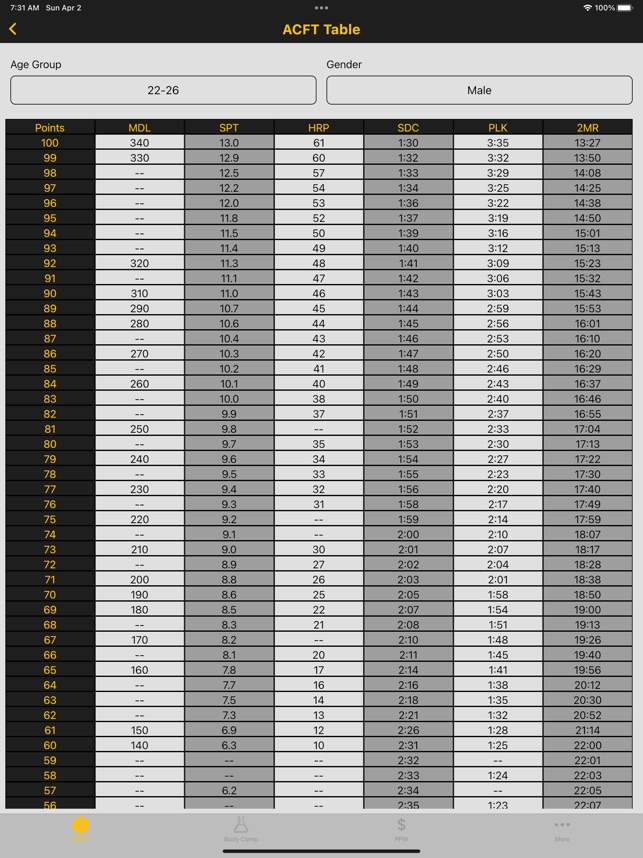
Credit: apps.apple.com
Sit-up Benchmarks Across Ages
Sit-ups measure core strength, a key part of Army fitness tests. The number of sit-ups required changes with age. This ensures fairness and safety for all soldiers. Knowing the benchmarks helps prepare for the test and track progress.
Sit-up Requirements For Ages 17-21
Young soldiers must perform the most sit-ups. This age group shows higher physical endurance. The standard usually requires around 42 to 53 sit-ups in two minutes. Meeting this benchmark shows good core strength and readiness.
Sit-up Requirements For Ages 22-26
This group has slightly lower sit-up goals. The range is typically 40 to 50 sit-ups in two minutes. The change reflects natural shifts in muscle endurance. Soldiers should maintain strong core fitness to meet these standards.
Sit-up Requirements For Ages 27-31
The sit-up count decreases a bit more for this group. The range is about 38 to 48 sit-ups in two minutes. The adjustment helps keep the test fair. Staying consistent with training is important for success.
Sit-up Requirements For Ages 32-36
Physical requirements continue to adapt with age. Soldiers here need to complete around 35 to 45 sit-ups in two minutes. This allows for normal changes in body strength. Core fitness remains a focus at all ages.
Sit-up Requirements For Ages 37-41
This age group has a benchmark of roughly 33 to 43 sit-ups. The standard recognizes the natural aging process. Regular exercise supports meeting and exceeding these numbers. Sit-ups test endurance and muscle control.
Summary Of Sit-up Benchmarks By Age
| Age Group | Minimum Sit-Ups (2 min) | Maximum Sit-Ups (2 min) |
|---|---|---|
| 17-21 | 42 | 53 |
| 22-26 | 40 | 50 |
| 27-31 | 38 | 48 |
| 32-36 | 35 | 45 |
| 37-41 | 33 | 43 |
Running Standards For Different Age Groups
Running is a key part of Army fitness tests. Standards vary by age to keep challenges fair and safe. Each age group has set times to complete runs. Meeting these standards shows good endurance and readiness.
2-mile Run Expectations
The 2-mile run is the main test for cardiovascular fitness. Younger soldiers must run faster than older ones. Times increase as age groups get higher. Soldiers aim to finish within the set limits for their age.
| Age Group | Maximum Time (minutes:seconds) |
|---|---|
| 17-21 | 15:54 |
| 22-26 | 16:36 |
| 27-31 | 17:18 |
| 32-36 | 18:00 |
| 37-41 | 18:42 |
| 42-46 | 19:24 |
| 47-51 | 20:06 |
| 52-56 | 20:48 |
| 57-61 | 21:30 |
| 62+ | 22:12 |
These times reflect the minimum pace required. Training should focus on improving speed and stamina.
Alternate Cardiovascular Tests
Some soldiers may use other tests to meet cardio requirements. These include the 1.5-mile run and the 12-minute swim. Each test has its own time standards based on age.
- 1.5-Mile Run:Shorter distance but faster pace.
- 12-Minute Swim:Measures endurance in water.
- 2-Kilometer Walk:For soldiers with joint issues.
Choosing an alternate test depends on individual needs. All tests aim to measure heart and lung fitness accurately.
Tips To Meet Age-specific Fitness Goals
Meeting fitness goals changes with age. The body reacts differently as years pass. Adjusting your training helps maintain strength and stamina. Focus on smart strategies that suit your age. This keeps you fit and ready for Army demands.
Strength Training Strategies
Prioritize exercises that build muscle safely. Use lighter weights with more repetitions. This improves endurance and reduces injury risk. Older adults should include resistance bands and bodyweight moves. Younger people can handle heavier weights with proper form. Always warm up before lifting to prepare muscles.
Endurance Building Techniques
Start with low-impact activities like walking or cycling. Gradually increase time and intensity over weeks. Mix steady cardio with interval training for best results. Breathing control helps improve lung capacity. Stay consistent to build lasting endurance. Listen to your body and avoid pushing too hard.
Recovery And Injury Prevention
Rest days are essential for all ages. Sleep helps muscles repair and grow stronger. Stretch before and after workouts to maintain flexibility. Use foam rollers or massage to ease muscle tightness. Pay attention to pain signals to prevent serious injuries. Hydrate well and eat balanced meals to support recovery.
Common Challenges By Age Group
Each age group faces unique challenges in meeting Army fitness requirements. These challenges affect training progress and motivation. Understanding these hurdles helps create effective fitness plans tailored to age.
Challenges vary by age due to changes in body strength, endurance, and recovery speed. Addressing these issues can improve performance and reduce injury risk.
Overcoming Plateaus
Many experience fitness plateaus where progress slows or stops. This can happen at any age but is common in mid-career soldiers.
To break plateaus, vary workouts and increase intensity slowly. Adding new exercises targets different muscle groups. Tracking progress helps identify weak areas.
Managing Time Constraints
Time is limited for most soldiers, especially those with family or additional duties. Older age groups often face more time challenges.
Effective time management includes short, focused workouts. Combining strength and cardio saves time. Planning workouts around daily schedules keeps consistency.
Addressing Physical Limitations
Physical limits grow with age. Joint pain, slower recovery, and reduced flexibility are common concerns.
Modify exercises to reduce strain and prevent injury. Warm-ups and cool-downs become more important. Regular rest days allow the body to heal and stay strong.

Credit: www.aftcalculator.com
Tracking Progress And Adjusting Training
Tracking your progress and adjusting your training is essential to meet the Army fitness requirements by age. Without monitoring how you improve, you risk plateauing or even regressing. Small, consistent changes based on your progress keep you moving forward and prevent injury.
Setting Clear, Measurable Goals
Start by defining specific targets for each fitness test component like push-ups, sit-ups, and the two-mile run. Write down your current scores and aim for incremental improvements. This clarity helps you stay focused and motivated.
Ask yourself: Are my goals realistic for my age group? Adjusting expectations based on your age ensures steady progress without burnout.
Using A Training Log To Monitor Progress
Keep a detailed log of your workouts and test results. Note the number of reps, run times, and how you felt during each session. This record reveals patterns—when you improve, when you stall, and when you need rest.
- Track weekly changes in your performance
- Record recovery times and energy levels
- Note any injuries or unusual fatigue
Seeing your progress on paper can boost your confidence and highlight areas needing more focus.
Adjusting Your Training Based On Feedback
Review your log regularly to identify what’s working and what isn’t. If your push-ups aren’t improving, try adding strength exercises like planks or dumbbell presses. If your run times plateau, consider interval training or cross-training with cycling.
Don’t hesitate to tweak your routine. Your body changes with age, so your training must evolve too.
Incorporating Rest And Recovery
Tracking progress isn’t just about pushing harder. Rest days are crucial for muscle repair and overall performance. Without proper recovery, you risk injury and setbacks.
Listen to your body signals. If your log shows increased soreness or fatigue, add more rest or lighter sessions. Balancing work and rest is a key to consistent improvement.
Seeking Professional Feedback
Consider consulting a fitness coach or joining group sessions tailored to your age bracket. External feedback can provide new insights and correct your form or technique. Sometimes, a fresh perspective helps you overcome plateaus.
Have you tried getting a second opinion on your training? It might be the push you need to break through your limits.

Credit: www.reddit.com
Frequently Asked Questions
What Are The Army Fitness Standards By Age Group?
Army fitness standards vary by age to ensure fair assessment. Younger soldiers face more demanding requirements. Older age groups have adjusted benchmarks. These standards cover push-ups, sit-ups, and a timed run. Meeting these ensures physical readiness for military duties.
How Does Age Affect Army Physical Fitness Tests?
Age impacts the number of required repetitions and run time. Older soldiers have reduced targets to accommodate natural fitness changes. This adjustment helps maintain fairness across all age groups. Fitness tests remain challenging yet achievable for every age.
What Exercises Are Included In Army Fitness Tests?
The Army fitness test includes push-ups, sit-ups, and a two-mile run. These exercises measure strength, endurance, and cardiovascular health. Each event has specific minimum standards based on age and gender. Passing all parts is necessary for fitness qualification.
Can Older Soldiers Meet Army Fitness Requirements?
Yes, older soldiers can meet fitness requirements with proper training. The Army sets age-adjusted standards to support all age groups. Consistent exercise and conditioning help soldiers pass the tests. Staying fit is essential for military readiness at any age.
Conclusion
Meeting army fitness requirements changes with age. Each age group has clear standards to follow. Staying fit helps you perform well during tests. Regular exercise and healthy habits make a big difference. Focus on strength, endurance, and flexibility every day.
Training smart keeps your body ready for challenges. Keep track of your progress and improve steadily. Remember, fitness is a key part of army life. Prepare well, stay consistent, and reach your goals. Fitness is not just for now, but for the future too.







