
Are you looking to enhance your fitness routine with something that nurtures both your body and mind? Discover the transformative power of Vinyasa Flow Yoga, a dynamic practice that’s perfect for beginners like you.
Imagine gliding through a series of poses, each seamlessly linked to the next by your breath, creating a moving meditation that leaves you feeling invigorated and centered. Vinyasa Flow Yoga isn’t just about flexibility; it’s about finding balance and peace in your busy life.
As you dive deeper into this article, you’ll uncover how Vinyasa can improve your physical health, reduce stress, and boost your overall well-being. Are you ready to take a step towards a healthier, more mindful you? Let’s explore the world of Vinyasa Flow Yoga together.
What Is Vinyasa Flow Yoga
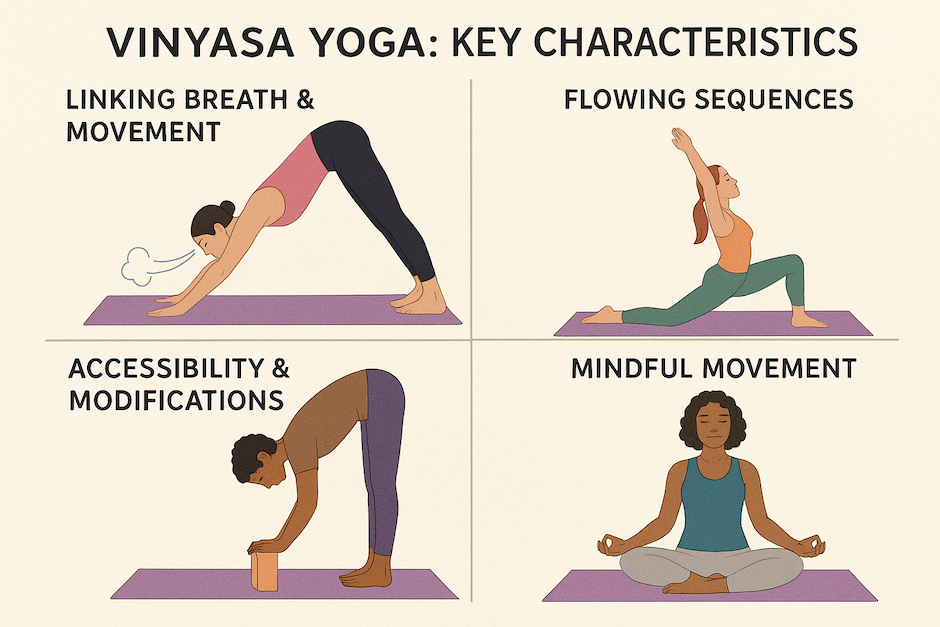
Vinyasa Flow Yoga is a popular style of yoga that links movement with breath. It creates a smooth, dance-like flow through different poses. This style is dynamic and often faster-paced than other yoga types. It helps build strength, flexibility, and balance while calming the mind.
Beginners find Vinyasa Flow engaging because each class varies. This keeps the practice interesting and encourages body awareness. The focus on breath connects the mind and body deeply.
Definition Of Vinyasa Flow Yoga
Vinyasa means “to place in a special way.” It refers to moving through poses with breath. Flow means a continuous, smooth movement from one pose to the next. Together, Vinyasa Flow Yoga means moving the body fluidly, guided by breath.
How Vinyasa Flow Yoga Works
Each movement matches an inhale or exhale. This rhythm links poses together in a sequence. Teachers often guide students through sun salutations and standing poses. The transitions create a flow that feels like moving meditation.
Benefits Of Vinyasa Flow Yoga
- Improves cardiovascular health by increasing heart rate
- Builds muscle strength and endurance
- Enhances flexibility and joint mobility
- Reduces stress through breath-focused movement
- Boosts mental focus and body awareness

Credit: www.youtube.com
Benefits For Beginners
Starting Vinyasa Flow Yoga opens many doors for beginners. It improves both body and mind in simple ways. The practice links breath with movement, making each session feel natural and smooth. This gentle flow suits those new to yoga or anyone seeking balance and calm.
Boosting Energy Levels
Vinyasa Flow Yoga increases blood circulation. This delivers oxygen to muscles and brain. The steady movement wakes up the body. Many feel more awake and alert after practice. It helps fight fatigue without needing caffeine or sugar.
Enhancing Flexibility
The flowing poses stretch muscles gently. Over time, joints loosen and move more freely. Beginners gain better range of motion with regular sessions. Flexibility reduces the chance of injuries in daily life. Simple stretches make everyday tasks easier and less painful.
Reducing Stress
Focused breathing calms the nervous system. The rhythmic flow diverts attention from worries. This lowers stress hormones in the body. Many report feeling peaceful and relaxed after class. The practice creates space for mental clarity and rest.
Basic Vinyasa Poses
Starting your Vinyasa Flow Yoga journey means getting comfortable with a few basic poses. These poses form the foundation of your practice and help you build strength, balance, and flexibility. Knowing them well will make your flow smoother and more enjoyable.
Mountain Pose
Mountain Pose is the starting point for many yoga sequences. Stand tall with your feet together, arms at your sides, and shoulders relaxed. Focus on grounding through your feet and lifting through the crown of your head.
This pose teaches you how to find balance and stability. Try to feel the connection between your feet and the floor—do you notice any tension or tightness? Adjust your posture until you feel steady and aligned.
Downward Dog
Downward Dog is a classic pose that stretches your entire body. Start on your hands and knees, then lift your hips toward the ceiling, creating an inverted V shape. Keep your hands shoulder-width apart and feet hip-width apart.
Many beginners find their hamstrings tight here. Don’t force your heels to touch the ground; instead, bend your knees slightly and focus on lengthening your spine. Can you feel your back and legs waking up?
Warrior I
Warrior I builds strength in your legs and opens your chest. From a standing position, step one foot back, bend the front knee, and raise your arms overhead. Keep your hips facing forward and your gaze upward.
This pose challenges your balance and stamina. Notice if one side feels weaker or less flexible—this awareness helps you improve evenly. How does holding Warrior I affect your focus and breath?
Plank Pose
Plank Pose strengthens your core and arms, preparing you for more advanced moves. Start in a push-up position with your body in a straight line from head to heels. Engage your abdominal muscles and avoid letting your hips sag.
Holding plank can feel tough at first, but it’s key to building endurance. Try timing yourself—how long can you hold a strong, steady plank without losing form? This pose is a great test of your growing strength.

Credit: www.youtube.com
Step-by-step Flow Sequence
Getting comfortable with a Vinyasa flow sequence means understanding how breath, movement, and transitions work together. This combination builds strength, flexibility, and focus. The flow becomes a moving meditation, not just a series of poses.
Starting With Breath
Your breath sets the pace for your entire practice. Begin by taking deep, steady inhales and exhales through your nose. Notice how your body feels as you breathe—this awareness grounds you immediately.
Try to keep your breath smooth and even. If you find yourself holding it during a pose, pause and return to steady breathing. This simple focus can change your experience from stressful to calming.
Linking Movement And Breath
Each movement in Vinyasa is tied to either an inhale or an exhale. For example, when you lift your arms overhead, breathe in. When you fold forward, breathe out. This connection helps your body move with more ease and purpose.
Think about how your breath influences the flow. Does it make your movements slower and more controlled? Or faster and more energetic? Adjust your pace to what feels right for you.
Transitioning Between Poses
Transitions are often overlooked but are where your practice truly flows. Move smoothly from one pose to the next, keeping your breath steady. Avoid rushing or forcing positions; instead, let your body guide the flow.
Imagine moving through a sequence like Warrior II to Side Angle pose. Maintain balance and alignment while your breath stays calm and controlled. How do you feel when transitions become seamless parts of your practice?
Tips For A Safe Practice
Practicing Vinyasa Flow Yoga safely is essential to enjoy its full benefits without injury. Paying attention to your body’s signals, using helpful tools, and steering clear of common pitfalls can make your practice both effective and enjoyable. Here are some practical tips to help you stay safe on your yoga journey.
Listening To Your Body
Your body knows best. If a pose feels painful or uncomfortable, pause and adjust rather than pushing through. Remember, yoga is about connection, not competition.
Notice how your muscles and joints respond during each movement. Are you holding your breath or tensing unnecessarily? Relax and breathe deeply to support better alignment and ease.
Ask yourself: Are you respecting your current limits or trying to rush into advanced poses? Staying mindful helps prevent injuries and builds a stronger foundation.
Using Props
Props like blocks, straps, and blankets can be game-changers, especially when you’re starting out. They help you maintain proper alignment and reduce strain on tight muscles.
For example, placing a block under your hand in a forward fold can prevent overstretching and keep your back safe. Straps can assist in extending your reach without forcing your body.
Don’t hesitate to experiment with different props to find what supports you best. They’re there to make your practice accessible and comfortable.
Avoiding Common Mistakes
- Skipping Warm-Ups:Jumping straight into challenging poses can lead to injuries. Begin with gentle stretches to prepare your body.
- Ignoring Breath:Holding your breath reduces oxygen flow and can cause tension. Coordinate your breath with each movement for fluidity.
- Overextending:Trying to force flexibility or balance too soon increases injury risk. Progress gradually and respect your current abilities.
- Neglecting Rest:Resting between flows allows your muscles to recover. Avoid rushing from one pose to the next without pauses.
Have you noticed any habits in your practice that might be holding you back or risking injury? Becoming aware is the first step toward a safer and more enjoyable Vinyasa Flow Yoga experience.
Creating A Morning Routine
Creating a morning routine with Vinyasa Flow Yoga helps set a positive tone for the day. It boosts energy and calms the mind. Starting your day with gentle movement can improve focus and mood. A consistent practice builds strength and flexibility over time.
Choosing The Right Time
Pick a time that fits your daily schedule. Early mornings often work best for a fresh start. Aim to practice before breakfast or any busy tasks. Even 10 to 15 minutes can make a difference. Consistency matters more than duration. Try to wake up a bit earlier to avoid rushing. Make your practice a priority to form a lasting habit.
Setting Up Your Space
Create a quiet and clean area for your yoga. Use a yoga mat or soft carpet for comfort. Remove distractions like phones or loud noises. Natural light helps to wake up your body. Add calming elements such as plants or candles if you like. Keep your space simple to stay focused. A dedicated spot makes it easier to start your routine daily.
Incorporating Meditation
Begin or end your Vinyasa Flow with meditation. Sit quietly and focus on your breath. Even a few minutes helps clear your mind. Meditation improves awareness and reduces stress. Use a guided meditation app if you need help. Combining meditation with yoga deepens relaxation. This calm start can shape your mindset for the whole day.
Credit: myyogateacher.com
Frequently Asked Questions
What Is Vinyasa Flow Yoga For Beginners?
Vinyasa Flow Yoga links breath with movement in a smooth sequence. It builds strength, flexibility, and mindfulness. Beginners enjoy its dynamic yet accessible practice.
How Often Should Beginners Practice Vinyasa Yoga?
Start with 2-3 sessions per week. This frequency helps build consistency and stamina. Gradually increase as your strength and comfort grow.
What Are The Key Benefits Of Vinyasa Flow Yoga?
It improves cardiovascular health, flexibility, and mental focus. Vinyasa also reduces stress and boosts energy. It’s ideal for full-body fitness and relaxation.
Do Beginners Need Special Equipment For Vinyasa Yoga?
Basic equipment includes a yoga mat and comfortable clothes. Props like blocks or straps help with alignment but aren’t mandatory. A quiet space enhances focus.
Conclusion
Vinyasa Flow Yoga offers a gentle way to start your practice. It helps improve strength, balance, and focus. Moving with your breath creates calm and reduces stress. Beginners can enjoy learning simple poses step by step. Consistent practice brings better flexibility and body awareness.
Stay patient and listen to your body’s signals. Small progress adds up over time. Embrace the journey and enjoy each session fully. Yoga becomes a helpful part of your daily life. Try Vinyasa Flow and feel its positive effects soon.







